Todd J. Braje - Böcker
Visar alla böcker från författaren Todd J. Braje. Handla med fri frakt och snabb leverans.
5 produkter
5 produkter
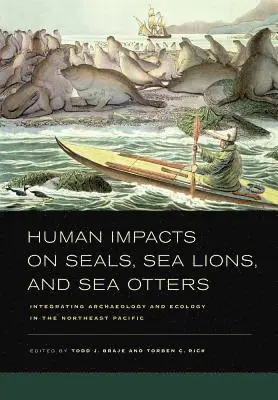
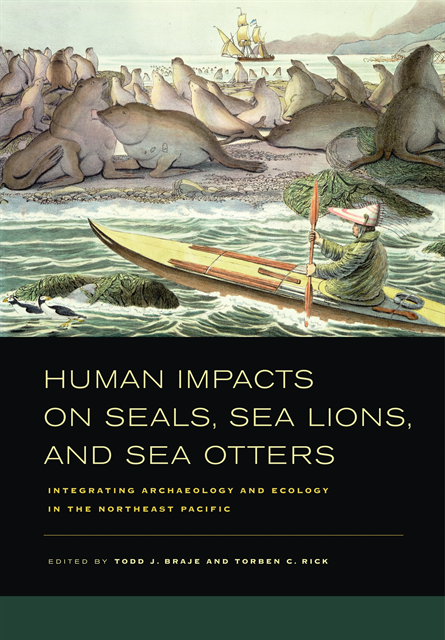
Human Impacts on Seals, Sea Lions, and Sea Otters
Integrating Archaeology and Ecology in the Northeast Pacific
Inbunden, Engelska, 2011
696 kr
Skickas inom 7-10 vardagar
For more than ten thousand years, Native Americans from Alaska to southern California relied on aquatic animals such as seals, sea lions, and sea otters for food and raw materials. Archaeological research on the interactions between people and these marine mammals has made great advances recently and provides a unique lens for understanding the human and ecological past. Archaeological research is also emerging as a crucial source of information on contemporary environmental issues as we improve our understanding of the ancient abundance, ecology, and natural history of these species. This groundbreaking interdisciplinary volume brings together archaeologists, biologists, and other scientists to consider how archaeology can inform the conservation and management of pinnipeds and other marine mammals along the Pacific Coast.
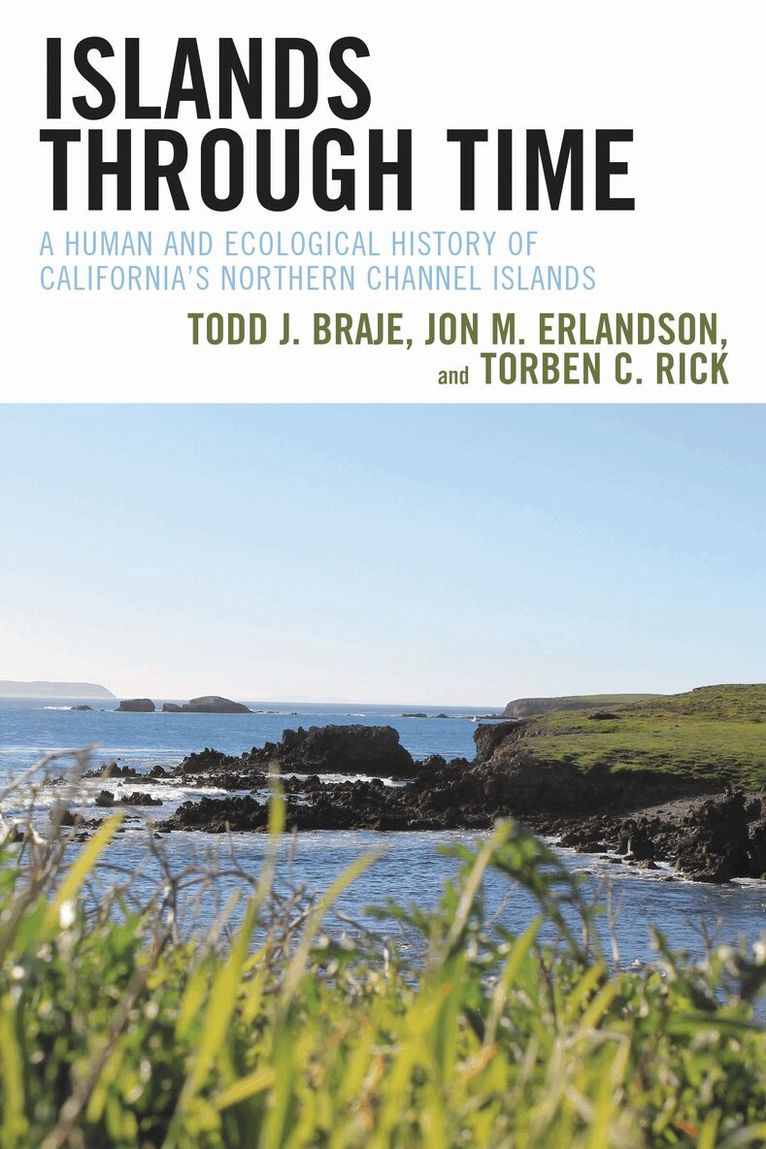
Islands through Time
A Human and Ecological History of California's Northern Channel Islands
Inbunden, Engelska, 2021
502 kr
Skickas inom 10-15 vardagar
Explore the remarkable history of one of the jewels of the US National Park systemCalifornia’s Northern Channel Islands, sometimes called the American Galápagos and one of the jewels of the US National Park system, are a located between 20 and 44 km off the southern California mainland coast. Celebrated as a trip back in time where tourists can capture glimpses of California prior to modern development, the islands are often portrayed as frozen moments in history where ecosystems developed in virtual isolation for tens of thousands of years. This could not, however, be further from the truth.For at least 13,000 years, the Chumash and their ancestors occupied the Northern Channel Islands, leaving behind an archaeological record that is one of the longest and best preserved in the Americas. From ephemeral hunting and gathering camps to densely populated coastal villages and Euro-American and Chinese historical sites, archaeologists have studied the Channel Island environments and material culture records for over 100 years. They have pieced together a fascinating story of initial settlement by mobile hunter-gatherers to the development of one of the world’s most complex hunter-gatherer societies ever recorded, followed by the devastating effects of European contact and settlement. Likely arriving by boat along a “kelp highway,” Paleocoastal migrants found not four offshore islands, but a single super island, Santarosae. For millennia, the Chumash and their predecessors survived dramatic changes to their land- and seascapes, climatic fluctuations, and ever-evolving social and cultural systems.Islands Through Time is the remarkable story of the human and ecological history of California’s Northern Channel Islands. We weave the tale of how the Chumash and their ancestors shaped and were shaped by their island homes. Their story is one of adaptation to shifting land- and seascapes, growing populations, fluctuating subsistence resources, and the innovation of new technologies, subsistence strategies, and socio-political systems. Islands Through Time demonstrates that to truly understand and preserve the Channel Islands National Park today, archaeology and deep history are critically important. The lessons of history can act as a guide for building sustainable strategies into the future. The resilience of the Chumash and Channel Island ecosystems provides a story of hope for a world increasingly threatened by climate change, declining biodiversity, and geopolitical instability.
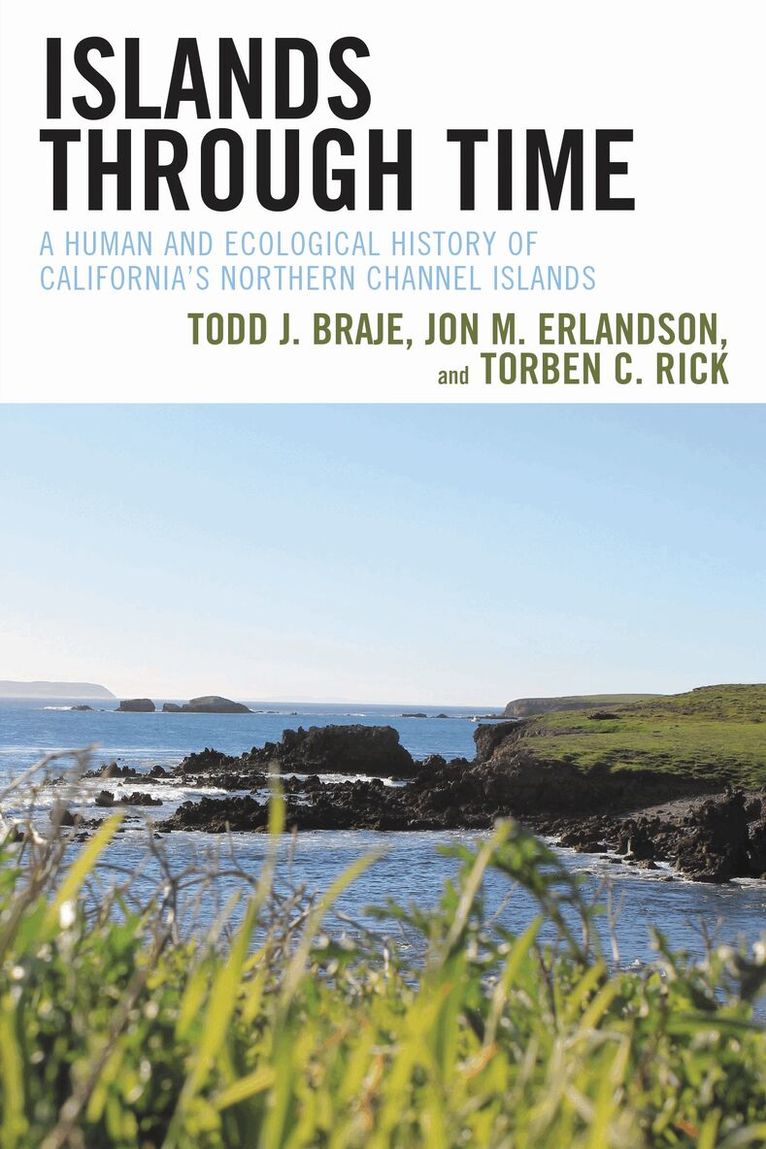
Islands through Time
A Human and Ecological History of California's Northern Channel Islands
Häftad, Engelska, 2023
282 kr
Skickas inom 10-15 vardagar
Explore the remarkable history of one of the jewels of the US National Park systemCalifornia’s Northern Channel Islands, sometimes called the American Galápagos and one of the jewels of the US National Park system, are a located between 20 and 44 km off the southern California mainland coast. Celebrated as a trip back in time where tourists can capture glimpses of California prior to modern development, the islands are often portrayed as frozen moments in history where ecosystems developed in virtual isolation for tens of thousands of years. This could not, however, be further from the truth.For at least 13,000 years, the Chumash and their ancestors occupied the Northern Channel Islands, leaving behind an archaeological record that is one of the longest and best preserved in the Americas. From ephemeral hunting and gathering camps to densely populated coastal villages and Euro-American and Chinese historical sites, archaeologists have studied the Channel Island environments and material culture records for over 100 years. They have pieced together a fascinating story of initial settlement by mobile hunter-gatherers to the development of one of the world’s most complex hunter-gatherer societies ever recorded, followed by the devastating effects of European contact and settlement. Likely arriving by boat along a “kelp highway,” Paleocoastal migrants found not four offshore islands, but a single super island, Santarosae. For millennia, the Chumash and their predecessors survived dramatic changes to their land- and seascapes, climatic fluctuations, and ever-evolving social and cultural systems.Islands Through Time is the remarkable story of the human and ecological history of California’s Northern Channel Islands. We weave the tale of how the Chumash and their ancestors shaped and were shaped by their island homes. Their story is one of adaptation to shifting land- and seascapes, growing populations, fluctuating subsistence resources, and the innovation of new technologies, subsistence strategies, and socio-political systems. Islands Through Time demonstrates that to truly understand and preserve the Channel Islands National Park today, archaeology and deep history are critically important. The lessons of history can act as a guide for building sustainable strategies into the future. The resilience of the Chumash and Channel Island ecosystems provides a story of hope for a world increasingly threatened by climate change, declining biodiversity, and geopolitical instability.
Understanding Imperiled Earth
How Archaeology and Human History Inform a Sustainable Future
Inbunden, Engelska, 2024
414 kr
Skickas
An essential and hopeful book for climate-conscious readers The world faces an uncertain future with the rise of climate change, biodiversity loss, deforestation, overfishing, and other threats. UNDERSTANDING IMPERILED EARTH meets this uncertainty head-on, presenting archaeology and history as critical guides to addressing the modern environmental crisis. Anthropologist Todd J. Braje draws connections between deep history and today's hot-button environmental news stories to reveal how the study of the ancient past can help build a more sustainable future. The book covers a diverse array of interconnected issues, including: · how modern humans have altered the natural world · conservation work of Indigenous communities · extinction of megafauna like dire wolves and woolly rhinoceros · the risk of deforestation highlighted by Notre Dame's destruction · the extinction crisis reflected by endangered bird species in Hawai'i · fish scarcity driving demand and price, like the single blue-fin tuna fish that sold for three million dollars · importance of "action archaeology" Braje examines how historical roots offer a necessary baseline for a healthier Earth, because understanding how the planet used to be is fundamental to creating effective restoration efforts moving forward through urban forests, sustainable food webs, and more. UNDERSTANDING IMPERILED EARTH offers an illuminating, hopeful, and actionable approach to some of the world's most urgent problems.
Shellfish for the Celestial Empire
The Rise and Fall of Commercial Abalone Fishing in California
Häftad, Engelska, 2016
373 kr
Skickas inom 7-10 vardagar
In the 1800s, when California was captivated by gold fever, a small group of Chinese immigrants recognized the fortune to be made from the untapped resources along the Pacific coast, particularly from harvesting the black abalone of southern and Baja California. These immigrants, with skills from humble beginnings in a traditional Chinese fishing province, founded California’s commercial abalone industry and led its growth and expansion for several decades.Today, the physical evidence of historical Chinese abalone fishing on the mainland has been erased by development. On California’s Channel Islands, however, remnants of temporary abalone collecting and processing camps lie scattered along the coastlines. These sites hold a treasure trove of information, stories, lifeways, and history. Todd Braje uses them to explore the history of Chinese abalone fishing, presenting a microcosm of the broader history of Chinese immigrants in America.