Tom Archibald - Böcker
Visar alla böcker från författaren Tom Archibald. Handla med fri frakt och snabb leverans.
6 produkter
6 produkter
1 000 kr
Skickas inom 7-10 vardagar
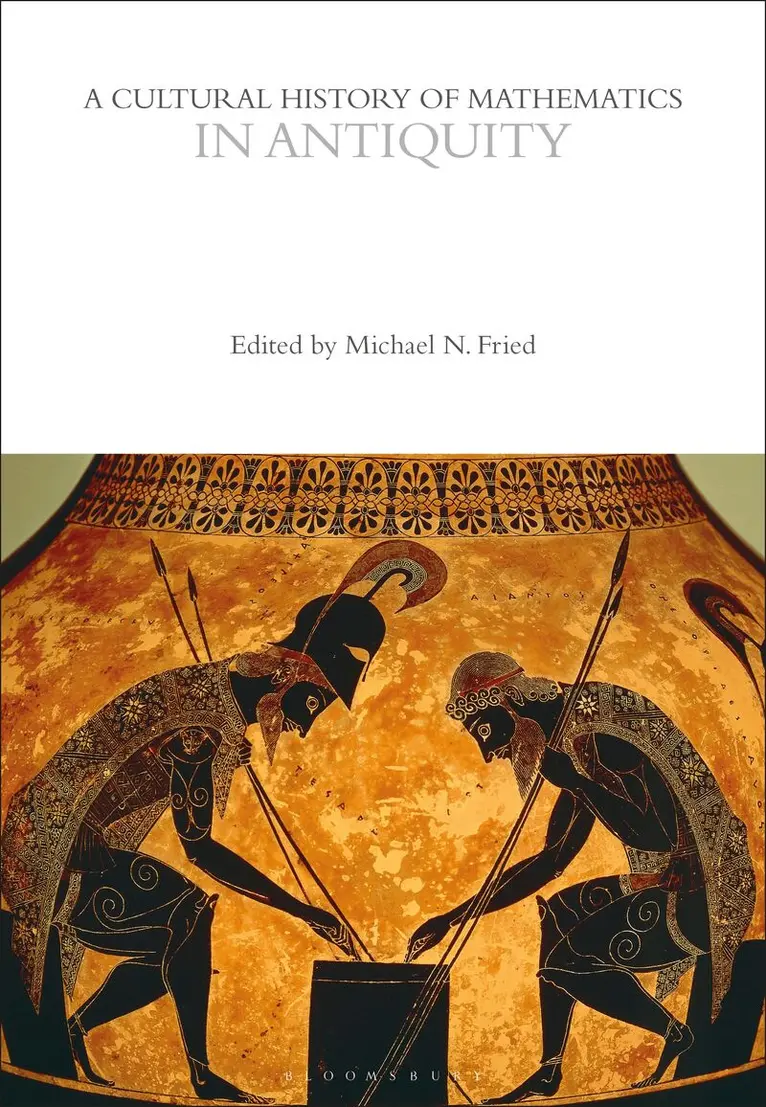
A Cultural History of Mathematics in Antiquity covers the period from 3000 BCE to 500 CE, exploring the great richness and diversity of mathematical thought and activity across the ancient world. Our modern notion of mathematics – and the word itself – was established by Greco-Roman culture. However, sophisticated forms of what we should call mathematics – number systems, ways of measurement, notation, and formulae – were developed millennia earlier by scribes in ancient Egypt, Mesopotamia, and Iraq. Mathematics proved just as invaluable in trade, taxation, astronomy, engineering, war, and agriculture in antiquity as it does now.The six volume set of the Cultural History of Mathematics explores the value and impact of mathematics in human culture from antiquity to the present. The themes covered in each volume are everyday numeracy; practice and profession; inventing mathematics; mathematics and worldviews; describing and understanding the world; mathematics and technological change; representing mathematics.Michael N. Fried is Associate Professor and Chair of the Program for Science and Technology Education in the School of Education at Ben-Gurion University of the Negev, Israel.Volume 1 in the Cultural History of Mathematics set.General Editors: David E. Rowe, Johannes Gutenberg University Mainz, Germany, and Joseph W. Dauben, City University of New York, USA.
1 000 kr
Skickas inom 7-10 vardagar
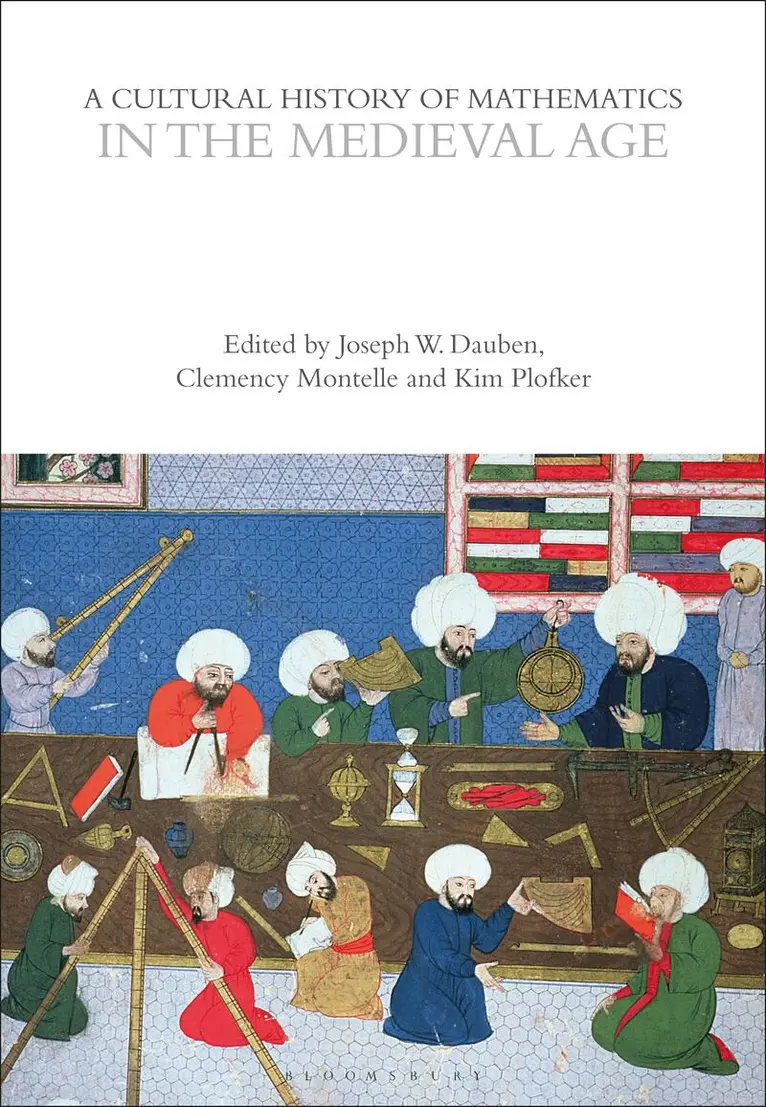
A Cultural History of Mathematics in the Medieval Age covers the period from 500 to 1450, focusing in particular on the innovations in East and South Asia and in Islamicate cultures. With the invention of algebra and the decimal place-value number system – as well as innovations in trigonometry, astronomy, and finance – medieval mathematics reenvisioned the science it inherited from antiquity and fundamentally transformed the world. The six volume set of the Cultural History of Mathematics explores the value and impact of mathematics in human culture from antiquity to the present. The themes covered in each volume are everyday numeracy; practice and profession; inventing mathematics; mathematics and worldviews; describing and understanding the world; mathematics and technological change; representing mathematics.Joseph W. Dauben is Distinguished Professor of History at the City University of New York, USA.Clemency Montelle is Professor of Mathematics at the University of Canterbury, New Zealand. Kim Plofker is Associate Professor of Mathematics at Union College, Schenectady, NY,USA. Volume 2 in the Cultural History of Mathematics set.General Editors: David E. Rowe, Johannes Gutenberg University Mainz, Germany, and Joseph W. Dauben, City University of New York, USA.
1 000 kr
Skickas inom 7-10 vardagar
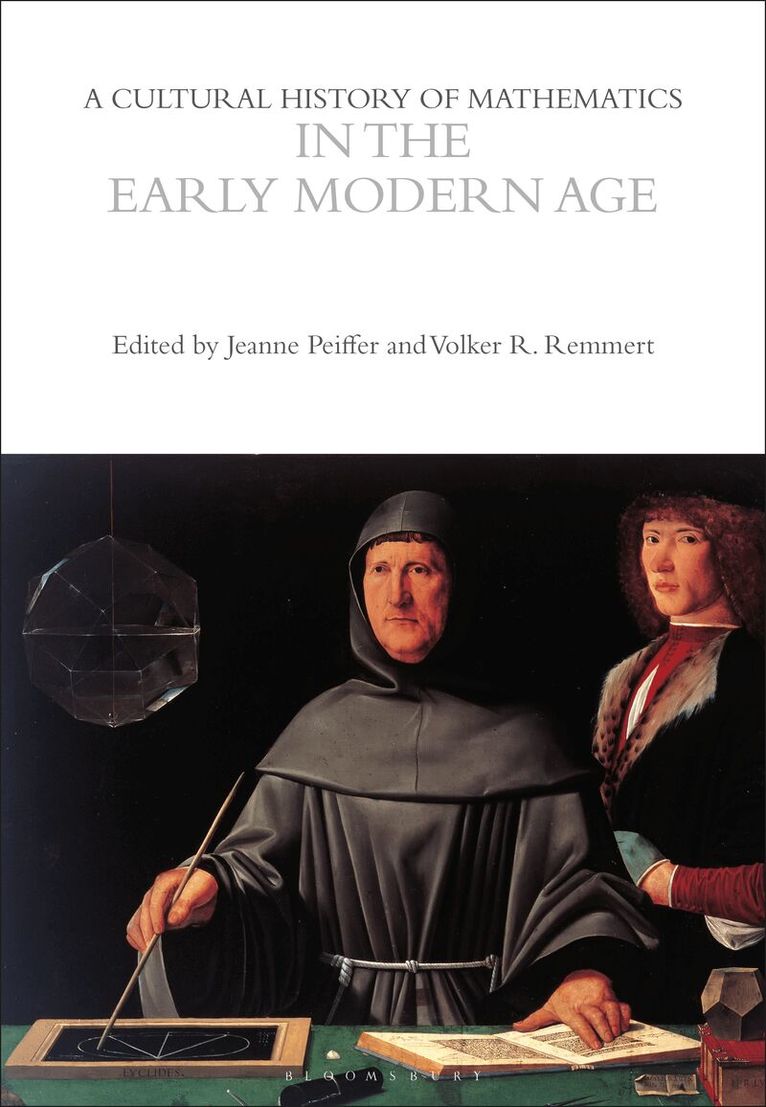
A Cultural History of Mathematics in the Early Modern Age covers the period from 1450 to 1687, a time marked by increasing interplay between science and society. Classical writing on science which had been lost and Arabic thinking which was new both percolated into the West, fertilizing new ideas and giving birth to what has been called the “Scientific Revolution”. From artisanal workshops to academic institutions, mathematicians thrived. And, with the development of symbolic algebra and infinitesimal calculus, mathematics became one of the major tools for describing and understanding the world.The six volume set of the Cultural History of Mathematics explores the value and impact of mathematics in human culture from antiquity to the present. The themes covered in each volume are everyday numeracy; practice and profession; inventing mathematics; mathematics and worldviews; describing and understanding the world; mathematics and technological change; representing mathematics.Jeanne Peiffer is Senior Scientist at the French National Centre for Scientific Research, affiliated to the Centre Alexandre-Koyré, Paris, France. Volker R. Remmert is Professor of History of Science at the University of Wuppertal, Germany.Volume 3 in the Cultural History of Mathematics set.General Editors: David E. Rowe, Johannes Gutenberg University Mainz, Germany, and Joseph W. Dauben, City University of New York, USA.
1 000 kr
Skickas inom 7-10 vardagar
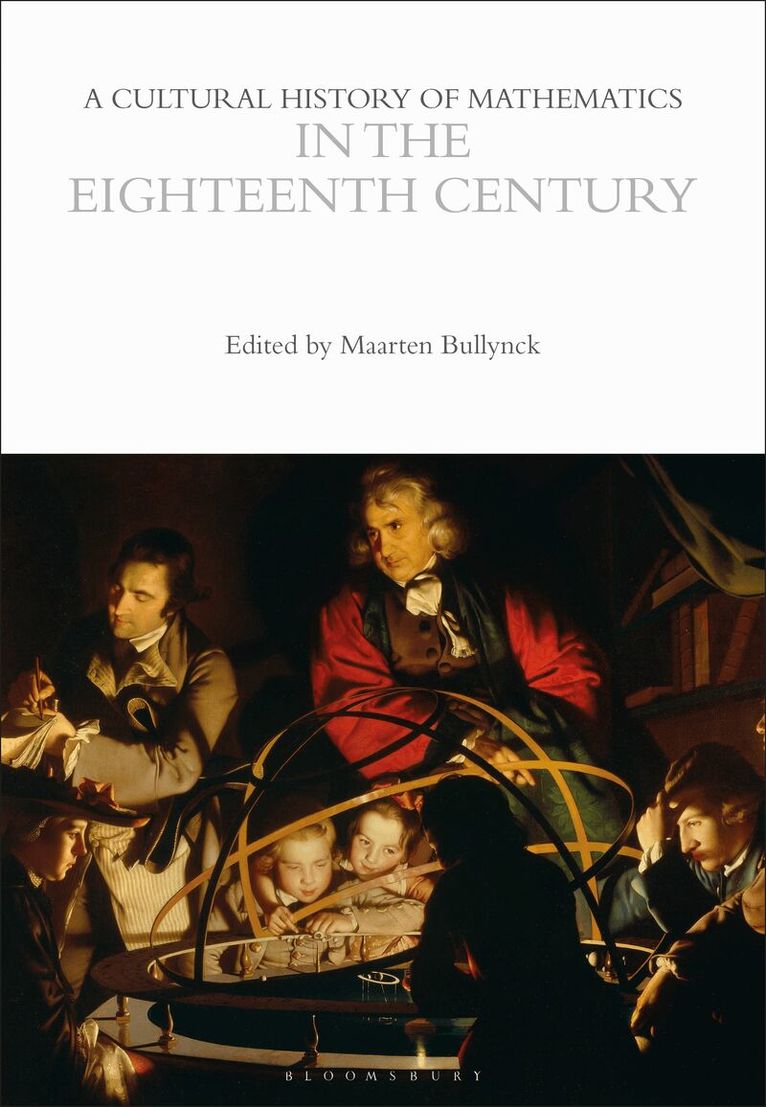
A Cultural History of Mathematics in the Eighteenth Century covers the period from 1687 to 1800. Advances in the use of calculus opened up both nature and society to mathematical analysis, while mathematical skills became increasingly valuable in ongoing power struggles between nation-states. This redefined the role of mathematics in many professional occupations, encouraging greater numerical literacy and better mathematical education. Building on advances in both analysis and physics, mathematics helped shape the ideas of the Enlightenment.The six volume set of the Cultural History of Mathematics explores the value and impact of mathematics in human culture from antiquity to the present. The themes covered in each volume are everyday numeracy; practice and profession; inventing mathematics; mathematics and worldviews; describing and understanding the world; mathematics and technological change; representing mathematics.Maarten Bullynckis Associate Professor of Mathematics and History of Science at the University of Paris 8, France.Volume 4 in the Cultural History of Mathematics set.General Editors: David E. Rowe, Johannes Gutenberg University Mainz, Germany, and Joseph W. Dauben, City University of New York, USA.
1 000 kr
Skickas inom 7-10 vardagar
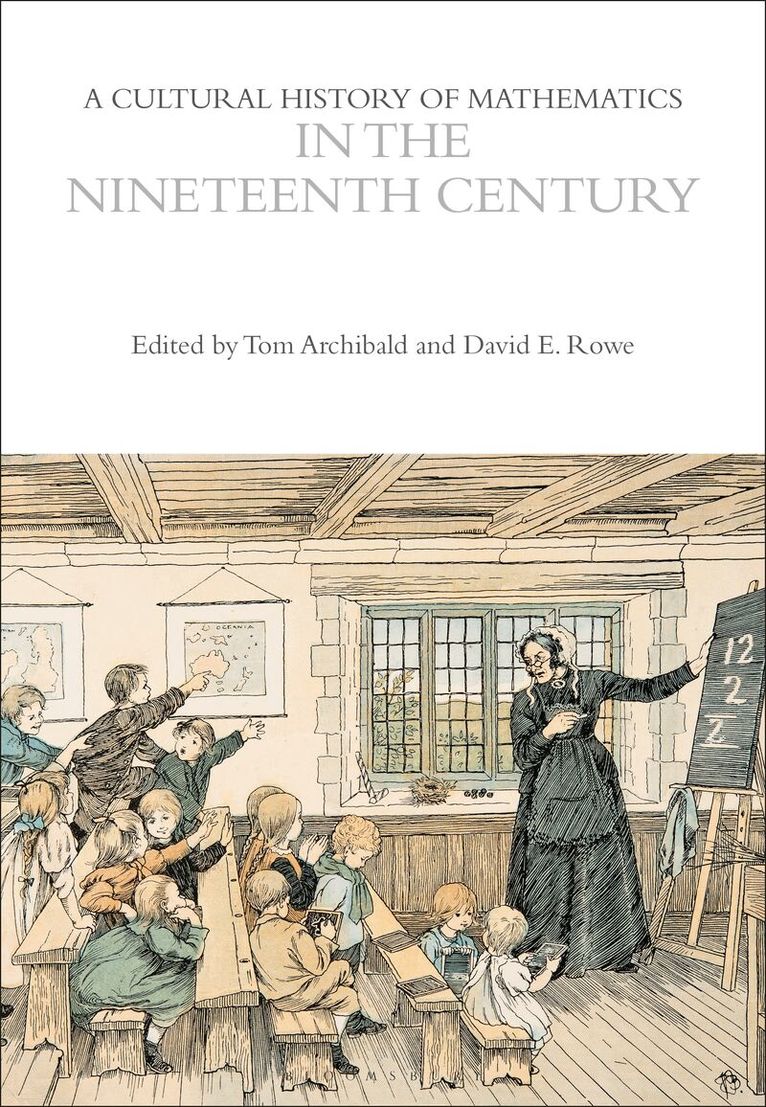
A Cultural History of Mathematics in the Nineteenth Century covers the period from 1800 to 1914, an era shaped by expanding European empires and vastly improved systems of transportation and communication. Widening access to schools improved mathematical literacy amongst the public, while the growth of universities encouraged the formation of national societies of professional mathematicians. Technological innovations, such as wireless telegraphy and aeronautics, spawned new fields in applied mathematics, just as specialists in pure mathematics produced a huge body of knowledge, which almost defied classification. But the international competition and cooperation which had spurred much mathematical progress across the Nineteenth Century was suspended by the onset of the Great War.The six volume set of the Cultural History of Mathematics explores the value and impact of mathematics in human culture from antiquity to the present. The themes covered in each volume are everyday numeracy; practice and profession; inventing mathematics; mathematics and worldviews; describing and understanding the world; mathematics and technological change; representing mathematics.Tom Archibald is Professor of Mathematics at Simon Fraser University, Burnaby, Canada. David E. Rowe is Professor Emeritus of the History of Mathematics at Johannes Gutenberg University Mainz, Germany.Volume 5 in the Cultural History of Mathematics set.General Editors: David E. Rowe, Johannes Gutenberg University Mainz, Germany, and Joseph W. Dauben, City University of New York, USA.
1 000 kr
Skickas inom 7-10 vardagar
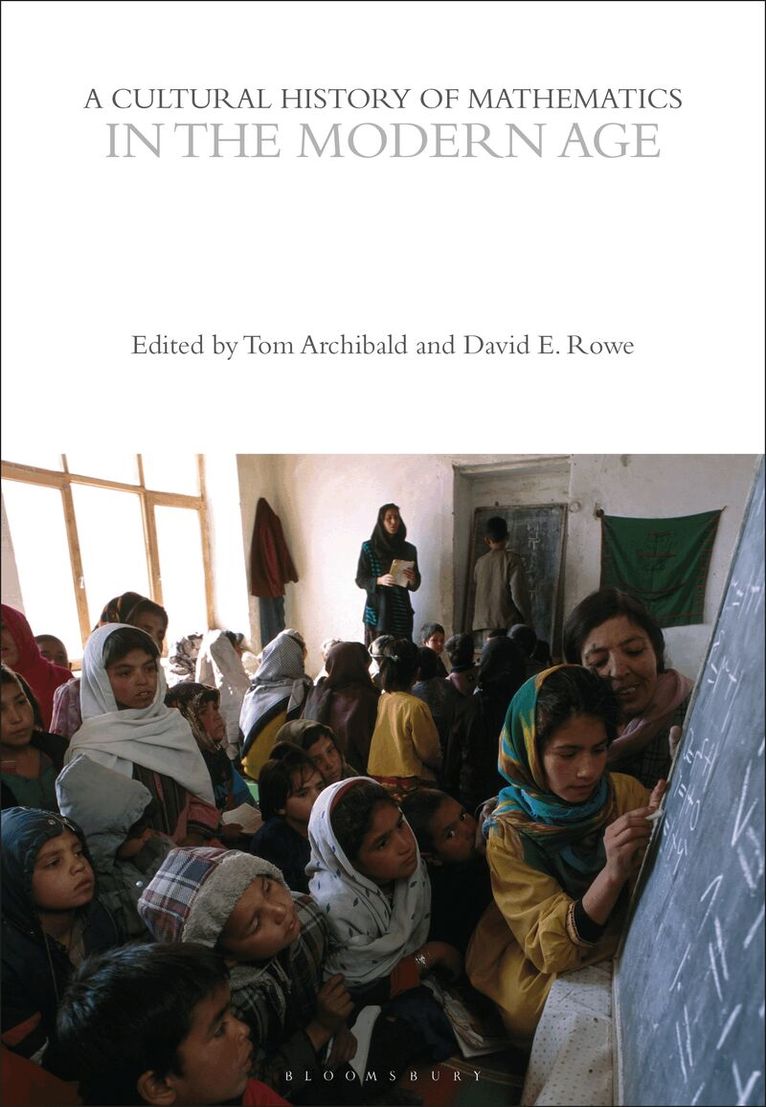
A Cultural History of Mathematics in the Modern Age covers the period from 1914 to today. Across the Twentieth Century, mathematics influenced two World Wars and the shape of modern warfare, nuclear technology, and the space age, while the certainties of mathematics were taken up by philosophers, artists, and writers. In the increasingly digital world of the Twenty-first Century, the exponential growth of mathematical knowledge has triggered major technological developments. Mathematical ideas now inform fundamental physical theories and technological models; even our social connectivity relies on mathematical algorithms.The six volume set of the Cultural History of Mathematics explores the value and impact of mathematics in human culture from antiquity to the present. The themes covered in each volume are everyday numeracy; practice and profession; inventing mathematics; mathematics and worldviews; describing and understanding the world; mathematics and technological change; representing mathematics.Tom Archibald is Professor of Mathematics at Simon Fraser University, Burnaby, Canada. David E. Rowe is Professor Emeritus of the History of Mathematics at Johannes Gutenberg University Mainz, Germany.Volume 6 in the Cultural History of Mathematics set.General Editors: David E. Rowe, Johannes Gutenberg University Mainz, Germany, and Joseph W. Dauben, City University of New York, USA.