614 kr
David E. Rowe – författare
- Inbunden, Engelska, 2026This book provides the first detailed account of Riemann's life along with analysis of his major works and their reception. These themes are presented in a chronological flow that takes into account numerous others who played important roles in Riemann's brief life and career. Among the more prominent figures who influenced Riemann's work were Gauss, Dirichlet, and Jacobi, but several others, including the physicist Wilhelm Weber, also played a major part. Special attention is given to the last four years of Riemann's life, which he and his wife Elise mainly spent in Italy, where he died. Her role in supporting Richard Dedekind and Heinrich Weber, the editors of Riemann's posthumous papers, is one of the many new aspects covered in this book.Drawing on family letters and other archival documents, the biographical chapters bring the reader into Riemann's often tumultuous personal life. Money and other mundane problems were a constant cause of concern, but even more serious were the health problems he suffered all his life. Socially awkward, he often withdrew from his peers while seeking solace in his work or that of others. Riemann was a voracious reader, but the present account offers a detailed picture of what he read and when. Plenty of mysteries still remain, but here for the first time one gains a sense of the extraordinary intellectual adventure that dominated Riemann's life.To help orient the reader, the book begins with an Introduction describing the landscape of German mathematics before Riemann arrived on the scene and ending with a chronological list of key events in his life. The remainder of the book has a three-part structure. Part I tells the story of Riemann's life in four chapters, corresponding to four distinct phases in his career. Part II delves into his better-known mathematical works, treated at first chronologically in Chapters 5 to 8. These are followed by an examination of Riemann's work on physical topics in Chapter 9, and closing with Chapter 10, which discusses Gaussian themes and their connections with Riemann's work. Part III deals with aspects of Riemann's legacy in two chapters. Chapter 11 traces the activities of seven important pupils and followers of Riemann up until the early 1880s. Chapter 12 then picks up the story told in the final section of Chapter 4, which describes the initial plans to publish Riemann's Collected Works. How that project was eventually brought to fruition by Dedekind and Weber forms part of the remarkable story of their lifelong friendship.The biographical parts of this book – Chapters 1 to 4 and 12 – are intended for the general reader. They are not totally "jargon-free", but will interest anyone with a taste for intellectual history. The remaining parts of the book aim to describe Riemann's work in the language of his time, which often means quoting him directly. A short section on "Reading Riemann" appears at the end of Chapter 5. For a serious historical account, one should always keep the author's voice in mind, even if, as in Riemann's case, the meaning of his words was at times unclear.
- Inbunden, Engelska, 2026
1 042 kr
Skickas inom 5-8 vardagar
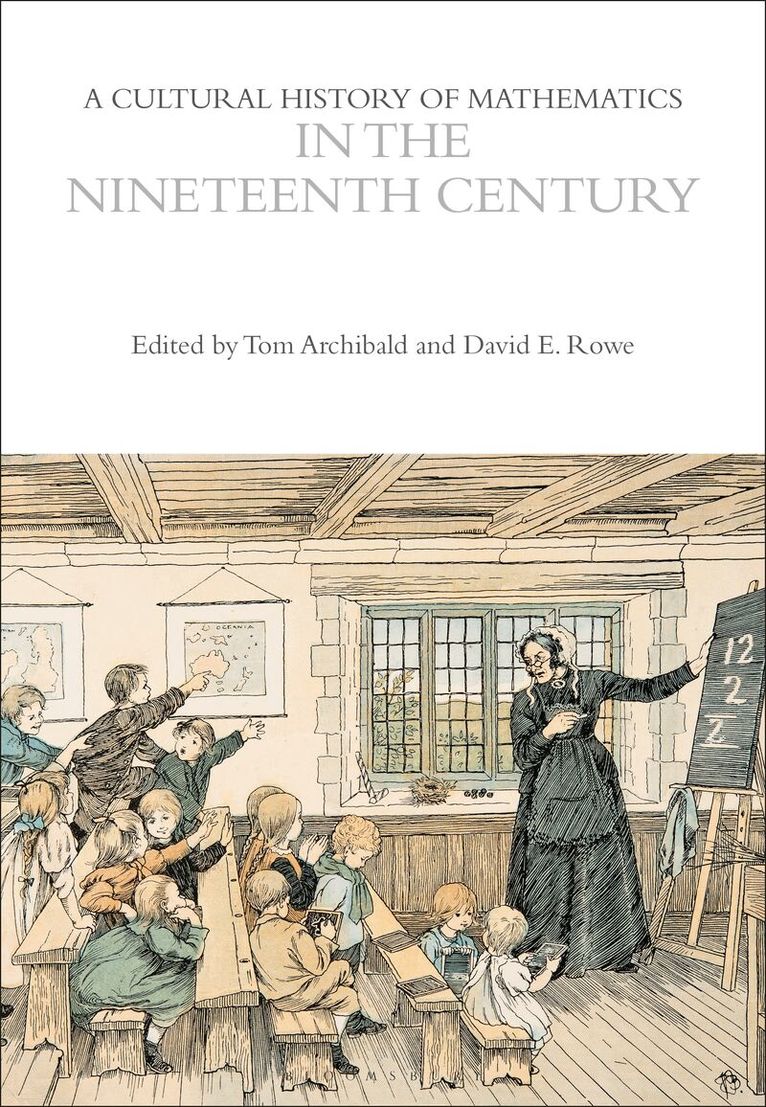
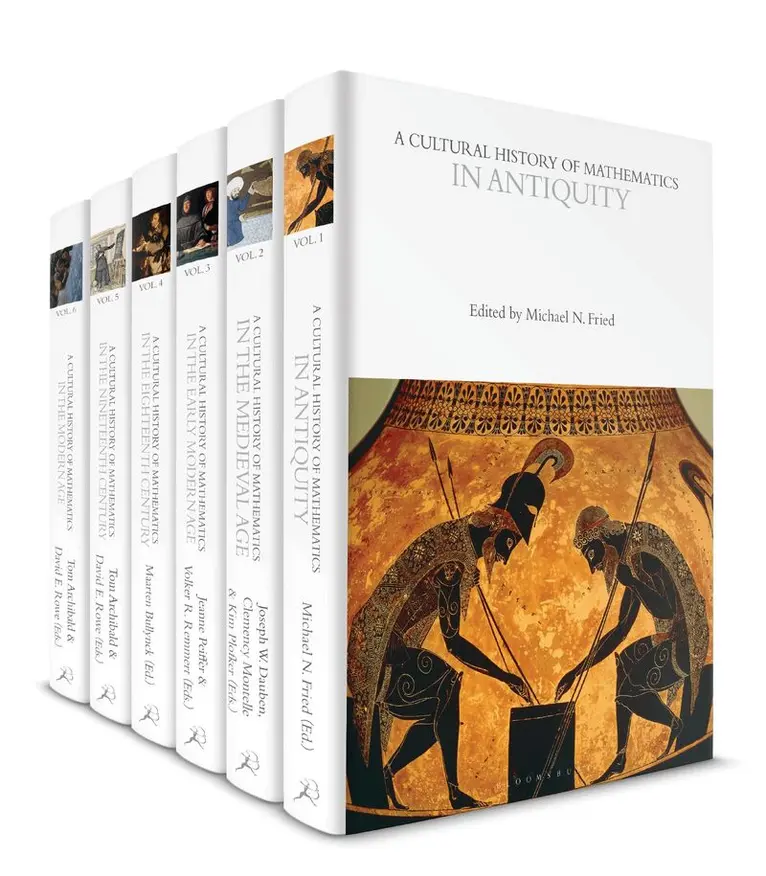
A Cultural History of Mathematics in the Nineteenth Century covers the period from 1800 to 1914, an era shaped by expanding European empires and vastly improved systems of transportation and communication. Widening access to schools improved mathematical literacy amongst the public, while the growth of universities encouraged the formation of national societies of professional mathematicians. Technological innovations, such as wireless telegraphy and aeronautics, spawned new fields in applied mathematics, just as specialists in pure mathematics produced a huge body of knowledge, which almost defied classification. But the international competition and cooperation which had spurred much mathematical progress across the Nineteenth Century was suspended by the onset of the Great War.The six volume set of the Cultural History of Mathematics explores the value and impact of mathematics in human culture from antiquity to the present. The themes covered in each volume are everyday numeracy; practice and profession; inventing mathematics; mathematics and worldviews; describing and understanding the world; mathematics and technological change; representing mathematics.Tom Archibald is Professor of Mathematics at Simon Fraser University, Burnaby, Canada. David E. Rowe is Professor Emeritus of the History of Mathematics at Johannes Gutenberg University Mainz, Germany.Volume 5 in the Cultural History of Mathematics set.General Editors: David E. Rowe, Johannes Gutenberg University Mainz, Germany, and Joseph W. Dauben, City University of New York, USA. - E-bokPDF, Engelska, 2014
1 884 kr
Läs direkt efter köp
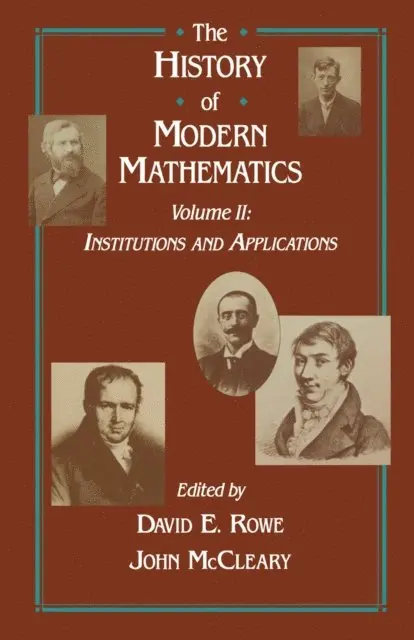
The History of Modern Mathematics, Volume II: Institutions and Applications focuses on the history and progress of methodologies, techniques, principles, and approaches involved in modern mathematics. The selection first elaborates on crystallographic symmetry concepts and group theory, case of potential theory and electrodynamics, and geometrization of analytical mechanics. Discussions focus on differential geometry and least action, intrinsic differential geometry, physically-motivated research in potential theory, introduction of potentials in electrodynamics, and group theory and crystallography in the mid-19th century. The text then elaborates on Schouten, Levi-Civita, and emergence of tensor calculus, modes and manners of applied mathematics, and pure and applied mathematics in divergent institutional settings in Germany. Topics include function of mathematics within technical colleges, evolvement of the notion of applied mathematics, rise of technical colleges, and an engineering approach to mechanics. The publication examines the transformation of numerical analysis by the computer; mathematics at the Berlin Technische Hochschule/Technische Universität; and contribution of mathematical societies to promoting applications of mathematics in Germany. The selection is a valuable reference for mathematicians and researchers interested in the history of modern mathematics.- Mathematical institutions in France and Germany and their role in promoting applications- Relationship between mathematics and physics- Foundations of mathematics- Complex variable theory, geometry and topology- Geometry in the spirit of Klein''s Erlangen program- Algebra and number theory- Formative influences on mathematics in the United States - Häftad, Engelska, 2013
230 kr
Skickas inom 5-8 vardagar
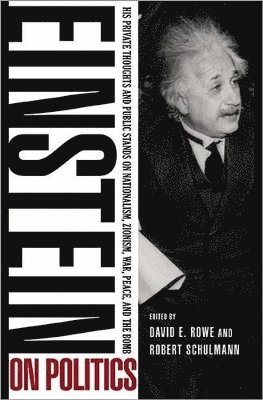
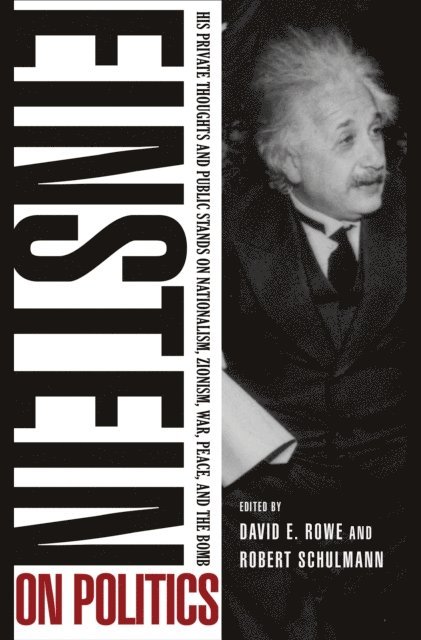
The most famous scientist of the twentieth century, Albert Einstein was also one of the century's most outspoken political activists. Deeply engaged with the events of his tumultuous times, from the two world wars and the Holocaust, to the atomic bomb and the Cold War, to the effort to establish a Jewish homeland, Einstein was a remarkably prolific political writer, someone who took courageous and often unpopular stands against nationalism, militarism, anti-Semitism, racism, and McCarthyism. In Einstein on Politics, leading Einstein scholars David Rowe and Robert Schulmann gather Einstein's most important public and private political writings and put them into historical context. The book reveals a little-known Einstein--not the ineffectual and naive idealist of popular imagination, but a principled, shrewd pragmatist whose stands on political issues reflected the depth of his humanity. Nothing encapsulates Einstein's profound involvement in twentieth-century politics like the atomic bomb. Here we read the former militant pacifist's 1939 letter to President Franklin D. Roosevelt warning that Germany might try to develop an atomic bomb.But the book also documents how Einstein tried to explain this action to Japanese pacifists after the United States used atomic weapons to destroy Hiroshima and Nagasaki, events that spurred Einstein to call for international control of nuclear technology. A vivid firsthand view of how one of the twentieth century's greatest minds responded to the greatest political challenges of his day, Einstein on Politics will forever change our picture of Einstein's public activism and private motivations. - Häftad, Engelska, 1994
1 483 kr
Skickas inom 5-8 vardagar
This volume traces the transformation of the United States from a mathematical backwater to a major presence during the quarter-century from 1876 to 1900. Presenting a detailed study of the major figures involved in this transformation, it focuses on the three most influential individuals - the British algebraist James Joseph Sylvester, the German standard-bearer Felix Klein, and the American mathematician Eliakim Hastings Moore - and on the principal institutions with which they were associated - the Johns Hopkins University, Gottingen University, and the University of Chicago. This book further analyzes the research traditions these men and their institutions represented, the impact they had on the second generation of American mathematical researchers, and the role of the American Mathematical Society in these developments.This is the first work ever written on the history of American mathematics during this period and one of the few books that examines the historical development of American mathematics from a wide perspective. By placing the development of American mathematics within the context of broader external factors affecting historical events, the authors show how the character of American research was decisively affected by the surrounding scientific, educational, and social contexts of the period. Aimed at a general mathematical audience and at historians of science, this book contains an abundance of unpublished archival material, numerous rare photographs, and an extensive bibliography. - Inbunden, Engelska, 2026
1 042 kr
Skickas inom 5-8 vardagar
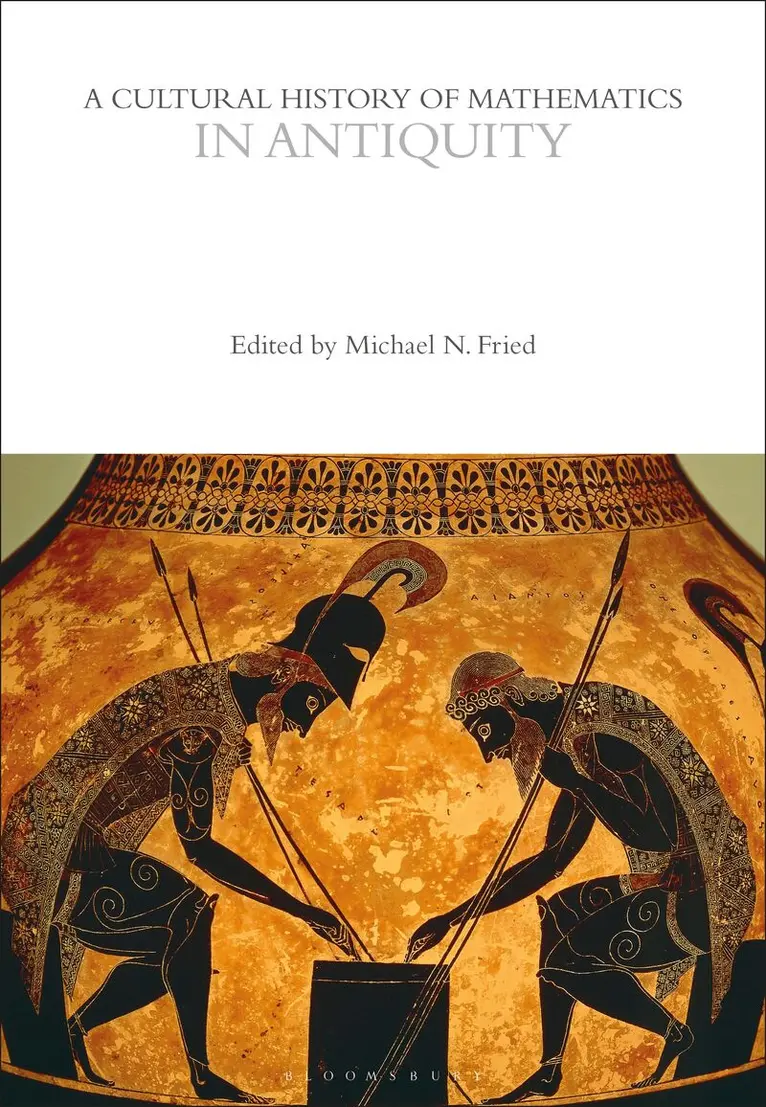
A Cultural History of Mathematics in Antiquity covers the period from 3000 BCE to 500 CE, exploring the great richness and diversity of mathematical thought and activity across the ancient world. Our modern notion of mathematics – and the word itself – was established by Greco-Roman culture. However, sophisticated forms of what we should call mathematics – number systems, ways of measurement, notation, and formulae – were developed millennia earlier by scribes in ancient Egypt, Mesopotamia, and Iraq. Mathematics proved just as invaluable in trade, taxation, astronomy, engineering, war, and agriculture in antiquity as it does now.The six volume set of the Cultural History of Mathematics explores the value and impact of mathematics in human culture from antiquity to the present. The themes covered in each volume are everyday numeracy; practice and profession; inventing mathematics; mathematics and worldviews; describing and understanding the world; mathematics and technological change; representing mathematics.Michael N. Fried is Associate Professor and Chair of the Program for Science and Technology Education in the School of Education at Ben-Gurion University of the Negev, Israel.Volume 1 in the Cultural History of Mathematics set.General Editors: David E. Rowe, Johannes Gutenberg University Mainz, Germany, and Joseph W. Dauben, City University of New York, USA. - Inbunden, Engelska, 2026
1 042 kr
Skickas inom 5-8 vardagar
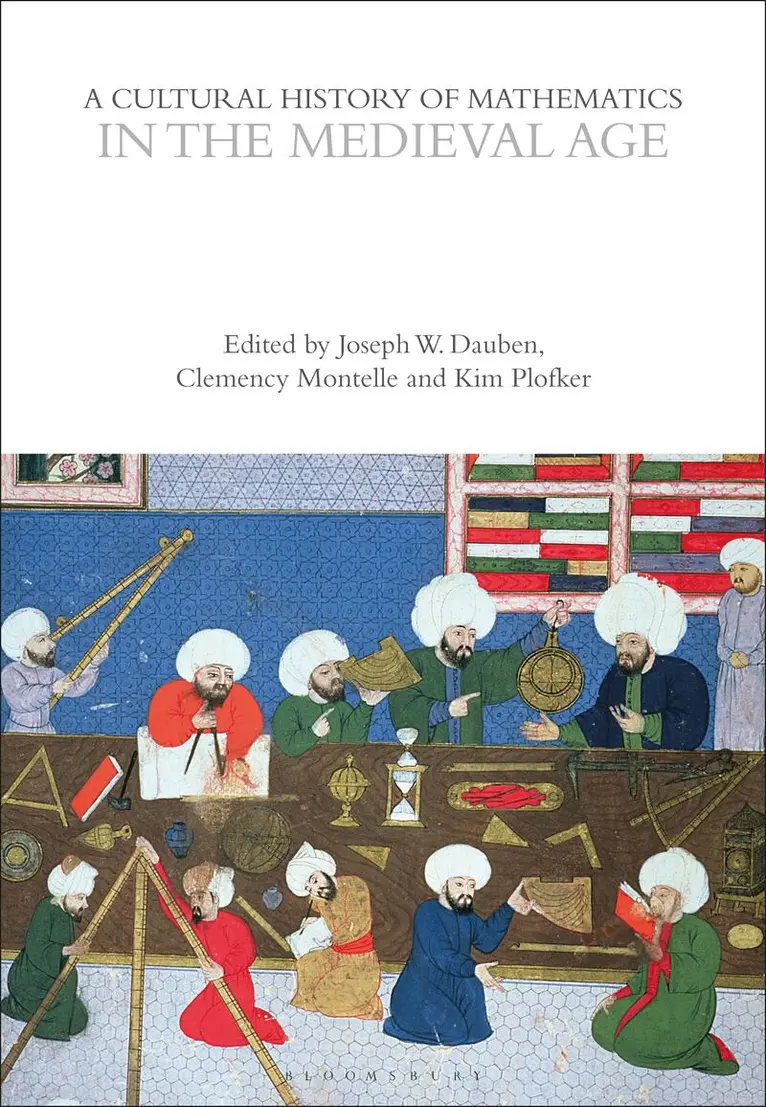
A Cultural History of Mathematics in the Medieval Age covers the period from 500 to 1450, focusing in particular on the innovations in East and South Asia and in Islamicate cultures. With the invention of algebra and the decimal place-value number system – as well as innovations in trigonometry, astronomy, and finance – medieval mathematics reenvisioned the science it inherited from antiquity and fundamentally transformed the world. The six volume set of the Cultural History of Mathematics explores the value and impact of mathematics in human culture from antiquity to the present. The themes covered in each volume are everyday numeracy; practice and profession; inventing mathematics; mathematics and worldviews; describing and understanding the world; mathematics and technological change; representing mathematics.Joseph W. Dauben is Distinguished Professor of History at the City University of New York, USA.Clemency Montelle is Professor of Mathematics at the University of Canterbury, New Zealand. Kim Plofker is Associate Professor of Mathematics at Union College, Schenectady, NY,USA. Volume 2 in the Cultural History of Mathematics set.General Editors: David E. Rowe, Johannes Gutenberg University Mainz, Germany, and Joseph W. Dauben, City University of New York, USA. - Inbunden, Engelska, 2026
1 037 kr
Skickas inom 5-8 vardagar
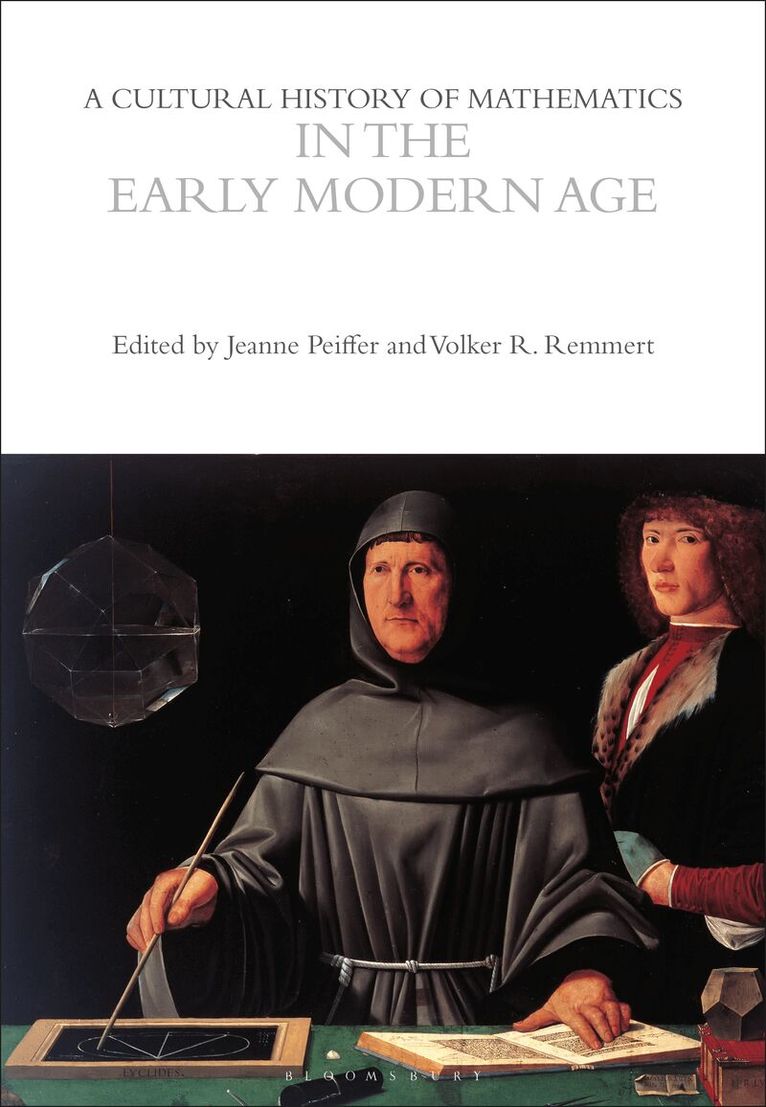
A Cultural History of Mathematics in the Early Modern Age covers the period from 1450 to 1687, a time marked by increasing interplay between science and society. Classical writing on science which had been lost and Arabic thinking which was new both percolated into the West, fertilizing new ideas and giving birth to what has been called the “Scientific Revolution”. From artisanal workshops to academic institutions, mathematicians thrived. And, with the development of symbolic algebra and infinitesimal calculus, mathematics became one of the major tools for describing and understanding the world.The six volume set of the Cultural History of Mathematics explores the value and impact of mathematics in human culture from antiquity to the present. The themes covered in each volume are everyday numeracy; practice and profession; inventing mathematics; mathematics and worldviews; describing and understanding the world; mathematics and technological change; representing mathematics.Jeanne Peiffer is Senior Scientist at the French National Centre for Scientific Research, affiliated to the Centre Alexandre-Koyré, Paris, France. Volker R. Remmert is Professor of History of Science at the University of Wuppertal, Germany.Volume 3 in the Cultural History of Mathematics set.General Editors: David E. Rowe, Johannes Gutenberg University Mainz, Germany, and Joseph W. Dauben, City University of New York, USA. - Inbunden, Engelska, 2026
1 042 kr
Skickas inom 5-8 vardagar
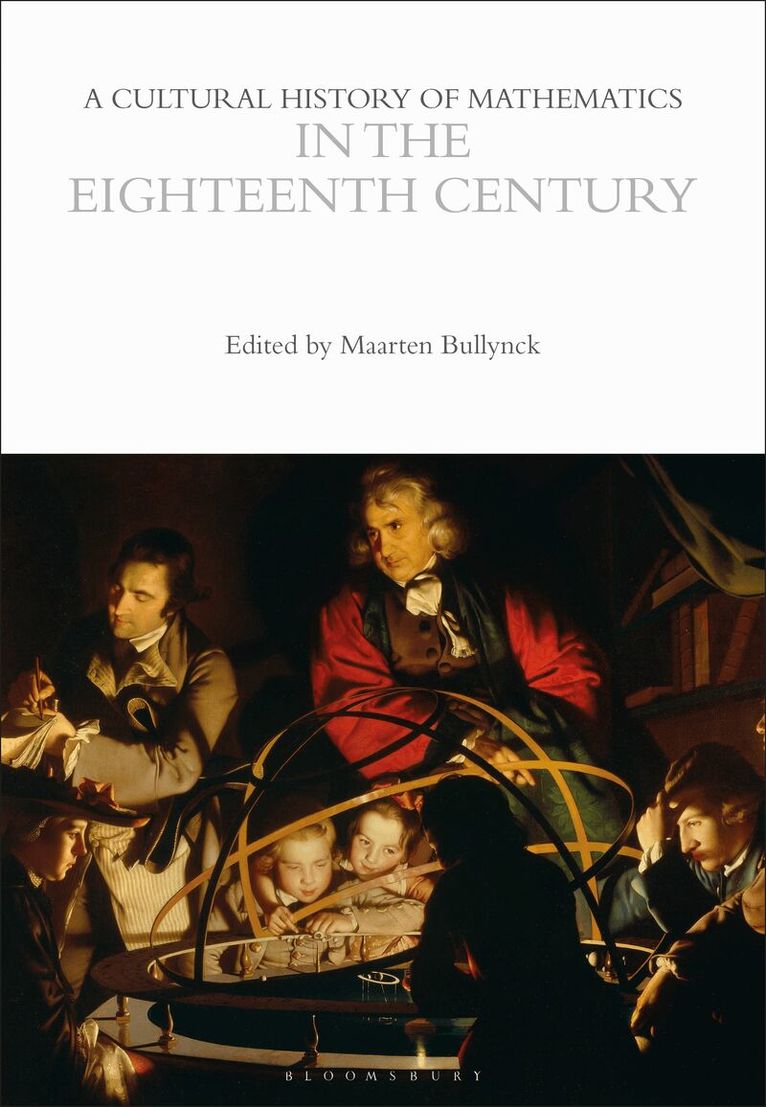
A Cultural History of Mathematics in the Eighteenth Century covers the period from 1687 to 1800. Advances in the use of calculus opened up both nature and society to mathematical analysis, while mathematical skills became increasingly valuable in ongoing power struggles between nation-states. This redefined the role of mathematics in many professional occupations, encouraging greater numerical literacy and better mathematical education. Building on advances in both analysis and physics, mathematics helped shape the ideas of the Enlightenment.The six volume set of the Cultural History of Mathematics explores the value and impact of mathematics in human culture from antiquity to the present. The themes covered in each volume are everyday numeracy; practice and profession; inventing mathematics; mathematics and worldviews; describing and understanding the world; mathematics and technological change; representing mathematics.Maarten Bullynckis Associate Professor of Mathematics and History of Science at the University of Paris 8, France.Volume 4 in the Cultural History of Mathematics set.General Editors: David E. Rowe, Johannes Gutenberg University Mainz, Germany, and Joseph W. Dauben, City University of New York, USA. - Inbunden, Engelska, 2026
1 042 kr
Skickas inom 5-8 vardagar
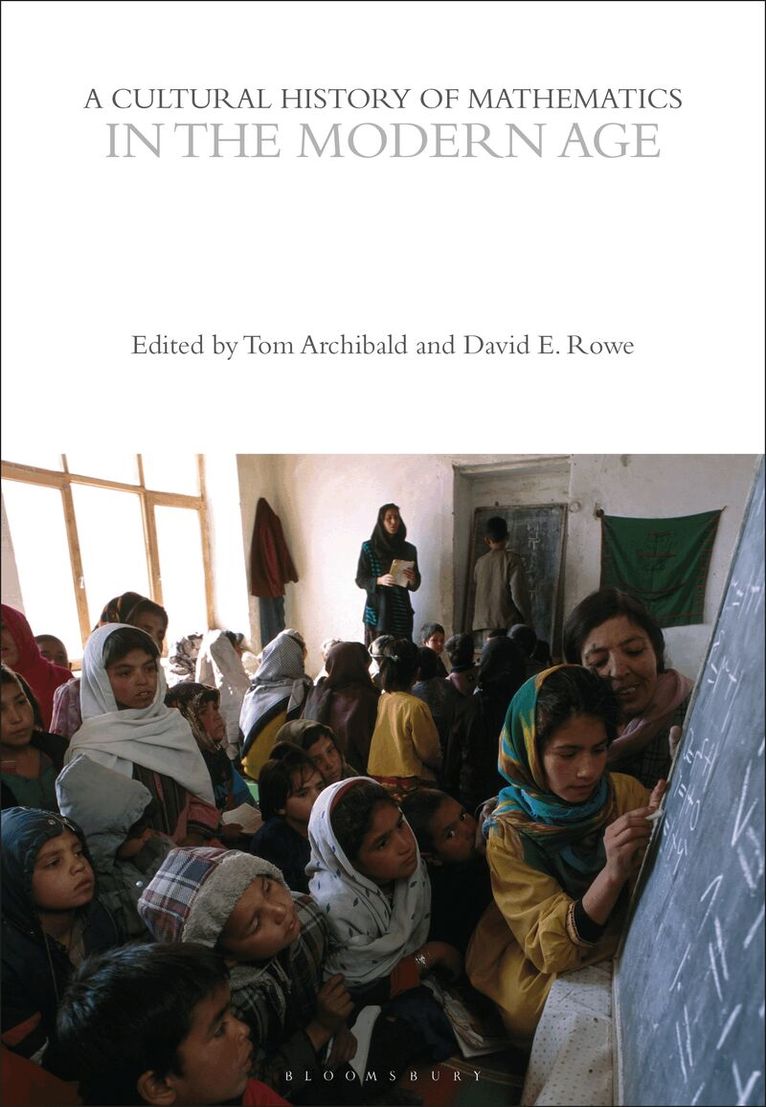
A Cultural History of Mathematics in the Modern Age covers the period from 1914 to today. Across the Twentieth Century, mathematics influenced two World Wars and the shape of modern warfare, nuclear technology, and the space age, while the certainties of mathematics were taken up by philosophers, artists, and writers. In the increasingly digital world of the Twenty-first Century, the exponential growth of mathematical knowledge has triggered major technological developments. Mathematical ideas now inform fundamental physical theories and technological models; even our social connectivity relies on mathematical algorithms.The six volume set of the Cultural History of Mathematics explores the value and impact of mathematics in human culture from antiquity to the present. The themes covered in each volume are everyday numeracy; practice and profession; inventing mathematics; mathematics and worldviews; describing and understanding the world; mathematics and technological change; representing mathematics.Tom Archibald is Professor of Mathematics at Simon Fraser University, Burnaby, Canada. David E. Rowe is Professor Emeritus of the History of Mathematics at Johannes Gutenberg University Mainz, Germany.Volume 6 in the Cultural History of Mathematics set.General Editors: David E. Rowe, Johannes Gutenberg University Mainz, Germany, and Joseph W. Dauben, City University of New York, USA. 7 328 kr
Skickas inom 5-8 vardagar
Numeracy has shaped human history as much as literacy: mathematics has enabled us to measure the cosmos, control the Earth, and create all technological change. A Cultural History of Mathematics presents the first comprehensive and global history from antiquity to today. The work is divided into 6 volumes, with each volume covering the same topics, so readers can either study a period/volume or follow a topic across history. The 6 volumes cover: Antiquity (c.3000 BCE-500 CE); the Medieval Age (500-1400); the Early Modern Age (1450-1687); the Eighteenth Century (1687-1800); the Nineteenth Century (1800-1914); the Modern Age (1914-present).Themes (and chapter titles) are: everyday numeracy; practice & profession; inventing mathematics; mathematics & worldviews; describing & understanding the world; mathematics & technological change; representing mathematics.The page extent for the pack is approximately 1536pp. Each volume opens with notes on contributors and an Introduction and concludes with notes, bibliography, and an index.Special introductory offer (valid up to 3 months after publication): £395 / $550 (full price: £440 / $610)The Cultural Histories SeriesA Cultural History of Mathematics is part of The Cultural Histories Series. Titles are available as hardcover sets for libraries needing just one subject or preferring a tangible reference for their shelves or as part of a fully-searchable digital library. The digital product is available to institutions by annual subscription or on perpetual access via www.bloomsburyculturalhistory.com. Individual volumes for academics and researchers interested in specific historical periods are also available in print or digitally via www.bloomsburycollections.com.- E-bokEngelska, 2013
324 kr
Läs direkt efter köp
The most famous scientist of the twentieth century, Albert Einstein was also one of the century''s most outspoken political activists. Deeply engaged with the events of his tumultuous times, from the two world wars and the Holocaust, to the atomic bomb and the Cold War, to the effort to establish a Jewish homeland, Einstein was a remarkably prolific political writer, someone who took courageous and often unpopular stands against nationalism, militarism, anti-Semitism, racism, and McCarthyism. In Einstein on Politics, leading Einstein scholars David Rowe and Robert Schulmann gather Einstein''s most important public and private political writings and put them into historical context. The book reveals a little-known Einstein--not the ineffectual and naïve idealist of popular imagination, but a principled, shrewd pragmatist whose stands on political issues reflected the depth of his humanity.Nothing encapsulates Einstein''s profound involvement in twentieth-century politics like the atomic bomb. Here we read the former militant pacifist''s 1939 letter to President Franklin D. Roosevelt warning that Germany might try to develop an atomic bomb. But the book also documents how Einstein tried to explain this action to Japanese pacifists after the United States used atomic weapons to destroy Hiroshima and Nagasaki, events that spurred Einstein to call for international control of nuclear technology.A vivid firsthand view of how one of the twentieth century''s greatest minds responded to the greatest political challenges of his day, Einstein on Politics will forever change our picture of Einstein''s public activism and private motivations.
- Häftad, Engelska, 2024
1 483 kr
Skickas inom 5-8 vardagar
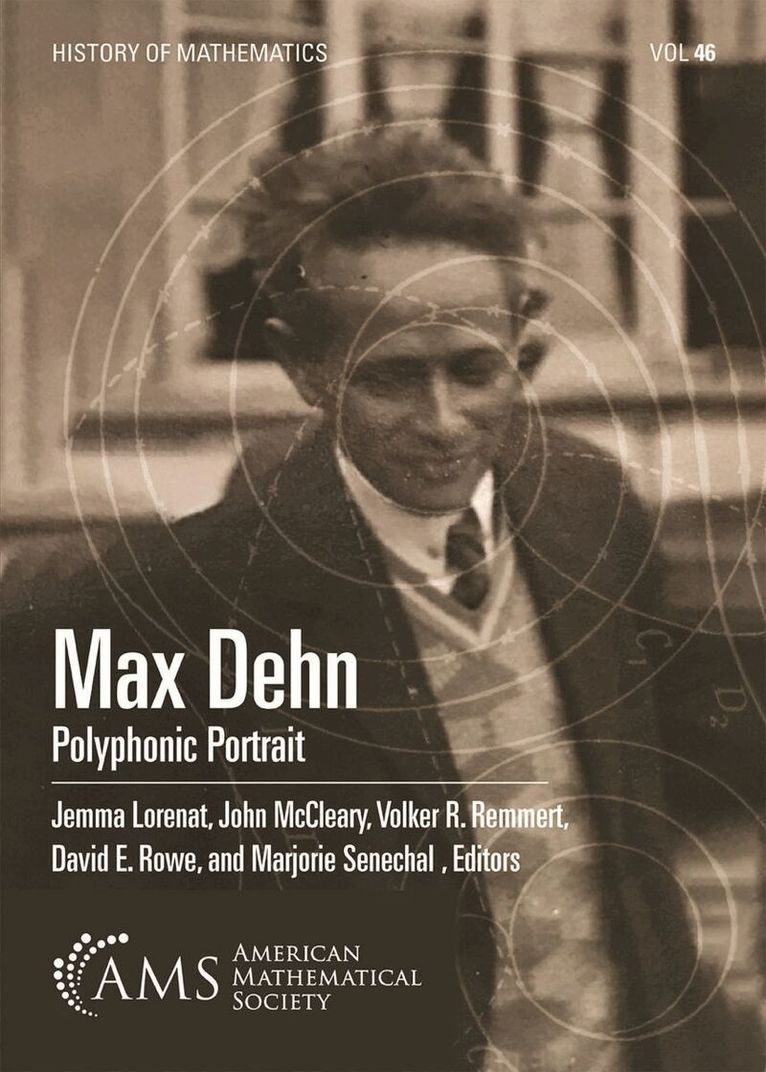
Max Dehn (1878-1952) is known to mathematicians today for his seminal contributions to geometry and topology-Dehn surgery, Dehn twists, the Dehn invariant, etc. He is also remembered as the first mathematician to solve one of Hilbert's famous problems. However, Dehn's influence as a scholar and teacher extended far beyond his mathematics. Dehn also lived a remarkable life, described in this book in three phases. The first phase focuses on his early career as one of David Hilbert's most gifted students. The second, after World War I, treats his time in Frankfurt where he led an intimate community of mathematicians in explorations of historical texts. The final phase, after 1938, concerns his flight from Nazi Germany to Scandinavia and eventually to the United States where, after various teaching experiences, the Dehns settled at iconic Black Mountain College.This book is a collection of essays written by mathematicians and historians of art and science. It treats Dehn's mathematics and its influence, his journeys, and his remarkable engagement in history and the arts. A great deal of the information found in this book has never before been published. - E-bokPDF, Engelska, 2014
789 kr
Läs direkt efter köp
The History of Modern Mathematics, Volume I: Ideas and their Reception documents the proceedings of the Symposium on the History of Modern Mathematics held at Vassar College in Poughkeepsie, New York on June 20-24, 1989. This book is concerned with the emergence and reception of major ideas in fields that range from foundations and set theory, algebra and invariant theory, and number theory to differential geometry, projective and algebraic geometry, line geometry, and transformation groups. Other topics include the theory of reception for the history of mathematics and British synthetic vs. French analytic styles of algebra in the early American Republic. The early geometrical works of Sophus Lie and Felix Klein, background to Gergonne''s treatment of duality, and algebraic geometry in the late 19th century are also elaborated. This volume is intended for students and researchers interested in developments in pure mathematics. - Del 14 - Einstein Studies
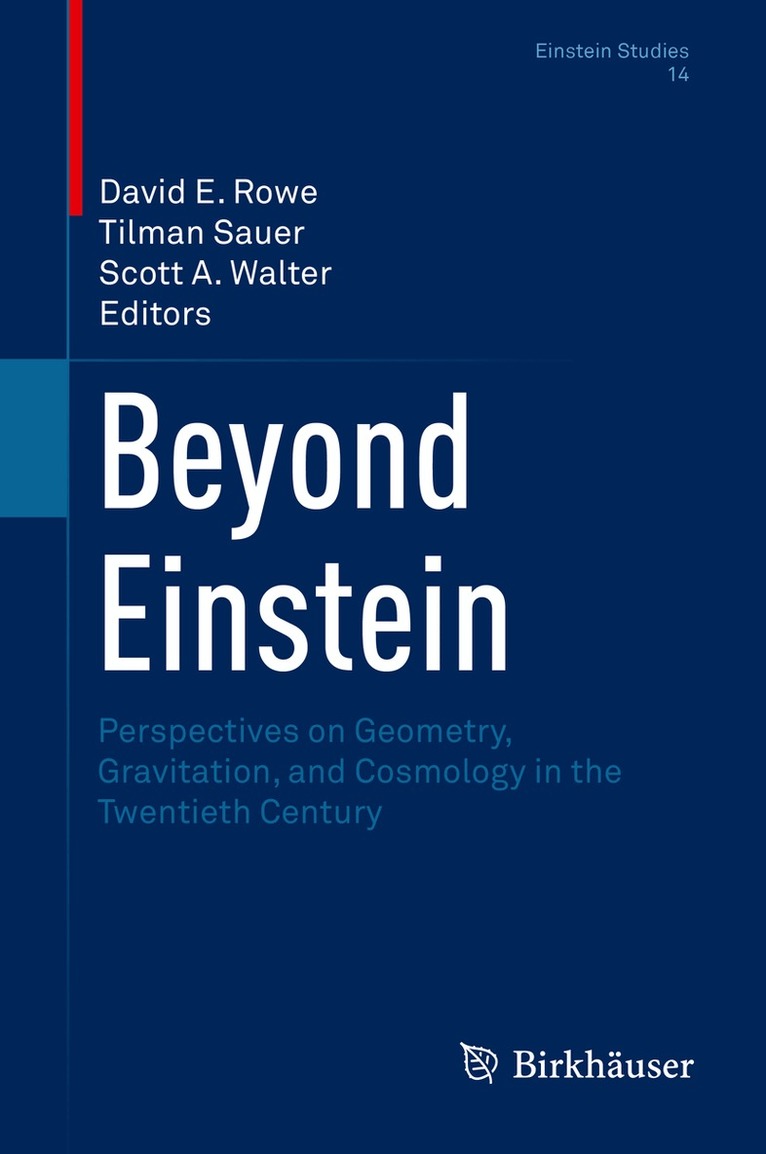
Beyond Einstein
Perspectives on Geometry, Gravitation, and Cosmology in the Twentieth Century
Inbunden, Engelska, 20181 674 kr
Skickas inom 10-15 vardagar
This volume explores the interplay between mathematical and physical research and the interactions of twentieth-century scientists within their academic communities. Beginning with Einstein’s general theory of relativity, the authors investigate a series of dramatic discoveries and rival theories in physics that influenced the development of modern differential geometry. Other sections recount the numerous methods, like the resurgence of Weyl geometry, used by geometers to solve the problems revealed by those same innovations in space-time physics. The effect of general relativity on astronomy is also addressed, namely how astronomers worked through new theories like inflationary cosmology and Phoenix models.By including recent historical research and coupling this work with many disciplines’ unique perspectives, this text provides a rich picture of general relativity and cosmology over the course of the twentieth century. The increased study on the documentation of Einstein’s early scientific work has clarified the history of science for that time and profoundly altered the way scientists view their own work, as this interdisciplinary volume demonstrates. - E-bokEngelska, 2018
2 065 kr
Läs direkt efter köp
This volume explores the interplay between mathematical and physical research and the interactions of twentieth-century scientists within their academic communities. Beginning with Einstein’s general theory of relativity, the authors investigate a series of dramatic discoveries and rival theories in physics that influenced the development of modern differential geometry. Other sections recount the numerous methods, like the resurgence of Weyl geometry, used by geometers to solve the problems revealed by those same innovations in space-time physics. The effect of general relativity on astronomy is also addressed, namely how astronomers worked through new theories like inflationary cosmology and Phoenix models.
By including recent historical research and coupling this work with many disciplines’ unique perspectives, this text provides a rich picture of general relativity and cosmology over the course of the twentieth century. The increased study on the documentation of Einstein’s early scientific work has clarified the history of science for that time and profoundly altered the way scientists view their own work, as this interdisciplinary volume demonstrates.
- Häftad, Engelska, 2019
1 674 kr
Skickas inom 10-15 vardagar
This volume explores the interplay between mathematical and physical research and the interactions of twentieth-century scientists within their academic communities. Beginning with Einstein’s general theory of relativity, the authors investigate a series of dramatic discoveries and rival theories in physics that influenced the development of modern differential geometry. Other sections recount the numerous methods, like the resurgence of Weyl geometry, used by geometers to solve the problems revealed by those same innovations in space-time physics. The effect of general relativity on astronomy is also addressed, namely how astronomers worked through new theories like inflationary cosmology and Phoenix models.By including recent historical research and coupling this work with many disciplines’ unique perspectives, this text provides a rich picture of general relativity and cosmology over the course of the twentieth century. The increased study on the documentation of Einstein’s early scientific work has clarified the history of science for that time and profoundly altered the way scientists view their own work, as this interdisciplinary volume demonstrates. - Häftad, Engelska, 2018
1 722 kr
Skickas inom 10-15 vardagar
Historian David E. Rowe captures the rich tapestry of mathematical creativity in this collection of essays from the “Years Ago” column of The Mathematical Intelligencer. With topics ranging from ancient Greek mathematics to modern relativistic cosmology, this collection conveys the impetus and spirit of Rowe’s various and many-faceted contributions to the history of mathematics. Centered on the Göttingen mathematical tradition, these stories illuminate important facets of mathematical activity often overlooked in other accounts. Six sections place the essays in chronological and thematic order, beginning with new introductions that contextualize each section. The essays that follow recount episodes relating to the section’s overall theme. All of the essays in this collection, with the exception of two, appeared over the course of more than 30 years in The Mathematical Intelligencer. Based largely on archival and primary sources, these vignettes offer unusual insights into behind-the-scenes events. Taken together, they aim to show how Göttingen managed to attract an extraordinary array of talented individuals, several of whom contributed to the development of a new mathematical culture during the first decades of the twentieth century. - Häftad, Engelska, 2020
362 kr
Skickas inom 10-15 vardagar
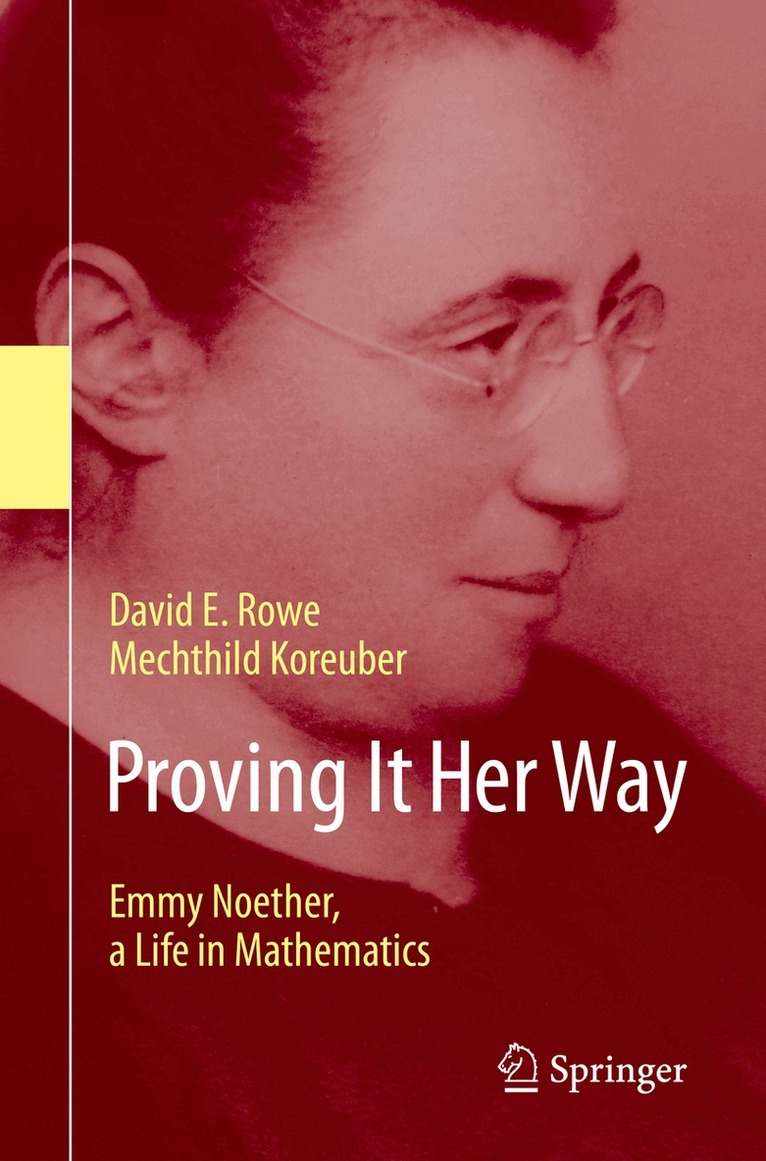
The name Emmy Noether is one of the most celebrated in the history of mathematics. A brilliant algebraist and iconic figure for women in modern science, Noether exerted a strong influence on the younger mathematicians of her time and long thereafter; today, she is known worldwide as the "mother of modern algebra." Drawing on original archival material and recent research, this book follows Emmy Noether’s career from her early years in Erlangen up until her tragic death in the United States. After solving a major outstanding problem in Einstein’s theory of relativity, she was finally able to join the Göttingen faculty in 1919. Proving It Her Way offers a new perspective on an extraordinary career, first, by focusing on important figures in Noether’s life and, second, by showing how she selflessly promoted the careers of several other talented individuals. By exploring her mathematical world, it aims to convey the personality and impact of a remarkable mathematician who literally changed the face of modern mathematics, despite the fact that, as a woman, she never held a regular professorship. Written for a general audience, this study uncovers the human dimensions of Noether’s key relationships with a younger generation of mathematicians. Thematically, the authors took inspiration from their cooperation with the ensemble portraittheater Vienna in producing the play "Diving into Math with Emmy Noether." Four of the young mathematicians portrayed in Proving It Her Way – B.L. van der Waerden, Pavel Alexandrov, Helmut Hasse, and Olga Taussky – also appear in "Diving into Math." - E-bokPDF, Engelska, 2020
479 kr
Läs direkt efter köp
The name Emmy Noether is one of the most celebrated in the history of mathematics. A brilliant algebraist and iconic figure for women in modern science, Noether exerted a strong influence on the younger mathematicians of her time and long thereafter; today, she is known worldwide as the "mother of modern algebra."Drawing on original archival material and recent research, this book follows Emmy Noether’s career from her early years in Erlangen up until her tragic death in the United States. After solving a major outstanding problem in Einstein’s theory of relativity, she was finally able to join the Göttingen faculty in 1919. Proving It Her Way offers a new perspective on an extraordinary career, first, by focusing on important figures in Noether’s life and, second, by showing how she selflessly promoted the careers of several other talented individuals. By exploring her mathematical world, it aims to convey the personality and impact of a remarkable mathematician who literally changed the face of modern mathematics, despite the fact that, as a woman, she never held a regular professorship.
Written for a general audience, this study uncovers the human dimensions of Noether’s key relationships with a younger generation of mathematicians. Thematically, the authors took inspiration from their cooperation with the ensemble portraittheater Vienna in producing the play "Diving into Math with Emmy Noether." Four of the young mathematicians portrayed in Proving It Her Way – B.L. van der Waerden, Pavel Alexandrov, Helmut Hasse, and Olga Taussky – also appear in "Diving into Math."
- Inbunden, Engelska, 2021
1 445 kr
Skickas inom 10-15 vardagar
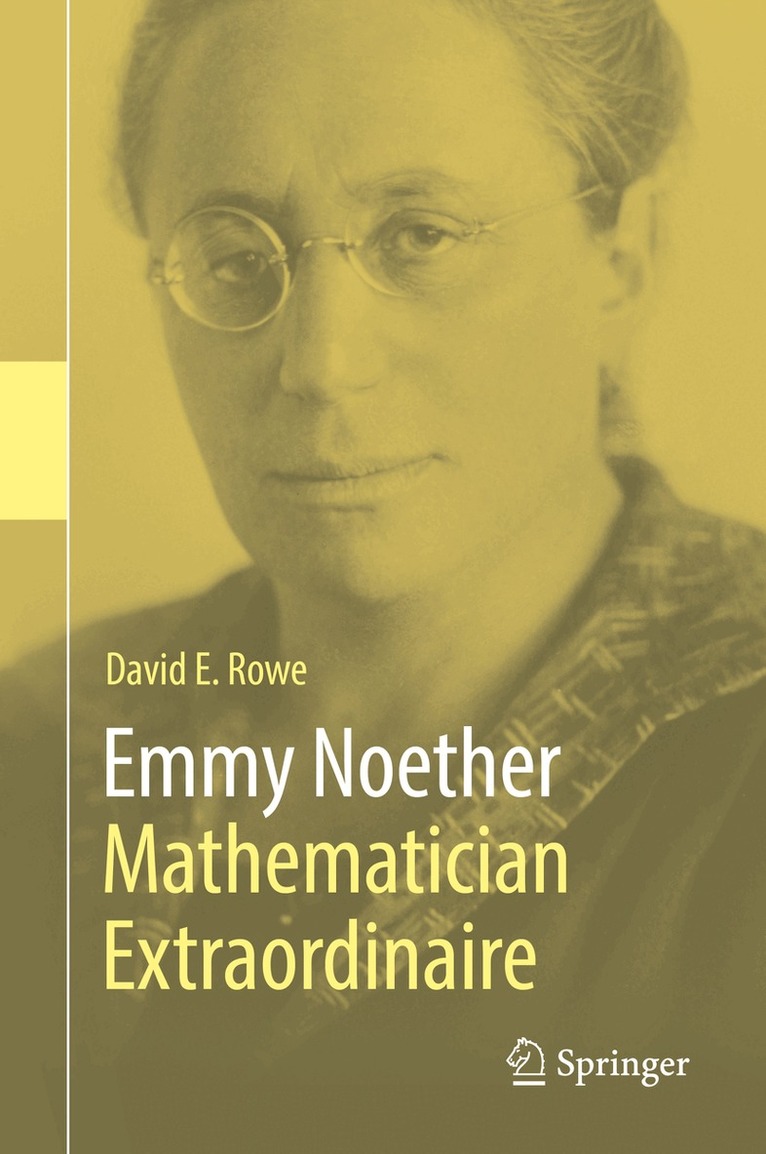
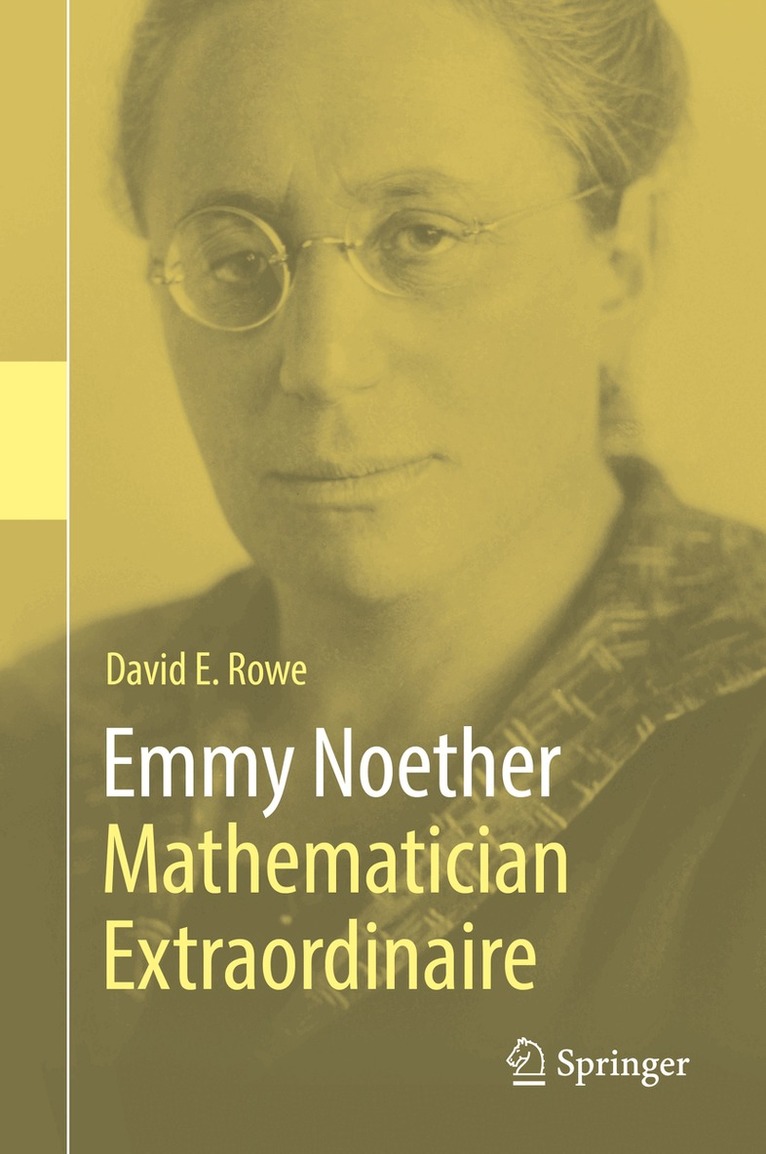
Although she was famous as the "mother of modern algebra," Emmy Noether’s life and work have never been the subject of an authoritative scientific biography. Emmy Noether – Mathematician Extraordinaire represents the most comprehensive study of this singularly important mathematician to date. Focusing on key turning points, it aims to provide an overall interpretation of Noether’s intellectual development while offering a new assessment of her role in transforming the mathematics of the twentieth century.Hermann Weyl, her colleague before both fled to the United States in 1933, fully recognized that Noether’s dynamic school was the very heart and soul of the famous Göttingen community. Beyond her immediate circle of students, Emmy Noether’s lectures and seminars drew talented mathematicians from all over the world. Four of the most important were B.L. van der Waerden, Pavel Alexandrov, Helmut Hasse, and Olga Taussky. Noether’s classic papers on ideal theory inspiredvan der Waerden to recast his research in algebraic geometry. Her lectures on group theory motivated Alexandrov to develop links between point set topology and combinatorial methods. Noether’s vision for a new approach to algebraic number theory gave Hasse the impetus to pursue a line of research that led to the Brauer–Hasse–Noether Theorem, whereas her abstract style clashed with Taussky’s approach to classical class field theory during a difficult time when both were trying to find their footing in a foreign country.Although similar to Proving It Her Way: Emmy Noether, a Life in Mathematics, this lengthier study addresses mathematically minded readers. Thus, it presents a detailed analysis of Emmy Noether’s work with Hilbert and Klein on mathematical problems connected with Einstein’s theory of relativity. These efforts culminated with her famous paper "Invariant Variational Problems," published one year before she joined the Göttingen faculty in 1919. - E-bokPDF, Engelska, 2021
1 736 kr
Läs direkt efter köp
Although she was famous as the "mother of modern algebra," Emmy Noether’s life and work have never been the subject of an authoritative scientific biography. Emmy Noether – Mathematician Extraordinaire represents the most comprehensive study of this singularly important mathematician to date. Focusing on key turning points, it aims to provide an overall interpretation of Noether’s intellectual development while offering a new assessment of her role in transforming the mathematics of the twentieth century.Hermann Weyl, her colleague before both fled to the United States in 1933, fully recognized that Noether’s dynamic school was the very heart and soul of the famous Göttingen community. Beyond her immediate circle of students, Emmy Noether’s lectures and seminars drew talented mathematicians from all over the world. Four of the most important were B.L. van der Waerden, Pavel Alexandrov, Helmut Hasse, and Olga Taussky. Noether’s classic papers on ideal theory inspiredvan der Waerden to recast his research in algebraic geometry. Her lectures on group theory motivated Alexandrov to develop links between point set topology and combinatorial methods. Noether’s vision for a new approach to algebraic number theory gave Hasse the impetus to pursue a line of research that led to the Brauer–Hasse–Noether Theorem, whereas her abstract style clashed with Taussky’s approach to classical class field theory during a difficult time when both were trying to find their footing in a foreign country.
Although similar to Proving It Her Way: Emmy Noether, a Life in Mathematics, this lengthier study addresses mathematically minded readers. Thus, it presents a detailed analysis of Emmy Noether’s work with Hilbert and Klein on mathematical problems connected with Einstein’s theory of relativity. These efforts culminated with her famous paper "Invariant Variational Problems," published one year before she joined the Göttingen faculty in 1919.
- Häftad, Engelska, 2022
1 210 kr
Skickas inom 5-8 vardagar
Although she was famous as the "mother of modern algebra," Emmy Noether’s life and work have never been the subject of an authoritative scientific biography. Emmy Noether – Mathematician Extraordinaire represents the most comprehensive study of this singularly important mathematician to date. Focusing on key turning points, it aims to provide an overall interpretation of Noether’s intellectual development while offering a new assessment of her role in transforming the mathematics of the twentieth century.Hermann Weyl, her colleague before both fled to the United States in 1933, fully recognized that Noether’s dynamic school was the very heart and soul of the famous Göttingen community. Beyond her immediate circle of students, Emmy Noether’s lectures and seminars drew talented mathematicians from all over the world. Four of the most important were B.L. van der Waerden, Pavel Alexandrov, Helmut Hasse, and Olga Taussky. Noether’s classic papers on ideal theory inspiredvan der Waerden to recast his research in algebraic geometry. Her lectures on group theory motivated Alexandrov to develop links between point set topology and combinatorial methods. Noether’s vision for a new approach to algebraic number theory gave Hasse the impetus to pursue a line of research that led to the Brauer–Hasse–Noether Theorem, whereas her abstract style clashed with Taussky’s approach to classical class field theory during a difficult time when both were trying to find their footing in a foreign country.Although similar to Proving It Her Way: Emmy Noether, a Life in Mathematics, this lengthier study addresses mathematically minded readers. Thus, it presents a detailed analysis of Emmy Noether’s work with Hilbert and Klein on mathematical problems connected with Einstein’s theory of relativity. These efforts culminated with her famous paper "Invariant Variational Problems," published one year before she joined the Göttingen faculty in 1919. - Inbunden, Engelska, 2025
892 kr
Skickas inom 10-15 vardagar
This book presents a historical account of Felix Klein's "Comparative Reflections on Recent Research in Geometry" (1872), better known as his "Erlangen Program.” Originally conceived and written when Klein was collaborating with Sophus Lie, this bold essay initially made little impression on contemporary researchers. Decades later, however, it eventually became a famous classic. Eminent mathematicians hailed Klein’s main message – the role of invariants of transformation groups in geometry – as presaging major developments in mathematics and physics. The first part of this book focuses on the prehistory surrounding Klein’s “Erlangen Program,” stressing the motivations that led Klein to write it. The core of the book (Part II) then presents a new translation of Klein's original text, followed by detailed textual analysis aimed at guiding the reader through its rather terse and opaque prose. Part III deals with its complicated reception history, treated in four periods spanning the years from 1872 to 1930. This culminated during Klein’s lifetime with his efforts to promote the "Erlangen Program” as a framework for interpreting Einstein’s theory of relativity. After his death in 1925, the viability of this framework became a contentious issue among leading differential geometers. Part IV looks back on the transformations in mathematics that led to a modernized interpretation of Klein’s message. The book also explores in depth how the growing fame of the “Erlangen Program” undermined Klein’s friendship with Sophus Lie, leading to a dramatic public break between them in 1893.Beyond the "Erlangen Program” itself, this book deals with many of Felix Klein’s other works. As an introduction to a largely forgotten world of ideas, this study will appeal not only to experts but also to graduate students and all those with a serious interest in the history of modern mathematics. - E-bokPDF, Engelska, 2025
1 116 kr
Läs direkt efter köp
This book presents a historical account of Felix Klein''s "Comparative Reflections on Recent Research in Geometry" (1872), better known as his "Erlangen Program.” Originally conceived and written when Klein was collaborating with Sophus Lie, this bold essay initially made little impression on contemporary researchers. Decades later, however, it eventually became a famous classic. Eminent mathematicians hailed Klein’s main message – the role of invariants of transformation groups in geometry – as presaging major developments in mathematics and physics.
The first part of this book focuses on the prehistory surrounding Klein’s “Erlangen Program,” stressing the motivations that led Klein to write it. The core of the book (Part II) then presents a new translation of Klein''s original text, followed by detailed textual analysis aimed at guiding the reader through its rather terse and opaque prose. Part III deals with its complicated reception history, treated in four periods spanning the years from 1872 to 1930. This culminated during Klein’s lifetime with his efforts to promote the "Erlangen Program” as a framework for interpreting Einstein’s theory of relativity. After his death in 1925, the viability of this framework became a contentious issue among leading differential geometers. Part IV looks back on the transformations in mathematics that led to a modernized interpretation of Klein’s message. The book also explores in depth how the growing fame of the “Erlangen Program” undermined Klein’s friendship with Sophus Lie, leading to a dramatic public break between them in 1893.
Beyond the "Erlangen Program” itself, this book deals with many of Felix Klein’s other works. As an introduction to a largely forgotten world of ideas, this study will appeal not only to experts but also to graduate students and all those with a serious interest in the history of modern mathematics.
- Häftad, Engelska, 2026
892 kr
Skickas inom 10-15 vardagar
This book presents a historical account of Felix Klein's "Comparative Reflections on Recent Research in Geometry" (1872), better known as his "Erlangen Program.” Originally conceived and written when Klein was collaborating with Sophus Lie, this bold essay initially made little impression on contemporary researchers. Decades later, however, it eventually became a famous classic. Eminent mathematicians hailed Klein’s main message – the role of invariants of transformation groups in geometry – as presaging major developments in mathematics and physics. The first part of this book focuses on the prehistory surrounding Klein’s “Erlangen Program,” stressing the motivations that led Klein to write it. The core of the book (Part II) then presents a new translation of Klein's original text, followed by detailed textual analysis aimed at guiding the reader through its rather terse and opaque prose. Part III deals with its complicated reception history, treated in four periods spanning the years from 1872 to 1930. This culminated during Klein’s lifetime with his efforts to promote the "Erlangen Program” as a framework for interpreting Einstein’s theory of relativity. After his death in 1925, the viability of this framework became a contentious issue among leading differential geometers. Part IV looks back on the transformations in mathematics that led to a modernized interpretation of Klein’s message. The book also explores in depth how the growing fame of the “Erlangen Program” undermined Klein’s friendship with Sophus Lie, leading to a dramatic public break between them in 1893.Beyond the "Erlangen Program” itself, this book deals with many of Felix Klein’s other works. As an introduction to a largely forgotten world of ideas, this study will appeal not only to experts but also to graduate students and all those with a serious interest in the history of modern mathematics. - E-bokPDF, Engelska, 2026
762 kr
Läs direkt efter köp
This book provides the first detailed account of Riemann's life along with analysis of his major works and their reception. These themes are presented in a chronological flow that takes into account numerous others who played important roles in Riemann's brief life and career. Among the more prominent figures who influenced Riemann's work were Gauss, Dirichlet, and Jacobi, but several others, including the physicist Wilhelm Weber, also played a major part. Special attention is given to the last four years of Riemann's life, which he and his wife Elise mainly spent in Italy, where he died. Her role in supporting Richard Dedekind and Heinrich Weber, the editors of Riemann's posthumous papers, is one of the many new aspects covered in this book.Drawing on family letters and other archival documents, the biographical chapters bring the reader into Riemann's often tumultuous personal life. Money and other mundane problems were a constant cause of concern, but even more serious were the health problems he suffered all his life. Socially awkward, he often withdrew from his peers while seeking solace in his work or that of others. Riemann was a voracious reader, but the present account offers a detailed picture of what he read and when. Plenty of mysteries still remain, but here for the first time one gains a sense of the extraordinary intellectual adventure that dominated Riemann's life.To help orient the reader, the book begins with an Introduction describing the landscape of German mathematics before Riemann arrived on the scene and ending with a chronological list of key events in his life. The remainder of the book has a three-part structure. Part I tells the story of Riemann's life in four chapters, corresponding to four distinct phases in his career. Part II delves into his better-known mathematical works, treated at first chronologically in Chapters 5 to 8. These are followed by an examination of Riemann's work on physical topics in Chapter 9, and closing with Chapter 10, which discusses Gaussian themes and their connections with Riemann's work. Part III deals with aspects of Riemann's legacy in two chapters. Chapter 11 traces the activities of seven important pupils and followers of Riemann up until the early 1880s. Chapter 12 then picks up the story told in the final section of Chapter 4, which describes the initial plans to publish Riemann's Collected Works. How that project was eventually brought to fruition by Dedekind and Weber forms part of the remarkable story of their lifelong friendship.The biographical parts of this book – Chapters 1 to 4 and 12 – are intended for the general reader. They are not totally "e;jargon-free"e;, but will interest anyone with a taste for intellectual history. The remaining parts of the book aim to describe Riemann's work in the language of his time, which often means quoting him directly. A short section on "e;Reading Riemann"e; appears at the end of Chapter 5. For a serious historical account, one should always keep the author's voice in mind, even if, as in Riemann's case, the meaning of his words was at times unclear. - Inbunden, Engelska, 2015
1 113 kr
Skickas inom 10-15 vardagar
Joseph W. Dauben, a leading authority on the history of mathematics in Europe, China, and North America, has played a pivotal role in promoting international scholarship over the last forty years. This Festschrift volume, showcasing recent historical research by leading experts on three continents, offers a global perspective on important themes in this field. - E-bokPDF, Engelska, 2015
1 427 kr
Läs direkt efter köp
Joseph W. Dauben, a leading authority on the history of mathematics in Europe, China, and North America, has played a pivotal role in promoting international scholarship over the last forty years. This Festschrift volume, showcasing recent historical research by leading experts on three continents, offers a global perspective on important themes in this field. - Häftad, Engelska, 2016
1 113 kr
Skickas inom 10-15 vardagar
Joseph W. Dauben, a leading authority on the history of mathematics in Europe, China, and North America, has played a pivotal role in promoting international scholarship over the last forty years. This Festschrift volume, showcasing recent historical research by leading experts on three continents, offers a global perspective on important themes in this field.