Tor Egil Førland - Böcker
Visar alla böcker från författaren Tor Egil Førland. Handla med fri frakt och snabb leverans.
3 produkter
3 produkter
673 kr
Skickas inom 10-15 vardagar
Bringing sophisticated philosophy to bear on real-life historiography, Values, Objectivity, and Explanation in Historiography rekindles and invigorates the debate on two perennials in the theory and methodology of history. One is the tension between historians' values and the ideal—or illusion—of objective historiography. The other is historical explanation.The point of departure for the treatment of values and objectivity is an exceptionally heated debate on Cold War historiography in Denmark, involving not only historians but also the political parties, the national newspapers, and the courts. The in-depth analysis that follows concludes that historians can produce accounts that deserve the label "objective," even though their descriptions are tinged by ineluctable epistemic instability. A separate chapter dissects the postmodern notion of situated truths.The second part of the book proffers a new take on historical explanation. It is based on the notion of the ideal explanatory text, which allows for not only causal—including intentional—but also nomological, structural, and functional explanations. The approach, which can accommodate narrative explanations driven by causal plots, is ecumenical but not all-encompassing. Emergent social properties and supernatural entities are excluded from the ideal explanatory text, making scientific historiography methodologically individualistic—albeit with room for explanations at higher levels when pragmatically justified—and atheist.
2 297 kr
Skickas inom 10-15 vardagar
Bringing sophisticated philosophy to bear on real-life historiography, Values, Objectivity, and Explanation in Historiography rekindles and invigorates the debate on two perennials in the theory and methodology of history. One is the tension between historians' values and the ideal—or illusion—of objective historiography. The other is historical explanation.The point of departure for the treatment of values and objectivity is an exceptionally heated debate on Cold War historiography in Denmark, involving not only historians but also the political parties, the national newspapers, and the courts. The in-depth analysis that follows concludes that historians can produce accounts that deserve the label "objective," even though their descriptions are tinged by ineluctable epistemic instability. A separate chapter dissects the postmodern notion of situated truths.The second part of the book proffers a new take on historical explanation. It is based on the notion of the ideal explanatory text, which allows for not only causal—including intentional—but also nomological, structural, and functional explanations. The approach, which can accommodate narrative explanations driven by causal plots, is ecumenical but not all-encompassing. Emergent social properties and supernatural entities are excluded from the ideal explanatory text, making scientific historiography methodologically individualistic—albeit with room for explanations at higher levels when pragmatically justified—and atheist.The Open Access version of this book, available at http://www.taylorfrancis.com, has been made available under a Creative Commons Attribution-Non-Commercial-No Derivative License.
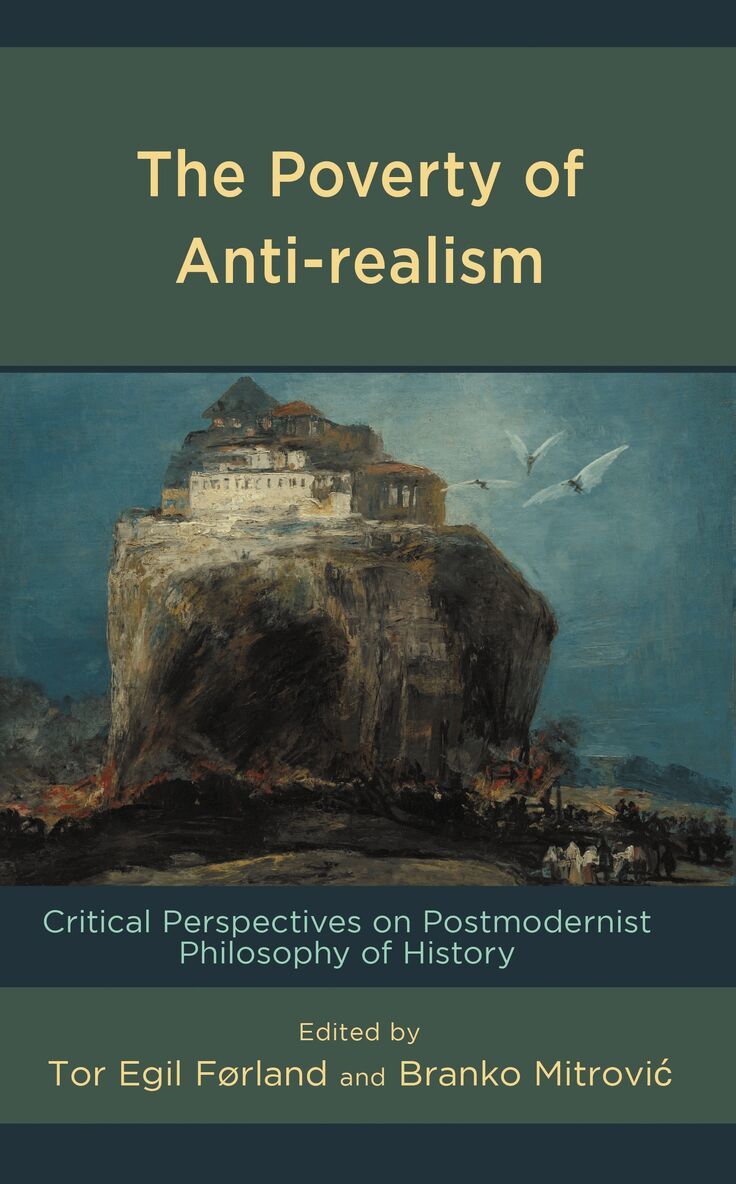
Poverty of Anti-realism
Critical Perspectives on Postmodernist Philosophy of History
Inbunden, Engelska, 2023
1 076 kr
Skickas inom 10-15 vardagar
From the global geopolitical arena to the smart city, control over knowledge—particularly over data and intellectual property—has become a key battleground for the exercise of economic and political power. For companies and governments alike, control over knowledge—what scholar Susan Strange calls the knowledge structure—has become a goal unto itself.The rising dominance of the knowledge structure is leading to a massive redistribution of power, including from individuals to companies and states. Strong intellectual property rights have concentrated economic benefits in a smaller number of hands, while the “internet of things” is reshaping basic notions of property, ownership, and control. In the scramble to create and control data and intellectual property, governments and companies alike are engaging in ever-more surveillance.This open access book is a guide to and analysis of these changes, and of the emerging phenomenon of the knowledge-driven society. It highlights how the pursuit of the control over knowledge has become its own ideology, with its own set of experts drawn from those with the ability to collect and manipulate digital data. Haggart and Tusikov propose a workable path forward—knowledge decommodification—to ensure that our new knowledge is not treated simply as a commodity to be bought and sold, but as a way to meet the needs of the individuals and communities that create this knowledge in the first place.The ebook editions of this book are available open access under a CC BY-NC-ND 4.0 licence on bloomsburycollections.com. Open access was funded by Social Sciences and Humanities Research Council of Canada (SSHRC)