Branko Mitrović - Böcker
Visar alla böcker från författaren Branko Mitrović. Handla med fri frakt och snabb leverans.
7 produkter
7 produkter
Rage and Denials
Collectivist Philosophy, Politics, and Art Historiography, 1890–1947
Inbunden, Engelska, 2015
1 051 kr
Skickas inom 7-10 vardagar
In Rage and Denials, philosopher and architectural historian Branko Mitrović examines in detail the historiography of art and architecture in the twentieth century, with a focus on the debate between the understanding of society as a set of individuals and the understanding of individuals as mere manifestations of the collectives to which they belong. The conflict between these two views constitutes a core methodological problem of the philosophy of history and was intensely debated by twentieth-century art historians—one of the few art-historical debates with a wide range of implications for the entire field of the humanities. Mitrović presents the most significant positions and arguments in this dispute as they were articulated in the art- and architectural-historical discourse as well as in the wider context of the historiography and philosophy of history of the era. He explores the philosophical content of scholarship engaged in these debates, examining the authors’ positions, the intricacies and implications of their arguments, and the rise and dominance of collectivist art historiography after the 1890s. He centers his study on the key art-historical figures Erwin Panofsky, Ernst Gombrich, and Hans Sedlmayr while drawing attention to the writings of the less well known Vasiliy Pavlovich Zubov. Rage and Denials offers a valuable window onto how key aspects of modern research in the humanities took shape over the course of the twentieth century.
584 kr
Tillfälligt slut
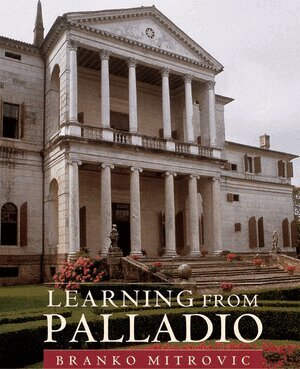
Even when Modernism dimmed interest in the work of classical architects, Palladio's opus never ceased to attract attention. This book sets Pallado in his contemporary context, discusses the theory of the orders, proportions, space composition, façade design, and presents this material in a way accessible to practicing architects and students, so that the ideas can be applied in their architectural work.
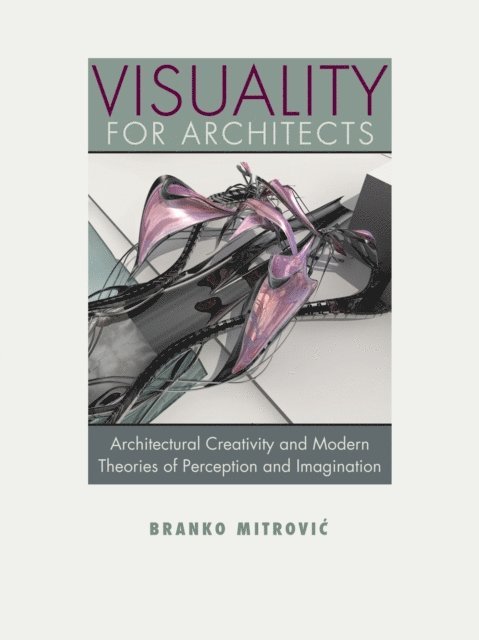
Visuality for Architects
Architectural Creativity and Modern Theories of Perception and Imagination
Häftad, Engelska, 2013
308 kr
Skickas inom 10-15 vardagar
What is more important in architectural works—their form, shape, and colour, or the meanings and symbolism that can be associated with them? Can aesthetic judgments of architecture be independent of the stories one can tell about buildings? Do non-architects perceive buildings in the same way as do architects?For the greater part of the twentieth century it was common to respond to these and similar questions by relying on psychological theories asserting there is no innocent eye, that we think only in language, and that human visuality results from pre-existing, conceptual knowledge. Dramatic breakthroughs in philosophy and psychology over the past two decades, however, have shown us that human visuality functions for the most part independently of conceptual thinking and language.This book examines the ways in which new theories of human visuality create a different understanding of architectural design, practice, and education. This new understanding coincides with and supports formalist approaches to architecture that have become influential in recent years as a result of the digital revolution in architectural design.
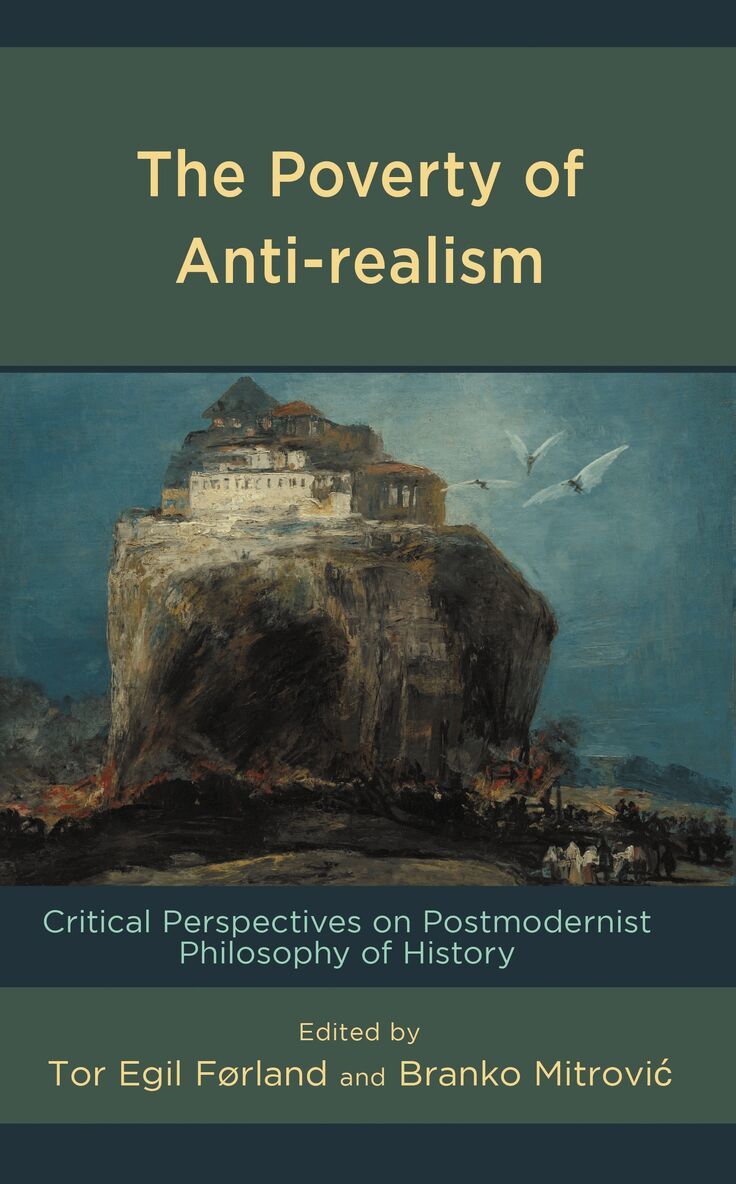
Poverty of Anti-realism
Critical Perspectives on Postmodernist Philosophy of History
Inbunden, Engelska, 2023
1 076 kr
Skickas inom 10-15 vardagar
From the global geopolitical arena to the smart city, control over knowledge—particularly over data and intellectual property—has become a key battleground for the exercise of economic and political power. For companies and governments alike, control over knowledge—what scholar Susan Strange calls the knowledge structure—has become a goal unto itself.The rising dominance of the knowledge structure is leading to a massive redistribution of power, including from individuals to companies and states. Strong intellectual property rights have concentrated economic benefits in a smaller number of hands, while the “internet of things” is reshaping basic notions of property, ownership, and control. In the scramble to create and control data and intellectual property, governments and companies alike are engaging in ever-more surveillance.This open access book is a guide to and analysis of these changes, and of the emerging phenomenon of the knowledge-driven society. It highlights how the pursuit of the control over knowledge has become its own ideology, with its own set of experts drawn from those with the ability to collect and manipulate digital data. Haggart and Tusikov propose a workable path forward—knowledge decommodification—to ensure that our new knowledge is not treated simply as a commodity to be bought and sold, but as a way to meet the needs of the individuals and communities that create this knowledge in the first place.The ebook editions of this book are available open access under a CC BY-NC-ND 4.0 licence on bloomsburycollections.com. Open access was funded by Social Sciences and Humanities Research Council of Canada (SSHRC)
1 276 kr
Skickas inom 10-15 vardagar
What does it mean for our understanding of history if we assume that everything is physical and that no immaterial entities, forces, or phenomena exist? A Materialist Philosophy of History: A Realist Antidote to Postmodernism examines the implications of a materialist worldview in contemporary philosophy of history. Materialism has wide-ranging consequences for historical research as well as for the credibility of various conceptions of the historical past. Branko Mitrovic´ shows how these implications pertain both to the nature of social institutions and the capacities of historical figures to decide, act, acquire beliefs, and communicate and to the methodology of historical research and problems, such as the interpretation and the translation of historical documents. A materialist view also entails rejecting the view that forces such as culture, language, or society can construct physical reality or that the historical past is constructed through the work of the historian. This book examines these consequences and presents a comprehensive materialist perspective on historical research and the understanding of the historical past.
502 kr
Skickas inom 10-15 vardagar
What does it mean for our understanding of history if we assume that everything is physical and that no immaterial entities, forces, or phenomena exist? A Materialist Philosophy of History: A Realist Antidote to Postmodernism examines the implications of a materialist worldview in contemporary philosophy of history. Materialism has wide-ranging consequences for historical research as well as for the credibility of various conceptions of the historical past. Branko Mitrovic´ shows how these implications pertain both to the nature of social institutions and the capacities of historical figures to decide, act, acquire beliefs, and communicate and to the methodology of historical research and problems, such as the interpretation and the translation of historical documents. A materialist view also entails rejecting the view that forces such as culture, language, or society can construct physical reality or that the historical past is constructed through the work of the historian. This book examines these consequences and presents a comprehensive materialist perspective on historical research and the understanding of the historical past.
234 kr
Skickas inom 7-10 vardagar
Philosophy exercises a massive influence on contemporary architectural culture and the understanding of the built environment. Discussions of architects and architectural academics are heavily loaded with theoretical ideas, concepts and views imported from the works of philosophers. At the same time this architectural employment of philosophy rarely goes beyond the tendency to mine philosophical works for ideas, words and phrases and use them, often without much understanding, in order to promote architectural agendas and embellish theoretical claims made by architects and academics.The book presents the history of this phenomenon for the past 100 years. It describes and analyses numerous, often funny, entertaining as well as embarrassing, examples of false intellectual pretence and pompous but incompetent philosophical posturing by prominent architects and architectural academics of the era and their efforts to bamboozle readers, colleagues and the general public. The book presents a powerful criticism of modernist views on architecture and argues that the rise of obfuscation and philosophical posturing among architects and architectural academics is a defensive strategy intended to draw attention away from the failure of Modernism in architecture.