Tora Holmberg - Böcker
Visar alla böcker från författaren Tora Holmberg. Handla med fri frakt och snabb leverans.
6 produkter
6 produkter
620 kr
Skickas inom 10-15 vardagar
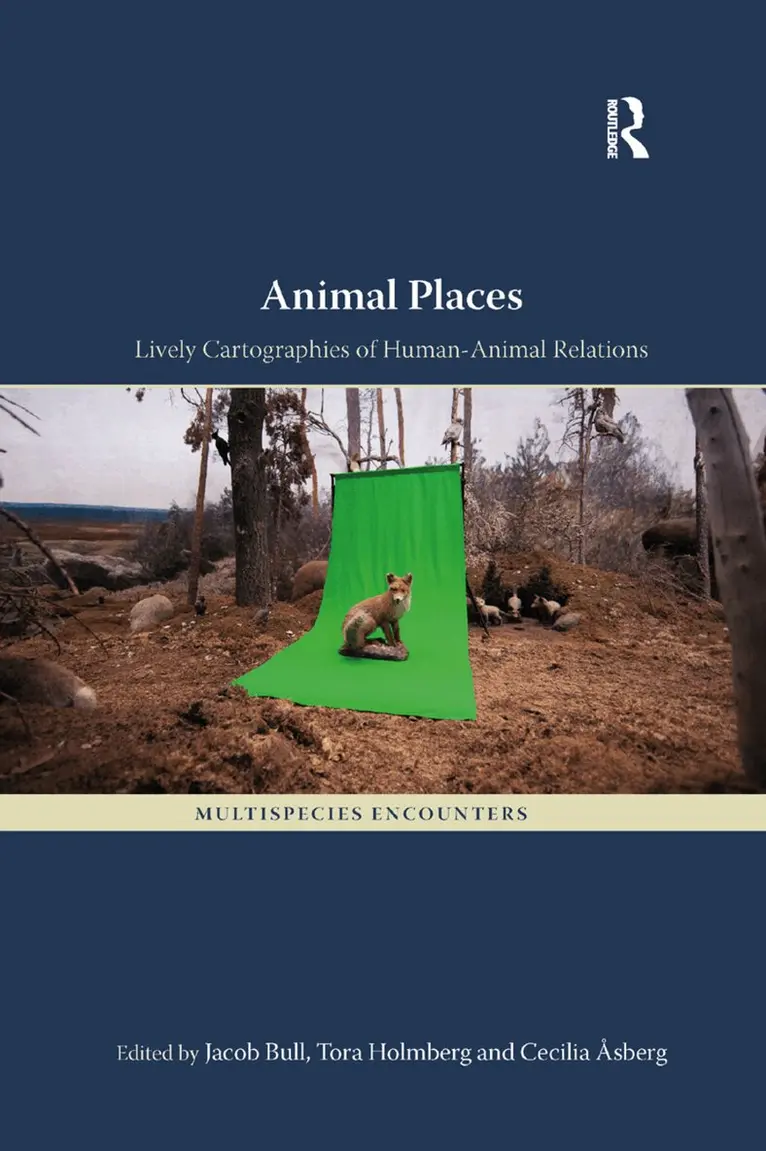
Nonhuman animals are ubiquitous to our ‘human’ societies. Interdisciplinary human/animal research has - for 50 years - drawn attention to how animals are ever-present in what we think of as human spaces and cultures. Our societies are built with animals and through all kinds of multispecies interactions. From public spaces and laboratories to homes, farms and in the ‘wilderness’; human and nonhuman animals meet to make space and place together, through webs of power relations. However, the very spaces of these interactions are not mute or passive themselves. The spaces where species meet matter, and shape human/animal relations. This book takes as its starting point the relationship between place and human/animal interaction. It brings together the work of leading scholars in human/animal studies, from a variety of disciplinary and interdisciplinary backgrounds. With a distinct focus on place, physical space and biocultural geography, the authors of this volume consider the ways in which space, human and nonhuman animals co-constitute each other, how they make spaces together, produce meaning around them, struggle over access, how these places are storied and how stories of spaces matter. Presenting studies thematically and including a variety of nonhuman creatures in a range of settings, this book delivers new understandings of the importance of nonhuman animals to understandings of place - and the role of places in shaping our interactions with nonhuman creatures. As pets, as laboratory animals, as exhibits, as parasites, as livestock, as quarry, as victims of disaster or objects of folklore, this book offers insights into human/animal intermingling at locales and settings of great relevance to many areas of research, including geography, sociology, science and technology studies, gender studies, history and anthropology. This book meets the evolving interest in human/animal interaction, anthrozoology, and the environmental humanities in relation to the research on space and place that currently informs the humanities and the social sciences.
810 kr
Skickas inom 10-15 vardagar
The city includes opportunities as well as constraints for humans and other animals alike. Urban animals are often subjected to complaints; they transgress geographical, legal, and cultural ordering systems, while roaming the city in what are often perceived as uncontrolled ways. But they are also objects of care, conservation practices, and bio-political interventions. What, then, are the "more-than-human" experiences of living in a city? What does it mean to consider spatial formations and urban politics from the perspective of human/animal relations?This book draws on a number of case studies to explore urban controversies around human/animal relations, in particular companion animals: free-ranging dogs, homeless and feral cats, urban animal hoarding, and "crazy cat ladies." The book explores "zoocities," the theoretical framework in which animal studies meets urban studies, resulting in a reframing of urban relations and space. Through the expansion of urban theories beyond the human, and the resuscitation of sociological theories through animal studies literature, the book seeks to uncover the phenomenon of "humanimal crowding," both as threats to be policed and as potentially subversive. In this book, a number of urban controversies and crowding technologies are analyzed, finally pointing at alternative modes of trans-species urban politics through the promises of humanimal crowding—of proximity and collective agency. The exclusion of animals may be an urban ideology, aiming at social order, but close attention to the level of practice reveals a much more diverse, disordered, and perhaps disturbing experience.
2 098 kr
Skickas inom 10-15 vardagar
The city includes opportunities as well as constraints for humans and other animals alike. Urban animals are often subjected to complaints; they transgress geographical, legal as and cultural ordering systems, while roaming the city in what is often perceived as uncontrolled ways. But they are also objects of care, conservation practices and bio-political interventions. What then, are the "more-than-human" experiences of living in a city? What does it mean to consider spatial formations and urban politics from the perspective of human/animal relations?This book draws on a number of case studies to explore urban controversies around human/animal relations, in particular companion animals: free ranging dogs, homeless and feral cats, urban animal hoarding and "crazy cat ladies". The book explores ‘zoocities’, the theoretical framework in which animal studies meet urban studies, resulting in a reframing of urban relations and space. Through the expansion of urban theories beyond the human, and the resuscitation of sociological theories through animal studies literature, the book seeks to uncover the phenomenon of ‘humanimal crowding’, both as threats to be policed, and as potentially subversive. In this book, a number of urban controversies and crowding technologies are analysed, finally pointing at alternative modes of trans-species urban politics through the promises of humanimal crowding - of proximity and collective agency. The exclusion of animals may be an urban ideology, aiming at social order, but close attention to the level of practice reveals a much more diverse, disordered, and perhaps disturbing experience.
2 098 kr
Skickas inom 10-15 vardagar
Nonhuman animals are ubiquitous to our ‘human’ societies. Interdisciplinary human/animal research has - for 50 years - drawn attention to how animals are ever-present in what we think of as human spaces and cultures. Our societies are built with animals and through all kinds of multispecies interactions. From public spaces and laboratories to homes, farms and in the ‘wilderness’; human and nonhuman animals meet to make space and place together, through webs of power relations. However, the very spaces of these interactions are not mute or passive themselves. The spaces where species meet matter, and shape human/animal relations. This book takes as its starting point the relationship between place and human/animal interaction. It brings together the work of leading scholars in human/animal studies, from a variety of disciplinary and interdisciplinary backgrounds. With a distinct focus on place, physical space and biocultural geography, the authors of this volume consider the ways in which space, human and nonhuman animals co-constitute each other, how they make spaces together, produce meaning around them, struggle over access, how these places are storied and how stories of spaces matter. Presenting studies thematically and including a variety of nonhuman creatures in a range of settings, this book delivers new understandings of the importance of nonhuman animals to understandings of place - and the role of places in shaping our interactions with nonhuman creatures. As pets, as laboratory animals, as exhibits, as parasites, as livestock, as quarry, as victims of disaster or objects of folklore, this book offers insights into human/animal intermingling at locales and settings of great relevance to many areas of research, including geography, sociology, science and technology studies, gender studies, history and anthropology. This book meets the evolving interest in human/animal interaction, anthrozoology, and the environmental humanities in relation to the research on space and place that currently informs the humanities and the social sciences.
1 691 kr
Skickas inom 10-15 vardagar
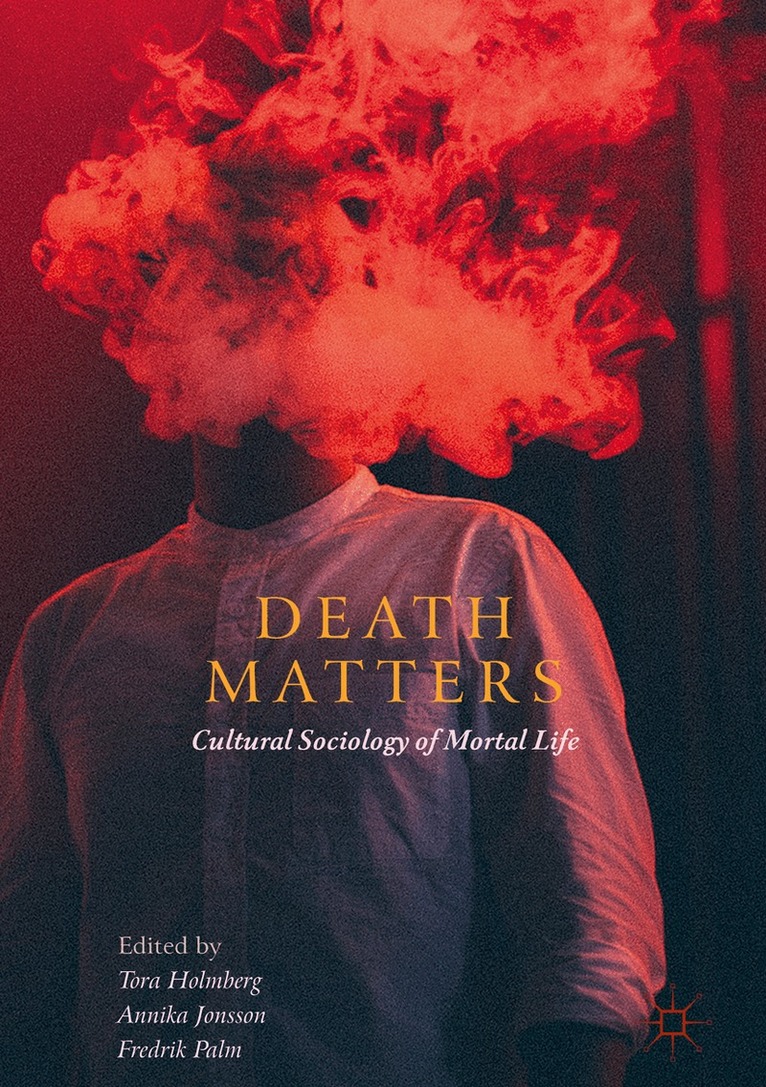
This book investigates death as part of contemporary everyday experience and practices. Through a cultural sociological lens, it studies death as it remains constantly at the edge of our consciousness, shaping the ways in which we move through social reality. As such, Death Matters is a significant contribution to death studies, going beyond traditional parameters of the field by addressing the cultural omnipresence of death.The contributions analyse several death-related meaning-making processes, arguing that meanings emerging from culturally shared narratives, social institutions, and material conditions, are just as important as ’death practices’ in understanding the role of death in society. Drawing on the related themes of places of absence and presence, disease and bodies, and persons and non-persons, the authors explore a variety of areas of social life, from haunting to celebrity deaths, to move the notion of death from the margins of social reality to ongoing everyday life.This far-reaching collection will be of use to scholars and students across death studies, sociology, anthropology, philosophy, culture, media and communication studies.
244 kr
Skickas
Vad är människans sanna natur? Det är en fråga med många slags svar. Under senare tid har den genetiska forskningen fått en alltmer framträdande roll i diskussionen om mänskliga egenskaper och beteenden. Generna får förklara varför vi beter oss som vi gör. I denna vetenskapssociologiska studie undersöks den forskning som förbinder det sociala beteendet med ärftlighet. Forskningen om mänskligt beteende berör existentiella och politiska frågor och blir många gånger kontroversiell. Forskningsresultaten är insatser i en kontinuerlig kamp om vetenskaplig hegemoni. Vetenskap på gränsen analyserar resultat från djurforskning och tvillingstudier och hur de framställs i vetenskap och media. Denna forskning rör sig i spänningsfältet mellan en rad motsatspar -- natur och kultur, arv och miljö, djur och människor, naturvetenskap och beteendevetenskap. Tora Holmberg visar att gränserna mellan respektive kategori inte är så självklara som de ofta framställs utåt. Det är snarare något som förhandlas, förflyttas och omtolkas. Utifrån ett rikt vetenskapligt och populärvetenskapligt material diskuteras här teman som "Tvillingars magiska kraft", "Genantal som mänsklighetsmarkör", "Konserverade gener" och "Sjöhästars omvända könsroller".