Traci Roberts-Camps – författare
Visar alla böcker från författaren Traci Roberts-Camps. Handla med fri frakt och snabb leverans.
3 produkter
3 produkter
798 kr
Skickas inom 7-10 vardagar
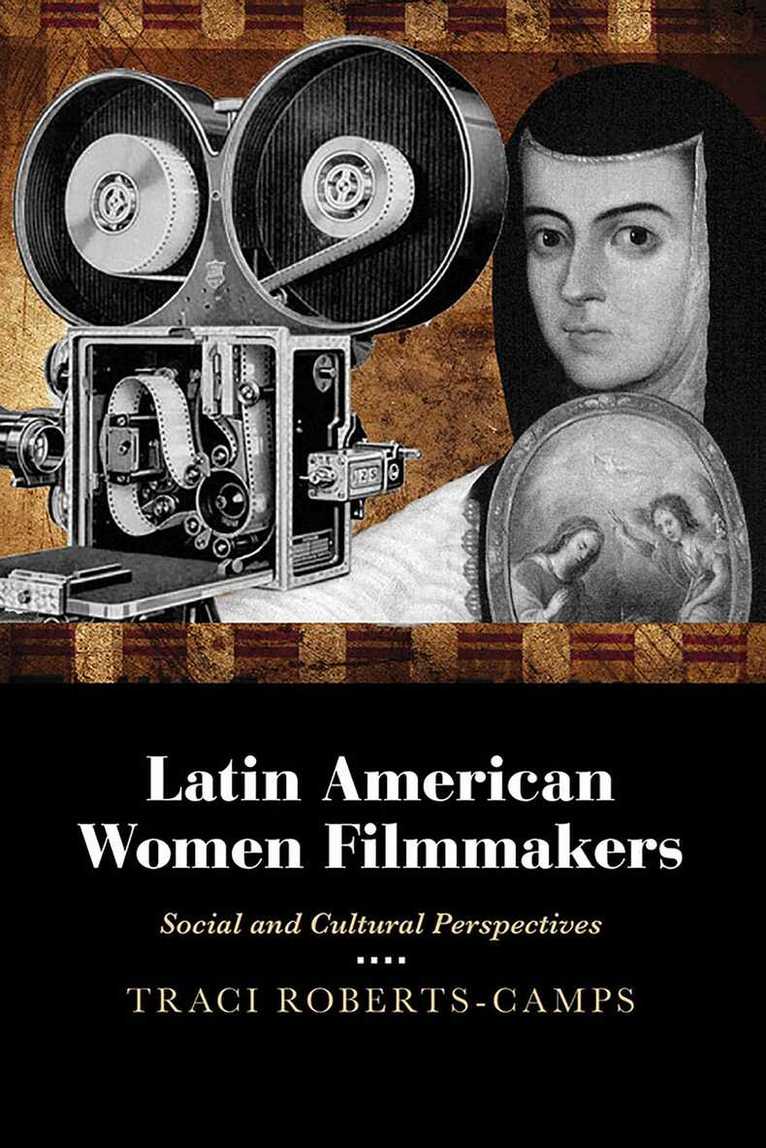
Women are noticeably marginalized from the Latin American film industry, with lower budgets and inadequate distribution, and they often rely on their creativity to make more interesting films. This book highlights the voices and stories of some of these directors from Brazil, Chile, Argentina, and Mexico. Roberts-Camps’s insightful exploration is the most broad-ranging account of its kind, making the book relevant to the study of literature as well as film.
503 kr
Skickas inom 5-8 vardagar
Where Social Identities Converge examines adolescent girlhood as a metaphorical site in Latin American and Latinx film. Author Traci Roberts‑Camps analyzes the work of a series of female directors from Argentina, Ecuador, Mexico, Peru, Venezuela, and the United States to understand how female adolescence and young adulthood are represented in film. She argues that using an intersectional lens reveals how these directors present the image of adolescent girlhood as a site of early trauma that presages women’s lived experiences with institutional, interconnected forms of oppression. The book thus considers intersectionality through young female protagonists who represent identity struggles in Latin America and US Latinx communities. In doing so, it examines a range of genres, such as fictional film, documentary, and television miniseries. Each chapter includes a close reading of specific scenes that offer insight into the young female protagonists’ multiple identity markers and a continuous comparison between chapters.
1 409 kr
Skickas inom 5-8 vardagar
Where Social Identities Converge examines adolescent girlhood as a metaphorical site in Latin American and Latinx film. Author Traci Roberts‑Camps analyzes the work of a series of female directors from Argentina, Ecuador, Mexico, Peru, Venezuela, and the United States to understand how female adolescence and young adulthood are represented in film. She argues that using an intersectional lens reveals how these directors present the image of adolescent girlhood as a site of early trauma that presages women’s lived experiences with institutional, interconnected forms of oppression. The book thus considers intersectionality through young female protagonists who represent identity struggles in Latin America and US Latinx communities. In doing so, it examines a range of genres, such as fictional film, documentary, and television miniseries. Each chapter includes a close reading of specific scenes that offer insight into the young female protagonists’ multiple identity markers and a continuous comparison between chapters.