• Fri frakt över 249 kr
  • •
  • Snabba leveranser
  • •
  • Billiga böcker
Kundservice

Du är på sajten för privatpersoner.

Företag, bibliotek eller offentlig verksamhet?

Du handlar på classic.bokus.com, där alla dina funktioner finns intakta.
Till classic.bokus.com
Bokus logotyp. Gå till startsidan.
  • Erbjudanden
  • Nyheter
  • Student
  • Topplistor
  • Barn & ungdom
  • Bokus Play
  • E-böcker
  • Pocketböcker
  • Spel & pussel

10% studentrabatt med kod TERM26

Sidfot

Mina sidor

    Hjälp

    • Kundservice
    • Vanliga frågor och svar
    • Frakt och leverans
    • Retur vid ångerrätt
    • Reklamera vara
    • Betalning
    • Köpvillkor
    • Allmänna villkor
    • Information om webbplatsens tillgänglighet

    Om Bokus

    • Om oss
    • Pressrum
    • För studenter
    • För företag
    • För bibliotek och offentlig verksamhet
    • För leverantörer
    • Hållbarhet

    Populärt

    • Aktuella erbjudanden
    • Presentkort
    • Studentlitteratur
    • Nya böcker
    • Topplistor
    • Signerade böcker
    • Engelska böcker

    Inspiration

    • Boktips
    • BookTok
    • Populära bokserier
    • Barnbokskaraktärer
    • Populära författare
    Logotyp för Bokus
    Följ oss på Facebook (extern länk)Följ oss på Instagram (extern länk)Följ oss på YouTube (extern länk)Följ oss på TikTok (extern länk)
    bokus @ CookiesAnpassa cookiesIntegritetspolicyKöpvillkor
    Till Citymail hemsida (extern länk)Till Budbee hemsida (extern länk)Till Postnord hemsida (extern länk)Till Schenker hemsida (extern länk)Till Early Bird hemsida (extern länk)Till Walleys hemsida (extern länk)
    1. Kultur
    2. Scenkonst och film
    3. Film

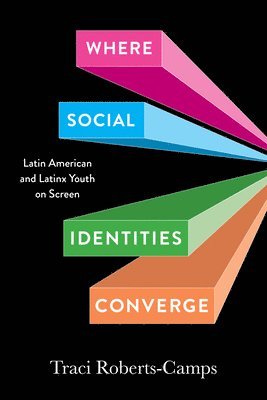
    Where Social Identities Converge

    Latin American and Latinx Youth on Screen

    AvTraci Roberts-Camps

    Inbunden, Engelska, 2024

    1 435 kr

    Beställningsvara. Skickas inom 5-8 vardagar. Fri frakt över 249 kr.

    Fler format och utgåvor

    Häftad

    512 kr

    Beskrivning

    Where Social Identities Converge examines adolescent girlhood as a metaphorical site in Latin American and Latinx film. Author Traci Roberts‑Camps analyzes the work of a series of female directors from Argentina, Ecuador, Mexico, Peru, Venezuela, and the United States to understand how female adolescence and young adulthood are represented in film. She argues that using an intersectional lens reveals how these directors present the image of adolescent girlhood as a site of early trauma that presages women’s lived experiences with institutional, interconnected forms of oppression. The book thus considers intersectionality through young female protagonists who represent identity struggles in Latin America and US Latinx communities. In doing so, it examines a range of genres, such as fictional film, documentary, and television miniseries. Each chapter includes a close reading of specific scenes that offer insight into the young female protagonists’ multiple identity markers and a continuous comparison between chapters.

    Produktinformation

    • Utgivningsdatum:2024-12-30
    • Mått:152 x 229 x 19 mm
    • Vikt:559 g
    • Format:Inbunden
    • Språk:Engelska
    • Antal sidor:230
    • Förlag:Vanderbilt University Press
    • ISBN:9780826507211

    Utforska kategorier

    • Film inom Kultur
    • Medievetenskap inom Samhälle och politik
    • Genusvetenskap inom Samhälle och politik

    Mer om författaren

    Traci Roberts-Camps is a professor of Latin American literature and film and chair of the Department of Modern Languages and Literature at the University of the Pacific.

    Recensioner i media

    "Roberts-Camps demonstrates, yet again, that she is a leading scholar of Latin American film. Where Social Identities Converge will, undoubtedly, become a touchstone for other scholars in the field. Its lively prose, one that eschews academic jargon for the sake of clarity, makes it an ideal text for students and scholars alike."—Melissa A. Fitch, author of Global Tangos: Travels in the Transnational Imaginary

    Innehållsförteckning

    • IntroductionChapter 1: Audacity, Intelligence, and Indigenous Connections in Patricia Arriaga‑JordÁn’s Juana InÉs (2016)Chapter 2: Gender, Class, Sexuality, and Ethnicity in Aurora Guerrero’s Mosquita y Mari (2012) and Viviana Cordero’s No robarÁs…a menos que sea necesario (2013)Chapter 3: Intersectional Subjectivity in Gabriela David’s La mosca en la cenizaChapter 4: Indigeneity and the Rural/Urban Continuum in Claudia Llosa’s Madeinusa (2005) and La teta asustada (2009) and Itandehui Jansen’s Tiempo de lluvia (2018)Chapter 5: Intersectionality and Inter‑Nationality in Kaori Flores Yonekura’s Nikkei: Un viaje extraordinario (2014) and Cecilia Kang’s Mi Último fracaso (2016)ConclusionNotesBibliographyIndex