Tracy McNulty - Böcker
Visar alla böcker från författaren Tracy McNulty. Handla med fri frakt och snabb leverans.
5 produkter
5 produkter
1 104 kr
Skickas inom 7-10 vardagar
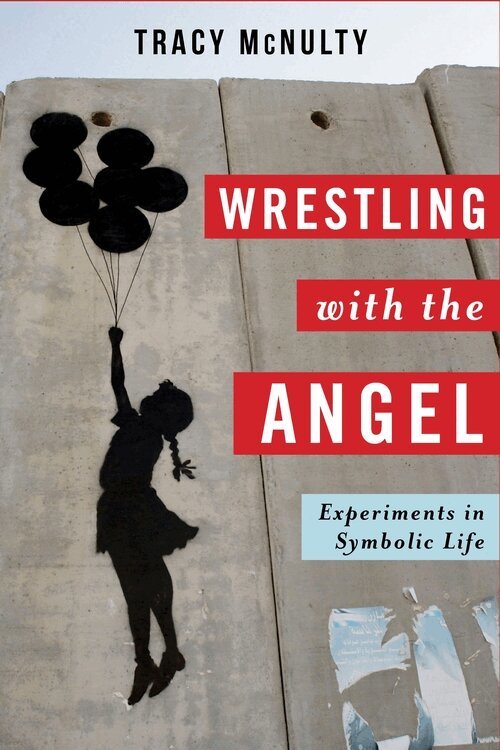
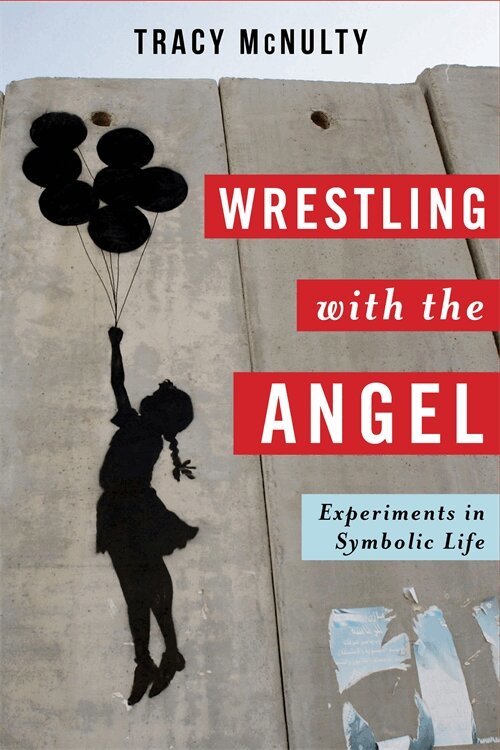
Wrestling with the Angel is a meditation on contemporary political, legal, and social theory from a psychoanalytic perspective. It argues for the enabling function of formal and symbolic constraints in sustaining desire as a source of creativity, innovation, and social change. The book begins by calling for a richer understanding of the psychoanalytic concept of the symbolic and the resources it might offer for an examination of the social link and the political sphere. The symbolic is a crucial dimension of social coexistence but cannot be reduced to the social norms, rules, and practices with which it is so often collapsed. As a dimension of human life that is introduced by language-and thus inescapably "other" with respect to the laws of nature-the symbolic is an undeniable fact of human existence. Yet the same cannot be said of the forms and practices that represent and sustain it. In designating these laws, structures, and practices as "fictions," Jacques Lacan makes clear that the symbolic is a dimension of social life that has to be created and maintained and that can also be displaced, eradicated, or rendered dysfunctional.The symbolic fictions that structure and support the social tie are therefore historicizable, emerging at specific times and in particular contexts and losing their efficacy when circumstances change. They are also fragile and ephemeral, needing to be renewed and reinvented if they are not to become outmoded or ridiculous. Therefore the aim of this study is not to call for a return to traditional symbolic laws but to reflect on the relationship between the symbolic in its most elementary or structural form and the function of constraints and limits. McNulty analyzes examples of "experimental" (as opposed to "normative") articulations of the symbolic and their creative use of formal limits and constraints not as mere prohibitions or rules but as "enabling constraints" that favor the exercise of freedom. The first part examines practices that conceive of subjective freedom as enabled by the struggle with constraints or limits, from the transference that structures the "minimal social link" of psychoanalysis to constrained relationships between two or more people in the context of political and social movements.Examples discussed range from the spiritual practices and social legacies of Moses, Jesus, and Teresa of Avila to the political philosophy of Hannah Arendt and Jacques Ranciere. The second part is devoted to legal and political debates surrounding the function of the written law. It isolates the law's function as a symbolic limit or constraint as distinct from its content and representational character. The analysis draws on Mosaic law traditions, the political theology of Paul, and twentieth-century treatments of written law in the work of Carl Schmitt, Walter Benjamin, Sigmund Freud, Pierre Legendre, and Alain Badiou. In conclusion, the study considers the relationship between will and constraint in Kant's aesthetic philosophy and in the experimental literary works of the collective Oulipo.
289 kr
Skickas inom 7-10 vardagar
Wrestling with the Angel is a meditation on contemporary political, legal, and social theory from a psychoanalytic perspective. It argues for the enabling function of formal and symbolic constraints in sustaining desire as a source of creativity, innovation, and social change. The book begins by calling for a richer understanding of the psychoanalytic concept of the symbolic and the resources it might offer for an examination of the social link and the political sphere. The symbolic is a crucial dimension of social coexistence but cannot be reduced to the social norms, rules, and practices with which it is so often collapsed. As a dimension of human life that is introduced by language-and thus inescapably "other" with respect to the laws of nature-the symbolic is an undeniable fact of human existence. Yet the same cannot be said of the forms and practices that represent and sustain it. In designating these laws, structures, and practices as "fictions," Jacques Lacan makes clear that the symbolic is a dimension of social life that has to be created and maintained and that can also be displaced, eradicated, or rendered dysfunctional.The symbolic fictions that structure and support the social tie are therefore historicizable, emerging at specific times and in particular contexts and losing their efficacy when circumstances change. They are also fragile and ephemeral, needing to be renewed and reinvented if they are not to become outmoded or ridiculous. Therefore the aim of this study is not to call for a return to traditional symbolic laws but to reflect on the relationship between the symbolic in its most elementary or structural form and the function of constraints and limits. McNulty analyzes examples of "experimental" (as opposed to "normative") articulations of the symbolic and their creative use of formal limits and constraints not as mere prohibitions or rules but as "enabling constraints" that favor the exercise of freedom. The first part examines practices that conceive of subjective freedom as enabled by the struggle with constraints or limits, from the transference that structures the "minimal social link" of psychoanalysis to constrained relationships between two or more people in the context of political and social movements.Examples discussed range from the spiritual practices and social legacies of Moses, Jesus, and Teresa of Avila to the political philosophy of Hannah Arendt and Jacques Ranciere. The second part is devoted to legal and political debates surrounding the function of the written law. It isolates the law's function as a symbolic limit or constraint as distinct from its content and representational character. The analysis draws on Mosaic law traditions, the political theology of Paul, and twentieth-century treatments of written law in the work of Carl Schmitt, Walter Benjamin, Sigmund Freud, Pierre Legendre, and Alain Badiou. In conclusion, the study considers the relationship between will and constraint in Kant's aesthetic philosophy and in the experimental literary works of the collective Oulipo.
273 kr
Skickas inom 10-15 vardagar
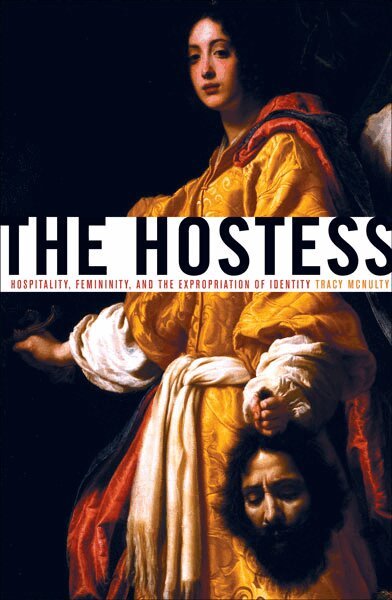
The evolution of the idea of hospitality can be traced alongside the development of Western civilization. Etymologically, the host is the "master," but this identity is established through expropriation and loss—the best host is the one who gives the most, ultimately relinquishing what defines him as master.In The Hostess, Tracy McNulty asks, What are the implications for personhood of sharing a person—a wife or daughter—as an act of hospitality? In many traditions, the hostess is viewed not as a subject but as the master's property. A foreign presence that both sustains and undercuts him, the hostess embodies the interplay of self and other within the host's own identity.Here McNulty combines critical readings of the Bible and Pierre Klossowski's trilogy The Laws of Hospitality with analyses of exogamous marital exchange, theological works from the Talmud to Aquinas, the writings of Kant and Nietzsche, and the theory of femininity in the work of Freud and Lacan. Ultimately, she contends, hospitality involves the boundary between the proper and the improper, affecting the subject as well as interpersonal relations.Tracy McNulty is assistant professor of romance studies at Cornell University.
1 295 kr
Skickas
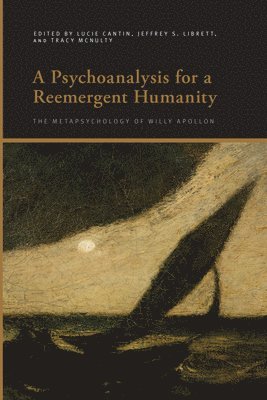
Provides the foundations for a new form of psychoanalysis appropriate to the subject of the twenty-first century.A Psychoanalysis for a Reemergent Humanity presents and elaborates upon the mature thought of the Haitian-Quebecois analyst Willy Apollon. Apollon's work amounts to a thorough revision of the fundamental concepts of Freudian-Lacanian psychoanalysis in view of the situation of the human subject today, in an age of global cultural conflict and interpenetration that he calls "mondialisation." This landmark volume brings together a new foundational text by Apollon, seven original essays, including by Apollon's longtime collaborators Danielle Bergeron and volume coeditor Lucie Cantin, and an interview with Apollon. Synthesizing clinical, cultural-historical, and aesthetic perspectives, contributors offer rich redefinitions of the unconscious, the imaginary-symbolic-real triad, masculine and feminine, puberty and adolescence, address and transference, the symptom, the fantasy, and more. As distinct cultures and civilizations crumble, the world as a whole and the human emerge in a new way. A Psychoanalysis for a Reemergent Humanity meets this moment, positioning spirit as a crucial term for a human creativity that exceeds any given culture.
380 kr
Kommande
Provides the foundations for a new form of psychoanalysis appropriate to the subject of the twenty-first century.A Psychoanalysis for a Reemergent Humanity presents and elaborates upon the mature thought of the Haitian-Quebecois analyst Willy Apollon. Apollon's work amounts to a thorough revision of the fundamental concepts of Freudian-Lacanian psychoanalysis in view of the situation of the human subject today, in an age of global cultural conflict and interpenetration that he calls "mondialisation." This landmark volume brings together a new foundational text by Apollon, seven original essays, including by Apollon's longtime collaborators Danielle Bergeron and volume coeditor Lucie Cantin, and an interview with Apollon. Synthesizing clinical, cultural-historical, and aesthetic perspectives, contributors offer rich redefinitions of the unconscious, the imaginary-symbolic-real triad, masculine and feminine, puberty and adolescence, address and transference, the symptom, the fantasy, and more. As distinct cultures and civilizations crumble, the world as a whole and the human emerge in a new way. A Psychoanalysis for a Reemergent Humanity meets this moment, positioning spirit as a crucial term for a human creativity that exceeds any given culture.