Travis Workman - Böcker
Visar alla böcker från författaren Travis Workman. Handla med fri frakt och snabb leverans.
7 produkter
7 produkter
Del 14 - Asia Pacific Modern
Imperial Genus
The Formation and Limits of the Human in Modern Korea and Japan
Häftad, Engelska, 2015
609 kr
Skickas inom 3-6 vardagar
A free ebook version of this title is available through Luminos, University of California Press' open access publishing program for monographs. Imperial Genus begins with the turn to world culture and ideas of the generally human in Japan's cultural policy in Korea in 1919. How were concepts of the human's genus-being operative in the discourses of the Japanese empire? How did they inform the imagination and representation of modernity in colonial Korea? Travis Workman delves into these questions through texts in philosophy, literature, and social science. Imperial Genus focuses on how notions of human generality mediated uncertainty between the transcendental and the empirical, the universal and the particular, and empire and colony. It shows how cosmopolitan cultural principles, the proletarian arts, and Pan-Asian imperial nationalism converged with practices of colonial governmentality. It is a genealogy of the various articulations of the human's genus-being within modern humanist thinking in East Asia, as well as an exploration of the limits of the human as both concept and historical figure.
Del 4 - Global Korea
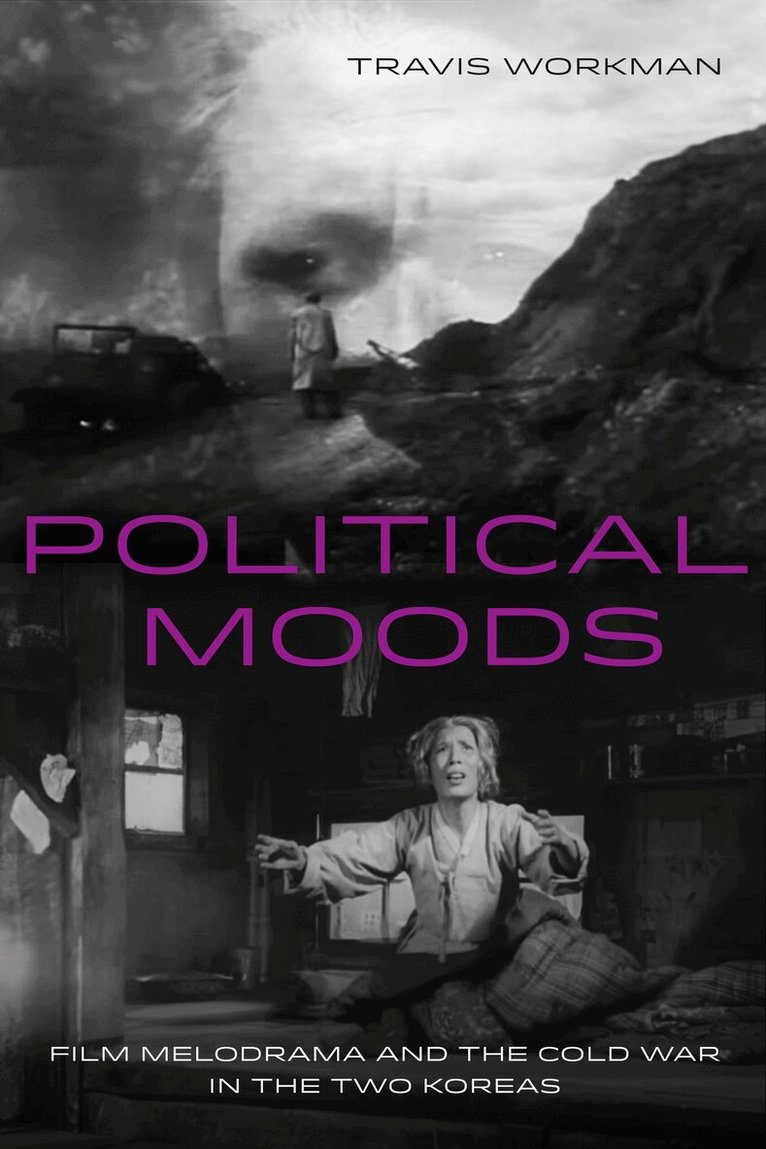
Political Moods
Film Melodrama and the Cold War in the Two Koreas
Häftad, Engelska, 2023
298 kr
Skickas inom 7-10 vardagar
A free ebook version of this title is available through Luminos, University of California Press's Open Access publishing program. Visit www.luminosoa.org to learn more.Melodrama films dominated the North and South Korean industries in the period between liberation from Japanese colonial rule in 1945 and the hardening of dictatorship in the 1970s. The films of each industry are often read as direct reflections of Cold War and Korean War political ideologies and national historical experiences, and therefore as aesthetically and politically opposed to each other. However, Political Moods develops a comparative analysis across the Cold War divide, analyzing how films in both North and South Korea convey political and moral ideas through the sentimentality of the melodramatic mode. Travis Workman reveals that the melancholic moods of film melodrama express the somatic and social conflicts between political ideologies and excesses of affect, meaning, and historical references. These moods dramatize the tension between the language of Cold War politics and the negative affects that connect cinema to what it cannot fully represent. The result is a new way of historicizing the cinema of the two Koreas in relation to colonialism, postcolonialism, war, and nation building.
Del 4 - Global Korea
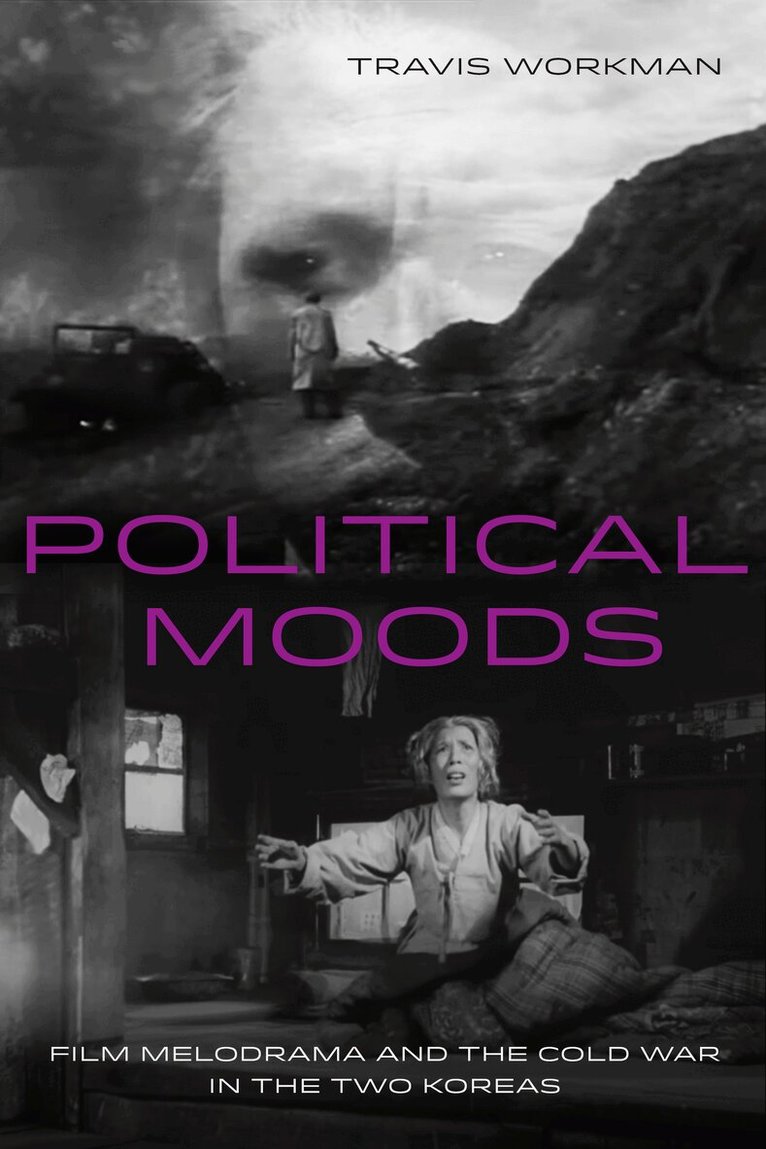
Political Moods
Film Melodrama and the Cold War in the Two Koreas
Inbunden, Engelska, 2024
798 kr
Skickas inom 7-10 vardagar
A free ebook version of this title is available through Luminos, University of California Press's Open Access publishing program. Visit www.luminosoa.org to learn more.Melodrama films dominated the North and South Korean industries in the period between liberation from Japanese colonial rule in 1945 and the hardening of dictatorship in the 1970s. The films of each industry are often read as direct reflections of Cold War and Korean War political ideologies and national historical experiences, and therefore as aesthetically and politically opposed to each other. However, Political Moods develops a comparative analysis across the Cold War divide, analyzing how films in both North and South Korea convey political and moral ideas through the sentimentality of the melodramatic mode. Travis Workman reveals that the melancholic moods of film melodrama express the somatic and social conflicts between political ideologies and excesses of affect, meaning, and historical references. These moods dramatize the tension between the language of Cold War politics and the negative affects that connect cinema to what it cannot fully represent. The result is a new way of historicizing the cinema of the two Koreas in relation to colonialism, postcolonialism, war, and nation building.
324 kr
Skickas inom 7-10 vardagar
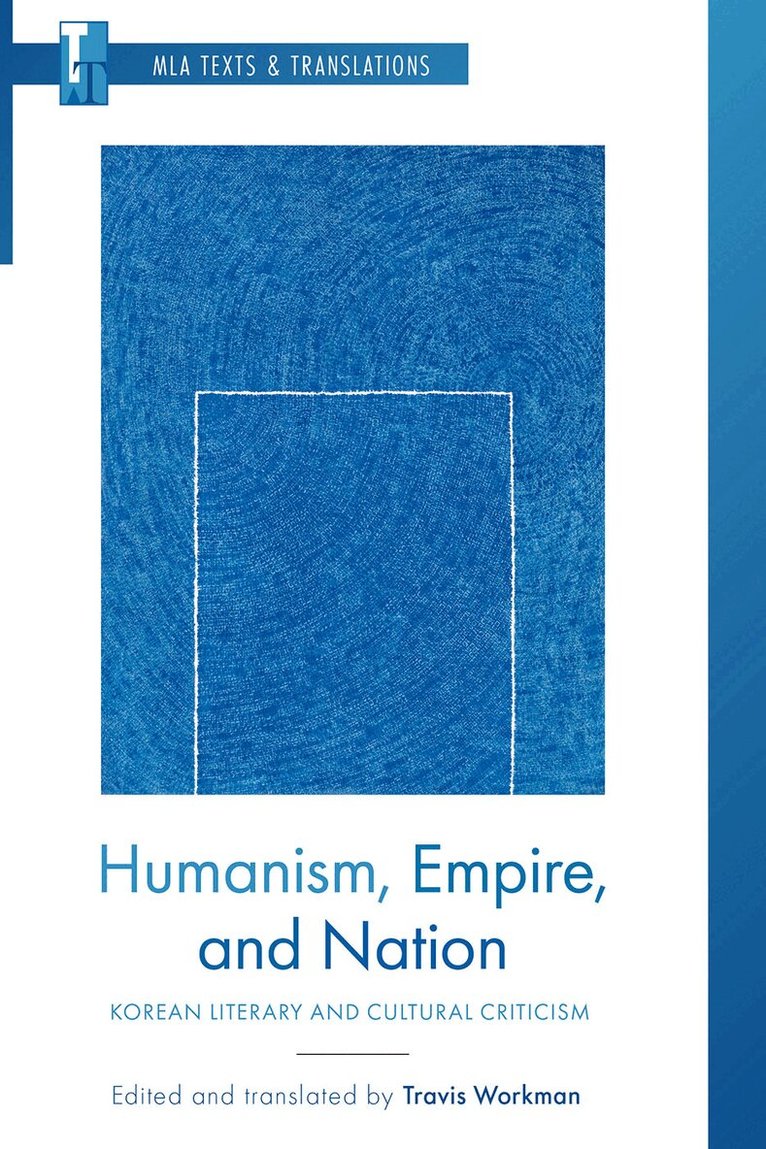
Essays featuring twentieth-century Korean thought on literature and culture.Faced with dramatic social and political changes, Korean writers of the twentieth century—writing in the context of Japanese imperialism, World War II, the Korean War, and the Cold War era—explored many pressing questions about modern life: What is the relationship between literature and society? How can intellectual concepts be used politically, for good or ill? What are the differences between Eastern and Western cultures? The essays in this collection, originally published between 1933 and 1957, explore these and other questions through varying lenses, including liberal humanism, socialism, fascism, and an early form of North Korea's Juche thought. Featuring works by Paik Ch'ŏl, Sŏ Insik, Ŏm Hosŏk, and Ch'oe Chaesŏ, the volume highlights the diversity of twentieth-century Korean thought, its developments during periods of upheaval, and its engagement with ideas of modernity that were being shared around the world.This volume contains discussion of writers such as Matthew Arnold, T. S. Eliot, Maxim Gorky, G. W. F. Hegel, Martin Heidegger, James Joyce, Karl Marx, Walter Pater, Plato, Marcel Proust, Yi Kwangsu, and Yi Sang; movements, schools of thought, and literary styles such as English Romanticism, European modernism, German idealism, the Kyoto school of philosophy, Marxism, naturalism, the New Tendency Group, nihilism, socialist realism, and tendentious literature; traditions such as Hinduism, Mahayana Buddhism, Taoism, and Zen Buddhism; and the sociopolitical and economic formation known as East Asian Community.
324 kr
Skickas inom 7-10 vardagar
Essays featuring twentieth-century Korean thought on literature and culture.Faced with dramatic social and political changes, Korean writers of the twentieth century—writing in the context of Japanese imperialism, World War II, the Korean War, and the Cold War era—explored many pressing questions about modern life: What is the relationship between literature and society? How can intellectual concepts be used politically, for good or ill? What are the differences between Eastern and Western cultures? The essays in this collection, originally published between 1933 and 1957, explore these and other questions through varying lenses, including liberal humanism, socialism, fascism, and an early form of North Korea's Juche thought. Featuring works by Paik Ch'ŏl, Sŏ Insik, Ŏm Hosŏk, and Ch'oe Chaesŏ, the volume highlights the diversity of twentieth-century Korean thought, its developments during periods of upheaval, and its engagement with ideas of modernity that were being shared around the world.This volume contains discussion of writers such as Matthew Arnold, T. S. Eliot, Maxim Gorky, G. W. F. Hegel, Martin Heidegger, James Joyce, Karl Marx, Walter Pater, Plato, Marcel Proust, Yi Kwangsu, and Yi Sang; movements, schools of thought, and literary styles such as English Romanticism, European modernism, German idealism, the Kyoto school of philosophy, Marxism, naturalism, the New Tendency Group, nihilism, socialist realism, and tendentious literature; traditions such as Hinduism, Mahayana Buddhism, Taoism, and Zen Buddhism; and the sociopolitical and economic formation known as East Asian Community.
1 946 kr
Skickas inom 10-15 vardagar
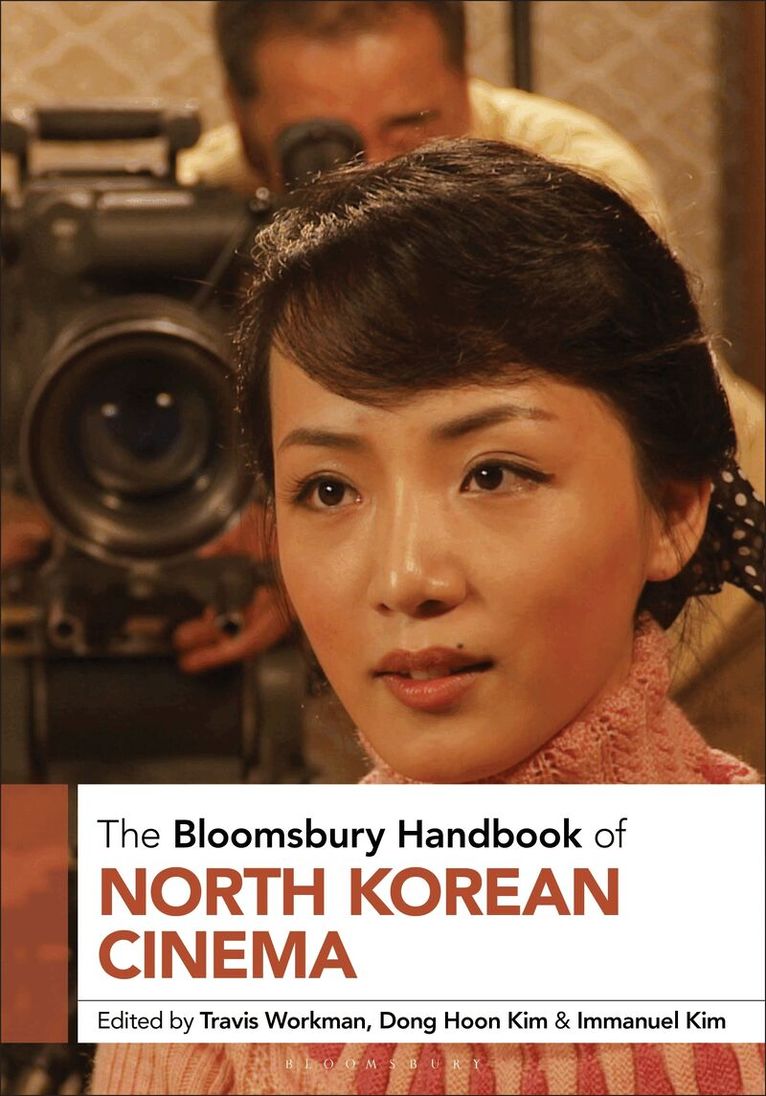
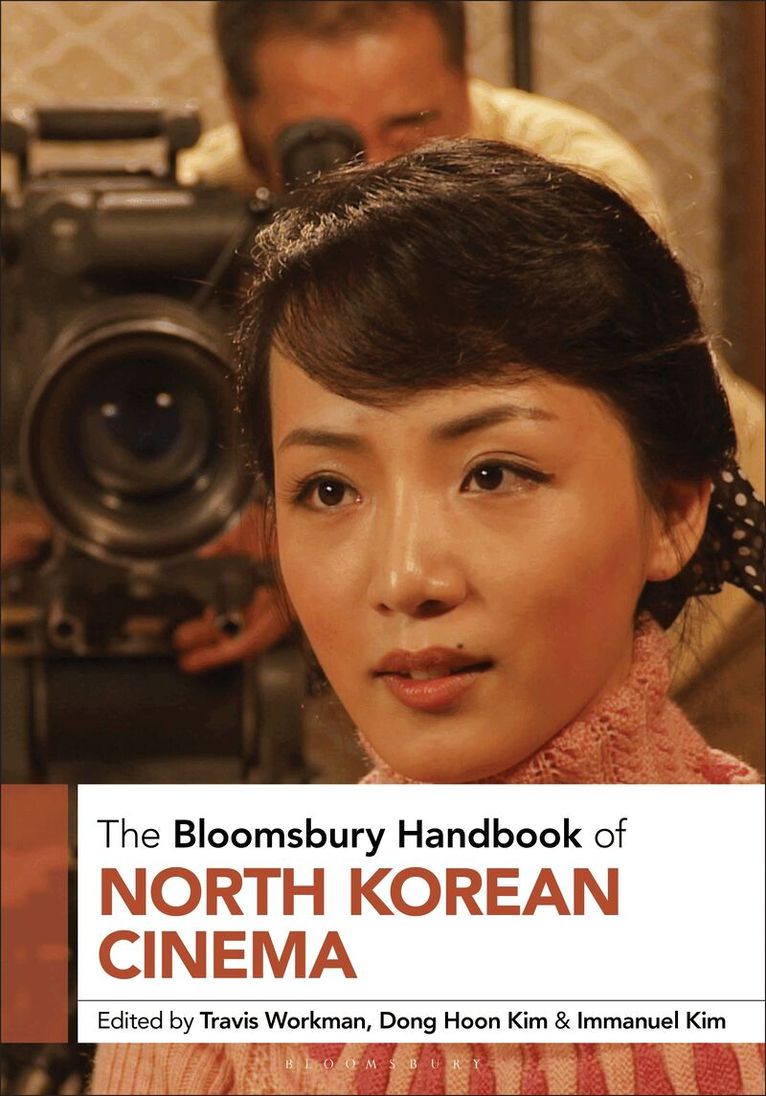
This first handbook on North Korean cinema contests the assumption that North Korean film is “unwatchable,” in terms of both quality and accessibility, refusing to reduce North Korean cinema to political propaganda and focusing on its aesthetic forms and cultural meanings. Since its founding in 1948, the Democratic People’s Republic of Korea (North Korea) has played diverse roles: a Cold War communist threat to the US, the other half of a divided nation to South Korea, an ally to the Soviet Union and China, one model for anti-colonialism to national liberation movements, an exotic political and cultural anomaly in the era of globalization. This handbook provides a solid and diverse foundation for the expanding scholarship on North Korean cinema. It is also a road map for connecting this field to broader issues in film and media studies: film history, affect and ideology, genre, and transnational cinema cultures. By connecting the worlds of North Korean cinema to broader questions in global cinema studies, this book explores the complexity of a national cinema too often reduced to a single image.
665 kr
Kommande
This first handbook on North Korean cinema contests the assumption that North Korean film is “unwatchable,” in terms of both quality and accessibility, refusing to reduce North Korean cinema to political propaganda and focusing on its aesthetic forms and cultural meanings. Since its founding in 1948, the Democratic People’s Republic of Korea (North Korea) has played diverse roles: a Cold War communist threat to the US, the other half of a divided nation to South Korea, an ally to the Soviet Union and China, one model for anti-colonialism to national liberation movements, an exotic political and cultural anomaly in the era of globalization. This handbook provides a solid and diverse foundation for the expanding scholarship on North Korean cinema. It is also a road map for connecting this field to broader issues in film and media studies: film history, affect and ideology, genre, and transnational cinema cultures. By connecting the worlds of North Korean cinema to broader questions in global cinema studies, this book explores the complexity of a national cinema too often reduced to a single image.