Trevor Pearce - Böcker
Visar alla böcker från författaren Trevor Pearce. Handla med fri frakt och snabb leverans.
4 produkter
4 produkter
912 kr
Skickas inom 7-10 vardagar
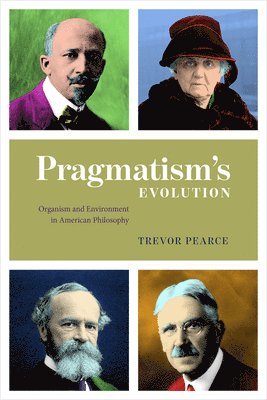
In Pragmatism’s Evolution, Trevor Pearce demonstrates that the philosophical tradition of pragmatism owes an enormous debt to specific biological debates in the late 1800s, especially those concerning the role of the environment in development and evolution. Many are familiar with John Dewey’s 1909 assertion that evolutionary ideas overturned two thousand years of philosophy—but what exactly happened in the fifty years prior to Dewey’s claim? What form did evolutionary ideas take? When and how were they received by American philosophers?Although the various thinkers associated with pragmatism—from Charles Sanders Peirce to Jane Addams and beyond—were towering figures in American intellectual life, few realize the full extent of their engagement with the life sciences. In his analysis, Pearce focuses on a series of debates in biology from 1860 to 1910—from the instincts of honeybees to the inheritance of acquired characteristics—in which the pragmatists were active participants. If we want to understand the pragmatists and their influence, Pearce argues, we need to understand the relationship between pragmatism and biology.
306 kr
Skickas inom 7-10 vardagar
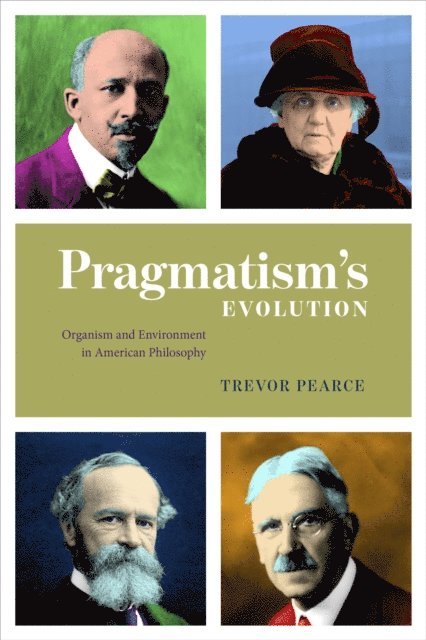
In Pragmatism’s Evolution, Trevor Pearce demonstrates that the philosophical tradition of pragmatism owes an enormous debt to specific biological debates in the late 1800s, especially those concerning the role of the environment in development and evolution. Many are familiar with John Dewey’s 1909 assertion that evolutionary ideas overturned two thousand years of philosophy—but what exactly happened in the fifty years prior to Dewey’s claim? What form did evolutionary ideas take? When and how were they received by American philosophers?Although the various thinkers associated with pragmatism—from Charles Sanders Peirce to Jane Addams and beyond—were towering figures in American intellectual life, few realize the full extent of their engagement with the life sciences. In his analysis, Pearce focuses on a series of debates in biology from 1860 to 1910—from the instincts of honeybees to the inheritance of acquired characteristics—in which the pragmatists were active participants. If we want to understand the pragmatists and their influence, Pearce argues, we need to understand the relationship between pragmatism and biology.
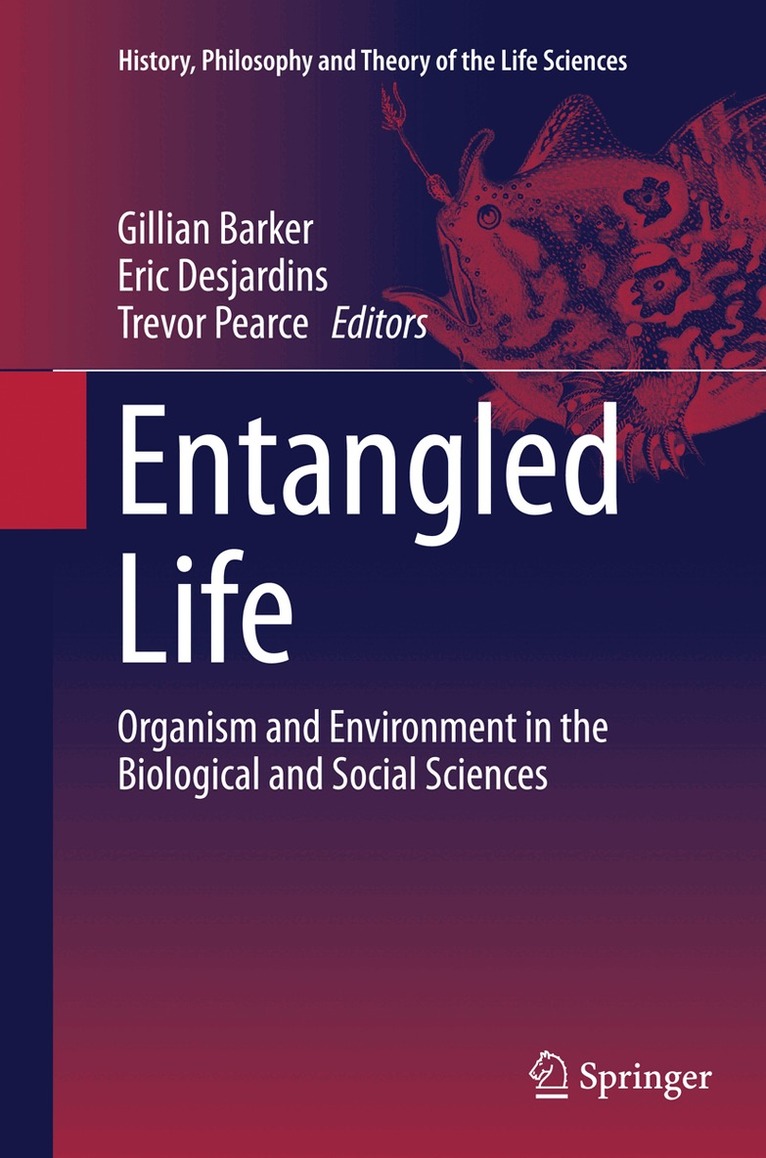
Entangled Life
Organism and Environment in the Biological and Social Sciences
Inbunden, Engelska, 2013
1 381 kr
Skickas inom 10-15 vardagar
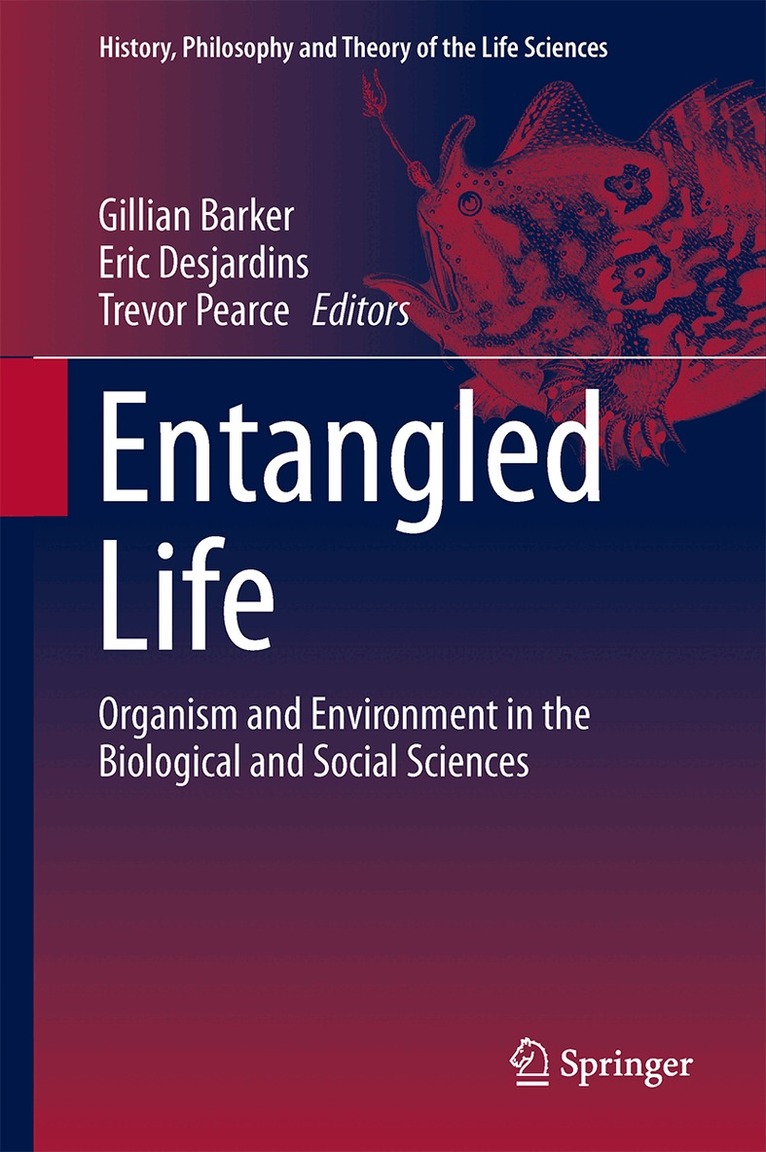
This volume explores the interactions between organisms and their environments and how this “entanglement” is a fundamental aspect of all life. It brings together the work and ideas of historians, philosophers, biologists, and social scientists, uniting a range of new perspectives, methods, and frameworks for examining and understanding the ways that organisms and environments interact.The volume is organized into three main sections: historical perspectives, contested models, and emerging frameworks. The first section explores the origins of the modern idea of organism-environment interaction in the mid-nineteenth century and its development by later psychologists and anthropologists. In the second section, a variety of controversial models—from mathematical representations of evolution to model organisms in medical research—are discussed and reframed in light of recent questions about the interplay between organisms and environment. The third section investigates several new ideas that have the potential to reshape key aspects of the biological and social sciences. Populations of organisms evolve in response to changing environments; bodies and minds depend on a wide array of circumstances for their development; cultures create complex relationships with the natural world even as they alter it irrevocably. The chapters in this volume share a commitment to unraveling the mysteries of this entangled life.
1 381 kr
Skickas inom 10-15 vardagar
This volume explores the interactions between organisms and their environments and how this “entanglement” is a fundamental aspect of all life. It brings together the work and ideas of historians, philosophers, biologists, and social scientists, uniting a range of new perspectives, methods, and frameworks for examining and understanding the ways that organisms and environments interact.The volume is organized into three main sections: historical perspectives, contested models, and emerging frameworks. The first section explores the origins of the modern idea of organism-environment interaction in the mid-nineteenth century and its development by later psychologists and anthropologists. In the second section, a variety of controversial models—from mathematical representations of evolution to model organisms in medical research—are discussed and reframed in light of recent questions about the interplay between organisms and environment. The third section investigates several new ideas that have the potential to reshape key aspects of the biological and social sciences. Populations of organisms evolve in response to changing environments; bodies and minds depend on a wide array of circumstances for their development; cultures create complex relationships with the natural world even as they alter it irrevocably. The chapters in this volume share a commitment to unraveling the mysteries of this entangled life.