Troy Paddock - Böcker
Visar alla böcker från författaren Troy Paddock. Handla med fri frakt och snabb leverans.
4 produkter
4 produkter
1 177 kr
Skickas inom 10-15 vardagar
World War I highlighted the influence of newspapers in rousing and maintaining public support for the war effort. Discussions of the role of the press in the Great War have, to date, largely focused on atrocity stories. This book offers the first comparative analysis of how newspapers in Great Britain, France, Russia, Germany, and Austria-Hungary attempted to define war, its objectives, and the enemy. Presented country-by-country, expert essays examine, through use of translated articles from the contemporary press, how newspapers of different nations defined the war for their readership and the ideals they used to justify a war and support governments that some segments of the press had opposed just a few months earlier.During the opening months of the war, governments attempted to influence public opinion functioned in a largely negative fashion, for example, the censoring of military information or criticisms of government policies. There was little effort to provide a positive message to sway readers. As a result, newspapers had a relatively free hand in justifying the war and the reasons for their respective nation's involvement. Partisan politics was a staple of the pre-war press; thus, newspapers could and did define the war in terms that reflected their own political ideals and agenda. Conservative, liberal, and socialist newspapers all largely supported the war (the ones that did not were shut down immediately), but they did so for different reasons and hoped for different outcomes if their side was victorious.
651 kr
Skickas inom 10-15 vardagar
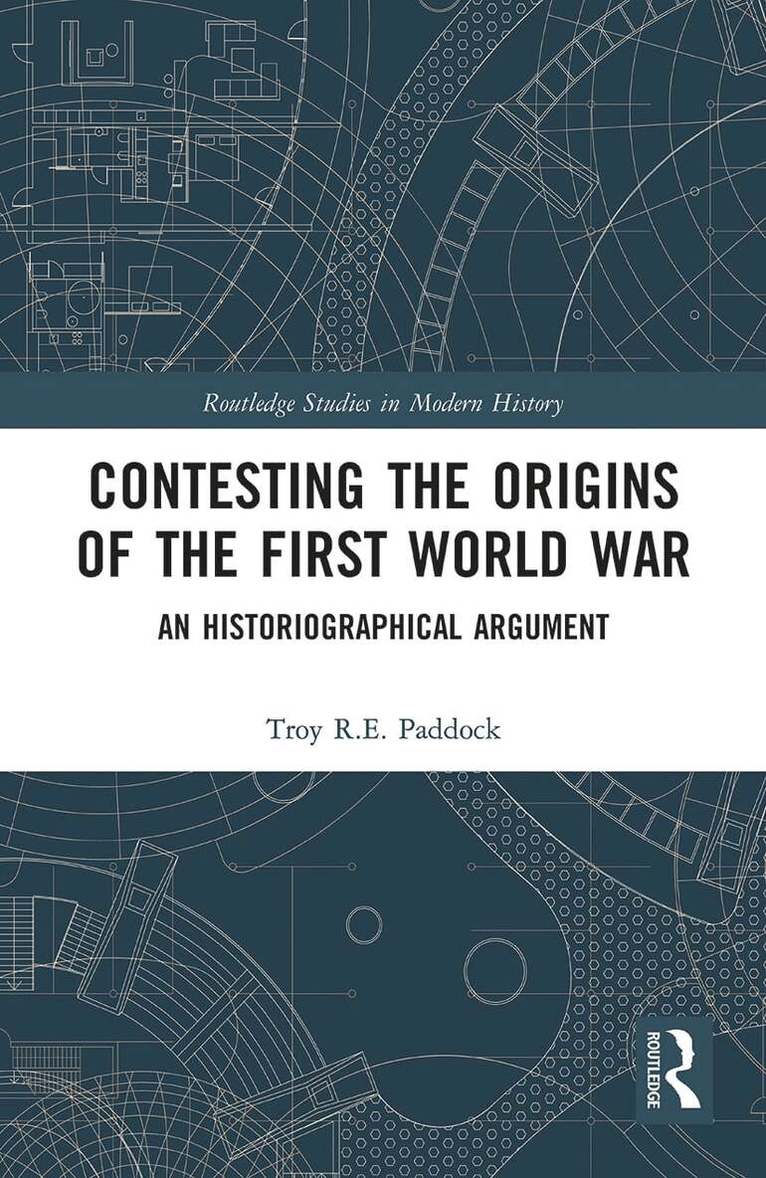
Contesting the Origins of the First World War challenges the Anglophone emphasis on Germany as bearing the primary responsibility in causing the conflict and instead builds upon new perspectives to reconsider the roles of the other Great Powers.Using the work of Terrance Zuber, Sean McMeekin, and Stefan Schmidt as building blocks, this book reassesses the origins of the First World War and offers an explanation as to why this reassessment did not come about earlier. Troy R.E. Paddock argues that historians need to redraw the historiographical map that has charted the origins of the war. His analysis creates a more balanced view of German actions by also noting the actions and inaction of other nations. Recent works about the roles of the five Great Powers involved in the events leading up to the war are considered, and Paddock concludes that Germany does not bear the primary responsibility.This book provides a unique historiographical analysis of key texts published on the origins of the First World War, and its narrative encourages students to engage with and challenge historical perspectives.
2 176 kr
Skickas inom 10-15 vardagar
Contesting the Origins of the First World War challenges the Anglophone emphasis on Germany as bearing the primary responsibility in causing the conflict and instead builds upon new perspectives to reconsider the roles of the other Great Powers.Using the work of Terrance Zuber, Sean McMeekin, and Stefan Schmidt as building blocks, this book reassesses the origins of the First World War and offers an explanation as to why this reassessment did not come about earlier. Troy R.E. Paddock argues that historians need to redraw the historiographical map that has charted the origins of the war. His analysis creates a more balanced view of German actions by also noting the actions and inaction of other nations. Recent works about the roles of the five Great Powers involved in the events leading up to the war are considered, and Paddock concludes that Germany does not bear the primary responsibility.This book provides a unique historiographical analysis of key texts published on the origins of the First World War, and its narrative encourages students to engage with and challenge historical perspectives.
2 695 kr
Skickas inom 5-8 vardagar
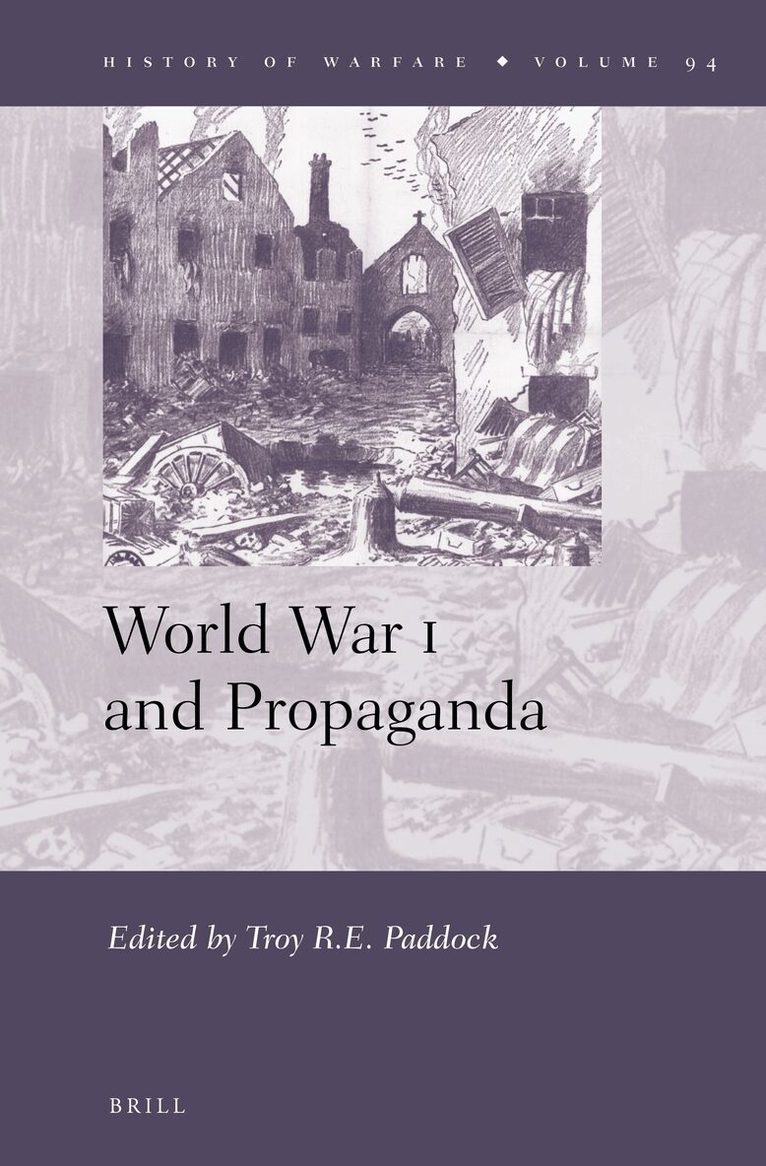
World War I and Propaganda offers a new look at a familiar subject. The contributions to this volume demonstrate that the traditional view of propaganda as top-down manipulation is no longer plausible. Drawing from a variety of sources, scholars examine the complex negotiations involved in propaganda within the British Empire, in occupied territories, in neutral nations, and how war should be conducted. Propaganda was tailored to meet local circumstances and integrated into a larger narrative in which the war was not always the most important issue. Issues centering on local politics, national identity, preservation of tradition, or hopes of a brighter future all played a role in different forms of propaganda.Contributors are Christopher Barthel, Donata Blobaum, Robert Blobaum, Mourad Djebabla, Christopher Fischer, Andrew T. Jarboe, Elli Lemonidou, David Monger, Javier Pounce,Catriona Pennell, Anne Samson, Richard Smith, Kenneth Andrew Steuer, María Inés Tato, and Lisa Todd.