
Troy R. E. Paddock - Böcker
Visar alla böcker från författaren Troy R. E. Paddock. Handla med fri frakt och snabb leverans.
2 produkter
2 produkter
1 177 kr
Skickas inom 10-15 vardagar
World War I highlighted the influence of newspapers in rousing and maintaining public support for the war effort. Discussions of the role of the press in the Great War have, to date, largely focused on atrocity stories. This book offers the first comparative analysis of how newspapers in Great Britain, France, Russia, Germany, and Austria-Hungary attempted to define war, its objectives, and the enemy. Presented country-by-country, expert essays examine, through use of translated articles from the contemporary press, how newspapers of different nations defined the war for their readership and the ideals they used to justify a war and support governments that some segments of the press had opposed just a few months earlier.During the opening months of the war, governments attempted to influence public opinion functioned in a largely negative fashion, for example, the censoring of military information or criticisms of government policies. There was little effort to provide a positive message to sway readers. As a result, newspapers had a relatively free hand in justifying the war and the reasons for their respective nation's involvement. Partisan politics was a staple of the pre-war press; thus, newspapers could and did define the war in terms that reflected their own political ideals and agenda. Conservative, liberal, and socialist newspapers all largely supported the war (the ones that did not were shut down immediately), but they did so for different reasons and hoped for different outcomes if their side was victorious.
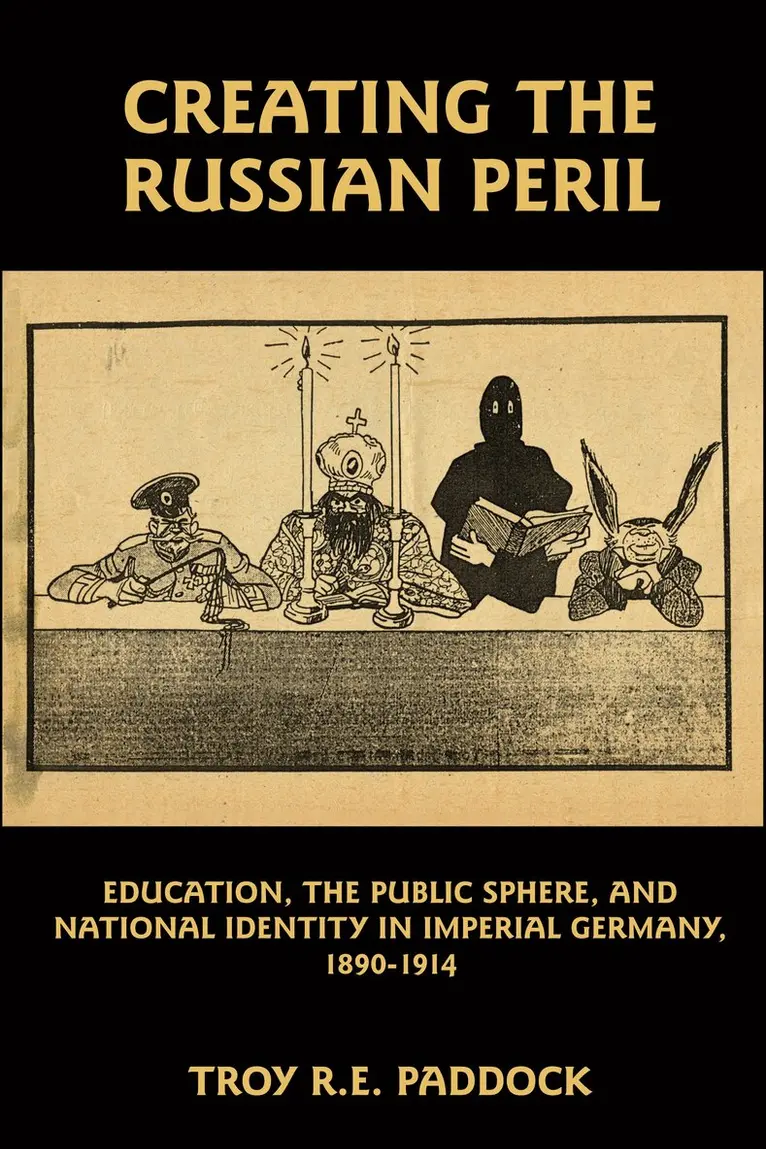
Creating the Russian Peril
Education, the Public Sphere, and National Identity in Imperial Germany, 1890-1914
Inbunden, Engelska, 2010
1 215 kr
Skickas inom 10-15 vardagar
German attitudes toward and stereotypes of Russia before the First World War and how they were inculcated in the public.The causes of the First World War have been studied and debated for many decades, yet cultural historians of Germany have largely neglected the German-Russian aspect of the conflict for a focus on the clash of Germany and Great Britain. When they have focused on Germany and Russia, they have too often dismissed the anti-Russian propaganda of the war's first months as a sudden and opportunistic campaign to justify the war. This intellectual and cultural history gives German attitudes toward and stereotypes of Russia their due, re-examining them through the lens of German national identity and revealing an evolving obsession with Russia during the quarter-century leading up to the war, when Germany came to consider itself a Western nation, with Russia, to use Edward Said's terminology, as an Oriental "other." While historians have addressed the issue of an Oriental Russia, this book extends the analysis beyond traditional intellectual history's focus on cultural elites by studying the construction of Russia in school textbooks, newspapers, and the writings of academics. Drawing upon the work of Said, Jürgen Habermas, Sander Gilman, and Pierre Bourdieu, Troy Paddock demonstrates that public debate on Russia was based on common assumptions, and contends that these assumptions -- which resulted in the ascendancy of a view of Russia as the "Slavic peril" in the last few years before the war -- were ingrained in the public through education.Troy Paddock is Professor of History at Southern Connecticut State University.