Tullia d'Aragona - Böcker
Visar alla böcker från författaren Tullia d'Aragona. Handla med fri frakt och snabb leverans.
4 produkter
4 produkter
423 kr
Tillfälligt slut
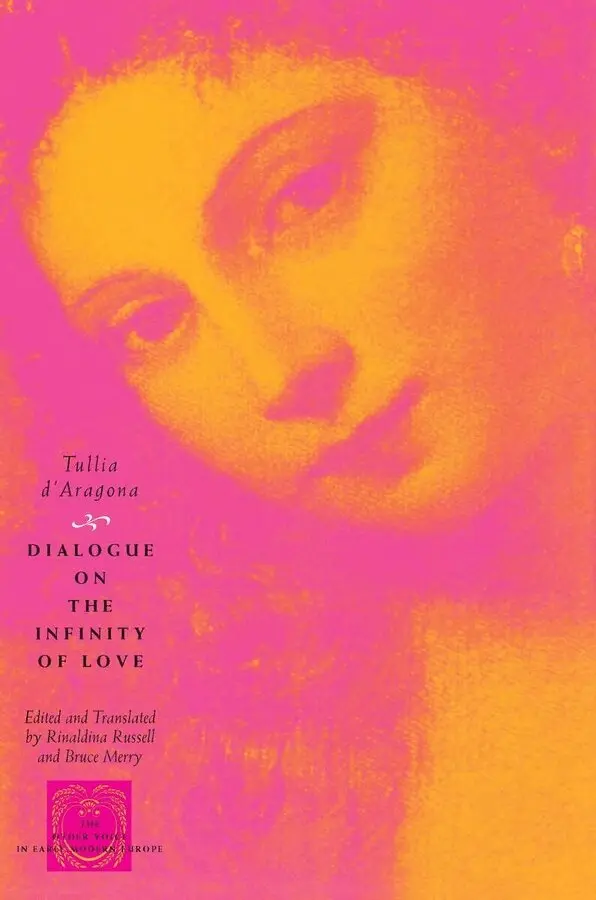
First published in Venice in 1547, this work casts a woman rather than a man as the main disputant on the ethics of love. Tullia d'Aragona argued that the only moral form of love between a woman and a man is one that recognizes both the sensual and the spiritual needs of humankind. Declaring sexual drives to be fundamentally irrepressible and blameless, she sought to challenge the Platonic and religious orthodoxy of her time, which condemed all forms of sensual experience, denied the rationality of women, and relegated femininity to the realm of physicality and sin. Human beings, the book asserts, consist of body and soul, sense and intellect, and honourable love must be based on this real nature. Aragona vindicates all women, proposing a morality of love that restores them to intellectual and sexual parity with men.
219 kr
Skickas inom 7-10 vardagar
First published in Venice in 1547, this work casts a woman rather than a man as the main disputant on the ethics of love. Tullia d'Aragona argued that the only moral form of love between a woman and a man is one that recognizes both the sensual and the spiritual needs of humankind. Declaring sexual drives to be fundamentally irrepressible and blameless, she sought to challenge the Platonic and religious orthodoxy of her time, which condemed all forms of sensual experience, denied the rationality of women, and relegated femininity to the realm of physicality and sin. Human beings, the book asserts, consist of body and soul, sense and intellect, and honourable love must be based on this real nature. Aragona vindicates all women, proposing a morality of love that restores them to intellectual and sexual parity with men.
543 kr
Skickas
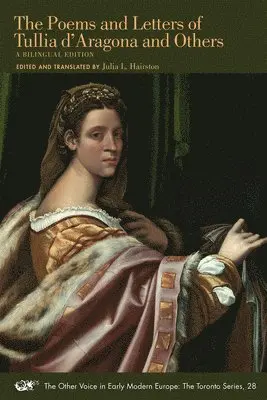
Hairston has constructed a full personal, cultural and literary biography for d’Aragona, using newly discovered letters, archival material of other kinds, and contemporary theory about gender in women’s writing. Footnotes establish the intricacy of Tullia’s intellectual networks and her courting of intellectuals in rhyme. Hairston includes poems written to d’Aragona, including Girolamo Muzio’s long pastoral, Tirrhenia. She addresses with tact the question of how sexual Tullia’s relationships were with her various interlocutors. At times, as she says, one just can’t know, but that the issue is much less important than the poems themselves. I agree wholeheartedly. This is the editor Tullia has been waiting for: an indefatigable researcher, a creative biographer, and a precise and appreciative literary critic.—Ann Rosalind JonesEsther Cloudman Dunn Professor of Comparative Literature, Smith CollegeThe figure of Tullia d’Aragona has long fascinated readers as the prototype of the “honest courtesan”, a woman who successfully exploited her physical and intellectual charms to win the adoration and respect of the Italian cultural elite. With Julia Hairston’s richly annotated edition of her collected verse, the product of more than a decade of scholarship, d’Aragona finally comes into focus also as poet. She emerges in this volume as one of the most distinctive protagonists in a key transitional moment in Italian literary history, when the aristocratic tradition of Petrarchist lyric began to be reshaped and democratized by its encounter with print.—Virginia CoxProfessor of Italian, New York University
1 226 kr
Skickas inom 7-10 vardagar
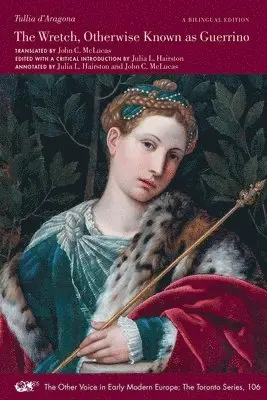
The only English translation of the first epic poem to be authored by an Italian woman.This is an unabridged bilingual, fully annotated edition of Tullia d’Aragona’s epic poem The Wretch. This mid-century epic reflects the many historical and religious changes taking place in the first half of the sixteenth century in Europe and the burgeoning literary debates following the publication of another Italian epic poem, Ariosto’s Orlando Furioso. The Wretch recounts the adventures of Guerrino, a nobleman captured by pirates as an infant and sold into slavery. His famous quest in search of his parents and his identity involves abductions, same-sex seductions, and skirmishes with fantastical beasts as he travels through Europe, Turkey, Africa, India, Arabia, and the Purgatory of St. Patrick. The poem occupies an important position in the development of the prestigious epic genre, the highest step on the ladder to literary recognition and fame, and Tullia’s work paved the way for the epics of other women writers in subsequent decades.