Tyler Priest - Böcker
Visar alla böcker från författaren Tyler Priest. Handla med fri frakt och snabb leverans.
4 produkter
4 produkter
1 039 kr
Skickas inom 10-15 vardagar
From the 1890s to the 1960s, U.S. steel makers imported more than 70 million tons of high-grade manganese ore, a ferroalloy indispensable to steel production but rare in the United States. Using a commodity approach to highlight the webs of interest and conflict over raw materials that studies of bilateral diplomacy often overlook, Priest reveals the interconnected histories of far-flung mining regions around the globe and the unexamined role of the major U.S. steel companies in the U.S. search for foreign materials. The big manganese mines would emerge first in Brazil, Soviet Georgia, and India, and later in Gabon and South Africa, in a world market that was extremely competitive and inherently unstable.Market instability, caused in part by consumer control over the manganese trade, stimulated direct U.S. investments in mining beginning in the 1920s. During the 1930s and 1940s, concerns about access to manganese increasingly shaped U.S. mineral and foreign lending policies, which by the Cold War focused on supporting infrastructure development linked to strategic mining districts. Big manganese projects in Brazil and Gabon, undertaken by Bethlehem and U.S. Steel, respectively, dramatically restructured world supply and demonstrated the ways in which U.S. investment and aid imposed an export orientation in producing nations and widened the gulf between industrial and extractive regions of the world.
510 kr
Kommande
Offshore Oildom tells the riveting story of the United States' quest to secure the oil riches of the sea. Drawing on a wealth of untapped sources, Tyler Priest reveals how the offshore oil industry emerged from an ambitious project to incorporate the ocean's submerged lands into the territory of the United States. These lands were frontier spaces, beyond traditional jurisdiction and control. Efforts to commandeer them for oil and gas extraction thus required new institutions of governance. From the titanic struggle over the tidelands starting in the 1930s to Project Independence in the 1970s, the process of establishing an offshore dominion of oil provoked intractable conflicts over money, values, and power. It pitted coastal states against their land-locked counterparts and captains of industry against federal civil servants and coastal communities. It stoked partisan and internecine warfare. It set off an international race to annex offshore territory, complicating U.S. foreign-policy objectives. It weighed on the minds of Supreme Court justices and troubled every occupant of the White House from Franklin Roosevelt forward. The modern environmental movement was born in opposition to offshore oil just as the 1970s energy crisis compelled the acceleration of drilling in the ocean. Creating and governing an offshore oildom involved nothing less than redrawing the territorial borders of the nation, rebuilding the political foundations of the U.S. energy system, and testing the environmental limits of resource extraction. This history is essential to understanding the tension between energy security and environmental protection in modern America.
686 kr
Skickas inom 5-8 vardagar
286 kr
Skickas inom 10-15 vardagar
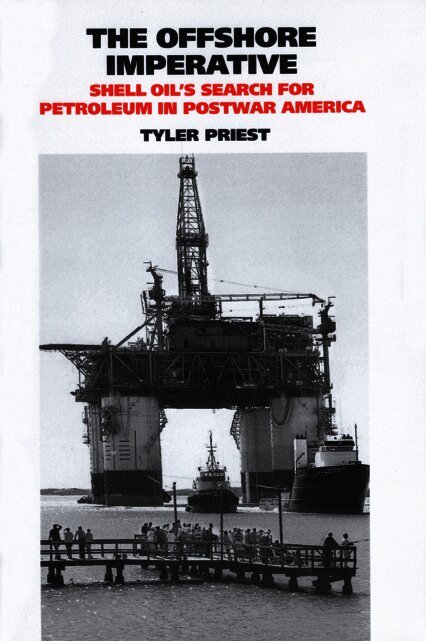
After World War II, the discovery and production of onshore oil in the United States faced decline. As a result, offshore prospects in the Gulf of Mexico took on new strategic value. Shell Oil Company pioneered many of the early moves offshore and continues to lead the way into “deepwater.”Tyler Priest’s study is the first time the modern history of Shell Oil has been told in any detail. Drawing on interviews with Shell retirees and many other sources, Priest relates how the imagination, talent, and hard work of personnel at all levels shaped the evolution of the company. The narrative also covers important aspects of Shell Oil’s corporate evolution, but the company’s pioneering steps into the deepwater fields of the Gulf of Mexico are its signature achievement. Priest’s study demonstrates that engineers did not suddenly create methods for finding and producing oil and gas from astounding water depths. Rather, they built on a half-century of accumulated knowledge and improvements to technical systems.Shell Oil’s story is unique, but it also illuminates the modern history of the petroleum industry. As Priest demonstrates, this company’s experiences offer a starting point for examining the understudied topics of strategic decision-making, scientific research, management of technology, and corporate organization and culture within modern oil companies, as well as how these activities applied to offshore development.