Ulrich Bischoff - Böcker
Visar alla böcker från författaren Ulrich Bischoff. Handla med fri frakt och snabb leverans.
7 produkter
7 produkter
504 kr
Kommande
Surrealism freed art from the grip of logic. Turning instead to dreams, desire, memory, and the volatile realm of the subconscious, these five modern masters pursued the impulse of Surrealism along radically individual paths, each one arriving at a distinct creative destination.Max Ernst was the movement’s great experimentalist. Embracing chance, collage, and invention, he pioneered new methods of image-making in which accident and intuition were his trusted collaborators. Joan Miró developed a language of dancing symbols and radiant color, filling his canvases with poetic constellations that are both playful and cosmically charged. René Magritte’s cool, cerebral wit shifted the focus to perception itself. He reveled in visual paradoxes and deadpan humor, questioning the dynamics between image, language, and reality. Salvador Dalí was infamous for his theatrical flair and virtuosic precision. His images, rendered with almost scientific clarity, turned the irrational into something uncannily tangible. Frida Kahlo was often placed at Surrealism’s margins and resisted the label herself. Her fiercely personal works fused physical pain, Mexican identity, folklore, and autobiography, juxtaposing reality and fantasy in images of raw emotional force.Surrealism was never a single doctrine but a shared impulse: to ignite the imagination and dismantle the familiar. Bringing landmark works from five canonical artists together with incisive commentaries, this is both the perfect primer and a rewarding deep dive into art’s dream state, where fantasy, intellect, and emotion collide.
185 kr
Skickas inom 3-6 vardagar
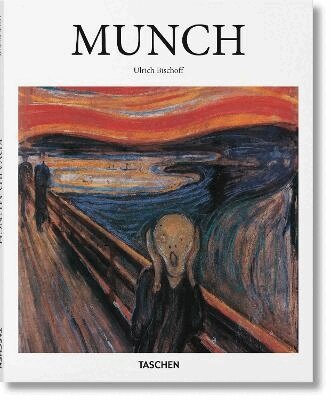
A hairless, ghostly figure on a bridge. The sky orange-red above him. His hands raised to his ears, his mouth wide in a haunting wail. In painting The Scream, Edvard Munch (1863–1944) created Mona Lisa for our times. The shriek of his iconic figure reverberates around the world, its echo resounding in the work of Andy Warhol, Jasper Johns, Martin Kippenberger, Marlene Dumas, and Tracey Emin.This introductory book surveys Munch’s staggering capacity for psychodrama in The Scream and beyond. With rich illustration, it looks at the lurid, dark, and deeply modern visions that made up the artist’s response to relationships and emotions. These compelling images, regarded by the artist himself as a means of “free confession,” remain as magnetic today as they were on the brink of modernism.
186 kr
Skickas
A hairless, ghostly figure on a bridge. The sky orange-red above him. His hands raised to his ears, his mouth wide in a haunting wail. In painting The Scream, Edvard Munch (1863–1944) created Mona Lisa for our times. The shriek of his iconic figure reverberates around the world, its echo resounding in the work of Andy Warhol, Jasper Johns, Martin Kippenberger, Marlene Dumas, and Tracey Emin.This introductory book surveys Munch’s staggering capacity for psychodrama in The Scream and beyond. With rich illustration, it looks at the lurid, dark, and deeply modern visions that made up the artist’s response to relationships and emotions. These compelling images, regarded by the artist himself as a means of “free confession,” remain as magnetic today as they were on the brink of modernism.
179 kr
Skickas inom 3-6 vardagar
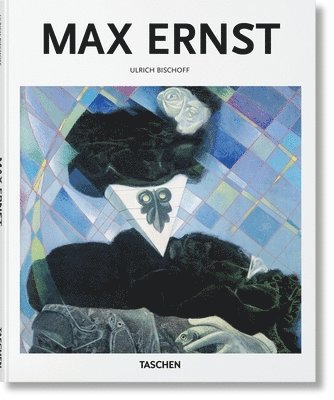
With unparalleled artistic originality Max Ernst (1891–1976) transformed everything he touched. By pushing the boundaries and breaking loose from the confined view of the culture of his time, he became one of the most important figures of Dadaism and Surrealism. Driven by the counter-reaction to the horrors of World War I, he became a pioneer of the Dada movement. The closing of the famed Dada exhibit in Cologne for ‘obscenity’ led Ernst to spend the rest of his life in Paris, where he came in contact with the Surrealists. Above all, Ernst stands out for his varied style and technique, having produced an oeuvre that reaches from paintings, drawings, and sculpture, across texts and stage settings to collage novels and the development of his own ‘frottage’ technique. During World War II, Ernst, like many of his colleagues, became an ‘undesirable foreigner’ and was forced to emigrate; however, he returned to France after the war. Continuing a career that spanned decades, in 1954 he received the Grand Prize for Painting at the Biennial in Venice. This book is a journey through magic, vividness, and fantasy. It is a gateway into the intricate mind and world of Max Ernst.
187 kr
Skickas
With unparalleled artistic originality Max Ernst (1891–1976) transformed everything he touched. By pushing the boundaries and breaking loose from the confined view of the culture of his time, he became one of the most important figures of Dadaism and Surrealism. Driven by the counter-reaction to the horrors of World War I, he became a pioneer of the Dada movement. The closing of the famed Dada exhibit in Cologne for ‘obscenity’ led Ernst to spend the rest of his life in Paris, where he came in contact with the Surrealists. Above all, Ernst stands out for his varied style and technique, having produced an oeuvre that reaches from paintings, drawings, and sculpture, across texts and stage settings to collage novels and the development of his own ‘frottage’ technique. During World War II, Ernst, like many of his colleagues, became an ‘undesirable foreigner’ and was forced to emigrate; however, he returned to France after the war. Continuing a career that spanned decades, in 1954 he received the Grand Prize for Painting at the Biennial in Venice. This book is a journey through magic, vividness, and fantasy. It is a gateway into the intricate mind and world of Max Ernst.
187 kr
Skickas
With unparalleled artistic originality Max Ernst (1891–1976) transformed everything he touched. By pushing the boundaries and breaking loose from the confined view of the culture of his time, he became one of the most important figures of Dadaism and Surrealism. Driven by the counter-reaction to the horrors of World War I, he became a pioneer of the Dada movement. The closing of the famed Dada exhibit in Cologne for ‘obscenity’ led Ernst to spend the rest of his life in Paris, where he came in contact with the Surrealists. Above all, Ernst stands out for his varied style and technique, having produced an oeuvre that reaches from paintings, drawings, and sculpture, across texts and stage settings to collage novels and the development of his own ‘frottage’ technique. During World War II, Ernst, like many of his colleagues, became an ‘undesirable foreigner’ and was forced to emigrate; however, he returned to France after the war. Continuing a career that spanned decades, in 1954 he received the Grand Prize for Painting at the Biennial in Venice. This book is a journey through magic, vividness, and fantasy. It is a gateway into the intricate mind and world of Max Ernst.
485 kr
Skickas
In The Power of the Avant-Garde, contemporary artists from different art disciplines enter into dialogue with their colleagues from the historical avant-garde movement. Luc Tuymans talks about 'Le Grand Cheval' of Raymond Duchamp-Villon; Marlene Dumas describes her passion for Edvard Munch; John Baldessari discusses the genius Marcel Broodthaers,...This book makes surprising links, shedding new light on the power and influence of art before, during and after World War I.