Ulrike Schaede - Böcker
Visar alla böcker från författaren Ulrike Schaede. Handla med fri frakt och snabb leverans.
7 produkter
7 produkter
Cooperative Capitalism
Self-Regulation, Trade Associations, and the Antimonopoly Law in Japan
Inbunden, Engelska, 2000
2 842 kr
Skickas inom 5-8 vardagar
The Japanese government is becoming less involved in shaping industrial policy–but what does this imply for the openness of Japanese markets to foreign competition? In an extensive study of 'post-development' Japan, Ulrike Schaede argues that, contrary to what many have suggested, the reduced role of government regulation may not result in more open markets. Instead, as has happened throughout Japanese history, deregulation and the recession of the 1990s have once again led Japanese trade associations to assume important regulatory functions of their own. They do this through 'self-regulation'–setting and enforcing the rules of trade for their industries, independent from the government. As a result, many Japanese markets are now effectively governed by incumbent firms, in particular in terms of structuring the distribution system. As the record of postwar antitrust enforcement reveals, Japan's antitrust system considers most activities of self-regulation, other than outright price-fixing, as legal. Using interviews and a unique database of trade association activities, this book concludes that increasing self-regulation renders both government deregulation programmes and international trade negotiations ineffective in opening Japanese markets. The implications of self-regulation for Japanese industry are mixed: while internationally competitive firms can use self-regulation to reduce competition at home in order to compete more forcefully abroad, some domestic industries, such as the financial sector, may suffer from increased self-protection.
2 088 kr
Skickas inom 10-15 vardagar
As Japan moves from a "catch-up" strategy to a post-developmental stage, it is changing its actions and reactions both in terms of international political economy and domestic policy issues. The current changes in Japan can best be understood as following a path toward "permeable insulation." Japan's government and economic system continue to insulate domestic businesses from full competition and the rigor of market forces, but this insulation is also permeable because a decline in state power vis-a-vis the private sector since the 1990s has combined with a decline in the solidarity of private institutions (such as keiretsu or trade associations) to make strategies of insulation much less rigid and uniform. As a result of the "permeable insulation," Japan's response to the global and domestic challenges of the 1990s is neither one of full acceptance nor rejection of global standards and practices. Instead, the basic scheme is one of pragmatic utilization of new rules and circumstances to continue industrial policies of promotion or protection in a new post-developmental era. By bringing together in-depth case studies of eight critical issue areas, this book looks at Japan's responses to globalization and move toward "permeable insulation." Part 1 introduces the reader to the concept of "permeable insulation" and provides a detailed review of past practices and changes in policy. Part 2 deals with international trade issues, Japan's compliance with and resistance to global trade rules, and the domestic interests visible in Japan's compliance. Part 3 focuses on domestic measures and policies that Japanese firms have used to adapt to the changes, within Japan and abroad, triggered by globalization and liberalization.
671 kr
Skickas inom 10-15 vardagar
As Japan moves from a "catch-up" strategy to a post-developmental stage, it is changing its actions and reactions both in terms of international political economy and domestic policy issues. The current changes in Japan can best be understood as following a path toward "permeable insulation." Japan's government and economic system continue to insulate domestic businesses from full competition and the rigor of market forces, but this insulation is also permeable because a decline in state power vis-a-vis the private sector since the 1990s has combined with a decline in the solidarity of private institutions (such as keiretsu or trade associations) to make strategies of insulation much less rigid and uniform. As a result of the "permeable insulation," Japan's response to the global and domestic challenges of the 1990s is neither one of full acceptance nor rejection of global standards and practices. Instead, the basic scheme is one of pragmatic utilization of new rules and circumstances to continue industrial policies of promotion or protection in a new post-developmental era. By bringing together in-depth case studies of eight critical issue areas, this book looks at Japan's responses to globalization and move toward "permeable insulation." Part 1 introduces the reader to the concept of "permeable insulation" and provides a detailed review of past practices and changes in policy. Part 2 deals with international trade issues, Japan's compliance with and resistance to global trade rules, and the domestic interests visible in Japan's compliance. Part 3 focuses on domestic measures and policies that Japanese firms have used to adapt to the changes, within Japan and abroad, triggered by globalization and liberalization.
350 kr
Skickas inom 10-15 vardagar
Between 2002 and 2008, Japan's economy saw constant expansion, a record among the world's advanced economies and Japan's longest period of economic growth since World War II. This remarkable achievement came about because of a transformation of Japanese business practices. This transformation was guided by strategies that enabled Japan's leading corporations, previously diversified to an exceptionally high degree, to become leaner, more nimble, and more competitive at home and in the global economy.In Choose and Focus, the first in-depth account of this strategic inflection point in Japanese business, Ulrike Schaede argues that the emerging practices and attitudes have created a New Japan. Drawing on profiles of several corporations, including Panasonic, Takeda and Astellas, Softbank, kakaku.com, and SBI E*Trade, Schaede explains how the fundamental principles of Japan's economy have been overturned. "Choose and focus" strategies, whereby corporations concentrate on core areas and spin off unrelated businesses, have completely altered the strategic logic of Japan's previous industrial architecture. These surprisingly aggressive moves, Schaede finds, have created new market opportunities for start-up enterprises and foreign investors, as well as a wave of mergers, acquisitions, and hostile takeovers that have shaken Japanese companies out of complacency.Unlike the advances made by Japanese firms in the 1970s and 1980s, the current transformation is taking root in component and materials industries rather than in consumer products. Because of the relative obscurity of the changes and the overshadowing story of China's ascent, the Japanese corporate revolution has gone largely unnoticed among Western observers. Choose and Focus is required reading for anyone doing business in Japan or trying to understand how contemporary Japanese business works and how Japanese corporations have reinvented themselves to face the challenges—and realize the opportunities—of the 21st century.
234 kr
Skickas inom 7-10 vardagar
Digital transformation and demographic change are usually seen as two separate but equally threatening events that foreshadow job replacement, industrial decline, and social bifurcation. Because Japan is the world's frontrunner in demographic change with an ageing and shrinking society, it is facing these two disruptions at the exact same time. This creates a 'lucky moment,' as it presents an opportunity to employ one as a solution for the problems caused by the other. For example, Japan's traditional sectors are replaced by digital systems that demand fewer people while offering new jobs. Emerging technologies are opening fresh opportunities for Japanese companies to compete globally. The twin disruptions are also upending Japan's political economy. As companies reinvent business strategies and employees reskill to pursue individual careers, the state is reorganizing to find a new role in balancing the unfolding demands of the digital economy.
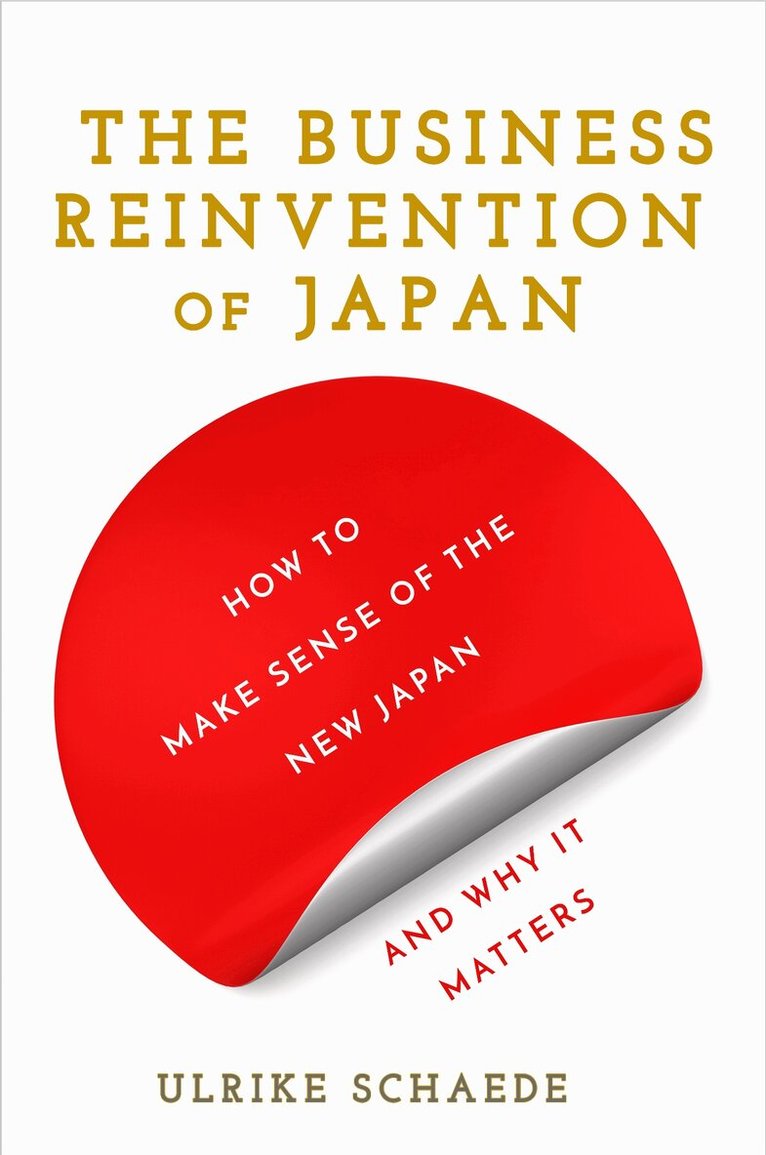
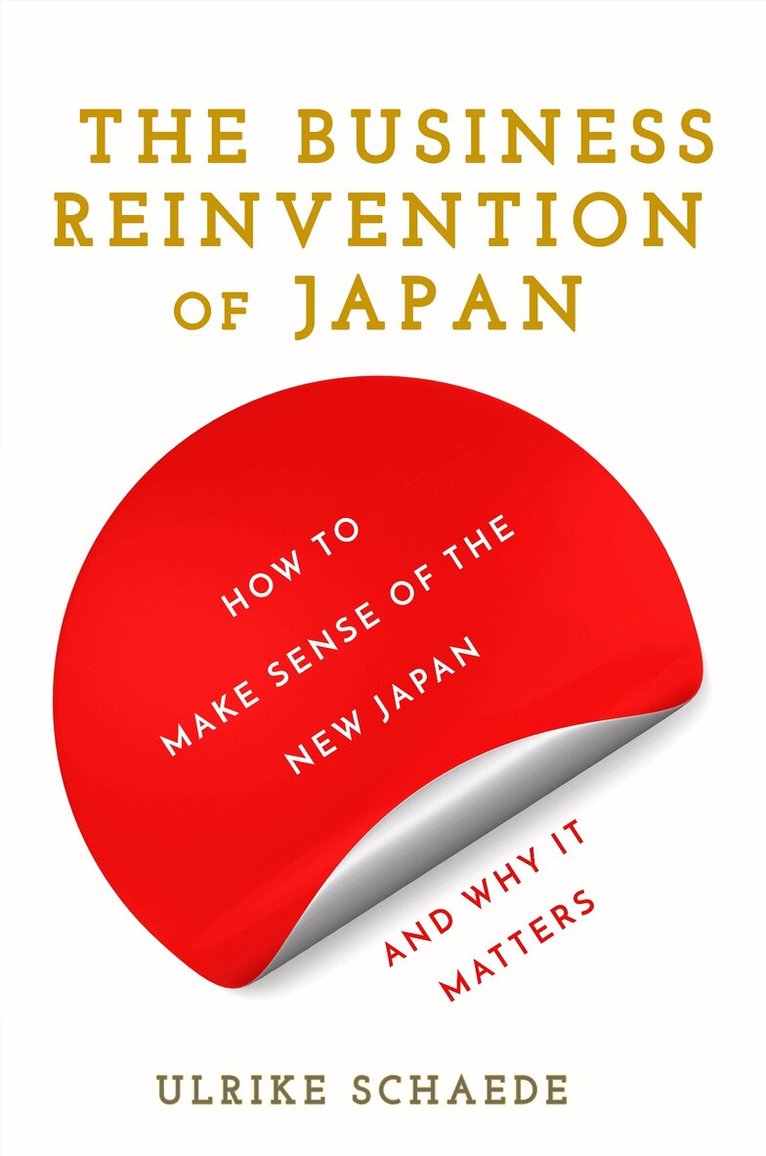
Business Reinvention of Japan
How to Make Sense of the New Japan and Why It Matters
Inbunden, Engelska, 2020
433 kr
Skickas inom 10-15 vardagar
After two decades of reinvention, Japanese companies are re-emerging as major players in the new digital economy. They have responded to the rise of China and new global competition by moving upstream into critical deep-tech inputs and advanced materials and components. This new "aggregate niche strategy" has made Japan the technology anchor for many global supply chains. Although the end products do not carry a "Japan Inside" label, Japan plays a pivotal role in our everyday lives across many critical industries.This book is an in-depth exploration of current Japanese business strategies that make Japan the world's third-largest economy and an economic leader in Asia. To accomplish their reinvention, Japan's largest companies are building new processes of breakthrough innovation. Central to this book is how they are addressing the necessary changes in organizational design, internal management processes, employment, and corporate governance. Because Japan values social stability and economic equality, this reinvention is happening slowly and methodically, and has gone largely unnoticed by Western observers. Yet, Japan's more balanced model of "caring capitalism" is both competitive and transformative, and more socially responsible than the unbridled growth approach of the United States.
567 kr
Skickas inom 10-15 vardagar