Una M. Cadegan - Böcker
Visar alla böcker från författaren Una M. Cadegan. Handla med fri frakt och snabb leverans.
3 produkter
3 produkter
1 670 kr
Skickas inom 5-8 vardagar
So much has changed about Catholic intellectual life in the half century since the end of the Second Vatican Council that it has become difficult to locate the core concepts that make up the tradition. In the Logos of Love is a collection of essays that grew out of a 2013 conference on Catholic intellectual life co-sponsored by the University of Dayton and the Institute for Advanced Catholic Studies of the University of Southern California. The essays, written by scholars of theology, history, law, and media studies of religion, trace the history of this intellectual tradition in order to craft new tools for understanding the present day and approaching the future. Each essay explores both the promise of Catholic intellectual life and its various contemporary predicaments. How does a changed media landscape affect the way Catholicism is depicted, and the way its adherents understand and communicate among themselves? What resources can the tradition offer for reflection on new understandings of sexuality and gender? How can and should US Catholic intellectual life embrace and enhance--and introduce students to--the new ways in which Catholicism is becoming a more global tradition? What is the role of scholars in disciplines beyond theology? Of scholars who are not Catholic? Of scholars in universities not sponsored by Catholic religious orders or dioceses? By providing context for and proposing responses to these questions, the scholars invite discussion and reflection from a wide range of readers who have one important thing in common--a stake in sustaining a vibrant, flourishing intellectual tradition.
495 kr
Skickas inom 5-8 vardagar
So much has changed about Catholic intellectual life in the half century since the end of the Second Vatican Council that it has become difficult to locate the core concepts that make up the tradition. In the Logos of Love is a collection of essays that grew out of a 2013 conference on Catholic intellectual life co-sponsored by the University of Dayton and the Institute for Advanced Catholic Studies of the University of Southern California. The essays, written by scholars of theology, history, law, and media studies of religion, trace the history of this intellectual tradition in order to craft new tools for understanding the present day and approaching the future. Each essay explores both the promise of Catholic intellectual life and its various contemporary predicaments. How does a changed media landscape affect the way Catholicism is depicted, and the way its adherents understand and communicate among themselves? What resources can the tradition offer for reflection on new understandings of sexuality and gender? How can and should US Catholic intellectual life embrace and enhance--and introduce students to--the new ways in which Catholicism is becoming a more global tradition? What is the role of scholars in disciplines beyond theology? Of scholars who are not Catholic? Of scholars in universities not sponsored by Catholic religious orders or dioceses? By providing context for and proposing responses to these questions, the scholars invite discussion and reflection from a wide range of readers who have one important thing in common--a stake in sustaining a vibrant, flourishing intellectual tradition.
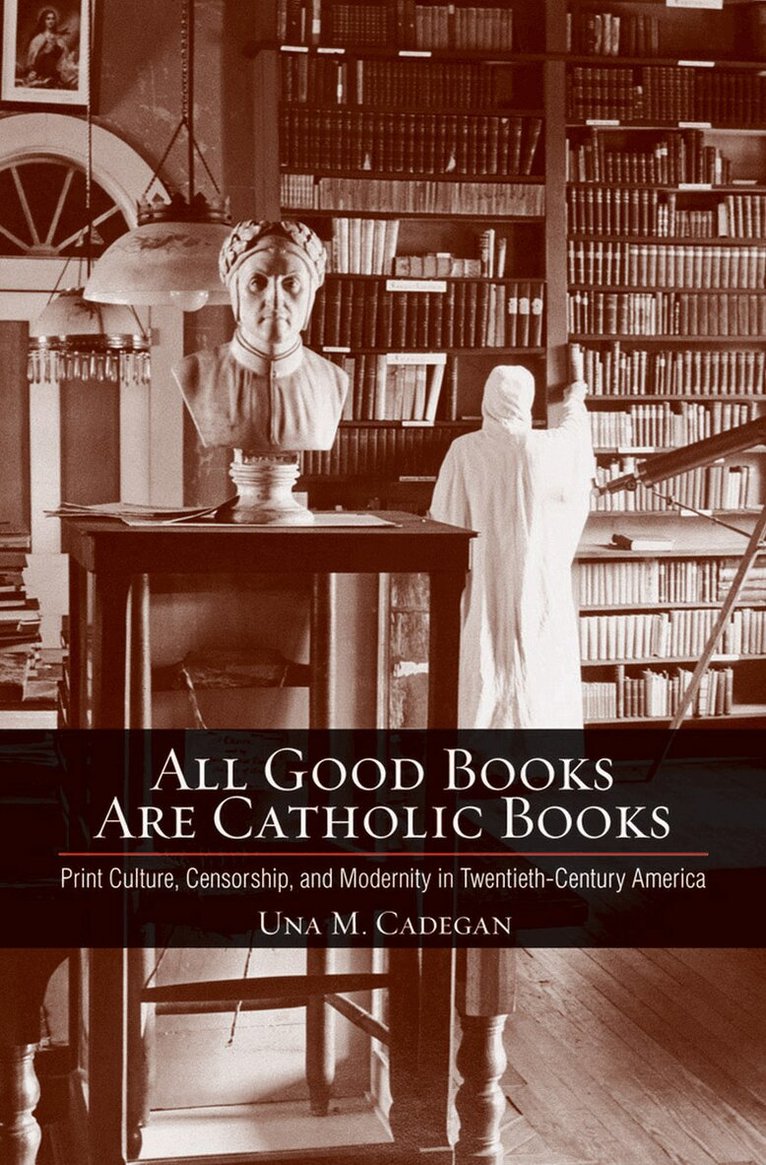
All Good Books Are Catholic Books
Print Culture, Censorship, and Modernity in Twentieth-Century America
Inbunden, Engelska, 2013
622 kr
Skickas inom 10-15 vardagar
Until the close of the Second Vatican Council in 1965, the stance of the Roman Catholic Church toward the social, cultural, economic, and political developments of the twentieth century was largely antagonistic. Naturally opposed to secularization, skeptical of capitalist markets indifferent to questions of justice, confused and appalled by new forms of high and low culture, and resistant to the social and economic freedom of women—in all of these ways the Catholic Church set itself up as a thoroughly anti-modern institution. Yet, in and through the period from World War I to Vatican II, the Church did engage with, react to, and even accommodate various aspects of modernity. In All Good Books Are Catholic Books, Una M. Cadegan shows how the Church's official position on literary culture developed over this crucial period. The Catholic Church in the United States maintained an Index of Prohibited Books and the National Legion of Decency (founded in 1933) lobbied Hollywood to edit or ban movies, pulp magazines, and comic books that were morally suspect. These regulations posed an obstacle for the self-understanding of Catholic American readers, writers, and scholars. But as Cadegan finds, Catholics developed a rationale by which they could both respect the laws of the Church as it sought to protect the integrity of doctrine and also engage the culture of artistic and commercial freedom in which they operated as Americans. Catholic literary figures including Flannery O'Connor and Thomas Merton are important to Cadegan's argument, particularly as their careers and the reception of their work demonstrate shifts in the relationship between Catholicism and literary culture. Cadegan trains her attention on American critics, editors, and university professors and administrators who mediated the relationship among the Church, parishioners, and the culture at large.