Urmila Seshagiri - Böcker
Visar alla böcker från författaren Urmila Seshagiri. Handla med fri frakt och snabb leverans.
3 produkter
3 produkter
112 kr
Skickas inom 5-8 vardagar
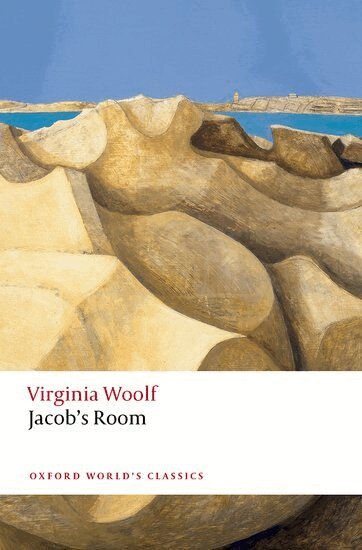
'What do we seek through millions of pages? Still hopefully turning the pages -- oh, here is Jacob's room.'Who is Jacob Flanders? Virginia Woolf's third novel, published in 1922 alongside James Joyce's Ulysses and T.S. Eliot's The Waste Land, follows this elusive title character from a sunlit childhood on the Cornwall coast to adventures in Cambridge, London, and Athens. Women fall in love with Jacob; young men desire his company and conversation. But Woolf keeps her scornful, charming protagonist at a distance, enveloping Jacob in mystery as he enters adulthood and the Great War thunders across Europe. A daring work that reimagines every element of the traditional novel, Jacob's Room tells a new story for a new century.In 1922, Lytton Strachey pronounced Jacob's Room 'a most wonderful achievement—more like poetry, it seems to me, than anything else, and as such I prophesy immortal.' One hundred years after its publication, Woolf's first full-length work of experimental fiction pulls us into the inexhaustible mysteries of intimacy and mortality.
212 kr
Skickas inom 7-10 vardagar
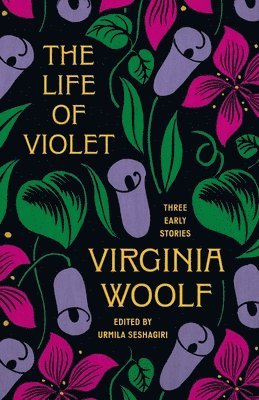
Virginia Woolf’s first fully realized work of fiction—published in its final, revised form for the first timeA beguiling trio of fantastical and farcical anti-fairy tales about a giantess who builds a magical “cottage of one’s own,” battles a silver-scaled sea monster, and defies governesses and gravity alikeIn 1907, eight years before she published her first novel, a twenty-five-year-old Virginia Woolf drafted three interconnected comic stories chronicling the adventures of a giantess named Violet—a teasing tribute to Woolf’s friend Mary Violet Dickinson. But it was only in 2022 that Woolf scholar Urmila Seshagiri discovered a final, revised typescript of the stories. The typescript revealed that Woolf had finished this mock-biography, making it her first fully realized literary experiment and a work that anticipates her later masterpieces. Published here for the first time in its final form, The Life of Violet blends fantasy, fairy tale, and satire as it transports readers into a magical world where the heroine triumphs over sea-monsters as well as stifling social traditions.In these irresistible and riotously plotted stories, Violet, who has powers “as marvelous as her height,” gleefully flouts aristocratic proprieties, finds joy in building “a cottage of one’s own,” and travels to Japan to help create a radical new social order. Amid flights of fancy such as a snowfall of sugared almonds and bathtubs made of painted ostrich eggs, The Life of Violet upends the marriage plot, rejects the Victorian belief that women must choose between virtue and ambition, and celebrates women’s friendships and laughter.A major literary discovery that heralds Woolf’s ambitions to revolutionize fiction and sheds new light on her great themes, The Life of Violet is first and foremost a delight to read.This volume features a preface, afterword, notes, and photographs that provide rich historical, literary, and biographical context.
873 kr
Skickas inom 10-15 vardagar
Race has long been recognized as a formative element of American modernism, but its role in England is less clearly understood. While critics have examined race in the works of British writers such as Kipling, Conrad, and Forster, they have done so mostly from a postcolonial perspective. In Race and the Modernist Imagination, Urmila Seshagiri finds that race—as a matter apart from imperialism—served as an engine for the creation of new literary forms by a wide range of writers, including Oscar Wilde, Ford Madox Ford, Katherine Mansfield, Rebecca West, and Virginia Woolf. In Seshagiri's view, race provided these writers with a set of tropes and plots that rejuvenated the British aesthetic tradition: new ideas and fresh forms found their way into British literature through characters and settings that evoked other peoples, other places. In addition to her readings of a fascinating array of works—The Picture of Dorian Gray, Heart of Darkness, The Good Soldier, To the Lighthouse, Orlando, and the short stories of Mansfield and West—Seshagiri considers examples that fall outside the usual purview of British modernist literature, such as Sax Rohmer's Dr. Fu Manchu tales, the avant-garde review BLAST, and Vita Sackville-West's travel writings. Throughout, she places her subjects within their social and cultural contexts: British Chinatowns, avant-garde cabaret clubs, exhibitions of African art, and dance performances by the Ballets Russes. Urmila Seshagiri's interdisciplinary study reveals a common core of race in the modern imaginary and, more broadly, establishes race as a crucial concept for understanding the cultural field of modernity.