Uwe Proske – författare
Visar alla böcker från författaren Uwe Proske. Handla med fri frakt och snabb leverans.
5 produkter
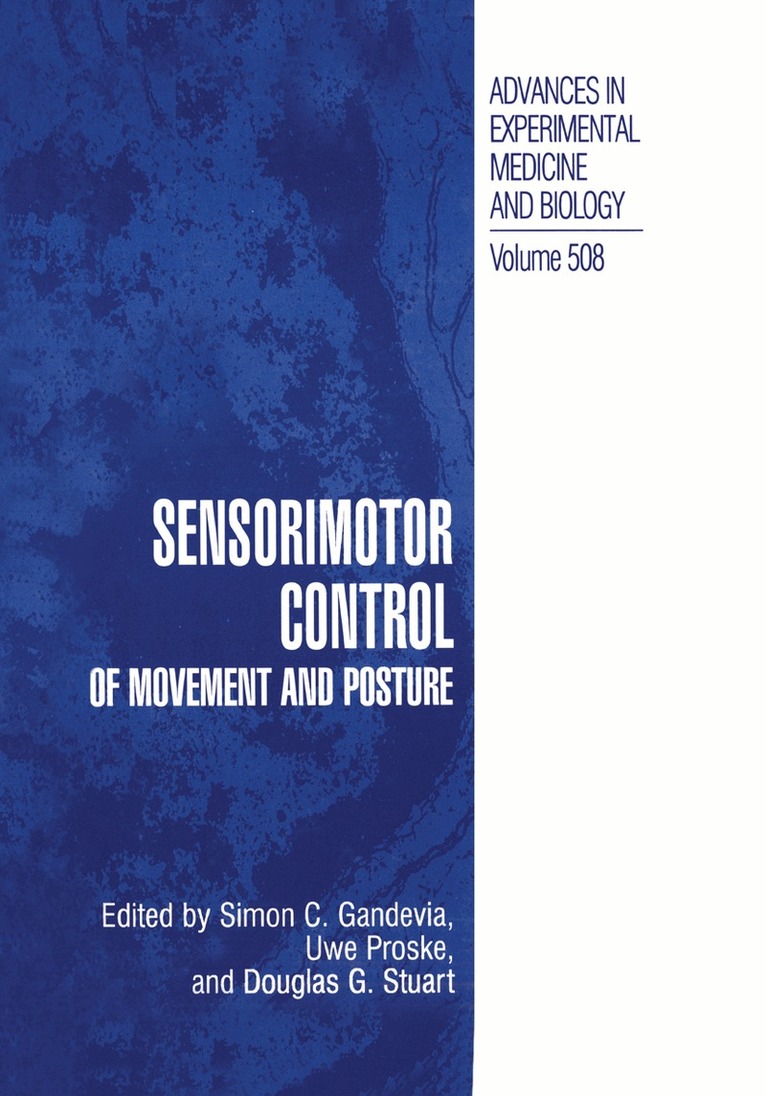
Sensorimotor Control of Movement and Posture
Av Simon C. Gandevia, Uwe Proske m. fl.
Inbunden, 2002
3369 kr
Lägg i varukorg
This collection of contributions on the subject of the neural mechanisms of sensorimotor control resulted from a conference held in Cairns, Australia, September 3-6, 2001. While the three of us were attending the International Union of Physiological Sciences (IUPS) Congress in St Petersburg, …
Sensorimotor Control of Movement and Posture
Av Simon C. Gandevia, Uwe Proske m. fl.
Häftad, 2012
3705 kr
Lägg i varukorg
This collection of contributions on the subject of the neural mechanisms of sensorimotor control resulted from a conference held in Cairns, Australia, September 3-6, 2001. While the three of us were attending the International Union of Physiological Sciences (IUPS) Congress in St Petersburg, …
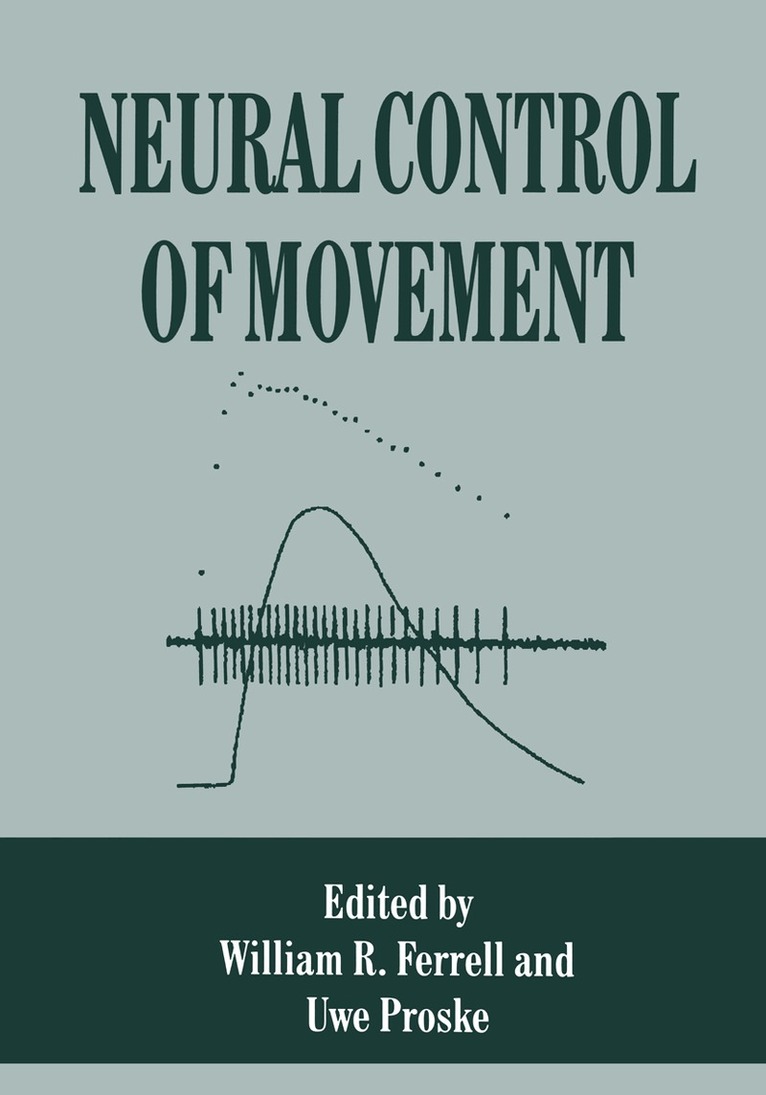
Neural Control of Movement
Häftad, 2011
551 kr
Lägg i varukorg
Presented with a choice of evils, most would prefer to be blinded rather than to be unable to move, immobilized in the late stages of Parkinson's disease. Yet in everyday life, as in Neuroscience, vision holds the centre of the stage. The conscious psyche watches a private TV show all day long, …
Sensorimotor Control of Movement and Posture
Av Douglas G. Stuart, Uwe Proske m. fl.
E-bok, 2012
4589 kr
Lägg i varukorg
This collection of contributions on the subject of the neural mechanisms of sensorimotor control resulted from a conference held in Cairns, Australia, September 3-6, 2001. While the three of us were attending the International Union of Physiological Sciences (IUPS) Congress in St Petersburg, …
Neural Control of Movement
E-bok, 2012
718 kr
Lägg i varukorg
Presented with a choice of evils, most would prefer to be blinded rather than to be unable to move, immobilized in the late stages of Parkinson''s disease. Yet in everyday life, as in Neuroscience, vision holds the centre of the stage. The conscious psyche watches a private TV show all day long, …