Vandana Prasad - Böcker
Visar alla böcker från författaren Vandana Prasad. Handla med fri frakt och snabb leverans.
5 produkter
5 produkter
592 kr
Skickas inom 10-15 vardagar
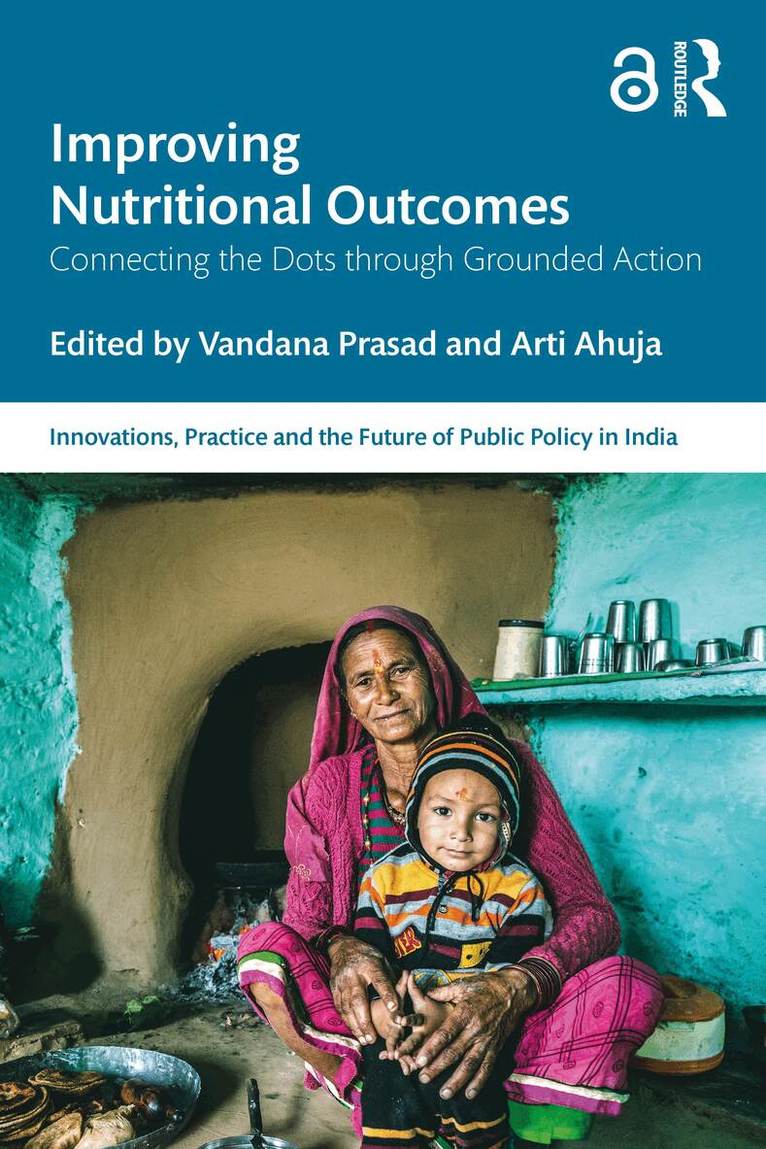
This book engages with the critical issue of nutrition and its relationship with the full spectrum of human development challenges in India. It examines concerns around both undernutrition and overnutrition through a range of case studies, documenting key interventions and strategies implemented by governments, NGOs, and other stakeholders.The book broadly discusses macroeconomic and social issues affecting India’s progress in addressing nutrition challenges, linking them to mesoand micro-level factors—from food and health systems to grassroots realities. It explores not only policy imperatives but, more importantly, the processes and mechanisms necessary to achieve them. Special attention is given to the role of women and women’s collectives, the importance of comprehensive, decentralized, and community-based approaches to improving nutrition among the most vulnerable, and the critical life phases that require targeted interventions. The volume also presents large-scale, state-led, and statewide models and strategies, offering valuable insights for policymakers, governments, and institutions grappling with similar issues.Part of the Innovations, Practice and the Future of Public Policy in India series, this open access volume will interest policy professionals, administrators, academics, and researchers working in public health, nutrition and dietetics, allied health, health and social care, health and development, public policy, social policy, and South Asian studies.
2 166 kr
Skickas inom 10-15 vardagar
This book engages with the critical issue of nutrition and its relationship with the full spectrum of human development challenges in India. It examines concerns around both undernutrition and overnutrition through a range of case studies, documenting key interventions and strategies implemented by governments, NGOs, and other stakeholders.The book broadly discusses macroeconomic and social issues affecting India’s progress in addressing nutrition challenges, linking them to mesoand micro-level factors—from food and health systems to grassroots realities. It explores not only policy imperatives but, more importantly, the processes and mechanisms necessary to achieve them. Special attention is given to the role of women and women’s collectives, the importance of comprehensive, decentralized, and community-based approaches to improving nutrition among the most vulnerable, and the critical life phases that require targeted interventions. The volume also presents large-scale, state-led, and statewide models and strategies, offering valuable insights for policymakers, governments, and institutions grappling with similar issues.Part of the Innovations, Practice and the Future of Public Policy in India series, this open access volume will interest policy professionals, administrators, academics, and researchers working in public health, nutrition and dietetics, allied health, health and social care, health and development, public policy, social policy, and South Asian studies.
1 487 kr
Skickas inom 10-15 vardagar
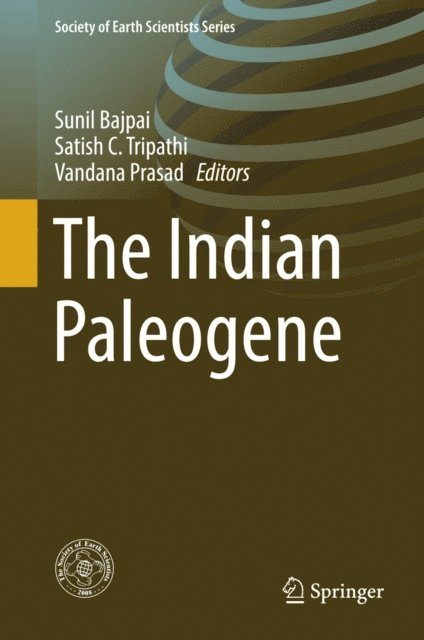
This unique book provides a concise account of Indian Paleogene and presents a unified view of the Paleogene sequences of India. The Paleogene, comprising the early part of the Cenozoic Era, was the most dynamic period in the Earth’s history with profound changes in the biosphere and geosphere. The period spans ~42 million years, beginning from post- K/T mass extinction event at ~65 Ma and ending at ~23 Ma, when the first Antarctic ice sheet appeared in the Southern Hemisphere. The early Paleogene (Paleocene–Eocene) has been considered a globally warm period, superimposed on which were several transient hyperthermal events of extreme warmth. Of these, the Palaeocene Eocene Thermal Maxima (PETM) boundary interval is the most prominent extreme warming episode, lasting 200 Ka. PETM is characterized by 2–6‰ global negative carbon isotope excursion. The event coincided with the Benthic Extinction Event (BEE) in deep sea and Larger Foraminifera Turnover (LFT) in shallow seas.Rapid ~60–80 warming of high latitudinal regions led to major faunal and floral turnovers in continental, shallow-marine and deep-marine areas. The emergence and dispersal of mammals with modern characteristics, including Artiodactyls, Perissodactyls and Primates (APP), and the evolution and expansion of tropical vegetation are some of the significant features of the Paleogene warm world.In the Indian subcontinent, the beginning and end of the Paleogene was marked by various events that shaped the various physiographic features of the Indian subcontinent. The subcontinent lay within the equatorial zone during the earliest part of the Paleogene. Carbonaceous shale, coal and lignite deposits of early Eocene age (~55.5–52 Ma) on the western and north-eastern margins of the Indian subcontinent are rich in fossils and provide information on climate as well as the evolution and paleobiogeography of tropical biota. Indian Paleogene deposits in the India–Asia collision zone also provideinformation pertaining to the paleogeography and timing of collision. Indian Paleogene rocks are exposed in the Himalayan and Arakan mountains; Assam and the shelf basins of Kutch–Saurashtra, Western Rajasthan; Tiruchirappalli–Pondicherry and Andaman and, though aerially limited, these rocks bear geological evidence of immense importance.
1 487 kr
Skickas inom 10-15 vardagar
This unique book provides a concise account of Indian Paleogene and presents a unified view of the Paleogene sequences of India. The Paleogene, comprising the early part of the Cenozoic Era, was the most dynamic period in the Earth’s history with profound changes in the biosphere and geosphere. The period spans ~42 million years, beginning from post- K/T mass extinction event at ~65 Ma and ending at ~23 Ma, when the first Antarctic ice sheet appeared in the Southern Hemisphere. The early Paleogene (Paleocene–Eocene) has been considered a globally warm period, superimposed on which were several transient hyperthermal events of extreme warmth. Of these, the Palaeocene Eocene Thermal Maxima (PETM) boundary interval is the most prominent extreme warming episode, lasting 200 Ka. PETM is characterized by 2–6‰ global negative carbon isotope excursion. The event coincided with the Benthic Extinction Event (BEE) in deep sea and Larger Foraminifera Turnover (LFT) in shallow seas.Rapid ~60–80 warming of high latitudinal regions led to major faunal and floral turnovers in continental, shallow-marine and deep-marine areas. The emergence and dispersal of mammals with modern characteristics, including Artiodactyls, Perissodactyls and Primates (APP), and the evolution and expansion of tropical vegetation are some of the significant features of the Paleogene warm world.In the Indian subcontinent, the beginning and end of the Paleogene was marked by various events that shaped the various physiographic features of the Indian subcontinent. The subcontinent lay within the equatorial zone during the earliest part of the Paleogene. Carbonaceous shale, coal and lignite deposits of early Eocene age (~55.5–52 Ma) on the western and north-eastern margins of the Indian subcontinent are rich in fossils and provide information on climate as well as the evolution and paleobiogeography of tropical biota. Indian Paleogene deposits in the India–Asia collision zone also provideinformation pertaining to the paleogeography and timing of collision. Indian Paleogene rocks are exposed in the Himalayan and Arakan mountains; Assam and the shelf basins of Kutch–Saurashtra, Western Rajasthan; Tiruchirappalli–Pondicherry and Andaman and, though aerially limited, these rocks bear geological evidence of immense importance.
670 kr
Skickas inom 7-10 vardagar
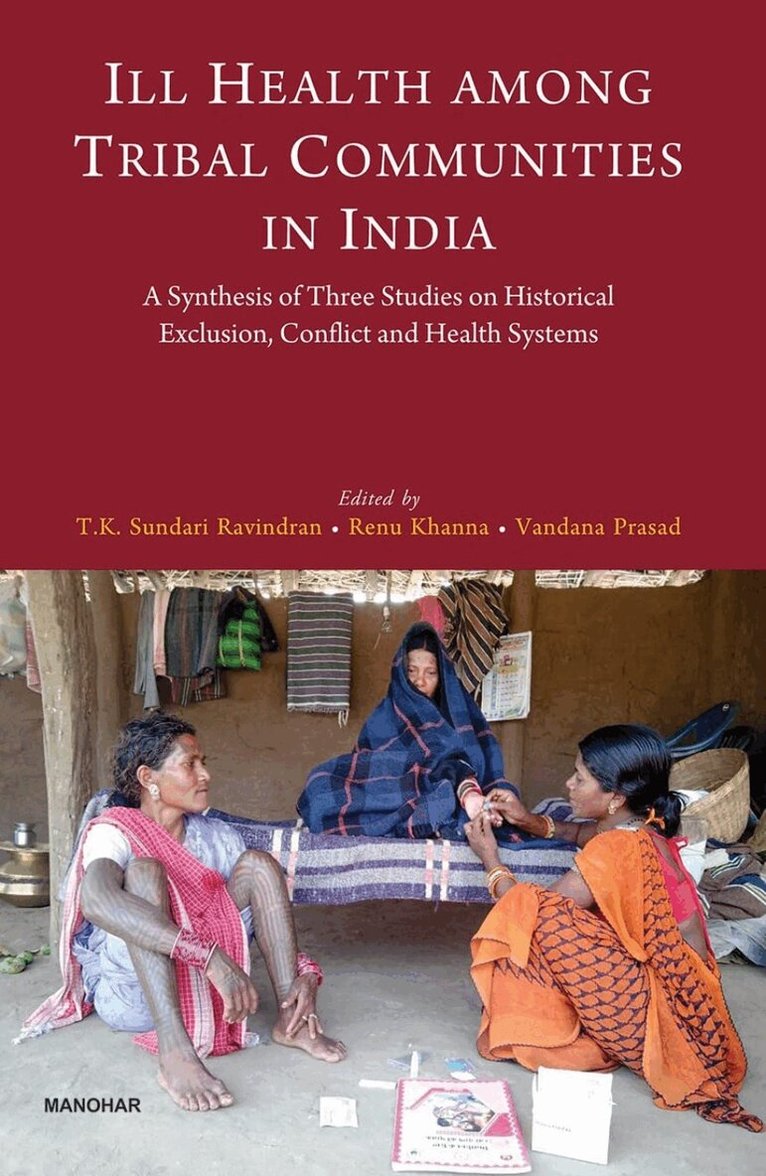
This book brings together the findings from three studies across four sites: Assam, Chhattisgarh, Jharkhand, and Kerala. It aims to understand and explain the diverse nature of health inequities along with processes and historical contexts which create, configure, and sustain health inequities among tribal populations in India. The book reveals that beneath the oft-repeated storyline of the poor health of tribal communities lies a more nuanced reality of varied experiences across different tribal communities; and within-group differentials among the same community. The book also forcefully brings home the inadequacy of commonly used health indicators such as morbidity and mortality to describe the multiple dimensions of lack of well-being experienced by the tribal communities.