Vasudevi Reddy – författare
Visar alla böcker från författaren Vasudevi Reddy. Handla med fri frakt och snabb leverans.
6 produkter
Intersubjective Minds
Rhythm, Sympathy, and Human Being
Av Vasudevi Reddy, Jonathan Delafield Butt
E-bok, 2025
1925 kr
Lägg i varukorg
Intersubjective Minds brings together world leaders in developmental psychology, biology, neuroscience, music, education, philosophy and psychiatry to consolidate the lifetime work of Professor Emeritus Colwyn Trevarthen, FRSE. Spanning research from the 1960s to the present, Trevarthen's …
Intersubjective Minds
Rhythm, Sympathy, and Human Being
Av Vasudevi Reddy, Jonathan Delafield Butt
E-bok, 2025
1925 kr
Lägg i varukorg
Intersubjective Minds brings together world leaders in developmental psychology, biology, neuroscience, music, education, philosophy and psychiatry to consolidate the lifetime work of Professor Emeritus Colwyn Trevarthen, FRSE. Spanning research from the 1960s to the present, Trevarthen's …
Intersubjective Minds
Rhythm, Sympathy, and Human Being
Av Jonathan Delafield Butt, Vasudevi Reddy
Inbunden, 2025
2146 kr
Lägg i varukorg
Intersubjective Minds brings together world leaders in developmental psychology, biology, neuroscience, music, education, philosophy and psychiatry to consolidate the lifetime work of Professor Emeritus Colwyn Trevarthen, FRSE. Spanning research from the 1960s to the present, Trevarthen's …
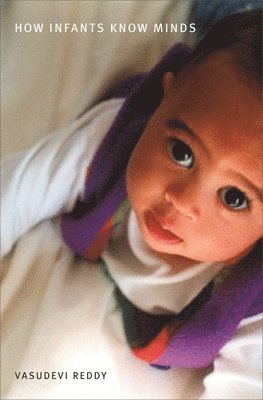
How Infants Know Minds
Häftad, 2010
281 kr
Lägg i varukorg
Most psychologists claim that we begin to develop a “theory of mind”—some basic ideas about other people’s minds—at age two or three, by inference, deduction, and logical reasoning. But does this mean that small babies are unaware of minds? That they see other people simply as another (rather …
Humor in Infants
Developmental and Psychological Perspectives
Av Gina C. Mireault, Vasudevi Reddy
Häftad, 2016
624 kr
Lägg i varukorg
This volume explores in depth how infants—perhaps as young as three months—develop the capacity to appreciate, participate in, and create humor. Engagingly written, it synthesizes theories of humor, its subtle complexities, and why it exists despite seeming to have little survival value. Chapters …
Humor in Infants
Developmental and Psychological Perspectives
Av Vasudevi Reddy, Gina C. Mireault
E-bok, 2016
839 kr
Lägg i varukorg
This volume explores in depth how infants—perhaps as young as three months—develop the capacity to appreciate, participate in, and create humor. Engagingly written, it synthesizes theories of humor, its subtle complexities, and why it exists despite seeming to have little survival value. Chapters …