• Fri frakt över 249 kr
  • •
  • Snabba leveranser
  • •
  • Billiga böcker
Kundservice

Du är på sajten för privatpersoner.

Företag, bibliotek eller offentlig verksamhet?

Du handlar på classic.bokus.com, där alla dina funktioner finns intakta.
Till classic.bokus.com
Bokus logotyp. Gå till startsidan.
  • Erbjudanden
  • Nyheter
  • Student
  • Topplistor
  • Barn & ungdom
  • Bokus Play
  • E-böcker
  • Pocketböcker
  • Spel & pussel

10% rabatt på allt med kod NYSTART10 →

Sidfot

Mina sidor

    Hjälp

    • Kundservice
    • Vanliga frågor och svar
    • Frakt och leverans
    • Retur vid ångerrätt
    • Reklamera vara
    • Betalning
    • Köpvillkor
    • Allmänna villkor
    • Information om webbplatsens tillgänglighet

    Om Bokus

    • Om oss
    • Pressrum
    • För studenter
    • För företag
    • För bibliotek och offentlig verksamhet
    • För leverantörer
    • Hållbarhet

    Populärt

    • Aktuella erbjudanden
    • Presentkort
    • Studentlitteratur
    • Nya böcker
    • Topplistor
    • Signerade böcker
    • Engelska böcker

    Inspiration

    • Boktips
    • BookTok
    • Populära bokserier
    • Barnbokskaraktärer
    • Populära författare
    Logotyp för Bokus
    Följ oss på Facebook (extern länk)Följ oss på Instagram (extern länk)Följ oss på YouTube (extern länk)Följ oss på TikTok (extern länk)
    bokus @ CookiesAnpassa cookiesIntegritetspolicyKöpvillkor
    Till Citymail hemsida (extern länk)Till Budbee hemsida (extern länk)Till Postnord hemsida (extern länk)Till Schenker hemsida (extern länk)Till Early Bird hemsida (extern länk)Till Walleys hemsida (extern länk)
    1. Psykologi och pedagogik
    2. Psykologi
    3. Barnpsykologi och utvecklingspsykologi

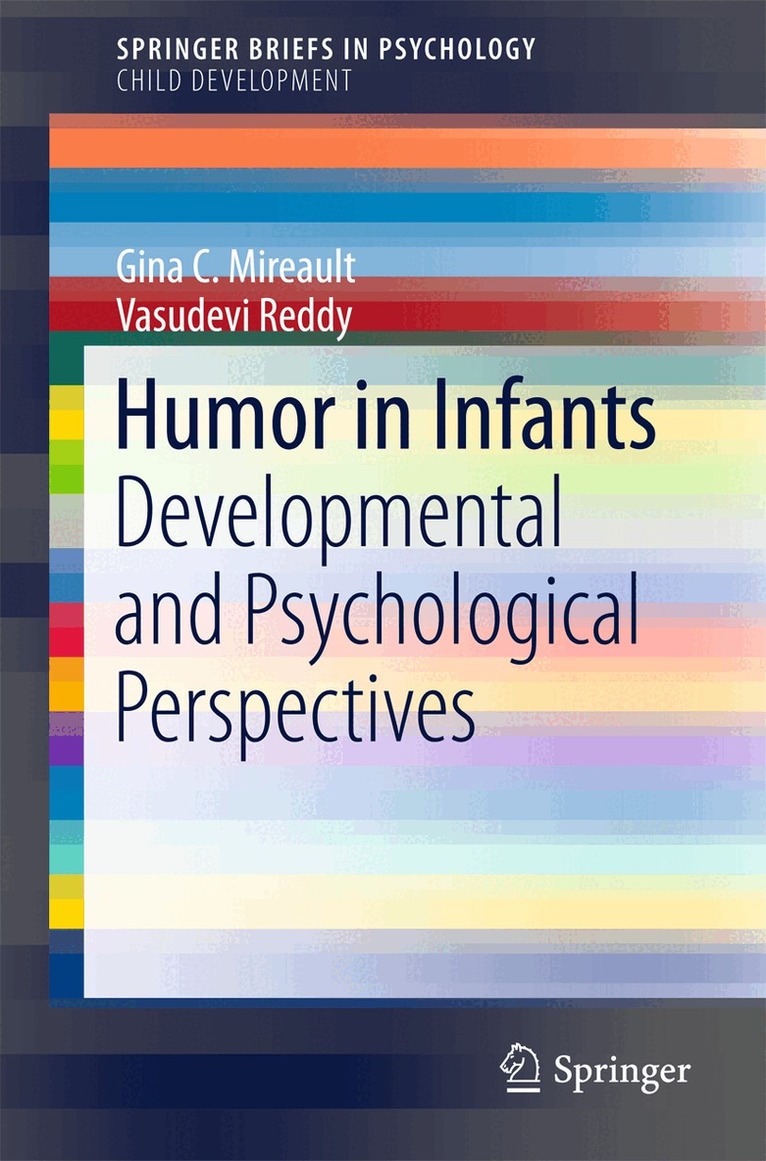
    Humor in Infants

    Developmental and Psychological Perspectives

    AvGina C. Mireault,Vasudevi Reddy

    Häftad, Engelska, 2016

    Del i serien SpringerBriefs in Psychology

    618 kr

    Beställningsvara. Skickas inom 10-15 vardagar. Fri frakt över 249 kr.

    Beskrivning

    This volume explores in depth how infants—perhaps as young as three months—develop the capacity to appreciate, participate in, and create humor. Engagingly written, it synthesizes theories of humor, its subtle complexities, and why it exists despite seeming to have little survival value. Chapters trace the developing skills in the child’s interactions with parents and others, the roles of verbal and nonverbal behaviors in humor, and related phenomena including absurdity, funniness, laughter, teasing, and play. These diverse perspectives offer rich insights into how the human mind learns from its environment, why humor is funny, and what humor can tell us about being human. This singular text: Reviews theories and findings on humor and its critical role in social behavior.Analyzes the challenges of researching humor in infants and young children.Differentiates among concepts and contexts of humor and playfulness.Situates humor as a social-emotional as well as cognitive experience.Details current research on humor in atypically developing children.Examines the role of culture in humor.Humor in Infants is an essential resource for researchers, clinicians, and graduate students in developmental psychology, infant mental health, social psychology, cognitive science, and pediatrics.

    Produktinformation

    • Utgivningsdatum:2016-06-22
    • Mått:155 x 235 x 5 mm
    • Vikt:131 g
    • Format:Häftad
    • Språk:Engelska
    • Serie:SpringerBriefs in Psychology
    • Antal sidor:62
    • Förlag:Springer International Publishing AG
    • ISBN:9783319389615

    Utforska kategorier

    • Barnpsykologi och utvecklingspsykologi inom Psykologi och pedagogik
    • Pediatrik inom Medicin

    Mer om författaren

    Gina Mireault, Ph.D., is a Developmental Psychologist and Professor in the Behavioral Sciences Department at Johnson State College. She studies the perception and creation of humor in infants from 3 months to 12 months of age, addressing the question: How do babies figure out what is funny?   She is interested in the serious implications of humor research for understanding critical developmental milestones, such as whether or not infants are capable of a “theory of mind”, whether or not humor can contribute to attachment security with parents, and whether or not infants rely on parental emotion to interpret and regulate their own emotional response to ambiguous events. She is intrigued by young infants’ detection of absurdity and what it may indicate about their early knowledge of social behavior.Vasudevi Reddy, Ph.D., is Professor of Developmental and Cultural Psychology at the University of Portsmouth in the United Kingdom. She is interested in the origins and development of social cognition, mainly in young infants. She has been exploring the role of emotional engagement in social understanding, focusing on such everyday, ordinary engagements as teasing and joking and showing-off or feeling shy, which often tend to be ignored in mainstream theories. She is Director of the Centre for Situated Action and Communication, which explores ideas of context and situation on different kinds of psychological phenomena. Her interest in engagement as the route to understanding has led her to questions about the nature and influence of cultural engagements on social understanding.

    Recensioner i media

    "Gina Mireault and Vasudevei Reddy, authors of Humor in Infants: Developmental and Psychological Perspectives, have written a short book totaling only 62 pages that examines numerous aspects of cognitive and emotional development in the first year of life as they might relate to the development of humor. ... offers the interested reader a nice little summary of the thinking as well as the research on the topic of humor in infancy. It is a good jumping-off point for further study." (Ronald J. Friedman, PsycCRITIQUES, Vol. 62 (1), January, 2017)

    Innehållsförteckning

    • Chapter 1: An Overview of Humor.- Chapter 2: The Development of Humor.- Chapter 3: Playfulness.- Chapter 4: Humor as a Social-Emotional Phenomenon.- Chapter 5: When Humor Goes Missing.- Chapter 6: Humor and Culture.