Victor R. Basili - Böcker
Visar alla böcker från författaren Victor R. Basili. Handla med fri frakt och snabb leverans.
5 produkter
5 produkter
1 096 kr
Skickas inom 10-15 vardagar
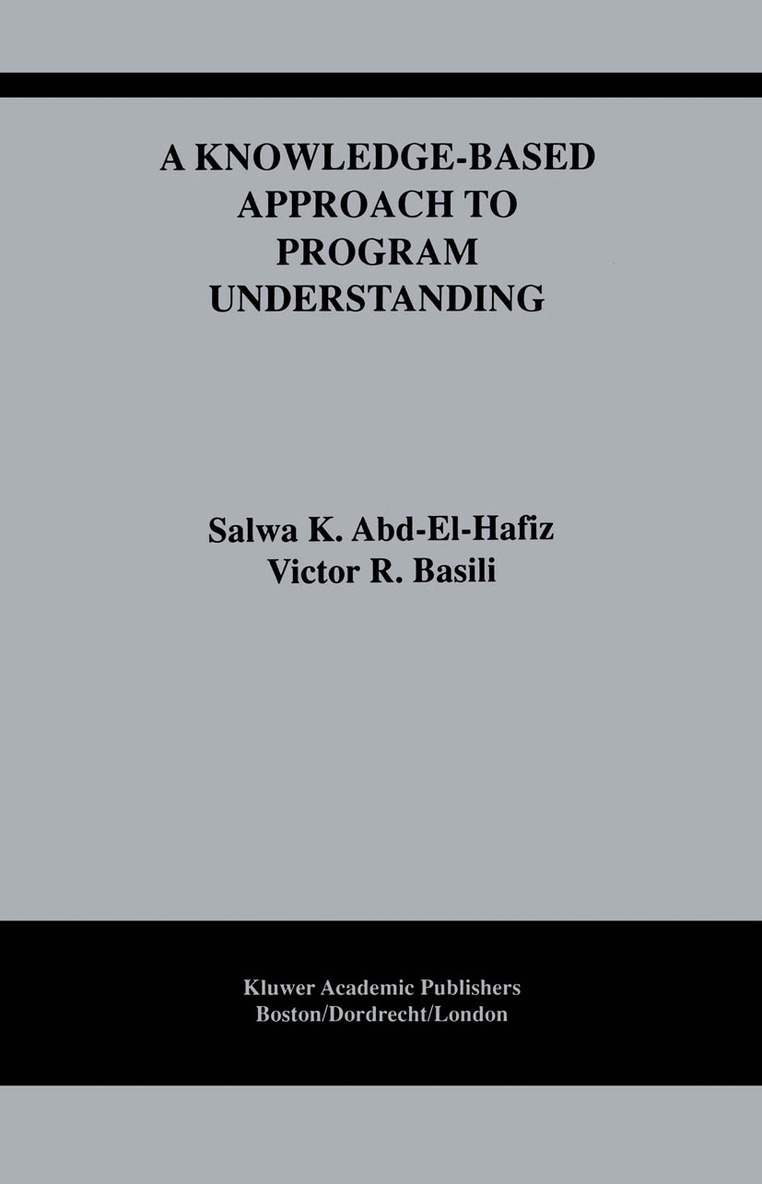
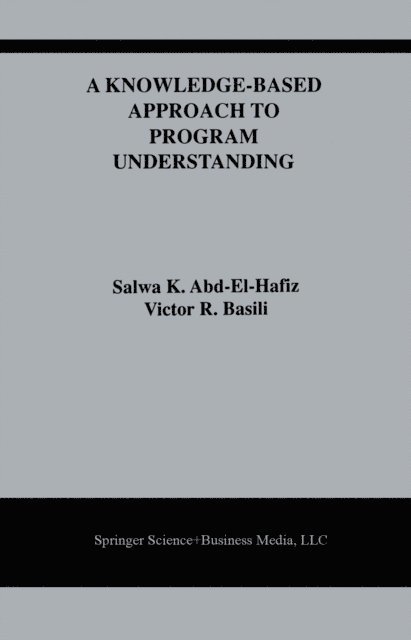
This text presents the knowledge-based approach to the automation of program understanding which plays an important role in nearly all software related tasks: it is vital to the development, maintenance and re-use activities, and is useful in improving the quality of software development. The approach generates program documentation mechanically by combining and building on the strengths of a practical program decomposition method, the axiomatic correctness notation, and the knowledge-based analysis approach. This text is aimed at: computer science students at the advanced graduate level and researchers and practitioners interested in software development, maintenance and re-use.
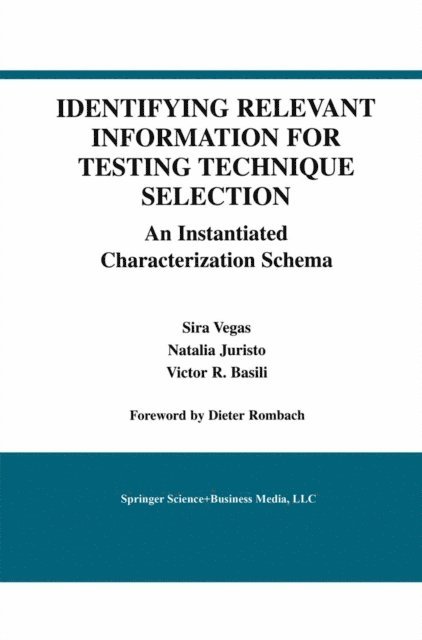
Identifying Relevant Information for Testing Technique Selection
An Instantiated Characterization Schema
Inbunden, Engelska, 2003
1 096 kr
Skickas inom 10-15 vardagar
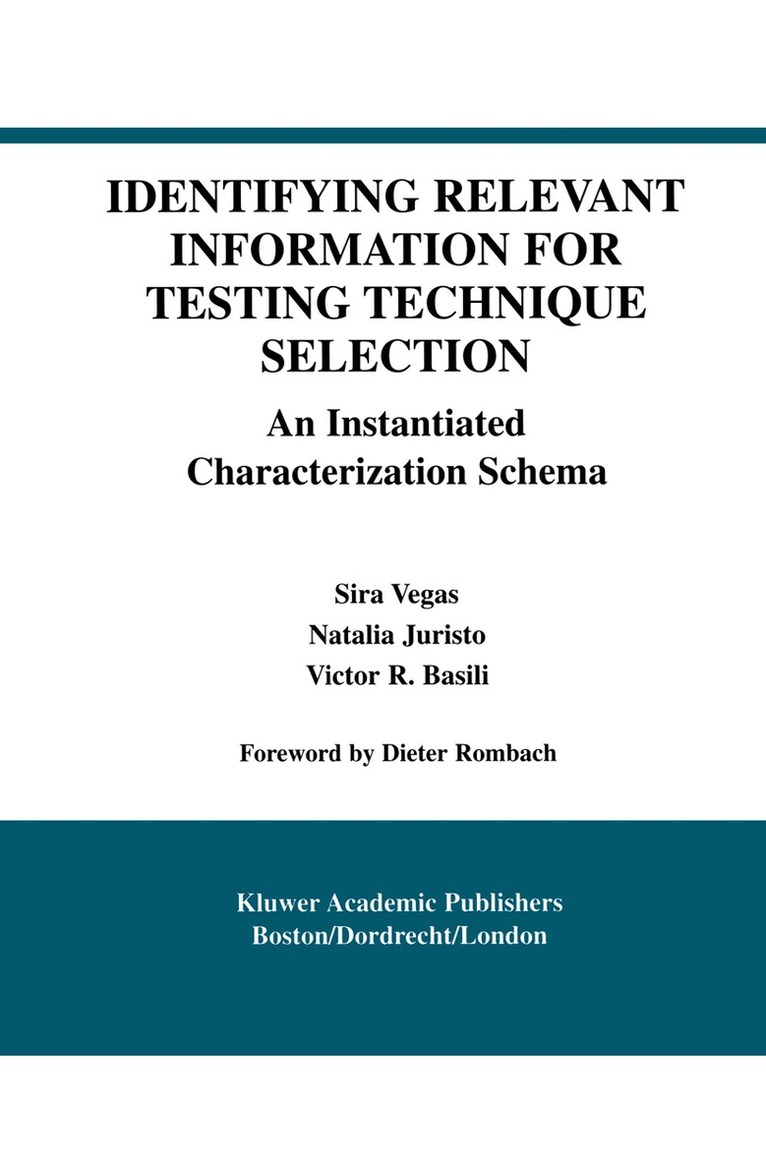
The importance of properly selecting testing techniques is widely accepted in the software engineering community. However, there are chiefly two reasons why the selections now made by software developers are difficult to evaluate as correct. First, there are several techniques with which the average developer is unfamiliar, often leaving testers with limited knowledge of all the techniques currently available. Second, the available information regarding the different testing techniques is primarily procedure (focused on how to use the technique), rather than pragmatic (focused on the effect and appropriateness of using the technique). The problem addressed in this book is that of improving software testing technique selection.
Identifying Relevant Information for Testing Technique Selection
An Instantiated Characterization Schema
Häftad, Engelska, 2012
1 064 kr
Skickas inom 10-15 vardagar
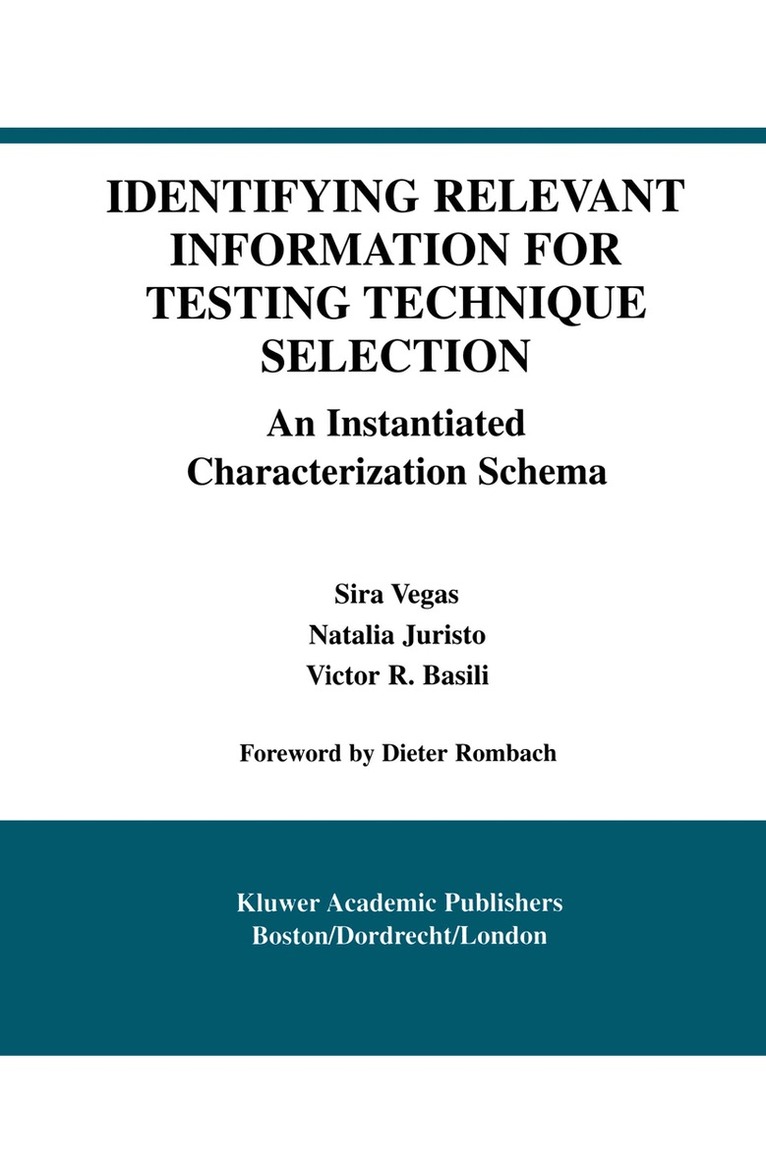
Engineering tasks are supposed to achieve defined goals under certain project constraints. Example goals of software engineering tasks include achieving a certain functionality together with some level of reliability or performance. Example constraints of software engineering tasks include budget and time limitations or experience limitations of the developers at hand. Planning of an engineering project requires the selection of techniques, methods and tools suited to achieve stated goals under given project constraints. This assumes sufficient knowledge regarding the process-product relationships (or effects) of candidate techniques, methods and tools. Planning of software projects suffers greatly from lack of knowledge regarding the process-product relationships of candidate techniques, methods and tools. Especially in the area of testing a project planner is confronted with an abundance of testing techniques, but very little knowledge regarding their effects under varying project conditions. This book offers a novel approach to addressing this problem: First, based on a comprehensive initial characterization scheme (see chapter 7) an overview of existing testing techniques and their effects under varying conditions is provided to guide the selection of testing approaches. Second, the optimisation of this knowledge base is suggested based on experience from experts, real projects and scientific experiments (chapters 8, 9, and 10). This book is of equal interest to practitioners, researchers and students. Practitioners interested in identifying ways to organize their company-specific knowledge about testing could start with the schema provided in this book, and optimise it further by applying similar strategies as offered in chapters 8 and 9.
1 096 kr
Skickas inom 10-15 vardagar
Program understanding plays an important role in nearly all software related tasks. It is vital to the development, maintenance and reuse activities. Program understanding is indispensable for improving the quality of software development. Several development activities such as code reviews, debugging and some testing approaches require programmers to read and understand programs. Maintenance activities cannot be performed without a deep and correct understanding of the component to be maintained. Program understanding is vital to the reuse of code components because they cannot be utilized without a clear understanding of what they do. If a candidate reusable component needs to be modified, an understanding how it is designed is also required. of This monograph presents a· knowledge-based approach to the automation of program understanding. This approach generates rigorous program documentation mechanically by combining and building on strengths of a practical program decomposition method, the axiomatic correctness notation, and the knowledge based analysis approaches. More specifically, this approach documents programs by generating first order predicate logic annotations of their loops. In this approach, loops are classified according to their complexity levels. Based on this taxonomy, variations on the basic analysis approach that best fit each of the different classes are described. In general, mechanical annotation of loops is performed by first decomposing them using data flow analysis. This decomposition encapsulates interdependent statements in events, which can be analyzed individually.
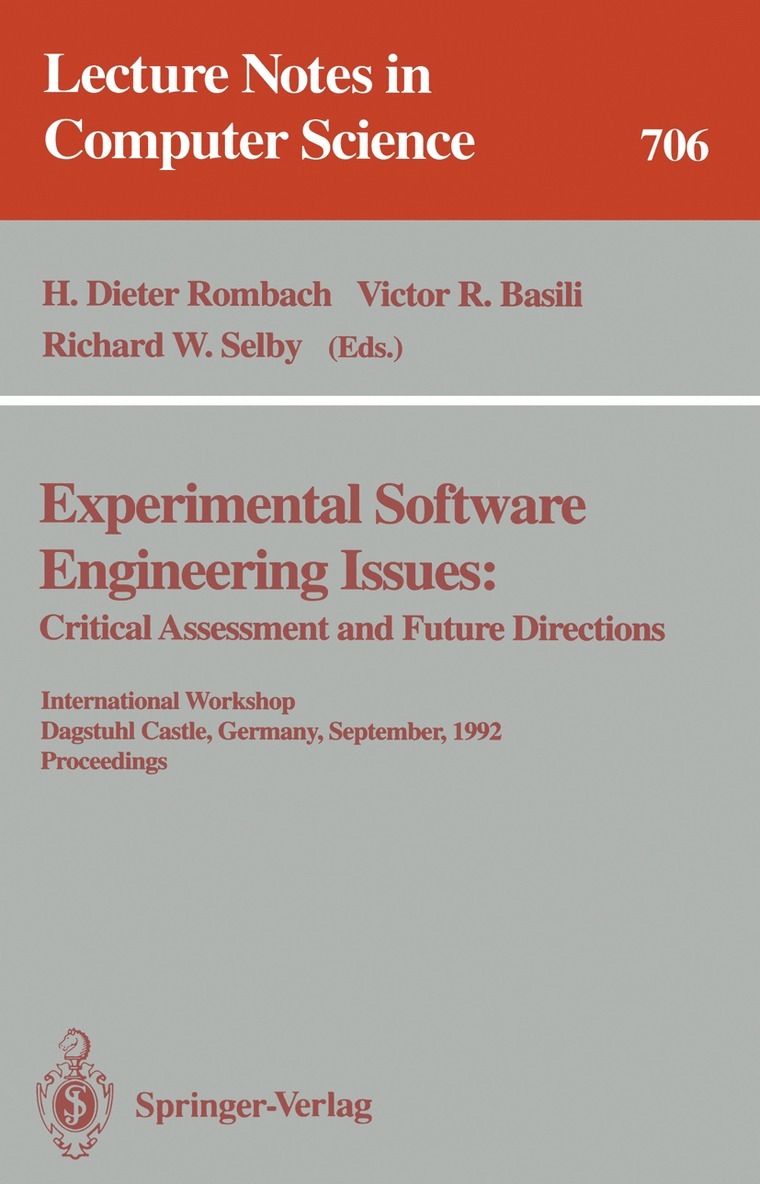
Experimental Software Engineering Issues:
Critical Assessment and Future Directions. International Workshop, Dagstuhl Castle, Germany, September 14-18, 1992. Proceedings
Häftad, Engelska, 1993
552 kr
Skickas inom 10-15 vardagar
We have only begun to understand the experimental nature ofsoftware engineering, the role of empirical studies andmeasurement within software engineering, and the mechanismsneeded to apply them successfully. This volume presents theproceedings of a workshop whose purpose was to gather thosemembers of the software engineering community who support anengineering approach based upon empirical studies to providean interchange of ideas and paradigms for research. The papers in the volume are grouped into six partscorresponding to the workshop sessions: The experimentalparadigm in software engineering; Objectives and context ofmeasurement/experimentation; Procedures and mechanisms formeasurement/experimentation; Measurement-based modeling;packaging for reuse/reuse of models; and technologytransfer, teaching and training. Each part opens with akeynote paper and ends with a discussion summary. The workshop served as an important event in continuing tostrengthen empirical software engineering as a majorsubdiscipline ofsoftware engineering.The deep interactionsand important accomplishments from the meeting documented inthese proceedings have helped identify key issues in movingsoftware engineering as a whole towards a true engineeringdiscipline.