Victoria Chang – författare
Visar alla böcker från författaren Victoria Chang. Handla med fri frakt och snabb leverans.
28 produkter
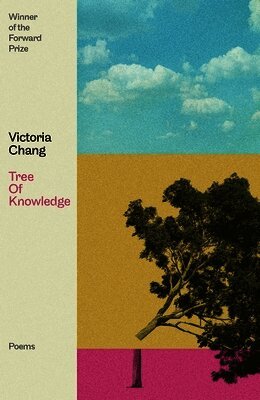
Tree of Knowledge: Longlisted for the National Book Award for Poetry 2026
Inbunden, 2026
220 kr
Lägg i varukorg
'A poet of precision, intellect and considerable emotional heft' ROXANE GAY'Chang's latest collection continues her engagement with visual art [...] creating space for Chang to meditate on language, grief and our relationship to history . . . Evocative' GUARDIANA poet watches the limbs of a …
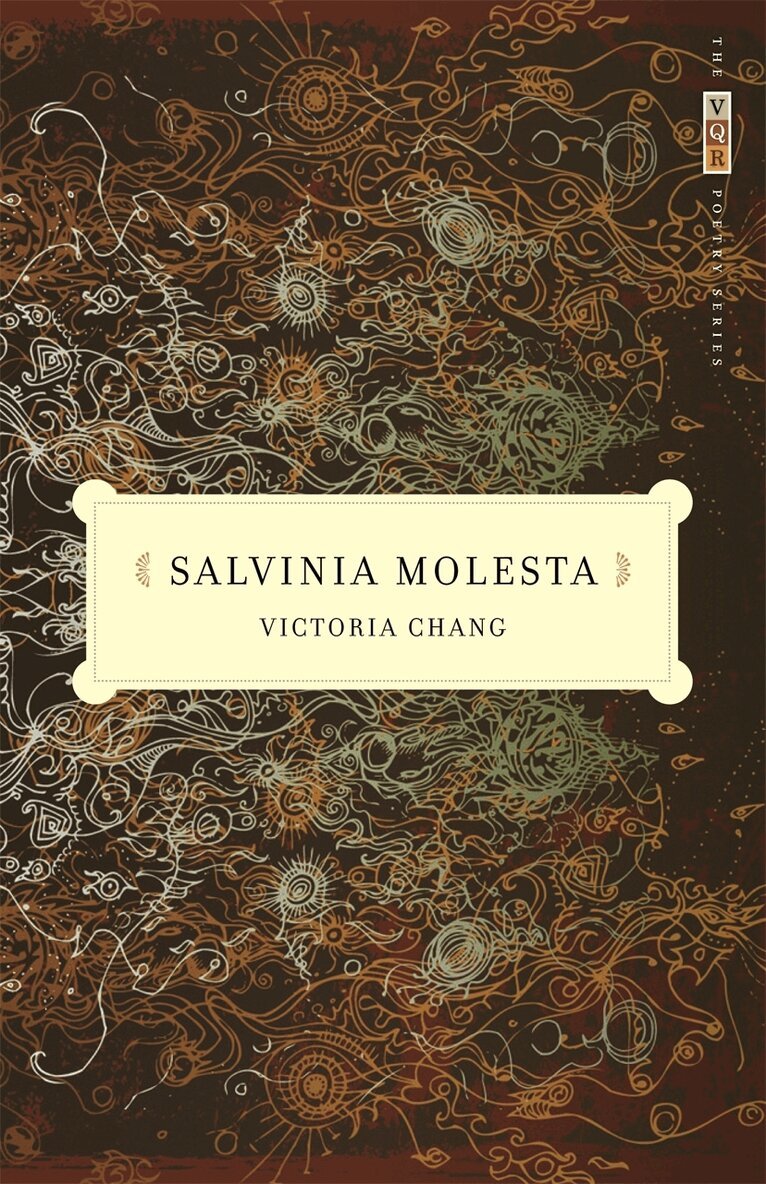
Salvinia Molesta
Poems
Häftad, 2008
317 kr
Lägg i varukorg
Victoria Chang's collection takes its title from what many call "the worst weed in the world," a plant so rapidly and uncontrollably invasive that it is illegal to sell or possess in the United States. Chang explores this image of vitality and evil in three thematically grouped sections focusing on …
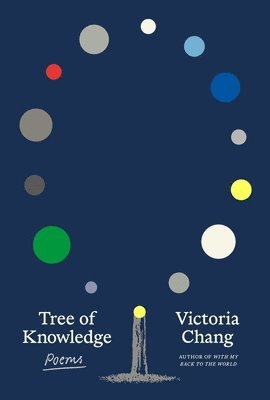
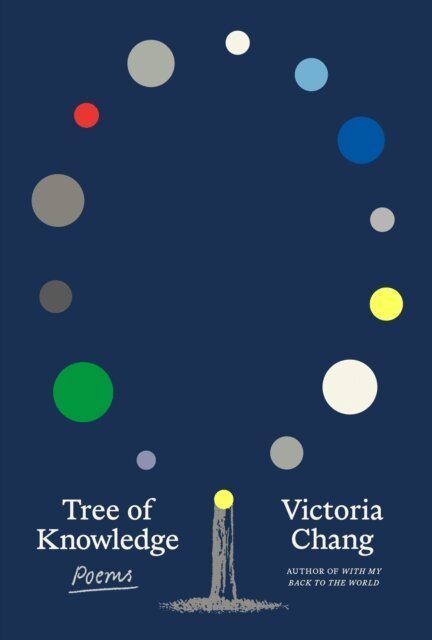
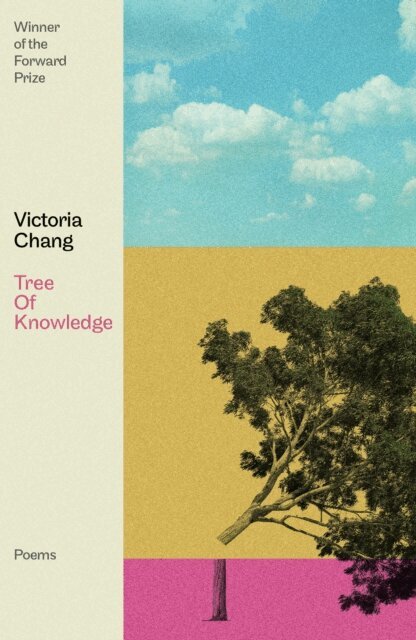
Tree of Knowledge
Poems
Inbunden, 2026
326 kr
Lägg i varukorg
A poet watches the limbs of a eucalyptus tree get sawed off: the image persists, refracting and recurring across poems of art, language, selfhood, memory, and loss. Joan Mitchell said, When I talk about love, I mean loving a tree. When I talk about love, I mean loving where a tree used to be. Men …
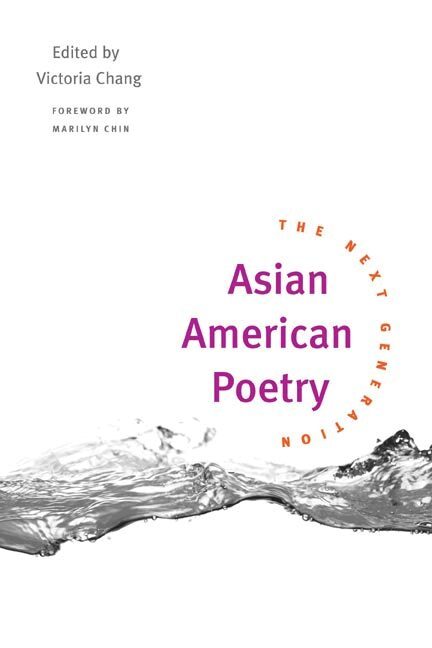
Asian American Poetry
The NEXT GENERATION
Häftad, 2004
377 kr
Lägg i varukorg
This book is the first in English to consider women's movements and feminist discourses in twentieth-century Taiwan. Doris T. Chang examines the way in which Taiwanese women in the twentieth century selectively appropriated Western feminist theories to meet their needs in a modernizing Confucian …
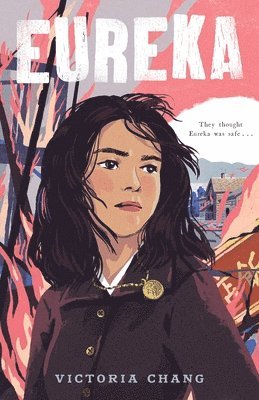
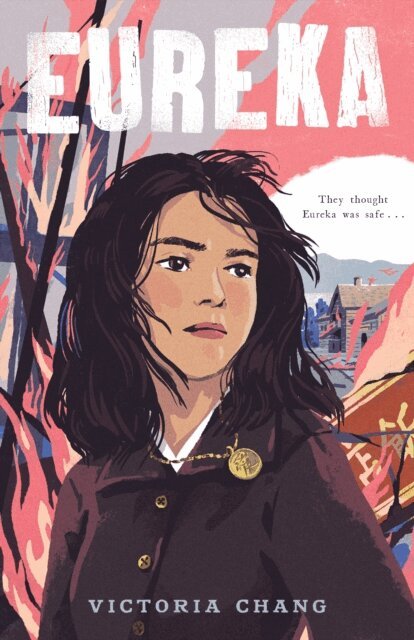
Eureka
Inbunden, 2026
277 kr
Lägg i varukorg
For fans of Inside Out and Back Again , Other Words for Home , and A Place to Hang the Moon -- Eureka is a gorgeous and emotionally resonant novel-in-verse by multiple-award-winning poet Victoria Chang that sensitively and lyrically renders the tragic events surrounding the 1885 expulsion of …
Eureka
E-bok, 2026
184 kr
Lägg i varukorg
For fans of Inside Out and Back Again , Other Words for Home , and A Place to Hang the Moon -- Eureka is a gorgeous and emotionally resonant novel-in-verse by multiple-award-winning poet Victoria Chang that sensitively and lyrically renders the tragic events surrounding the 1885 expulsion of …
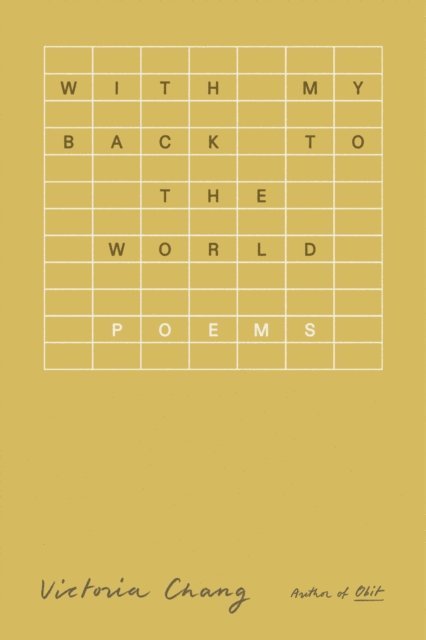
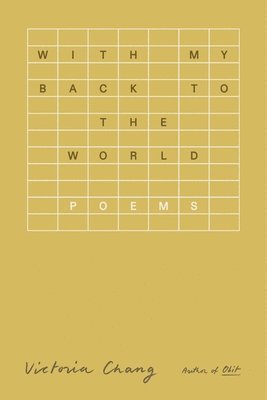
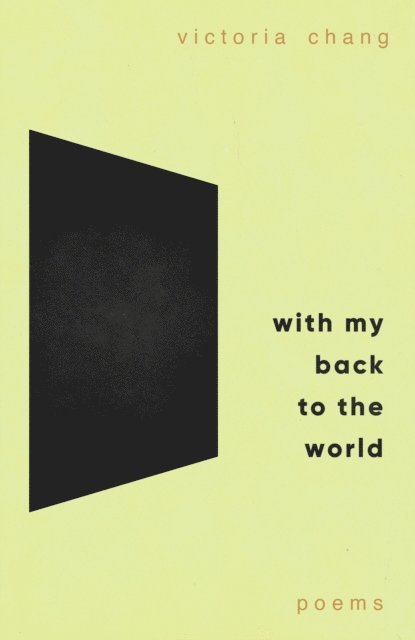
With My Back to the World
Poems
E-bok, 2024
165 kr
Lägg i varukorg
Winner of the Forward Prize for Best Collection Finalist for the PEN/Jean Stein Book Award and the Kingsley Tufts Poetry Award Named a Best Book of the Year by NPR Named One of the Best Poetry Collections of the Year by The Guardian , Literary Hub , and Electric Literature A new collection of …
Tree of Knowledge
Poems
E-bok, 2026
262 kr
Lägg i varukorg
LONGLISTED FOR THE NATIONAL BOOK AWARD FOR POETRYA poet watches the limbs of a eucalyptus tree get sawed off: the image persists, refracting and recurring across poems of art, language, selfhood, memory, and loss.Joan Mitchell said, When I talk about love, I mean loving a tree. When I talk about …
With My Back to the World
Poems
Häftad, 2025
262 kr
Lägg i varukorg
Winner of the Forward Prize for Best Collection Named a Best Book of the Year by NPR Named One of the Best Poetry Collections of the Year by The Guardian , Literary Hub , and Electric Literature A new collection of poetry inspired by the work of Agnes Martin, exploring topics of feminism, art, …
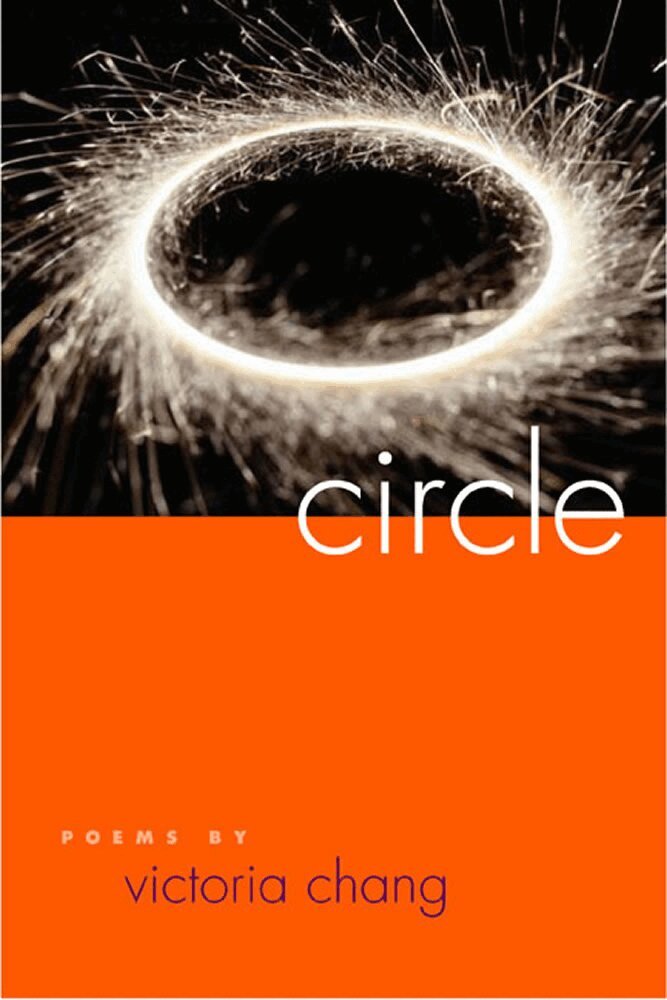
Circle
Häftad, 2005
216 kr
Lägg i varukorg
Taking its concept of concentricity from the eponymous Ralph Waldo Emerson essay, Circle, the first collection from Victoria Chang, adopts the shape as a trope for gender, family, and history. These lyrical, narrative, and hybrid poems trace the spiral trajectory of womanhood and growth and plot …
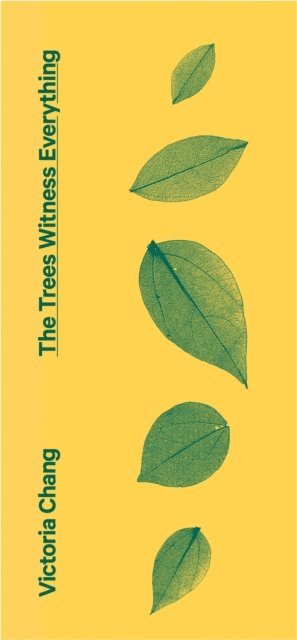
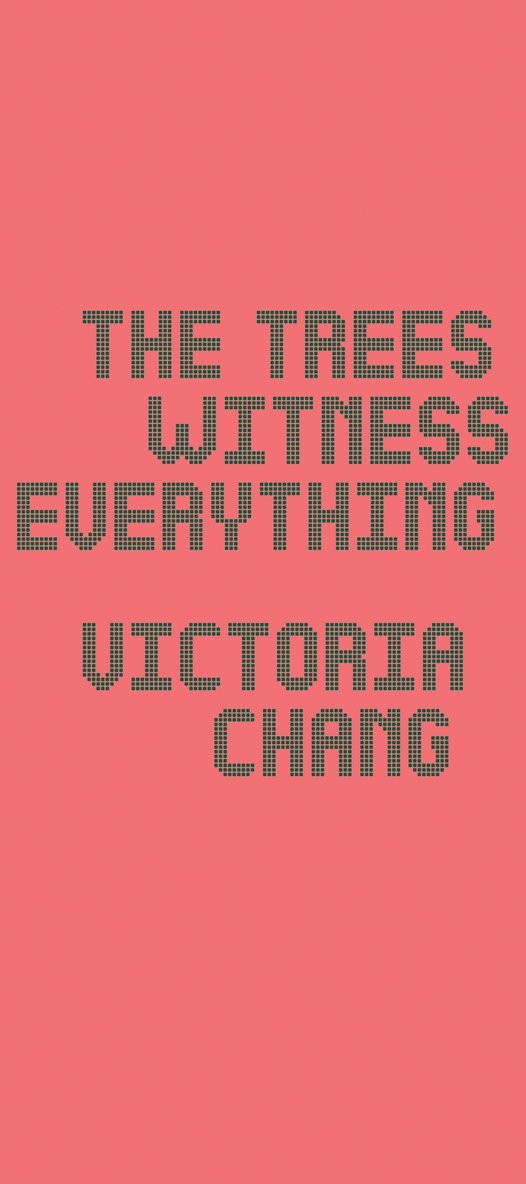
Trees Witness Everything
E-bok, 2022
45 kr
Lägg i varukorg
A NEW YORKER BEST BOOK OF 2022 ''Impeccable, precise poems, sometimes shocking and strange, but always startling'' Irish Times A lover of strict form, best-selling poet Victoria Chang turns to compact Japanese waka, powerfully innovating on tradition while continuing her pursuit of one of life''s …
Trees Witness Everything
Häftad, 2022
144 kr
Lägg i varukorg
A NEW YORKER BEST BOOK OF 2022'Impeccable, precise poems, sometimes shocking and strange, but always startling' Irish TimesA lover of strict form, best-selling poet Victoria Chang turns to compact Japanese waka, powerfully innovating on tradition while continuing her pursuit of one of life's …
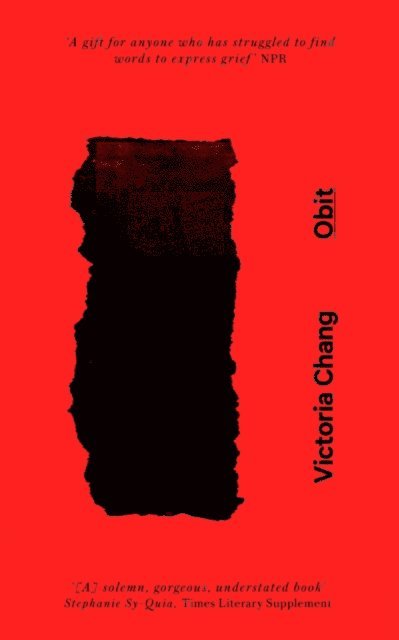
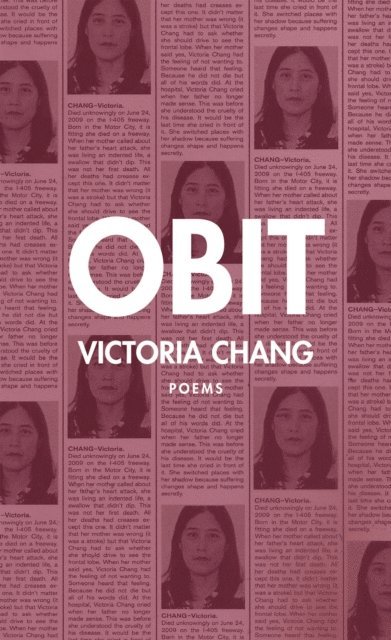
Obit
E-bok, 2022
45 kr
Lägg i varukorg
Los Angeles Times Book Prize PEN Voelcker Award Anisfield-Wolf Book Prize New York Times 100 Notable Books Time Magazine''s 100 Must-Read Books NPR''s Best Books National Book Award in Poetry, Longlist National Book Critics Circle, Finalist Griffin Poetry Prize, Shortlist Frank Sanchez Book Award …
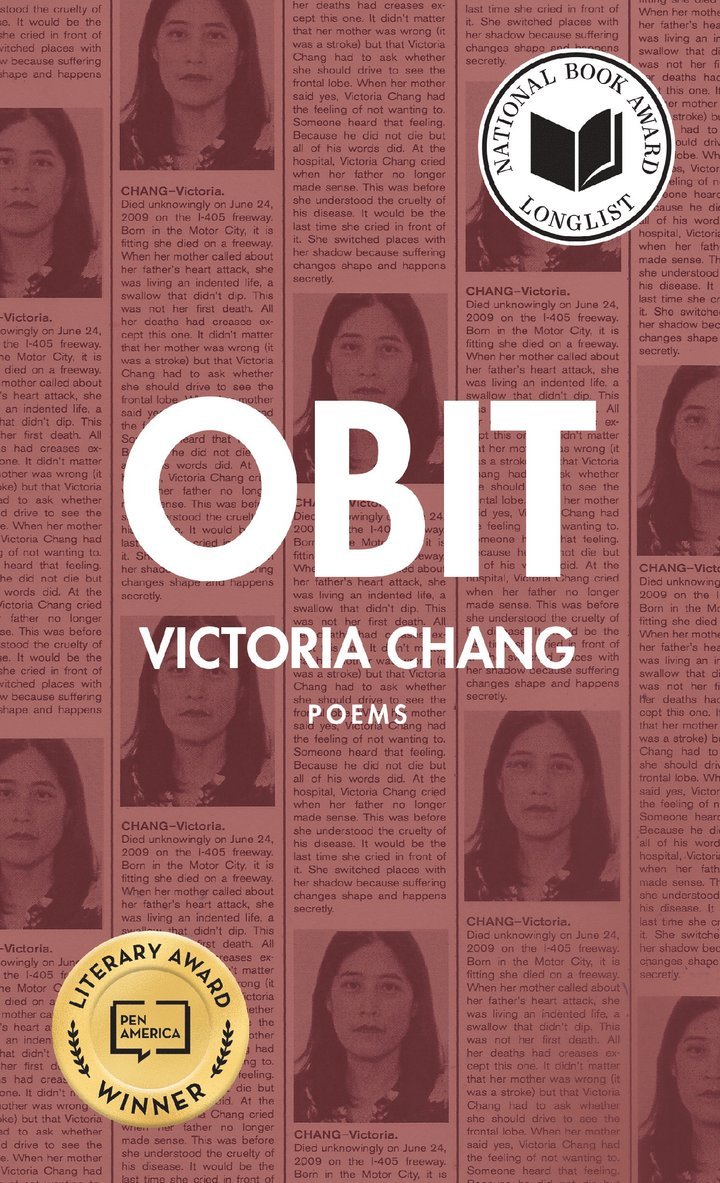
Obit
Häftad, 2022
193 kr
Lägg i varukorg
Los Angeles Times Book PrizePEN Voelcker AwardAnisfield-Wolf Book PrizeNew York Times 100 Notable Books Time Magazine's 100 Must-Read Books NPR's Best Books National Book Award in Poetry, LonglistNational Book Critics Circle, FinalistGriffin Poetry Prize, ShortlistFrank Sanchez Book AwardAfter her …
With My Back to the World
Winner of the Forward Prize for Best Poetry Collection 2024
E-bok, 2024
45 kr
Lägg i varukorg
WINNER OF THE FORWARD PRIZE FOR BEST POETRY COLLECTION 2024 '' Chang has liberated the Ekphrastic form to new lyric heights and depths. Inventive, meditative, audacious, strange and soulful. A marvel of a collection that engages the eye and mind as much as the ear and heart'' Raymond Antrobus …
With My Back to the World
Winner of the Forward Prize for Best Poetry Collection 2024
Inbunden, 2024
168 kr
Lägg i varukorg
WINNER OF THE FORWARD PRIZE FOR BEST POETRY COLLECTION 2024'Chang has liberated the Ekphrastic form to new lyric heights and depths. Inventive, meditative, audacious, strange and soulful. A marvel of a collection that engages the eye and mind as much as the ear and heart' Raymond AntrobusYesterday …
Tree of Knowledge: Longlisted for the National Book Award for Poetry 2026
E-bok, 2026
125 kr
Lägg i varukorg
''A poet of precision, intellect and considerable emotional heft'' ROXANE GAY ''Chang''s latest collection continues her engagement with visual art [...] creating space for Chang to meditate on language, grief and our relationship to history . . . Evocative'' GUARDIAN A poet watches the limbs of a …
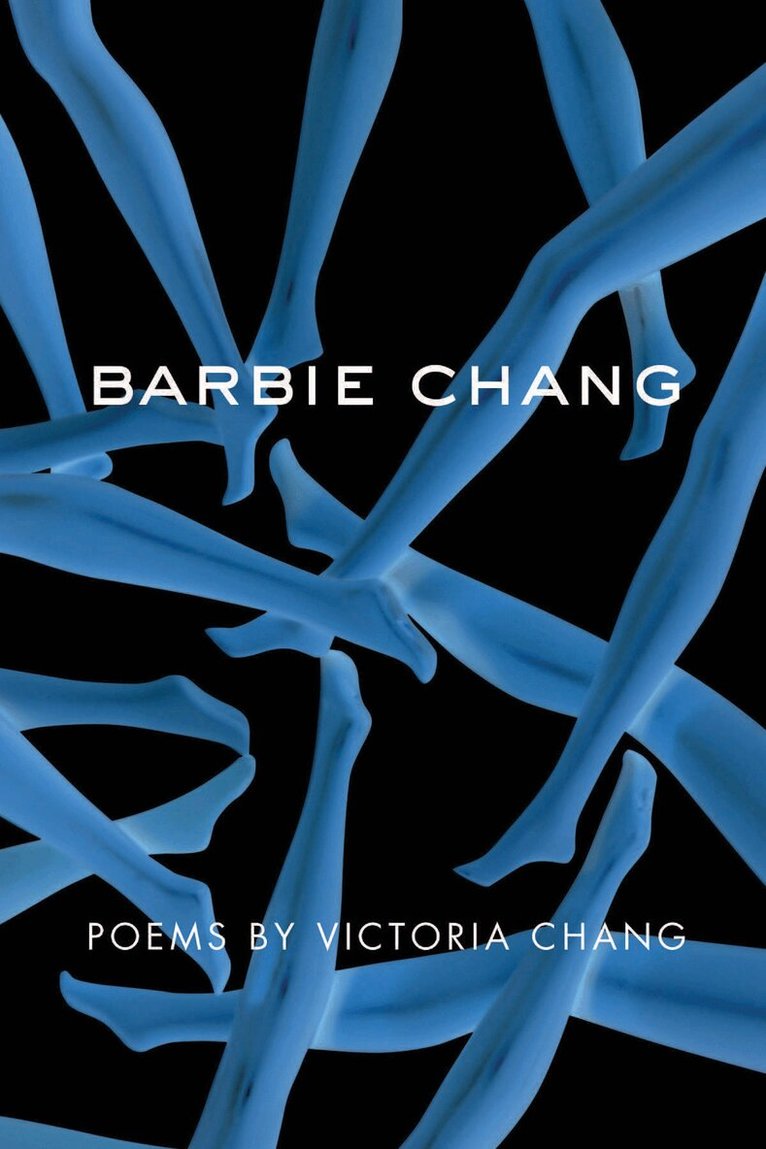
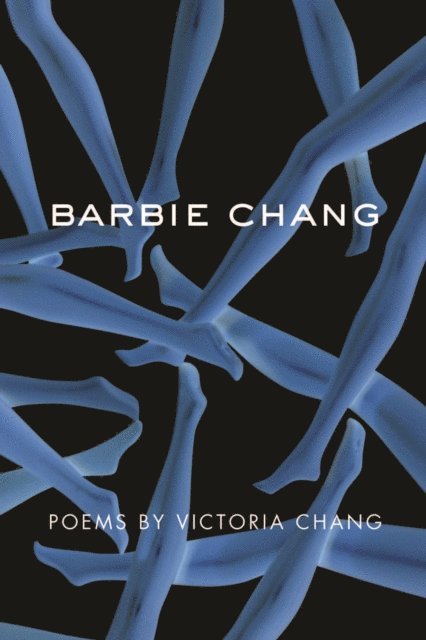
Barbie Chang
Häftad, 2017
190 kr
Lägg i varukorg
"With astringent understatement and wry economy, with nuance and intelligence and an enviable command of syntax and poetic line, Victoria Chang dissects the venerable practices of cultural piety and self-regard. She is a master of the thumbnail narrative. She can wield a dark eroticism. She is …
Obit
Häftad, 2020
254 kr
Lägg i varukorg
The New York Times 100 Notable Books of 2020 Time Magazine 's 100 Must-Read Books of 2020 NPR's Best Books of 2020 National Book Award in Poetry, Longlist Frank Sanchez Book Award After her mother died, poet Victoria Chang refused to write elegies. Rather, she distilled her grief during a feverish …
Trees Witness Everything
Häftad, 2022
191 kr
Lägg i varukorg
A lover of strict form, best-selling poet Victoria Chang turns to compact Japanese waka, powerfully innovating on tradition while continuing her pursuit of one of life’s hardest questions: how to let go. In The Trees Witness Everything, Victoria Chang reinvigorates language by way of concentration, …
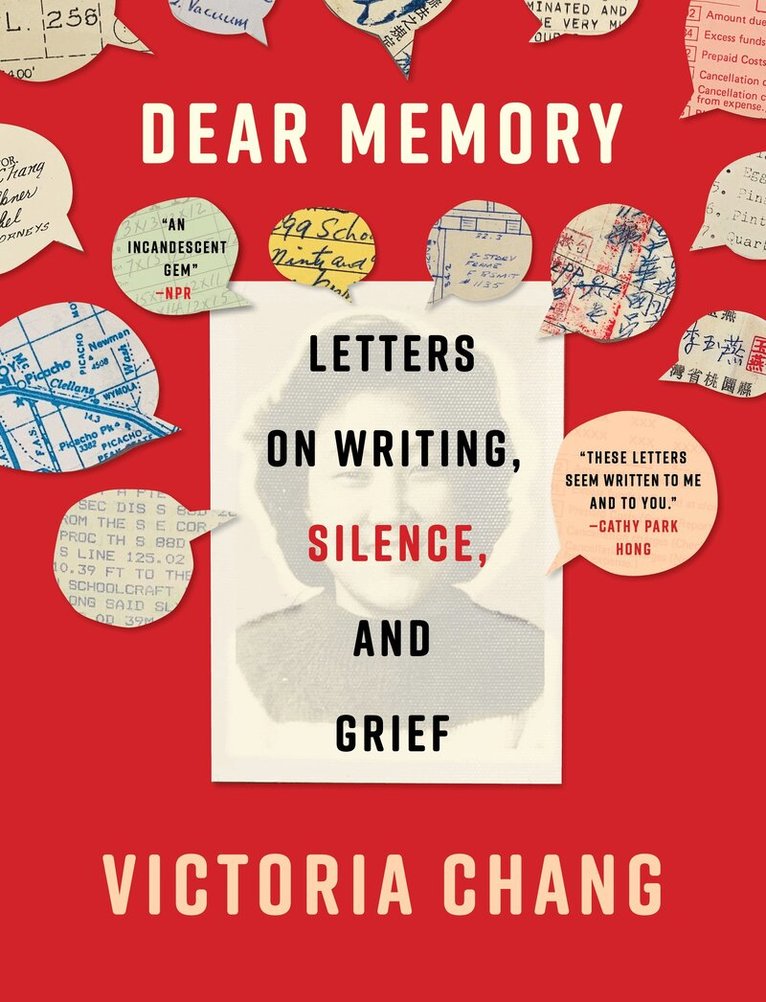
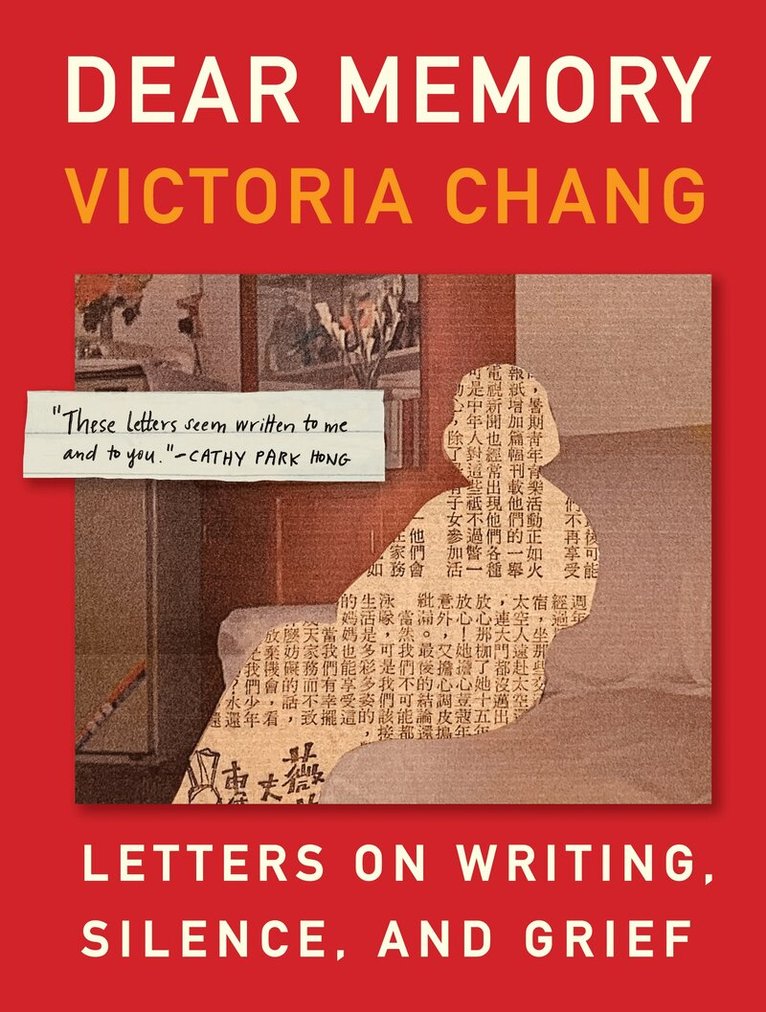
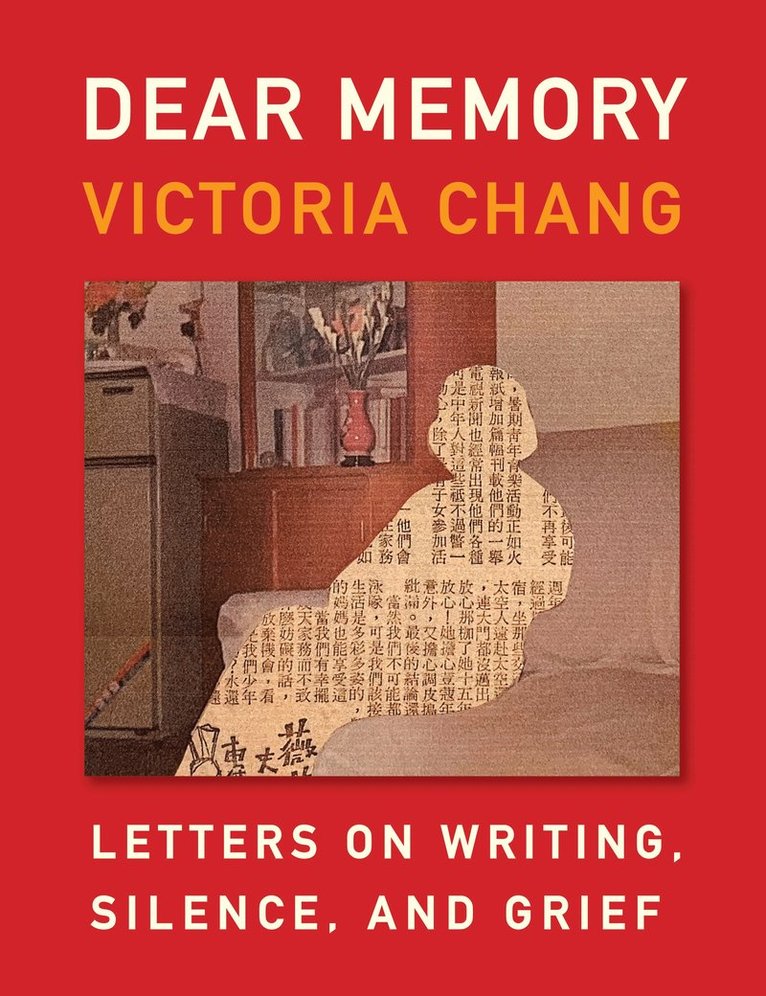
Dear Memory
Letters on Writing, Silence, and Grief
Häftad, 2026
274 kr
Lägg i varukorg
"Groundbreaking . . . Chang's lyrical experiment memorably evokes an individual family's time capsule and an artist's timeless yearning to shape carbon dust into incandescent gem." —NPRNow in paperback, from the poet who “resurrects mediums” (The Millions), a collection of literary letters and …
Dear Memory
Letters on Writing, Silence, and Grief
Inbunden, 2021
225 kr
Lägg i varukorg
A Firecracker Award Finalist in Creative NonfictionAn Electric Literature Favorite Nonfiction Book of the YearA Kirkus Best Book of the MonthFrom poet Victoria Chang, a collection of literary letters and mementos on the art of remembering across generations.For Victoria Chang, memory “isn’t …
Barbie Chang
E-bok, 2018
183 kr
Lägg i varukorg
"With astringent understatement and wry economy, with nuance and intelligence and an enviable command of syntax and poetic line, Victoria Chang dissects the venerable practices of cultural piety and self-regard. She is a master of the thumbnail narrative. She can wield a dark eroticism. She is …
Obit
E-bok, 2020
183 kr
Lägg i varukorg
The New York Times 100 Notable Books of 2020 Time Magazine ''s 100 Must-Read Books of 2020 NPR''s Best Books of 2020 National Book Award in Poetry, Longlist Frank Sanchez Book Award After her mother died, poet Victoria Chang refused to write elegies. Rather, she distilled her grief during a …
Trees Witness Everything
E-bok, 2022
198 kr
Lägg i varukorg
A lover of strict form, best-selling poet Victoria Chang turns to compact Japanese waka, powerfully innovating on tradition while continuing her pursuit of one of life’s hardest questions: how to let go. In The Trees Witness Everything, Victoria Chang reinvigorates language by way of concentration, …
Lyrikvännen 1(2021)
Av Ulf Karl Olov Nilsson, Jenny Tunedal m. fl.
2021
110 kr
Lägg i varukorg
"Övergången från muntligt framförd till nedskriven poesi skedde åtminstone delvis genom att dikter började ristas in på gravar. Så blev skriften ett minnesmärke – över dödsfall, krig och katastrofer – som till skillnad från talakten kunde agera ställföreträdare för de dödas röster långt efter att …
Dear Memory
Letters on Writing, Silence, and Grief
Häftad, 2026
194 kr
Tillfälligt slut
"Groundbreaking . . . Chang's lyrical experiment memorably evokes an individual family's time capsule and an artist's timeless yearning to shape carbon dust into incandescent gem." —NPRNow in paperback, from the poet who “resurrects mediums” (The Millions), a collection of literary letters and …