Victoria I. Lyall - Böcker
Visar alla böcker från författaren Victoria I. Lyall. Handla med fri frakt och snabb leverans.
4 produkter
4 produkter
467 kr
Skickas inom 7-10 vardagar
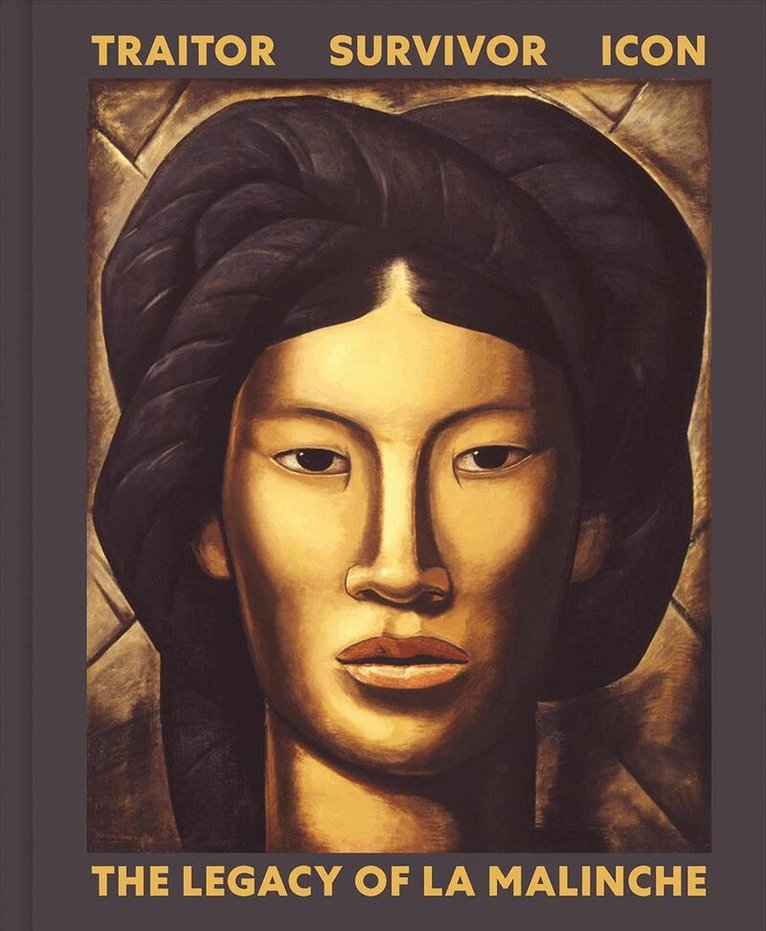
The first major visual and cultural exploration of the legacy of La Malinche, simultaneously reviled as a traitor to her people and hailed as the mother of Mexico “Malinche herself comes through. She is not an idea or a myth but a person. And she is ablaze with life.”—Angelica Aboulhosn, Humanities An enslaved Indigenous girl who became Hernán Cortés’s interpreter and cultural translator, Malinche stood at center stage in one of the most significant events of modern history. Linguistically gifted, she played a key role in the transactions, negotiations, and conflicts between the Spanish and the Indigenous populations of Mexico that shaped the course of global politics for centuries to come. As mother to Cortés’s firstborn son, she became the symbolic progenitor of a modern Mexican nation and a heroine to Chicana and Mexicana artists. Traitor, Survivor, Icon is the first major publication to present a comprehensive visual exploration of Malinche’s enduring impact on communities living on both sides of the US-Mexico border. Five hundred years after her death, her image and legacy remain relevant to conversations around female empowerment, indigeneity, and national identity throughout the Americas. This book establishes and examines her symbolic import and the ways in which artists, scholars, and activists have appropriated her image to interpret and express their own experiences and agendas, from the 1500s through today. Published in association with the Denver Art Museum Exhibition Schedule: Denver Art Museum(February 6–May 8, 2022) Albuquerque Museum(June 11–September 4, 2022) San Antonio Museum of Art(October 14, 2022–January 8, 2023)
Murals of the Americas
Mayer Center Symposium XVII, Readings in Latin American Studies
Häftad, Engelska, 2019
317 kr
Skickas inom 7-10 vardagar
This volume presents the work of ten scholars who shared their research at the Denver Art Museum's 2017 symposium hosted by the Frederick and Jan Mayer Center for Pre-Columbian and Spanish Colonial Art. Centered on the theme of murals, each chapter discusses how this art form functions as a powerful tool for the expression of political, social, or religious ideas across diverse time periods and cultures in the Americas, from the ancient rock cave paintings of Guerrero, Mexico, to the murals of the 1960s Chicano movement. Artist Judy Baca discusses her practice with Jesse Laird Ortega (Denver Art Museum).Claudia Brittenham (University of Chicago) considers the Rainbow Serpent mural from Chichen Itza's Temple of the Chacmool.Severin Fowles (Barnard College) and Lindsay Montgomery (University of Arizona) reevaluate rock art across the American plains and Southwest. Kelley Hays-Gilpin (Northern Arizona University) and Hopi artist Ed Kabotie survey dry fresco mural painting in Hopi, Zuni, Acoma, and Rio Grande Pueblo communities from the fifteenth century to the present.Heather Hurst (Skidmore College) reconstructs the sequence of drawing the Oxtotitlán cave paintings in Guerrero, Mexico, some of the earliest mural paintings in Mesoamerica.Lucha Martinez de Luna (INAH/independent scholar) examines how Chicano artists used mural arts to make statements about identity and cultural heritage in the context of the civil rights movement of the 1960s, with a focus on Denver artists.Franco Rossi (Boston University) provides a detailed examination of the Xultun mural images and texts, which shed light on the training of Classic Maya scribes and the transmission of artistic knowledge.Maria Teresa Uriarte (Universidad Nacional Autónoma de México) brings thirty years' insight to the striking iconography of the murals of Teotihuacan.
317 kr
Skickas inom 7-10 vardagar
The term “Pre-Columbian art” once described the material culture produced in the Americas, mostly south of the US-Mexico border, prior to the arrival of Europeans. Museums across the United States now refer to these departments as “the Americas” or “the ancient Americas.” A few individuals and museums began collecting in this area already in the late nineteenth century, but many others did not embark on it until well into the twentieth. A range of figures brought these collections into being: a handful of dedicated curators, pioneering directors, and passionate collectors and patrons engaged dealers, archaeologists, scholars, and governments to amass artworks and present them to students and the public alike. During this time, many art museums insisted on displaying these materials not as ethnographic or anthropological objects but as finely crafted works of aesthetic value—as art. During the latter half of the twentieth century, more concern arose over acquisition methods and standards as well as the ethics of collecting objects of cultural heritage and import. Stewards of these collections in American art museums have begun to confront the changing meanings and import of what Nelson Rockefeller once described as the “Other Americas.” This Mayer Center Symposium volume captures the history of collecting and display of ancient American works in art museums, a history surprisingly poorly documented until now, and their significance for communities today.With additional contributions by:Susan E. Bergh, former Curator of Pre-Columbian and Native North American Art, Cleveland Museum of ArtKristopher Driggers, Associate Curator of Latin American Art, San Antonio Museum of ArtRex Koontz, Moores Professor of Art History, University of Houston, and Consulting Curator of the Art of the Indigenous Americas, Museum of Fine Arts, Houston Mary E. Miller, Director of the Getty Research InstituteJoanne Pillsbury, Andrall E. Pearson Curator of Ancient American Art, Metropolitan Museum of ArtElizabeth Irene Pope, Senior Research Associate with the Arts of the Americas and Textiles departments at the Art Institute of ChicagoMatthew H. Robb, Mesoamerican specialist, Library of Congress, Washington, DCNancy B. Rosoff, Andrew W. Mellon Curator and Chair of the Arts of the Americas, Brooklyn Museum
379 kr
Skickas inom 7-10 vardagar
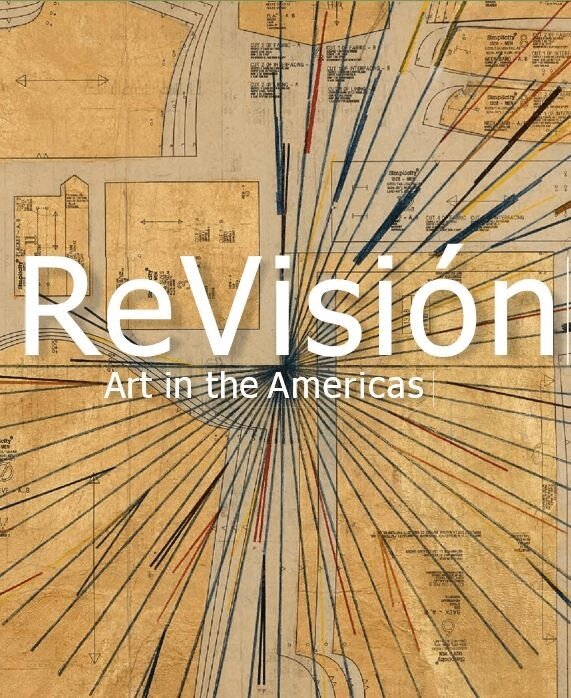
ReVisión: A New Look at Art in the Americas considers what makes the Americas the Americas. With essays by leading scholars of Latin American art history, the publication explores the ways in which the past continues to exert an influence on communities throughout the region.Artists such as Alexander Apóstol, Juan Enrique Bedoya, Johanna Calle, Ronny Quevedo, Sandy Rodríguez, Eduardo Sarabia, Clarissa Tossin,and Cecilia Vicuña draw on centuries of imagery from both before and after the Conquest to grapple with questions of identity, exploitation of natural resources, and displacement. The essays in this catalog provide a framework for understanding the region’s nuanced history of creation, destruction, and renewal.