Ellen Hoobler - Böcker
Visar alla böcker från författaren Ellen Hoobler. Handla med fri frakt och snabb leverans.
4 produkter
4 produkter
454 kr
Skickas inom 11-20 vardagar
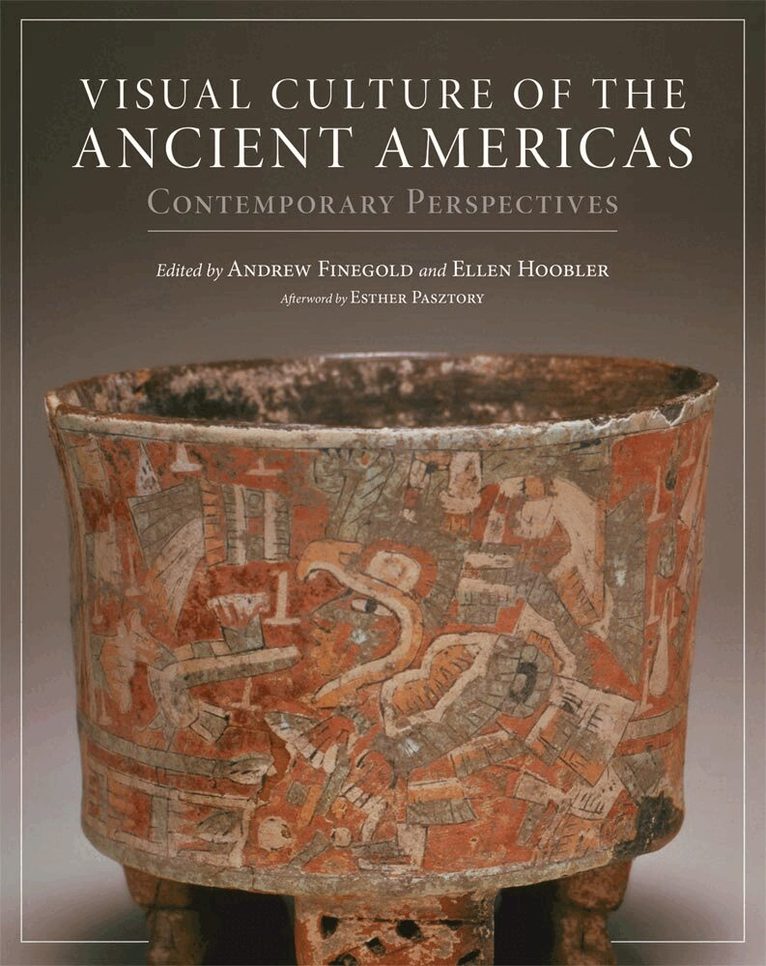
In the past fifty years, the study of indigenous and pre-Columbian art has evolved from a groundbreaking area of inquiry in the mid-1960s to an established field of research. This period also spans the career of art historian Esther Pasztory. Few scholars have made such a broad and lasting impact as Pasztory, both in terms of our understanding of specific facets of ancient American art as well as in our appreciation of the evolving analytical tendencies related to the broader field of study as it developed and matured. The essays collected in this volume reflect scholarly rigor and new perspectives on ancient American art and are contributed by many of Pasztory's former students and colleagues.A testament to the sheer breadth of Pasztory's accomplishments, Visual Culture of the Ancient Americas covers a wide range of topics, from Aztec picture-writing to nineteenth-century European scientific illustration of Andean sites in Peru. The essays, written by both established and rising scholars from across the field, focus on three areas: the ancient Andes, including its representation by European explorers and scholars of the nineteenth century; Classic period Mesoamerica and its uses within the cultural heritage debate of the twentieth and twenty-first centuries; and Postclassic Mesoamerica, particularly the deeper and heretofore often hidden meanings of its cultural production. Figures, maps, and color plates demonstrate the vibrancy and continued allure of indigenous artworks from the ancient Americas.""Pre-Columbian art can give more,"" Pasztory declares, and the scholars featured here make a compelling case for its incorporation into art theory as a whole. The result is a collection of essays that celebrates Pasztory's central role in the development of the field of Ancient American visual studies, even as it looks toward the future of the discipline.
556 kr
Skickas inom 7-10 vardagar
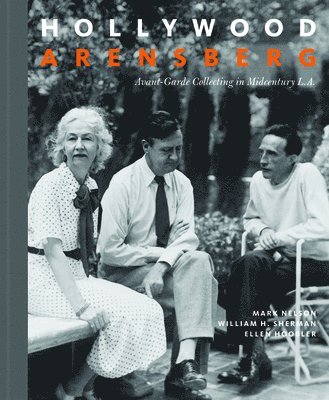
This comprehensive reconstruction and interpretation of Louise and Walter Arensberg's groundbreaking collection of modern and pre-Columbian art takes readers room by room, wall by wall, object by object through the couple's Los Angeles home in which their collection was displayed. Following the Armory Show of 1913, Louise and Walter Arensberg began assembling one of the most important private collections of art in the United States, as well as the world's largest private library of works by and about the philosopher Sir Francis Bacon. By the time Louise and Walter died--in 1953 and 1954, respectively--they had acquired some four thousand rare books and manuscripts and nearly one thousand works of art, including world-class specimens of Cubism, Surrealism, and Primitivism, the bulk of Marcel Duchamp's oeuvre, and hundreds of pre-Columbian objects. These exceptional works filled nearly all available space in every room of their house--including the bathrooms. The Arensbergs have long had a central role in the histories of Modernism and collecting, but images of their collection in situ have never been assembled or examined comprehensively until now. Presenting new research on how the Arensbergs acquired pre-Columbian art and featuring never-before-seen images, Hollywood Arensberg demonstrates the value of seeing the Arensbergs' collection as part of a single vision, framed by a unique domestic space at the heart of Hollywood's burgeoning artistic scene.
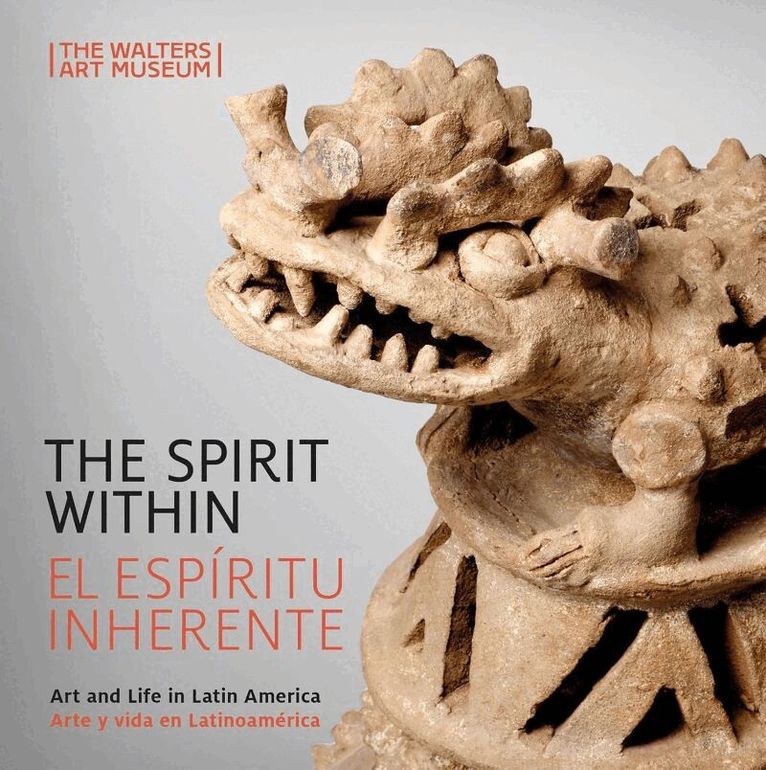
Spirit Within / El espíritu inherente
Art and Life in Latin America / Arte y vida en Latinoamerica
Häftad, Spanska, 2025
198 kr
Skickas inom 7-10 vardagar
Ancient and moderncraftspeople shaped jade, gold, feathers, and clay into exquisite artworks, butthe meanings of those objects are intertwined with the living essence of theraw materials themselves. Thirty-five highlights, ancient to contemporary, providea window into the spiritual and intellectual context in which these objectswere understood by the Indigenous people who made and used them.Al igual que lohacian los artesanos de la antiguedad, los de hoy dan forma al jade, al oro, alas plumas o a la arcilla para crear exquisitas obras de arte, cuyo significadoen tanto objetos esta entrelazado tambien con la esencia viva de las propias materiasprimas. 35 piezas destacadas de la coleccion de las Americas, tanto antiguascomo contemporaneas, las que permiten apreciar el contexto espiritual eintelectual en el que eran concebidos estos objetos por los pueblos indigenasque los fabricaban y empleaban..
317 kr
Skickas inom 7-10 vardagar
The term “Pre-Columbian art” once described the material culture produced in the Americas, mostly south of the US-Mexico border, prior to the arrival of Europeans. Museums across the United States now refer to these departments as “the Americas” or “the ancient Americas.” A few individuals and museums began collecting in this area already in the late nineteenth century, but many others did not embark on it until well into the twentieth. A range of figures brought these collections into being: a handful of dedicated curators, pioneering directors, and passionate collectors and patrons engaged dealers, archaeologists, scholars, and governments to amass artworks and present them to students and the public alike. During this time, many art museums insisted on displaying these materials not as ethnographic or anthropological objects but as finely crafted works of aesthetic value—as art. During the latter half of the twentieth century, more concern arose over acquisition methods and standards as well as the ethics of collecting objects of cultural heritage and import. Stewards of these collections in American art museums have begun to confront the changing meanings and import of what Nelson Rockefeller once described as the “Other Americas.” This Mayer Center Symposium volume captures the history of collecting and display of ancient American works in art museums, a history surprisingly poorly documented until now, and their significance for communities today.With additional contributions by:Susan E. Bergh, former Curator of Pre-Columbian and Native North American Art, Cleveland Museum of ArtKristopher Driggers, Associate Curator of Latin American Art, San Antonio Museum of ArtRex Koontz, Moores Professor of Art History, University of Houston, and Consulting Curator of the Art of the Indigenous Americas, Museum of Fine Arts, Houston Mary E. Miller, Director of the Getty Research InstituteJoanne Pillsbury, Andrall E. Pearson Curator of Ancient American Art, Metropolitan Museum of ArtElizabeth Irene Pope, Senior Research Associate with the Arts of the Americas and Textiles departments at the Art Institute of ChicagoMatthew H. Robb, Mesoamerican specialist, Library of Congress, Washington, DCNancy B. Rosoff, Andrew W. Mellon Curator and Chair of the Arts of the Americas, Brooklyn Museum