Victoria Shmidt - Böcker
Visar alla böcker från författaren Victoria Shmidt. Handla med fri frakt och snabb leverans.
8 produkter
8 produkter
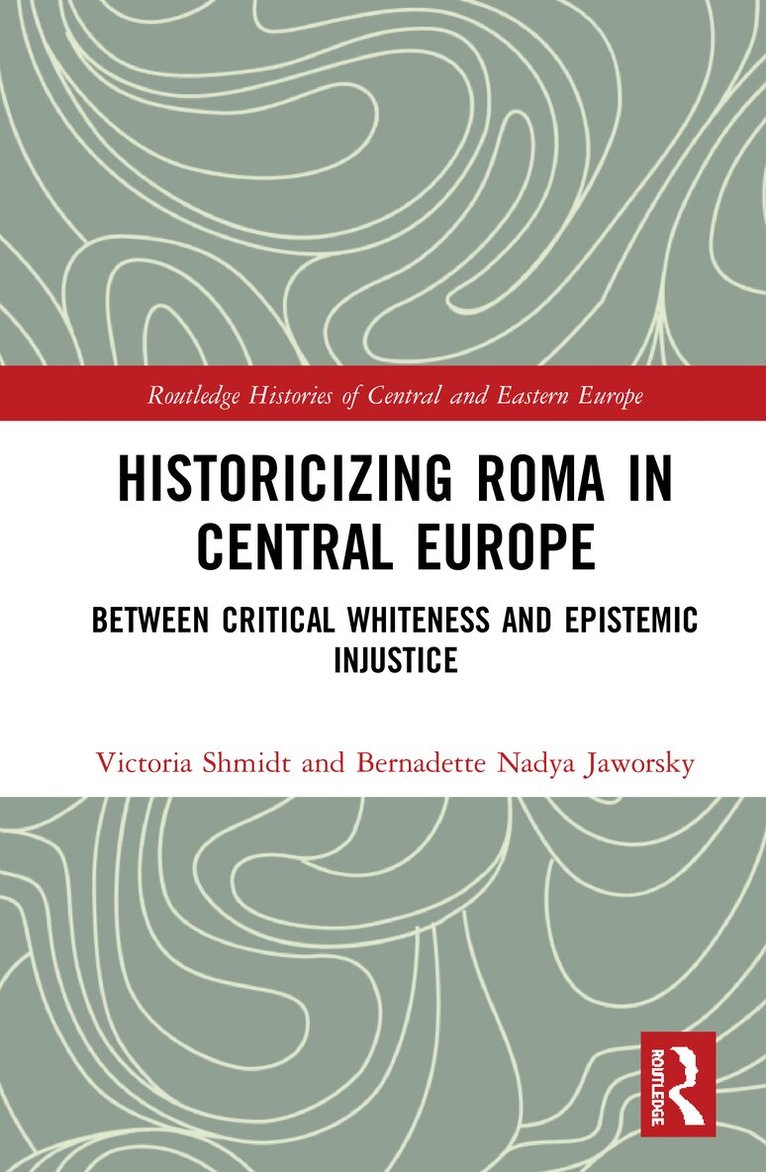
Historicizing Roma in Central Europe
Between Critical Whiteness and Epistemic Injustice
Inbunden, Engelska, 2020
2 150 kr
Skickas inom 10-15 vardagar
In Central Europe, limited success in revisiting the role of science in the segregation of Roma reverberates with the yet-unmet call for contextualizing the impact of ideas on everyday racism. This book attempts to interpret such a gap as a case of epistemic injustice. It underscores the historical role of ideas in race-making and provides analytical lenses for exploring cross-border transfers of whiteness in Central Europe. In the case of Roma, the scientific argument in favor of segregation continues to play an outstanding role due to a long-term focus on the limited educability of Roma. The authors trace the long-term interrelation between racializing Roma and the adaptation by Central European scholars of theories legitimizing segregation against those considered non-white, conceived as unable to become educated or "civilized." Along with legitimizing segregation, sterilization and even extermination, theorizing ineducability has laid the groundwork for negating the capacity of Roma as subjects of knowledge. Such negation has hindered practices of identity and quite literally prevented Roma in Central Europe from becoming who they are. This systematic epistemic injustice still echoes in contemporary attempts to historicize Roma in Central Europe. The authors critically investigate contemporary approaches to historicize Roma as reproducing whiteness and inevitably leading to various forms of epistemic injustice. The methodological approach herein conceptualizes critical whiteness as a practice of epistemic justice targeted at providing a sustainable platform for reflecting upon the impact of the past on the contemporary situation of Roma.
Historicizing Roma in Central Europe
Between Critical Whiteness and Epistemic Injustice
Häftad, Engelska, 2022
630 kr
Skickas inom 10-15 vardagar
In Central Europe, limited success in revisiting the role of science in the segregation of Roma reverberates with the yet-unmet call for contextualizing the impact of ideas on everyday racism. This book attempts to interpret such a gap as a case of epistemic injustice. It underscores the historical role of ideas in race-making and provides analytical lenses for exploring cross-border transfers of whiteness in Central Europe. In the case of Roma, the scientific argument in favor of segregation continues to play an outstanding role due to a long-term focus on the limited educability of Roma. The authors trace the long-term interrelation between racializing Roma and the adaptation by Central European scholars of theories legitimizing segregation against those considered non-white, conceived as unable to become educated or "civilized." Along with legitimizing segregation, sterilization and even extermination, theorizing ineducability has laid the groundwork for negating the capacity of Roma as subjects of knowledge. Such negation has hindered practices of identity and quite literally prevented Roma in Central Europe from becoming who they are. This systematic epistemic injustice still echoes in contemporary attempts to historicize Roma in Central Europe. The authors critically investigate contemporary approaches to historicize Roma as reproducing whiteness and inevitably leading to various forms of epistemic injustice. The methodological approach herein conceptualizes critical whiteness as a practice of epistemic justice targeted at providing a sustainable platform for reflecting upon the impact of the past on the contemporary situation of Roma.
2 150 kr
Skickas inom 10-15 vardagar
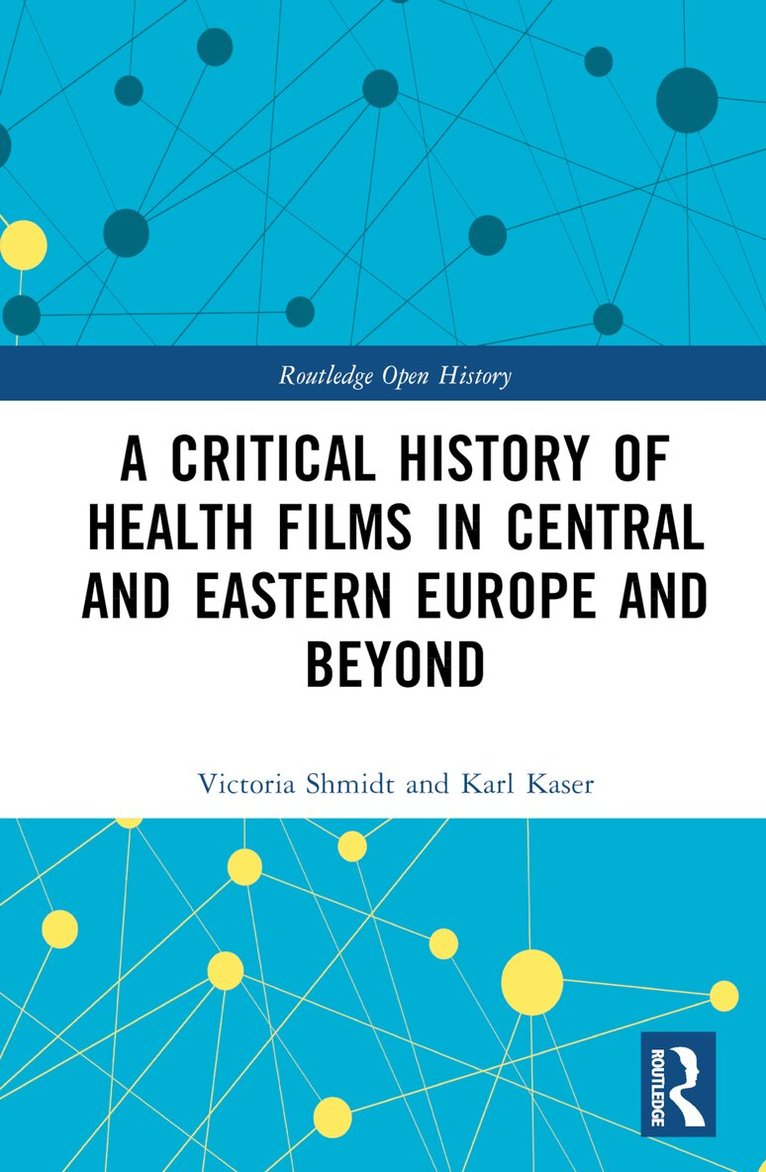
The burgeoning scholarship on Western health films stands in stark contrast to the vacuum in the historical conceptualization of Eastern European films. This book develops a nonlinear historical model that revises their unique role in the inception of national cinematography and establishing supranational health security.Readers witness the revelation of an unknown history concerning how the health films produced in Eastern European countries not only adopted Western patterns of propaganda but actively participated in its formation, especially with regard to those considered “others”: Women and the populations of the periphery. The authors elaborate on the long “echo” of the discursive practices introduced by health films within public health propaganda, as well as the attempts to negate and deconstruct such practices by rebellious filmmakers. A wide range of methods, including the analysis of the sociological biographies of filmmakers, the historical reconstruction of public campaigns against diseases and an investigation into the production of health films, contextualizes these films along a multifaceted continuum stretching between the adaptation of global patterns and the cultivation of national authenticities.The book is aimed at those who study the history of film, the history of public health, Central and Eastern European countries and global history.The Open Access version of this book, available at http://www.taylorfrancis.com, has been made available under a Creative Commons Attribution (CC-BY) 4.0 International license.
649 kr
Skickas inom 10-15 vardagar
The burgeoning scholarship on Western health films stands in stark contrast to the vacuum in the historical conceptualization of Eastern European films. This book develops a nonlinear historical model that revises their unique role in the inception of national cinematography and establishing supranational health security.Readers witness the revelation of an unknown history concerning how the health films produced in Eastern European countries not only adopted Western patterns of propaganda but actively participated in its formation, especially with regard to those considered “others”: Women and the populations of the periphery. The authors elaborate on the long “echo” of the discursive practices introduced by health films within public health propaganda, as well as the attempts to negate and deconstruct such practices by rebellious filmmakers. A wide range of methods, including the analysis of the sociological biographies of filmmakers, the historical reconstruction of public campaigns against diseases and an investigation into the production of health films, contextualizes these films along a multifaceted continuum stretching between the adaptation of global patterns and the cultivation of national authenticities.The book is aimed at those who study the history of film, the history of public health, Central and Eastern European countries and global history.The Open Access version of this book, available at http://www.taylorfrancis.com, has been made available under a Creative Commons Attribution (CC-BY) 4.0 International license.
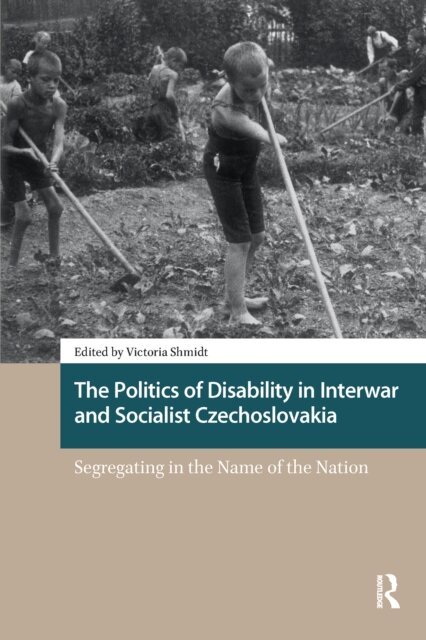
Politics of Disability in Interwar and Socialist Czechoslovakia
Segregating in the Name of the Nation
Häftad, Engelska, 2025
649 kr
Skickas inom 10-15 vardagar
By focusing on the politics of disability as a pillar of Czechoslovak identity, The Politics of Disability in Interwar and Socialist Czechoslovakia: Segregating in the Name of the Nation reflects upon the vicissitudes of nation building over the twentieth century that led to extreme forms of institutional violence against minorities, mainly the Roma, such as forced sterilization. The authors trace the intersectionality of ethnicity and disability, which proliferated across diverse realms of public life, positioning the continuities and ruptures of interrogating propaganda and racial science during the interwar and post-war periods as establishing and reinforcing the border between a healthy Czech majority and a disabled Roma minority. The book critically revises this border that remains observable but unapproachable until it operates as a part of constructing the authenticity of a nation.
Del 39 - History, Philosophy and Theory of the Life Sciences
Blumenbach’s Racial Classification
Deconstructing the Timeless Call for Human Differentiation
Inbunden, Engelska, 2026
536 kr
Skickas inom 10-15 vardagar
This open access book explores how the elements of Blumenbach’s epistemology have been variously assembled in different ways and in different historical-cultural and political-social contexts. It looks at the ways in which this epistemology has been enriched with new elements that have ensured its reproduction. The contributors revise approaches to the historical legacy of Enlightenment scholars such as Blumenbach in terms of nuances to our understanding of intellectual responsibility for the reproduction of race-informed thought, the legitimization of racial discrimination, and the lack of critical response to both. "Blumenbach’s Racial Classification: Deconstructing the Timeless Call for Human Differentiation" transcends the simplistic boundaries between “right” and “left” science and revises the internally contradictory impact of racialist/racial thinking on knowledge about humanity. This book deepens our understanding of race as a contributor to various fields of the production of knowledge about humanity and different epistemic platforms. Instead of highlighting the pathos in revealing racism in the stances of the most authoritative thinkers, the editors and authors suggest contemplation of the persistence of epistemologies that promote racially informed views on humanity and their implications. The book attributes the responsibility for atrocities legitimized by “race science” to intellectual movements like Enlightenment, through more complex historicization, making it of great importance to philosophers, historians of science, and those specialised in racial studies and social sciences.
Auswirkungen und Beitrag der aktuellen Finanzkrise auf die Private Equity Branche
Häftad, Tyska, 2010
529 kr
Skickas inom 3-6 vardagar
Del 7 - Heritage and Memory Studies
Politics of Disability in Interwar and Socialist Czechoslovakia
Segregating in the Name of the Nation
Inbunden, Engelska, 2019
1 804 kr
Skickas inom 10-15 vardagar
This book reexamines the politics of disability in interwar and socialist Czechoslovakia as embedded into nation building, recruited to legitimize diverse forms of structural violence against people with disabilities and ethnic minorities.