Virginia Trimble - Böcker
Visar alla böcker från författaren Virginia Trimble. Handla med fri frakt och snabb leverans.
9 produkter
9 produkter
968 kr
Skickas inom 7-10 vardagar
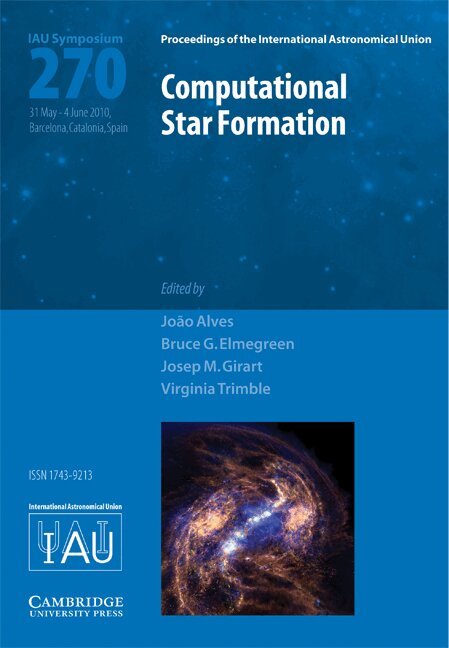
The rapid advance of computer capabilities over the last two decades has opened up a new field of numerical simulations in which detailed physical models can be made to represent the most complex processes. IAU Symposium 270 reviews a wide range of topics relevant to computer modeling in the fields of interstellar gas dynamics, star formation and galactic dynamics. It includes numerical techniques for modeling physical processes such as self-gravitating, radiative magnetohydrodynamics, as well as novel hardware options for acceleration and a view into the future of computation. Observations of interstellar gas and star formation are also reviewed. This book is ideal for graduate students and researchers in the field of numerical astrophysics.
260 kr
Skickas inom 7-10 vardagar
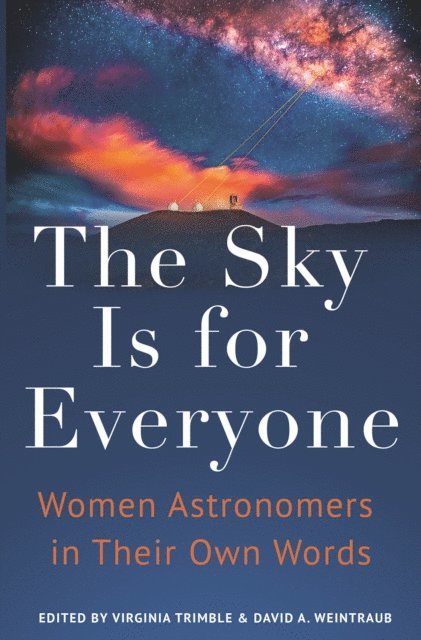
An inspiring anthology of writings by trailblazing women astronomers from around the globeThe Sky Is for Everyone is an internationally diverse collection of autobiographical essays by women who broke down barriers and changed the face of modern astronomy. Virginia Trimble and David Weintraub vividly describe how, before 1900, a woman who wanted to study the stars had to have a father, brother, or husband to provide entry, and how the considerable intellectual skills of women astronomers were still not enough to enable them to pry open doors of opportunity for much of the twentieth century. After decades of difficult struggles, women are closer to equality in astronomy than ever before. Trimble and Weintraub bring together the stories of the tough and determined women who flung the doors wide open. Taking readers from 1960 to today, this triumphant anthology serves as an inspiration to current and future generations of women scientists while giving voice to the history of a transformative era in astronomy.With contributions by Neta A. Bahcall, Beatriz Barbuy, Ann Merchant Boesgaard, Jocelyn Bell Burnell, Catherine Cesarsky, Poonam Chandra, Xuefei Chen, Cathie Clarke, Judith Gamora Cohen, France Anne Córdova, Anne Pyne Cowley, Bożena Czerny, Wendy L. Freedman, Yilen Gómez Maqueo Chew, Gabriela González, Saeko S. Hayashi, Martha P. Haynes, Roberta M. Humphreys, Vicky Kalogera, Gillian Knapp, Shazrene S. Mohamed, Carole Mundell, Priyamvada Natarajan, Dara J. Norman, Hiranya Peiris, Judith Lynn Pipher, Dina Prialnik, Anneila I. Sargent, Sara Seager, Gražina Tautvaišienė, Silvia Torres-Peimbert, Virginia Trimble, Meg Urry, Ewine F. van Dishoeck, Patricia Ann Whitelock, Sidney Wolff, and Rosemary F. G. Wyse.
176 kr
Skickas inom 7-10 vardagar
An inspiring anthology of writings by trailblazing women astronomers from around the globeThe Sky Is for Everyone is an internationally diverse collection of autobiographical essays by women who broke down barriers and changed the face of modern astronomy. Virginia Trimble and David Weintraub vividly describe how, before 1900, a woman who wanted to study the stars had to have a father, brother, or husband to provide entry, and how the considerable intellectual skills of women astronomers were still not enough to enable them to pry open doors of opportunity for much of the twentieth century. After decades of difficult struggles, women are closer to equality in astronomy than ever before. Trimble and Weintraub bring together the stories of the tough and determined women who flung the doors wide open. Taking readers from 1960 to today, this triumphant anthology serves as an inspiration to current and future generations of women scientists while giving voice to the history of a transformative era in astronomy.With contributions by Neta A. Bahcall, Beatriz Barbuy, Ann Merchant Boesgaard, Jocelyn Bell Burnell, Catherine Cesarsky, Poonam Chandra, Xuefei Chen, Cathie Clarke, Judith Gamora Cohen, France Anne Córdova, Anne Pyne Cowley, Bożena Czerny, Wendy L. Freedman, Yilen Gómez Maqueo Chew, Gabriela González, Saeko S. Hayashi, Martha P. Haynes, Roberta M. Humphreys, Vicky Kalogera, Gillian Knapp, Shazrene S. Mohamed, Carole Mundell, Priyamvada Natarajan, Dara J. Norman, Hiranya Peiris, Judith Lynn Pipher, Dina Prialnik, Anneila I. Sargent, Sara Seager, Gražina Tautvaišienė, Silvia Torres-Peimbert, Virginia Trimble, Meg Urry, Ewine F. van Dishoeck, Patricia Ann Whitelock, Sidney Wolff, and Rosemary F. G. Wyse.
416 kr
Skickas inom 10-15 vardagar
"Blurb & Contents" A select group of top Soviet and American specialists reports in this volume from the frontiers of chaos and nonlinear science. The papers grew out of the rest of a series of annual conferences organized by the American Institute of Physics and VAAP, the Russian Copyright Agency, with the cooperation of the Russian Academy of Sciences. Contributors have provided forward-looking papers that deal with the field's most exciting and frustrating problems. In keeping with the spirit of the summer 1989 meeting in Woods Hole, Massachusetts, the papers are far-ranging and individual, including general discussion, philosophy, opinion, and humor.
6 754 kr
Skickas inom 10-15 vardagar
The Biographical Encyclopedia of Astronomers is a unique and valuable resource for historians and astronomers alike. It includes approx. 1850 biographical sketches on astronomers from antiquity to modern times. It is the collective work of 430 authors edited by an editorial board of 8 historians and astronomers. This reference provides biographical information on astronomers and cosmologists by utilizing contemporary historical scholarship. The fully corrected and updated second edition adds approximately 300 biographical sketches. Based on ongoing research and feedback from the community, the new entries will fill gaps and provide expansions. In addition, greater emphasis on Russo phone astronomers and radio astronomers is given. Individual entries vary from 100 to 1500 words, including the likes of the super luminaries such as Newton and Einstein, as well as lesser-known astronomers like Galileo's acolyte, Mario Guiducci.
908 kr
Skickas inom 10-15 vardagar
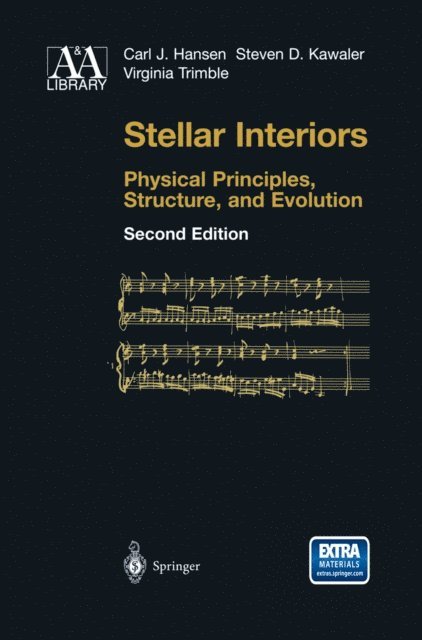
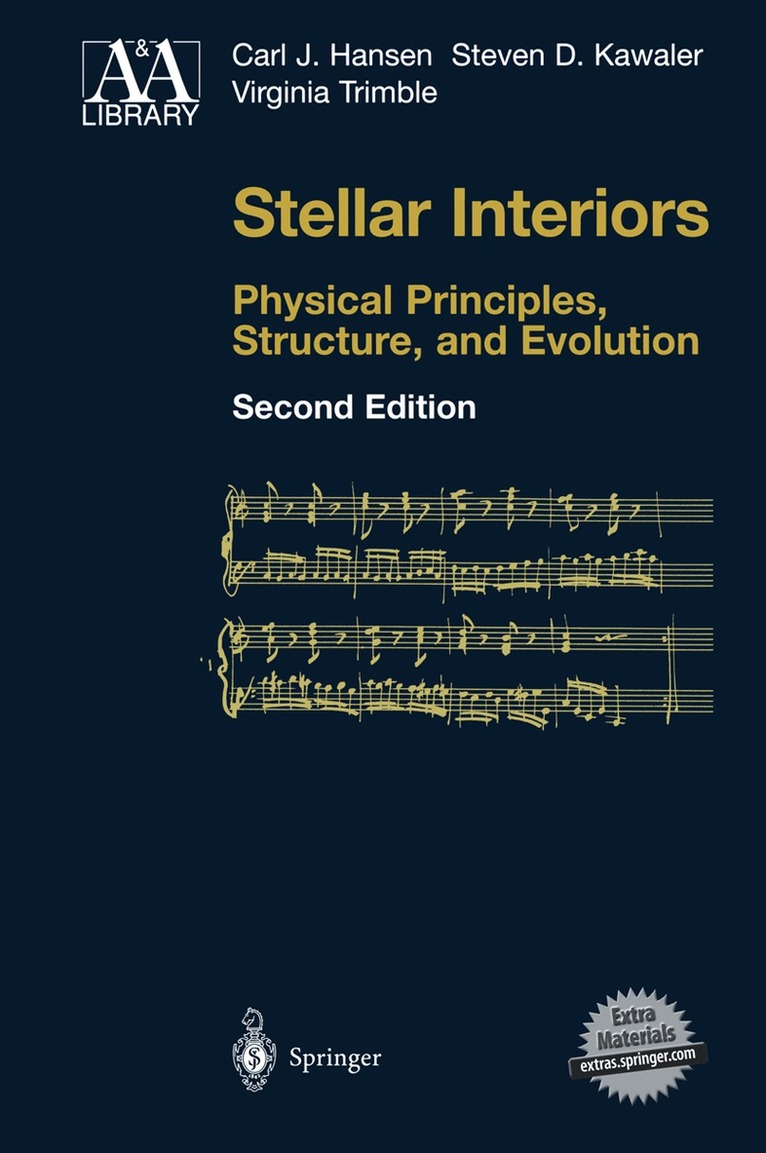
The?rsteditionofthistextappearedin1994.Shortlyafterthethirdprinting, our editor suggested that we attempt a second edition because new devel- mentsinstellarstructureandevolutionhadmadeouroriginalworkoutdated. We (the original authors, CJH and SDK) reluctantly agreed but with res- vations due to the e?ort involved. Our initial reluctance disappeared when we were able to convince (cajole, twist the arm of, etc.) our new coauth- colleague Virginia Trimble to join us. (Welcome Virginia!) We (i.e., all three of us) hope that you agree that the present edition is a great improvement compared to the 1994 e?ort. Our objectives in this edition are the same ones we set forth in 1994: Whatyouwill?ndisatextdesignedforourtargetaudience:thety- cal senior undergraduate or beginning graduate student in astronomy or astrophysics who wishes an overview of stellar structure and e- lution with just enough detail to understand the general picture. She or he can go on from there to more specialized texts or directly to the research literature depending on talent and interests. To this end, this text presents the basic physical principles without chasing all the (interesting!) details. For those of you familiar with the ?rst edition, you will ?nd that some things have not been changed substantially (F = ma is still F = ma), while othersde?nitelyhave.Forexample,Chapter2hasbeencompletelyrewritten.
1 091 kr
Skickas
Throughout the history of science, different thinkers, philosophers and scientists postulated the existence of entities that, in spite of their not being visible or detectable in their time, or perhaps ever, were nevertheless useful to explain the real world. We started this book by looking at a handful of these entities. These included phlogiston to account for fire; the luminiferous ether for propagation of radiation; the homunculus to provide for heredity; and crystalline spheres to carry the wandering planets around the earth. Many of these erroneous beliefs had held up progress, just as dragons drawn on the edges of a map discouraged exploration. This pattern of science evolution continued through the centuries up to the present day.The book evolved into a more extensive history of how science evolved through controversy, suppression, and the desire to maintain the status quo. Our story passes from the Babylonians and Greeks through the middle ages, the renaissance and the scientific revolution to almost current events. We discuss the evolution of our world, the controversy about the extinction of dinosaurs, and open questions in contemporary science such as dark matter, black holes and the origin of the Universe, including how we understand the subatomic world of elementary particles.Most of the chapters deal with astronomy, cosmology and physics, but there are brief ventures into geosciences (continental drift), biosciences (the homunculus), atmospheric physics (Heaviside layer), paleontology (the extinction of dinosaurs), and computer science (artificial intelligence). The authors present a sequence of how mistakes and fallacies have been purged from our quest to understand nature. The way these changes have come about are skillfully set in their relevant historical contexts.
617 kr
Skickas
Throughout the history of science, different thinkers, philosophers and scientists postulated the existence of entities that, in spite of their not being visible or detectable in their time, or perhaps ever, were nevertheless useful to explain the real world. We started this book by looking at a handful of these entities. These included phlogiston to account for fire; the luminiferous ether for propagation of radiation; the homunculus to provide for heredity; and crystalline spheres to carry the wandering planets around the earth. Many of these erroneous beliefs had held up progress, just as dragons drawn on the edges of a map discouraged exploration. This pattern of science evolution continued through the centuries up to the present day.The book evolved into a more extensive history of how science evolved through controversy, suppression, and the desire to maintain the status quo. Our story passes from the Babylonians and Greeks through the middle ages, the renaissance and the scientific revolution to almost current events. We discuss the evolution of our world, the controversy about the extinction of dinosaurs, and open questions in contemporary science such as dark matter, black holes and the origin of the Universe, including how we understand the subatomic world of elementary particles.Most of the chapters deal with astronomy, cosmology and physics, but there are brief ventures into geosciences (continental drift), biosciences (the homunculus), atmospheric physics (Heaviside layer), paleontology (the extinction of dinosaurs), and computer science (artificial intelligence). The authors present a sequence of how mistakes and fallacies have been purged from our quest to understand nature. The way these changes have come about are skillfully set in their relevant historical contexts.
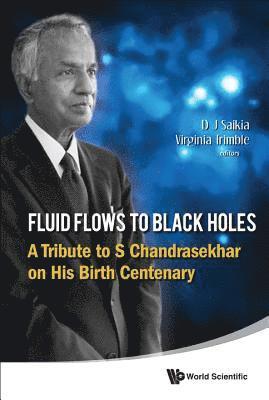
Fluid Flows To Black Holes: A Tribute To S Chandrasekhar On His Birth Centenary
Inbunden, Engelska, 2011
1 308 kr
Tillfälligt slut
This unique book contains a biographical portrait, accounts of Chandrasekhar's role and impact on modern science, historical perspectives and personal reminiscences, several of which appeared in Physics Today, and reviews by leading experts in areas which Prof. Chandrasekhar pioneered. The reviews, which appeared in the Bulletin of the Astronomical Society of India, are either based on papers presented by scholars in the Chandrasekhar Centennial Symposium at the University of Chicago during 15-17 October 2010, or were additional reviews covering topics not represented at the conference by other distinguished astrophysicists. It provides a glimpse of some of the most exciting areas of modern astrophysics as a tribute to Prof Chandrasekhar on his birth centenary.