
Vivian Pramataroff-Hamburger – författare
Visar alla böcker från författaren Vivian Pramataroff-Hamburger. Handla med fri frakt och snabb leverans.
4 produkter
4 produkter
1 559 kr
Skickas inom 10-15 vardagar
This book focuses on the unique challenges for women in a pandemic situation, both as caretakers and patients. It has been noted that in the last two years medical doctors, psychologists, and health workers have seen a huge impact of the pandemic experience on women and their families. Children and adolescents suffered from a strong reduction of social contacts, while families had often to resort to cramped living condition that put a strain on normal life activities, especially in underprivileged areas of society. Fear and uncertainty reigned. All these factors caused a wide range of psychosocial symptoms, from loneliness to domestic violence, depression, and psychosomatic reactions. As health professionals, women have been influenced by the pandemic experience as well. Hospital staff, who had to care for a huge number of seriously ill patients in a very short time, were confronted with considerable expectations, which often turned into hostility, especially in the period before vaccinations became available. Psychotherapists received increased requests for appointments and had to adjust to video consultation for those they were able to accommodate in their practice.Seeing the pandemic crisis as an opportunity to learn from mistakes, and lack of preparation, fostering a greater understanding of women’s health in general, and the unique experiences of pregnancy, childbirth, trauma, adolescence, body experience, and gender identity that affects their health. This book gathers our current state of knowledge about women in the extreme situation of a pandemic crisis and points the way to an improved level of care for the future.“This timely view of women’s mental health in pandemics provides a vision to the path we must all take now to assist women in some of the most important elements of preventive care: their mental and emotional well-being … [T]his book emphasizes that the mental health of a mother must be considered in allcircumstances. Well done for being the conscience we need!”- Jeanne Ann Conry, MD, PhD, President, The International Federation of Gynecology and Obstetrics, Past President, The American College of Obstetricians and Gynecologists, Immediate Past Chair, The Women’s Preventive Health Initiative (WPSI)
1 145 kr
Skickas inom 10-15 vardagar
This book focuses on the unique challenges for women in a pandemic situation, both as caretakers and patients. It has been noted that in the last two years medical doctors, psychologists, and health workers have seen a huge impact of the pandemic experience on women and their families. Children and adolescents suffered from a strong reduction of social contacts, while families had often to resort to cramped living condition that put a strain on normal life activities, especially in underprivileged areas of society. Fear and uncertainty reigned. All these factors caused a wide range of psychosocial symptoms, from loneliness to domestic violence, depression, and psychosomatic reactions. As health professionals, women have been influenced by the pandemic experience as well. Hospital staff, who had to care for a huge number of seriously ill patients in a very short time, were confronted with considerable expectations, which often turned into hostility, especially in the period before vaccinations became available. Psychotherapists received increased requests for appointments and had to adjust to video consultation for those they were able to accommodate in their practice.Seeing the pandemic crisis as an opportunity to learn from mistakes, and lack of preparation, fostering a greater understanding of women’s health in general, and the unique experiences of pregnancy, childbirth, trauma, adolescence, body experience, and gender identity that affects their health. This book gathers our current state of knowledge about women in the extreme situation of a pandemic crisis and points the way to an improved level of care for the future.“This timely view of women’s mental health in pandemics provides a vision to the path we must all take now to assist women in some of the most important elements of preventive care: their mental and emotional well-being … [T]his book emphasizes that the mental health of a mother must be considered in allcircumstances. Well done for being the conscience we need!”- Jeanne Ann Conry, MD, PhD, President, The International Federation of Gynecology and Obstetrics, Past President, The American College of Obstetricians and Gynecologists, Immediate Past Chair, The Women’s Preventive Health Initiative (WPSI)

345 kr
Skickas inom 10-15 vardagar
Weiblichkeit im Film hat viele Facetten: Starlets und Diven, eigensinnige, tapfere und souveräne Frauenfiguren. Im Kino ist mehr zu erleben als die einfache Formel vom männlichen Blick erwarten lässt. Das Buch zeichnet in 29 psychoanalytischen Interpretationen nach, wie die Inszenierung der Frau im Film auf Zuschauerinnen und Zuschauer wirkt.
357 kr
Skickas inom 5-8 vardagar
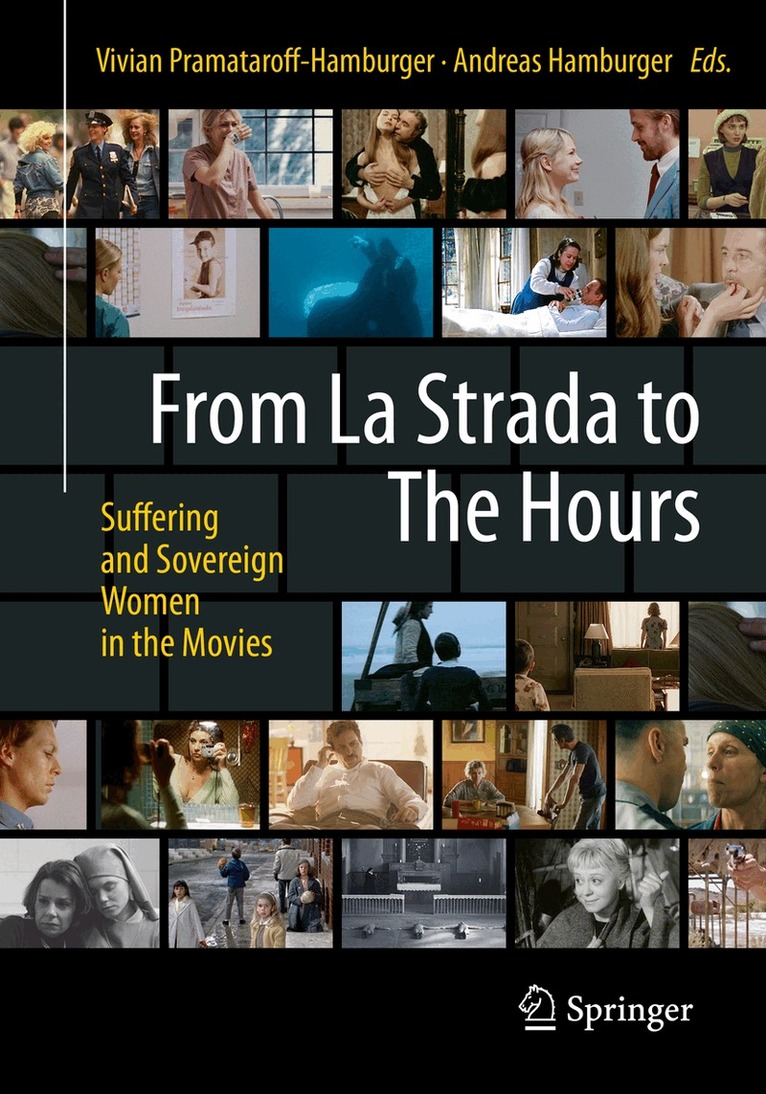
The book covers a wide range of cinematic femininities: It starts with Marilyn Monroe’s cool phrase "We are all of us stars, and we deserve to twinkle", which self-confidently marked her profession - with a wink, because she did not say "to sparkle". The (self-) staging of women also ironically plays its being tailored to the male gaze. In this section we discuss movies like Some like it hot, Breakfast at Tiffany’s, Cet obscur objet du désir and Le Mépris - with a notable chapter by Laura Mulvey. Moreover, some fifty films later, the book ends with a section on Self-Empowerment and Identity, featuring films like Thelma & Louise, The Hours, Blue Valentine and Carol.Are women in film really just those who are seen and displayed? Where are the ones who see and who point to something themselves? Where are the women in the audience, behind the camera? If, as feminist psychoanalytical film criticism rightly observes, the stars and starlets, especially in Hollywood mainstream cinema, are supposed to serve the male gaze as eye candy and self-assurance, what is the role of the women who do not fit into this scheme, the anti-heroes, the women who feel and act, those through whose eyes the world experiences a completely different way of being seen? Not only in arthouse cinema, but also in the mainstream, there is far more to the thousand facets of staged femininity than the simple formula of the male gaze. The book shows the most diverse stagings of femininity in great (and terrible) films, and explores (according to the approach of film psychoanalysis) how these staging affect the unconscious, or also the not-yet-conscious of viewers. Each of the eight sections deals with a thematic aspect of the staging of suffering or sovereign femininity in feature films. They follow a chronological structure to illustrate how the genre has evolved. Each section is held together by an editorial introduction.