W. Bruce Lincoln – författare
Visar alla böcker från författaren W. Bruce Lincoln. Handla med fri frakt och snabb leverans.
6 produkter
6 produkter
338 kr
Skickas inom 10-15 vardagar
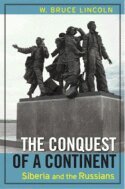
"In The Conquest of a Continent, the historian W. Bruce Lincoln details Siberia's role in Russian history, one remarkably similar to that of the frontier in the development of the United States.... It is a big, panoramic book, in keeping with the immensity of its subject."—Chicago Tribune"Lincoln is a compelling writer whose chapters are colorful snapshots of Siberia's past and present.... The Conquest of a Continent is a vivid narrative that will inform and entertain the broader reading public."—American Historical Review"This story includes Genghis Khan, who sent the Mongols warring into Russia; Ivan the Terrible, who conquered Siberia for Russia; Peter the Great, who supported scientific expeditions and mining enterprises; and Mikhail Gorbachev, whose glasnost policy prompted a new sense of 'Siberian' nationalism. It is also the story of millions of souls who themselves were conquered by Siberia.... Vast riches and great misery, often intertwined, mark this region."—The Wall Street JournalStretching from the Urals to the Arctic Ocean to China, Siberia is so vast that the continental United States and Western Europe could be fitted into its borders, with land to spare. Yet, in only six decades, Russian trappers, cossacks, and adventurers crossed this huge territory, beginning in the 1580s a process of conquest that continues to this day. As rich in resources as it was large in size, Siberia brought the Russians a sixth of the world's gold and silver, a fifth of its platinum, a third of its iron, and a quarter of its timber. The conquest of Siberia allowed Russia to build the modern world's largest empire, and Siberia's vast natural wealth continues to play a vital part in determining Russia's place in international affairs.Bleak yet romantic, Siberia's history comes to life in W. Bruce Lincoln's epic telling. The Conquest of a Continent, first published in 1993, stands as the most comprehensive and vivid account of the Russians in Siberia, from their first victories over the Mongol Khans to the environmental degradation of the twentieth century. Dynasties of incomparable wealth, such as the Stroganovs, figure into the story, as do explorers, natives, gold seekers, and the thousands of men and women sentenced to penal servitude or forced labor in Russia's great wilderness prisonhouse.
Great Reforms
Autocracy, Bureaucracy, and the Politics of Change in Imperial Russia
Inbunden, Engelska, 1990
1 604 kr
Skickas inom 10-15 vardagar
The Great Reforms of the 1860s marked the broadest attempt at social and economic renovation to occur in Russia between the death of Peter the Great in 1725 and the Revolution of 1905. In just more than a decade, imperial reform acts freed Russia's serfs, restructured her courts, established institutions of local self-government in parts of the empire, altered the constraints that censorship imposed on the press, and transformed Russia's vast serf armed forces into a citizen army in which men from all classes bore equal responsibility for military service. This invaluable study explains why the legislation assumed the shape that it did and estimates what the Great Reforms ultimately accomplished. The Great Reforms offered readers a vital starting point from which to evaluate the prospects for glasnost', perestroika, and reform in the Gorbachev era.
194 kr
Skickas inom 10-15 vardagar
The first decade of Alexander II's reign is known in Russian history as the Era of the Great Reforms, a time recognized as the major period of social, economic, and institutional transformation between the reign of Peter the Great and the Revolution of 1905. Coming directly after the notoriously repressive last decade of the Nicholas era, the appearance of such dramatic reform has led scholars to seek its causes in dramatic events. Surely some great, even cataclysmic, force must have driven Alexander II and his advisers to initiate what appears to be such an astonishing change in policy. In their search for the origins of these Great Reforms, historians generally have focused upon two phenomena. The first of these was Russia's defeat in the Crimean War by a relatively small, ineptly commanded Allied expeditionary force. The second was the serf revolts, which increased dramatically in the 1850s. From these events, most historians have concluded that the economic failings of serfdom, the problem of preserving domestic peace, and the need to restore Russia's tarnished military prestige were the major forces that convinced Alexander II's government to embark upon a new reformist path. As Lincoln's examination of the long-unstudied Russian archival evidence shows, there are good reasons to question whether such crises of policy and failings of Russia's servile economy impelled Alexander II and his advisers along a previously uncharted reformist path after the Crimean War. Further, in light of the Russian bureaucracy's slowness in drafting much less complex administrative reforms during the previous century, Lincoln argues that the Great Reform legislation simply was too complex and required too much sophisticated knowledge about the Empire's economic, administratvive, and judicial affairs to have been formulated in the brief half-decade after the war's end.
234 kr
Skickas inom 10-15 vardagar
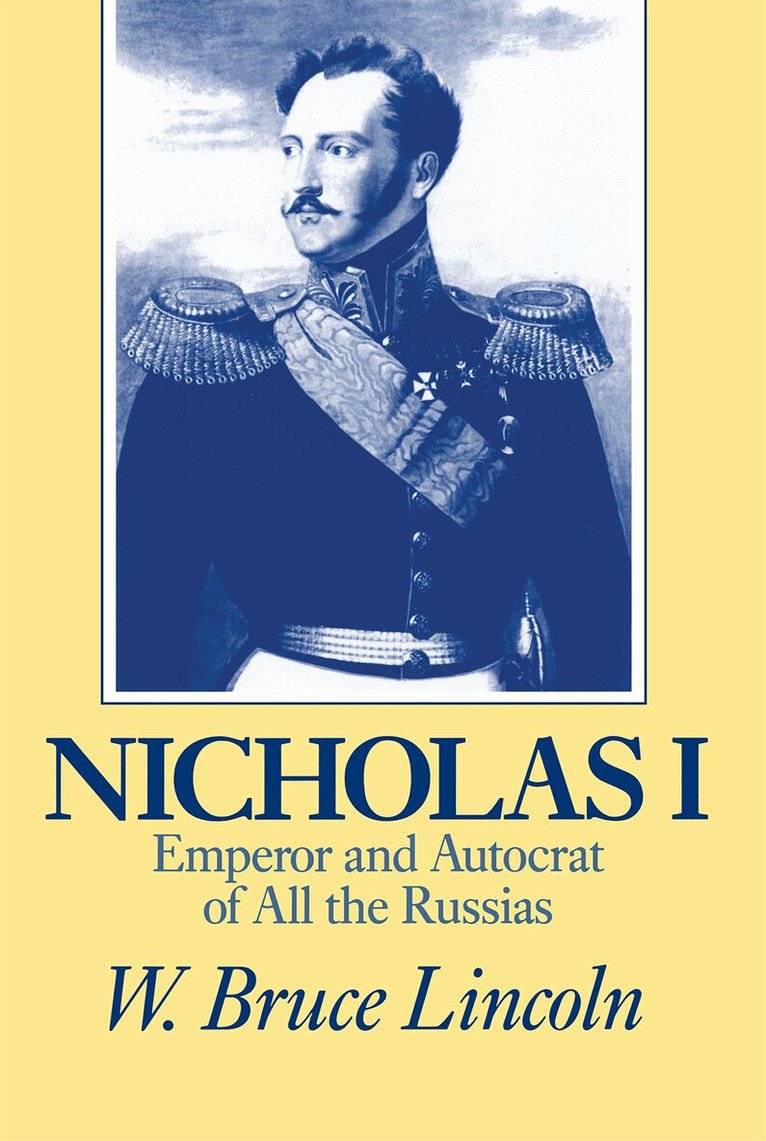
The Indiana U. Press edition (1978) is cited in BCL3 . A scholarly biography that provides a view of Russian autocracy. Annotation copyright Book News, Inc. Portland, Or.
Great Reforms
Autocracy, Bureaucracy, and the Politics of Change in Imperial Russia
Häftad, Engelska, 1990
214 kr
Skickas inom 10-15 vardagar
The Great Reforms of the 1860s marked the broadest attempt at social and economic renovation to occur in Russia between the death of Peter the Great in 1725 and the Revolution of 1905. In just more than a decade, imperial reform acts freed Russia's serfs, restructured her courts, established institutions of local self-government in parts of the empire, altered the constraints that censorship imposed on the press, and transformed Russia's vast serf armed forces into a citizen army in which men from all classes bore equal responsibility for military service. This invaluable study explains why the legislation assumed the shape that it did and estimates what the Great Reforms ultimately accomplished. The Great Reforms offered readers a vital starting point from which to evaluate the prospects for glasnost', perestroika, and reform in the Gorbachev era.
269 kr
Skickas inom 10-15 vardagar
In the quarter century before World War I, change came to Russia at a dizzying pace. The industrial revolution, the building of the Trans-Siberian Railroad, the disastrous Russo-Japanese War, and the Revolution of 1905 drastically reshaped the lives of both the ruling classes and ordinary people. Imperial Russia was home to more than a hundred million men and women, but by the time Vladimir Lenin announced the Bolsheviks' revolutionary victory, one in three had either perished or fled in exile. In War's Dark Shadow explores the lives, thoughts, and hopes of the Russian people as they entered the twentieth century.