W. Scott Haine – Författare
Visar alla böcker från författaren W. Scott Haine. Handla med fri frakt och snabb leverans.
3 produkter
3 produkter
Del 114 - The Johns Hopkins University Studies in Historical and Political Science
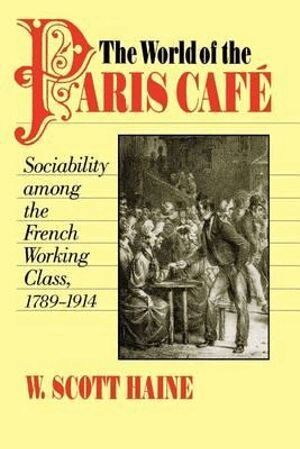
World of the Paris Café
Sociability among the French Working Class, 1789-1914
Häftad, Engelska, 1998
365 kr
Skickas inom 7-10 vardagar
"[Haine] invites the reader of The World of the Paris Cafe to step up to the serving counter of a nineteenth-century Parisian cafe to eavesdrop on the conversations and to observe the dynamics of this unique working-class establishment ...These cafes were far more than places to eat and drink to the great majority of working-class Parisians, who also frequented such establishments seeking shelter from authorities, exchanging and developing and sometimes enacting their ideas."-Jack B. Ridley, History: Review of New Books In The World of the Paris Cafe, W. Scott Haine investigates what the working-class cafe reveals about the formation of urban life in nineteenth-century France. Cafe society was not the product of a small elite of intellectuals and artists, he argues, but was instead the creation of a diverse and changing working population. Making unprecedented use of primary sources-from marriage contracts to police and bankruptcy records-Haine investigates the cafe in relation to work, family life, leisure, gender roles, and political activity. This rich and provocative study offers a bold reinterpretation of the social history of the working men and women of Paris."As its subtitle indicates, this book is as much about the emergence and flowering of working-class sociability as it is about the cafes that fostered this sociability, as much about milieu as it is about lieu ...This study is both wide-ranging and well researched ...At once serious and lively."-Elizabeth Ezra, Labour History Review "Haine takes the cafe as an institution with its own history ...But Haine's greatest contribution is the impressive archival work ...The World of the Paris Cafe is a rich study to which dix-neuviemistes in their turn can raise a glass."-Priscilla Parkhurst Ferguson, Nineteenth-Century French Studies
664 kr
Skickas inom 10-15 vardagar
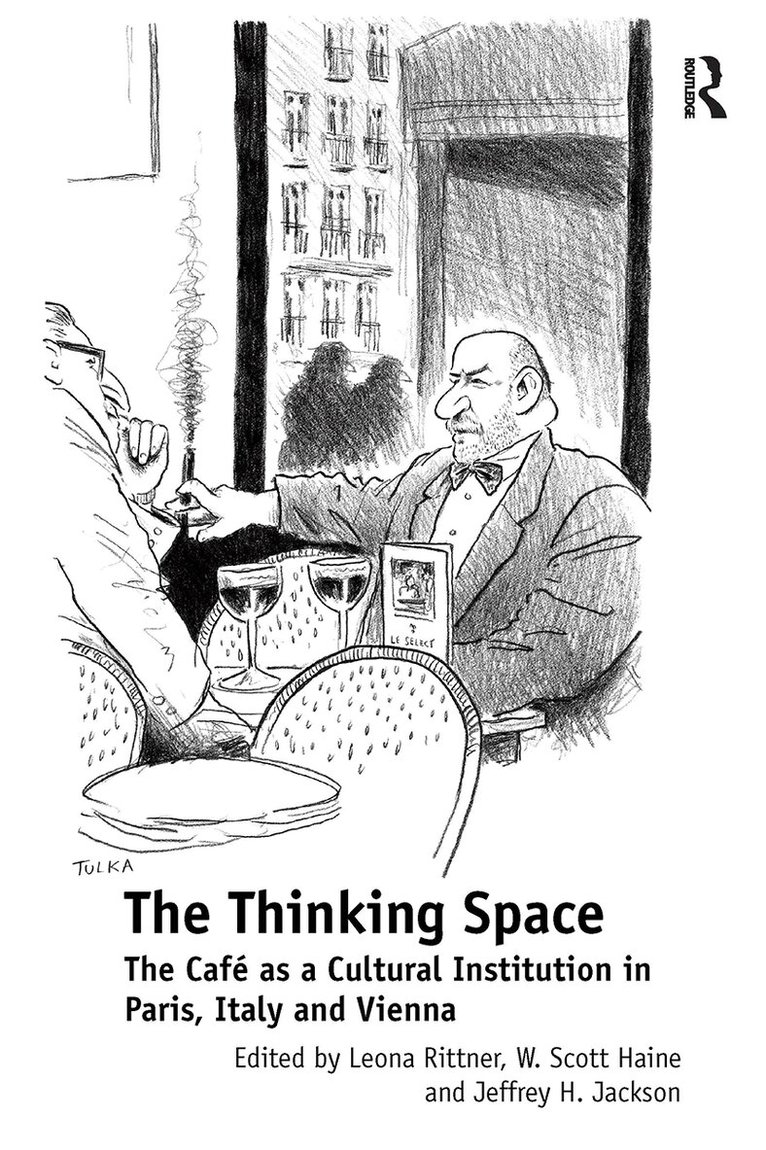
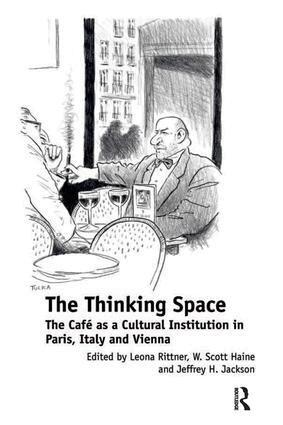
The cafe is not only a place to enjoy a cup of coffee, it is also a space - distinct from its urban environment - in which to reflect and take part in intellectual debate. Since the eighteenth century in Europe, intellectuals and artists have gathered in cafes to exchange ideas, inspirations and information that has driven the cultural agenda for Europe and the world. Without the café, would there have been a Karl Marx or a Jean-Paul Sartre? The café as an institutional site has been the subject of renewed interest amongst scholars in the past decade, and its role in the development of art, ideas and culture has been explored in some detail. However, few have investigated the ways in which cafés create a cultural and intellectual space which brings together multiple influences and intellectual practices and shapes the urban settings of which they are a part. This volume presents an international group of scholars who consider cafés as sites of intellectual discourse from across Europe during the long modern period. Drawing on literary theory, history, cultural studies and urban studies, the contributors explore the ways in which cafes have functioned and evolved at crucial moments in the histories of important cities and countries - notably Paris, Vienna and Italy. Choosing these sites allows readers to understand both the local particularities of each café while also seeing the larger cultural connections between these places. By revealing how the café operated as a unique cultural context within the urban setting, this volume demonstrates how space and ideas are connected. As our global society becomes more focused on creativity and mobility the intellectual cafés of past generations can also serve as inspiration for contemporary and future knowledge workers who will expand and develop this tradition of using and thinking in space.
2 181 kr
Skickas inom 10-15 vardagar
The cafe is not only a place to enjoy a cup of coffee, it is also a space - distinct from its urban environment - in which to reflect and take part in intellectual debate. Since the eighteenth century in Europe, intellectuals and artists have gathered in cafes to exchange ideas, inspirations and information that has driven the cultural agenda for Europe and the world. Without the café, would there have been a Karl Marx or a Jean-Paul Sartre? The café as an institutional site has been the subject of renewed interest amongst scholars in the past decade, and its role in the development of art, ideas and culture has been explored in some detail. However, few have investigated the ways in which cafés create a cultural and intellectual space which brings together multiple influences and intellectual practices and shapes the urban settings of which they are a part. This volume presents an international group of scholars who consider cafés as sites of intellectual discourse from across Europe during the long modern period. Drawing on literary theory, history, cultural studies and urban studies, the contributors explore the ways in which cafes have functioned and evolved at crucial moments in the histories of important cities and countries - notably Paris, Vienna and Italy. Choosing these sites allows readers to understand both the local particularities of each café while also seeing the larger cultural connections between these places. By revealing how the café operated as a unique cultural context within the urban setting, this volume demonstrates how space and ideas are connected. As our global society becomes more focused on creativity and mobility the intellectual cafés of past generations can also serve as inspiration for contemporary and future knowledge workers who will expand and develop this tradition of using and thinking in space.