Warren B. Powell - Böcker
Visar alla böcker från författaren Warren B. Powell. Handla med fri frakt och snabb leverans.
5 produkter
5 produkter
1 336 kr
Skickas inom 7-10 vardagar
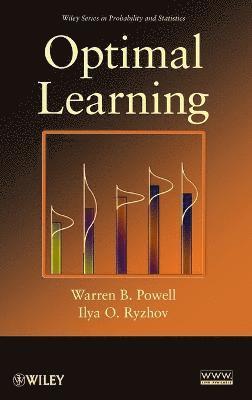
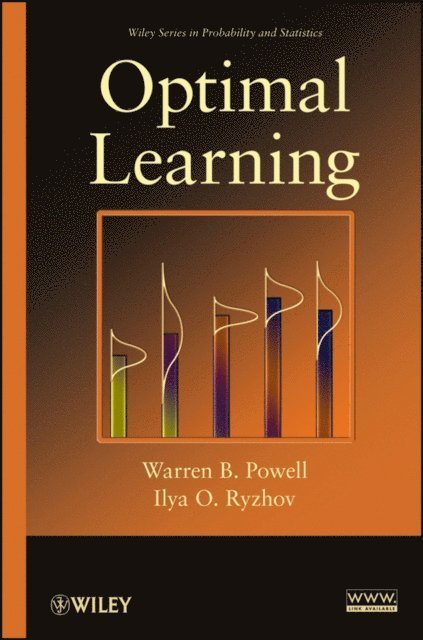
Learn the science of collecting information to make effective decisions Everyday decisions are made without the benefit of accurate information. Optimal Learning develops the needed principles for gathering information to make decisions, especially when collecting information is time-consuming and expensive. Designed for readers with an elementary background in probability and statistics, the book presents effective and practical policies illustrated in a wide range of applications, from energy, homeland security, and transportation to engineering, health, and business.This book covers the fundamental dimensions of a learning problem and presents a simple method for testing and comparing policies for learning. Special attention is given to the knowledge gradient policy and its use with a wide range of belief models, including lookup table and parametric and for online and offline problems. Three sections develop ideas with increasing levels of sophistication: Fundamentals explores fundamental topics, including adaptive learning, ranking and selection, the knowledge gradient, and bandit problemsExtensions and Applications features coverage of linear belief models, subset selection models, scalar function optimization, optimal bidding, and stopping problemsAdvanced Topics explores complex methods including simulation optimization, active learning in mathematical programming, and optimal continuous measurementsEach chapter identifies a specific learning problem, presents the related, practical algorithms for implementation, and concludes with numerous exercises. A related website features additional applications and downloadable software, including MATLAB and the Optimal Learning Calculator, a spreadsheet-based package that provides an introduction to learning and a variety of policies for learning.
Del 842 - Wiley Series in Probability and Statistics
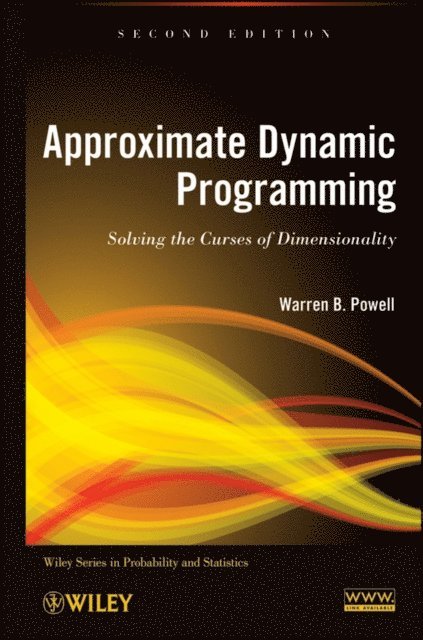
Approximate Dynamic Programming
Solving the Curses of Dimensionality
Inbunden, Engelska, 2011
1 520 kr
Skickas inom 7-10 vardagar
Praise for the First Edition "Finally, a book devoted to dynamic programming and written using the language of operations research (OR)! This beautiful book fills a gap in the libraries of OR specialists and practitioners."—Computing ReviewsThis new edition showcases a focus on modeling and computation for complex classes of approximate dynamic programming problemsUnderstanding approximate dynamic programming (ADP) is vital in order to develop practical and high-quality solutions to complex industrial problems, particularly when those problems involve making decisions in the presence of uncertainty. Approximate Dynamic Programming, Second Edition uniquely integrates four distinct disciplines—Markov decision processes, mathematical programming, simulation, and statistics—to demonstrate how to successfully approach, model, and solve a wide range of real-life problems using ADP.The book continues to bridge the gap between computer science, simulation, and operations research and now adopts the notation and vocabulary of reinforcement learning as well as stochastic search and simulation optimization. The author outlines the essential algorithms that serve as a starting point in the design of practical solutions for real problems. The three curses of dimensionality that impact complex problems are introduced and detailed coverage of implementation challenges is provided. The Second Edition also features: A new chapter describing four fundamental classes of policies for working with diverse stochastic optimization problems: myopic policies, look-ahead policies, policy function approximations, and policies based on value function approximations A new chapter on policy search that brings together stochastic search and simulation optimization concepts and introduces a new class of optimal learning strategies Updated coverage of the exploration exploitation problem in ADP, now including a recently developed method for doing active learning in the presence of a physical state, using the concept of the knowledge gradient A new sequence of chapters describing statistical methods for approximating value functions, estimating the value of a fixed policy, and value function approximation while searching for optimal policies The presented coverage of ADP emphasizes models and algorithms, focusing on related applications and computation while also discussing the theoretical side of the topic that explores proofs of convergence and rate of convergence. A related website features an ongoing discussion of the evolving fields of approximation dynamic programming and reinforcement learning, along with additional readings, software, and datasets.Requiring only a basic understanding of statistics and probability, Approximate Dynamic Programming, Second Edition is an excellent book for industrial engineering and operations research courses at the upper-undergraduate and graduate levels. It also serves as a valuable reference for researchers and professionals who utilize dynamic programming, stochastic programming, and control theory to solve problems in their everyday work.
Del 2 - IEEE Press Series on Computational Intelligence
Handbook of Learning and Approximate Dynamic Programming
Inbunden, Engelska, 2004
1 986 kr
Skickas inom 7-10 vardagar
A complete resource to Approximate Dynamic Programming (ADP), including on-line simulation codeProvides a tutorial that readers can use to start implementing the learning algorithms provided in the bookIncludes ideas, directions, and recent results on current research issues and addresses applications where ADP has been successfully implementedThe contributors are leading researchers in the field
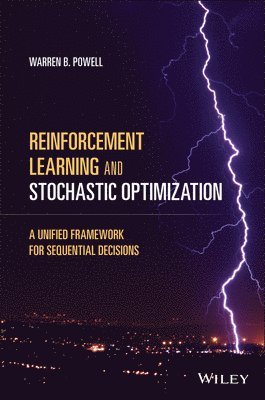
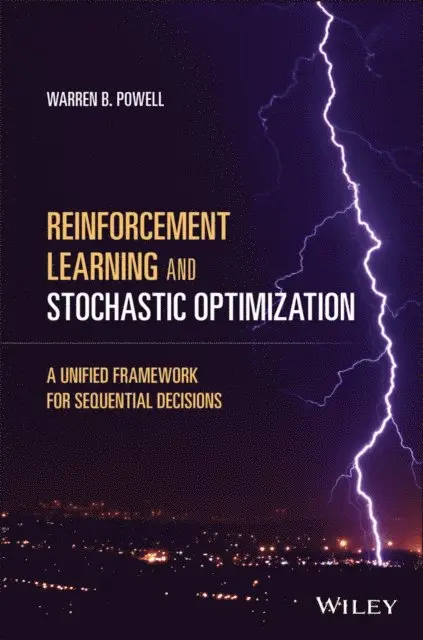
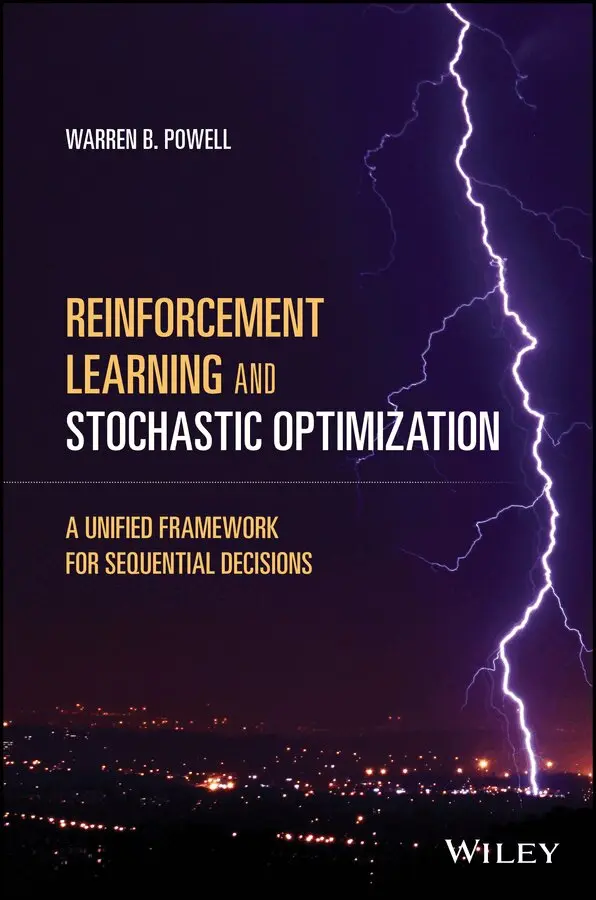
Reinforcement Learning and Stochastic Optimization
A Unified Framework for Sequential Decisions
Inbunden, Engelska, 2022
1 576 kr
Skickas inom 7-10 vardagar
REINFORCEMENT LEARNING AND STOCHASTIC OPTIMIZATIONClearing the jungle of stochastic optimization Sequential decision problems, which consist of “decision, information, decision, information,” are ubiquitous, spanning virtually every human activity ranging from business applications, health (personal and public health, and medical decision making), energy, the sciences, all fields of engineering, finance, and e-commerce. The diversity of applications attracted the attention of at least 15 distinct fields of research, using eight distinct notational systems which produced a vast array of analytical tools. A byproduct is that powerful tools developed in one community may be unknown to other communities.Reinforcement Learning and Stochastic Optimization offers a single canonical framework that can model any sequential decision problem using five core components: state variables, decision variables, exogenous information variables, transition function, and objective function. This book highlights twelve types of uncertainty that might enter any model and pulls together the diverse set of methods for making decisions, known as policies, into four fundamental classes that span every method suggested in the academic literature or used in practice.Reinforcement Learning and Stochastic Optimization is the first book to provide a balanced treatment of the different methods for modeling and solving sequential decision problems, following the style used by most books on machine learning, optimization, and simulation. The presentation is designed for readers with a course in probability and statistics, and an interest in modeling and applications. Linear programming is occasionally used for specific problem classes. The book is designed for readers who are new to the field, as well as those with some background in optimization under uncertainty.Throughout this book, readers will find references to over 100 different applications, spanning pure learning problems, dynamic resource allocation problems, general state-dependent problems, and hybrid learning/resource allocation problems such as those that arose in the COVID pandemic. There are 370 exercises, organized into seven groups, ranging from review questions, modeling, computation, problem solving, theory, programming exercises and a "diary problem" that a reader chooses at the beginning of the book, and which is used as a basis for questions throughout the rest of the book.
Del 42 - Foundations and Trends® in Technology, Information and Operations Management
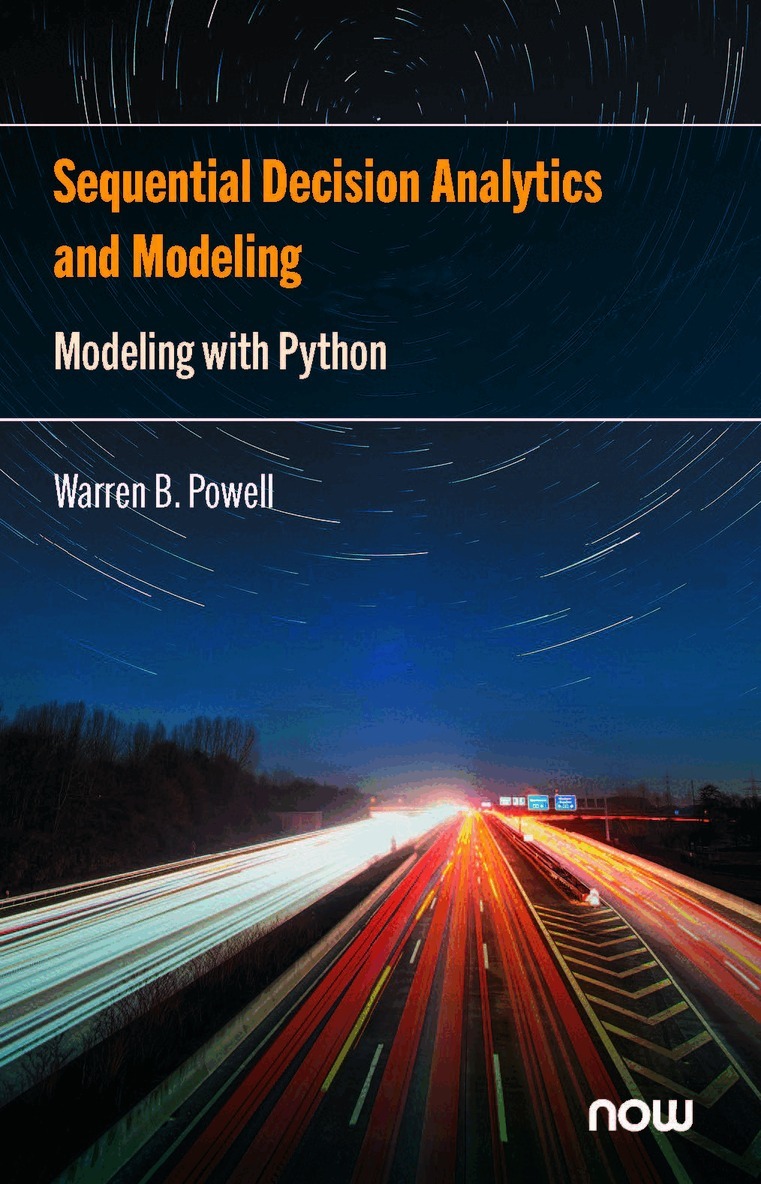
Sequential Decision Analytics and Modeling
Modeling with Python
Inbunden, Engelska, 2022
997 kr
Skickas inom 7-10 vardagar
Sequential decision problems arise in virtually every human process. They span finance, energy, transportation, health, e-commerce, and supply chains and include pure learning problems that arise in laboratory or field experiments. They even cover search algorithms to maximize uncertain functions. An important dimension of every problem setting is the need to make decisions in the presence of different forms of uncertainty and evolving information processes. Warren B. Powell’s work in sequential decision problems started in the 1980s and spanned rail, energy, health, finance, e-commerce, supply chain management, and even learning for materials science. His work on a wide range of problems highlighted the importance of using a variety of methods. In the process, he came to realize that any sequential decision problem can be modeled using a single universal framework that involves searching over methods for making decisions. The goal of this book is to enable readers to understand how to approach, model and solve a sequential decision problem. To that end, it uses a teach-by-example style to illustrate a modeling framework that can represent any sequential decision problem. It tackles the challenge of designing methods, called policies, for making decisions and describes four classes of policies that are universal in that they span any method that might be used; whether from the academic literature or heuristics used in practice. While this does not mean that every problem can be solved immediately, the framework helps avoid the tendency in the academic literature of focusing on narrow classes of methods.