Wesley Skogan - Böcker
Visar alla böcker från författaren Wesley Skogan. Handla med fri frakt och snabb leverans.
4 produkter
4 produkter
438 kr
Skickas inom 5-8 vardagar
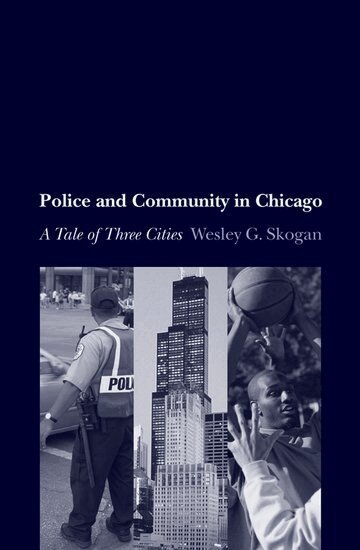
Highly popular with both the public and political leaders, community policing is the most important development in law enforcement in the last twenty-five years. But does community policing really work? Can police departments fundamentally change their organization? Can neighborhood problems be solved? In the early 1990s, Chicago, the nation's third largest city, instituted the nation's largest community policing initiative. Wesley G. Skogan here provides the first comprehensive evaluation of that citywide program, examining its impact on crime, neighborhood residents, and the police.Based on the results of a thirteen-year study, including interviews, citywide surveys, and sophisticated statistical analyses, Police and Community in Chicago reveals a city divided among African-Americans, Whites, and Latinos. By looking at the varying effects community policing had on each of these groups, Skogan provides a valuable analysis of what works and why. As the use of community policing increases and issues related to race and immigration become more pressing, Police and Community in Chicago will serve the needs of an increasing amount of students, scholars, and professionals interested in the most effective and harmonious means of keeping communities safe.Winner of the 2007 Outstanding Book Award from the Academy of Criminal Justice Sciences. "A landmark study of the social, political and institutional contexts of Chicago's community policing initiative. Skogan identifies critical challenges facing city leaders to democratize policing while confronting widening racial breaches in public confidence in the police. A must-read for big city mayors and police chiefs."--Jeffrey Fagan, Columbia University"Fortunately, when Chicago unveiled the country's most ambitious community policing experiment, Wesley Skogan and his team launched an equally ambitious evaluation. The result is a rich, rigorous and provocative analysis, carefully constructed over a decade, that sheds light on the profound challenges facing policing in America--how to simultaneously build public trust, reduce crime, and support urban renewal, while confronting deep racial divides and powerful demographic forces. This elegant and insightful account will stand as a landmark in the literature of police reform, with lessons for police leaders and elected officials alike."--Jeremy Travis, John Jay College of Criminal Justice"In a time when public sector innovation is either excessively hyped or cynically rejected, Skogan brings a refreshing balance and candor to his assessment of Chicago's extraordinary efforts to implement community policing. The book provides essential insights into what worked, what didn't, and why, and offers valuable lessons to be learned from Chicago's experience."--Stephen Mastrofski, George Mason University"Wesley Skogan's book is an account of an extraordinary study of an equally extraordinary program - community policing in Chicago. His evaluation is notable for its thoroughness and its independence from those principally involved in developing and implementing the program. The program is notable for the character of the city in which it was established - its demographics and politics - as well as the nature and quality of the program itself."--The Law and Politics Book ReviewÄny study of this magnitude will produce a wealth of data. Thankfully, this one has also produced a book of balance and insight.¨--Law and Society Review
646 kr
Tillfälligt slut
Because police are the most visible face of government power for most citizens, they are expected to deal effectively with crime and disorder and to be impartial. Producing justice through the fair, and restrained use of their authority. The standards by which the public judges police success have become more exacting and challenging. Fairness and Effectiveness in Policing explores police work in the new century. It replaces myths with research findings and provides recommendations for updated policy and practices to guide it. The book provides answers to the most basic questions: What do police do? It reviews how police work is organized, explores the expanding responsibilities of police, examines the increasing diversity among police employees, and discusses the complex interactions between officers and citizens. It also addresses such topics as community policing, use of force, racial profiling, and evaluates the success of common police techniques, such as focusing on crime ?hot spots.? It goes on to look at the issue of legitimacy?how the public gets information about police work, and how police are viewed by different groups, and how police can gain community trust.Fairness and Effectiveness in Policing will be important to anyone concerned about police work: policy makers, administrators, educators, police supervisors and officers, journalists, and interested citizens.
1 921 kr
Skickas inom 10-15 vardagar
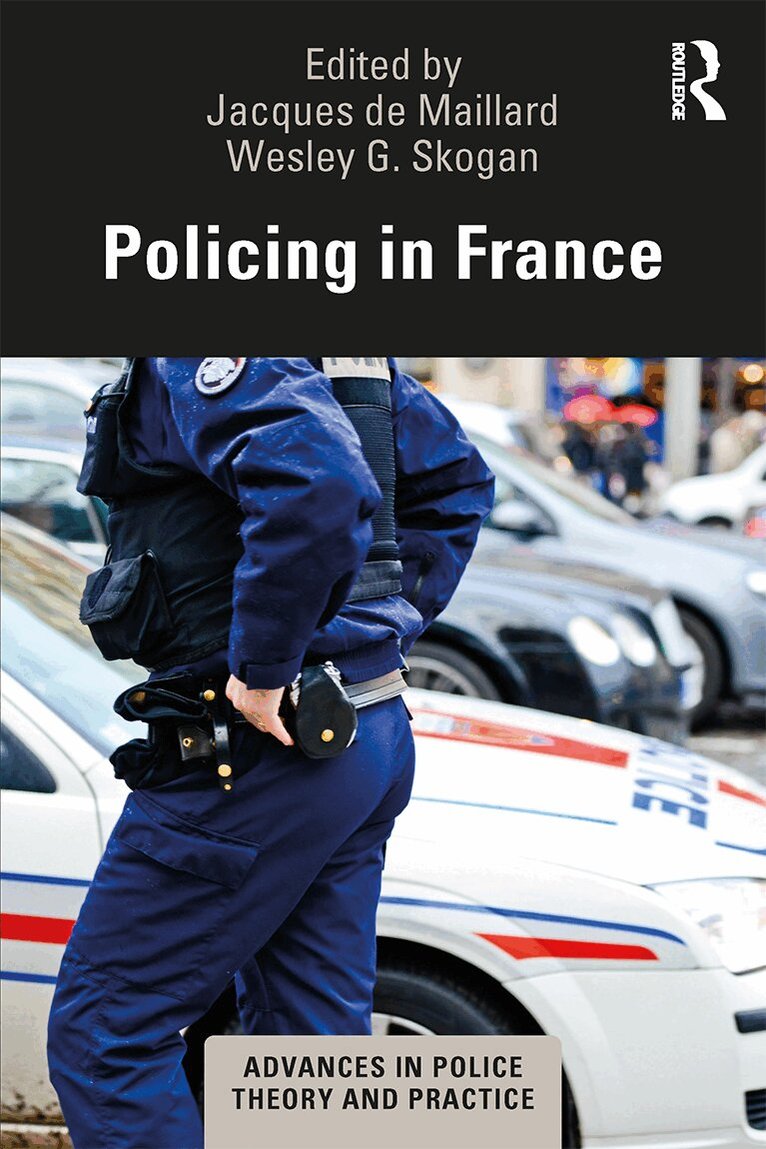
The eminent contributors to a new collection, Policing in France, provide an updated and realistic picture of how the French police system really works in the 21st century. In most international comparisons, France typifies the "Napoleonic" model for policing, one featuring administrative and political centralization, a strong hierarchical structure, distance from local communities, and a high priority on political policing. France has undergone a process of pluralization in the last 30 years. French administrative and political decentralization has reemphasized the role of local authorities in public security policies; the private security industry has grown significantly; and new kinds of governing models (based on arrangements such as contracts for service provision) have emerged. In addition, during this period, police organizations have been driven toward central government control through the imposition of performance indicators, and a top-down decision was made to integrate the national gendarmerie into the Ministry of Interior.The book addresses how police legitimacy differs across socioeconomic, generational, territorial, and ethnic lines. An analysis of the policing of banlieues (deprived neighborhoods) illustrates the convergence of contradictory police goals, police violence, the concentration of poverty, and entrenched opposition to the states’ representatives, and questions policing strategies such as the use of identity checks. The collection also frames the scope of community policing initiatives required to deal with the public’s security needs and delves into the security challenges presented by terrorist threats and the nuances of the relationship between policing and intelligence agencies. Identifying and explaining the diverse challenges facing French police organizations and how they have been responding to them, this book draws upon a flourishing French-language literature in history, sociology, political science, and law to produce this new English-language synthesis on policing in France.This book is a valuable resource for researchers and practitioners working in and around French policing, as well as students of international law enforcement.
830 kr
Skickas inom 10-15 vardagar
The eminent contributors to a new collection, Policing in France, provide an updated and realistic picture of how the French police system really works in the 21st century. In most international comparisons, France typifies the "Napoleonic" model for policing, one featuring administrative and political centralization, a strong hierarchical structure, distance from local communities, and a high priority on political policing. France has undergone a process of pluralization in the last 30 years. French administrative and political decentralization has reemphasized the role of local authorities in public security policies; the private security industry has grown significantly; and new kinds of governing models (based on arrangements such as contracts for service provision) have emerged. In addition, during this period, police organizations have been driven toward central government control through the imposition of performance indicators, and a top-down decision was made to integrate the national gendarmerie into the Ministry of Interior.The book addresses how police legitimacy differs across socioeconomic, generational, territorial, and ethnic lines. An analysis of the policing of banlieues (deprived neighborhoods) illustrates the convergence of contradictory police goals, police violence, the concentration of poverty, and entrenched opposition to the states’ representatives, and questions policing strategies such as the use of identity checks. The collection also frames the scope of community policing initiatives required to deal with the public’s security needs and delves into the security challenges presented by terrorist threats and the nuances of the relationship between policing and intelligence agencies. Identifying and explaining the diverse challenges facing French police organizations and how they have been responding to them, this book draws upon a flourishing French-language literature in history, sociology, political science, and law to produce this new English-language synthesis on policing in France.This book is a valuable resource for researchers and practitioners working in and around French policing, as well as students of international law enforcement.