Whitney Strub - Böcker
Visar alla böcker från författaren Whitney Strub. Handla med fri frakt och snabb leverans.
11 produkter
11 produkter
Films That Explode Like Grenades
Robert Kramer and the Search for a Radical Cinema
Inbunden, Engelska, 2026
1 426 kr
Kommande
The definitive portrait of independent filmmaker Robert Kramer that traces the revolutionary dreams of the Left from the 1960s through the end of the twentieth century. Robert Kramer (1939–99) was the emblematic filmmaker of the late-1960s New Left in the United States. Yet because most of his three dozen films have been out of circulation for decades, he has long been neglected by film historians and the Left. Kramer was the cofounder of the leftist documentary collective Newsreel and the director of underground films such as Ice (1970), Milestones (1975), and Route One/USA (1989). His films provide distinctive insights into how America’s political terrain has changed over time, capturing each era’s revolutionary ethos and its contradictions. Whitney Strub’s Films That Explode Like Grenades tracks the histories of leftist film and global revolutionary movements via Kramer’s life and travels. Moving among New York City, Chicago, North Vietnam, Paris, Portugal, Angola, and other crucial flashpoints, Kramer left a major and influential body of work in his wake that has fundamentally shaped the work of radical filmmakers across the globe. For Strub, Kramer’s career is a key thread in an intimate history of the 1960s New Left, one that emphasizes the complexities of the movement’s internal tensions and its legacies. Drawing on visual analysis, extensive archival research across the United States and France, and myriad interviews with Kramer contemporaries, including Bernardine Dohrn, Tom Hayden, Jonas Mekas, and Kramer’s relatives, Strub transforms Kramer’s life story into a dynamic and engaging social history of 1960s radicalism and its generational legacies.With detailed mapping of Robert Kramer’s many social and artistic contexts, Films That Explode Like Grenades restores him to a place of global importance in leftist cinema.
Films That Explode Like Grenades
Robert Kramer and the Search for a Radical Cinema
Häftad, Engelska, 2026
378 kr
Kommande
The definitive portrait of independent filmmaker Robert Kramer that traces the revolutionary dreams of the Left from the 1960s through the end of the twentieth century. Robert Kramer (1939–99) was the emblematic filmmaker of the late-1960s New Left in the United States. Yet because most of his three dozen films have been out of circulation for decades, he has long been neglected by film historians and the Left. Kramer was the cofounder of the leftist documentary collective Newsreel and the director of underground films such as Ice (1970), Milestones (1975), and Route One/USA (1989). His films provide distinctive insights into how America’s political terrain has changed over time, capturing each era’s revolutionary ethos and its contradictions. Whitney Strub’s Films That Explode Like Grenades tracks the histories of leftist film and global revolutionary movements via Kramer’s life and travels. Moving among New York City, Chicago, North Vietnam, Paris, Portugal, Angola, and other crucial flashpoints, Kramer left a major and influential body of work in his wake that has fundamentally shaped the work of radical filmmakers across the globe. For Strub, Kramer’s career is a key thread in an intimate history of the 1960s New Left, one that emphasizes the complexities of the movement’s internal tensions and its legacies. Drawing on visual analysis, extensive archival research across the United States and France, and myriad interviews with Kramer contemporaries, including Bernardine Dohrn, Tom Hayden, Jonas Mekas, and Kramer’s relatives, Strub transforms Kramer’s life story into a dynamic and engaging social history of 1960s radicalism and its generational legacies.With detailed mapping of Robert Kramer’s many social and artistic contexts, Films That Explode Like Grenades restores him to a place of global importance in leftist cinema.
Perversion for Profit
The Politics of Pornography and the Rise of the New Right
Inbunden, Engelska, 2010
1 228 kr
Skickas inom 7-10 vardagar
While America is not alone in its ambivalence toward sex and its depictions, the preferences of the nation swing sharply between toleration and censure. This pattern has grown even more pronounced since the 1960s, with the emergence of the New Right and its attack on the "floodtide of filth" that was supposedly sweeping the nation. Antipornography campaigns became the New Right's political capital in the 1960s, laying the groundwork for the "family values" agenda that shifted the country to the right. Perversion for Profit traces the anatomy of this trend and the crucial function of pornography in constructing the New Right agenda, which has emphasized social issues over racial and economic inequality. Conducting his own extensive research, Whitney Strub vividly recreates the debates over obscenity that consumed members of the ACLU in the 1950s and revisits the deployment of obscenity charges against purveyors of gay erotica during the cold war, revealing the differing standards applied to heterosexual and homosexual pornography.He follows the rise of the influential Citizens for Decent Literature during the 1960s and the pivotal events that followed: the sexual revolution, feminist activism, the rise of the gay rights movement, the "porno chic" moment of the early 1970s, and resurgent Christian conservatism, which now shapes public policy far beyond the issue of sexual decency. Strub also examines the ways in which the left failed to mount a serious or sustained counterattack to the New Right's use of pornography as a political tool. As he demonstrates, this failure put the Democratic Party at the mercy of Republican rhetoric. In placing debates about pornography at the forefront of American postwar history, Strub revolutionizes our understanding of sex and American politics.
Perversion for Profit
The Politics of Pornography and the Rise of the New Right
Häftad, Engelska, 2013
647 kr
Skickas inom 3-6 vardagar
While America is not alone in its ambivalence toward sex and its depictions, the preferences of the nation swing sharply between toleration and censure. This pattern has grown even more pronounced since the 1960s, with the emergence of the New Right and its attack on the "floodtide of filth" that was supposedly sweeping the nation. Antipornography campaigns became the New Right's political capital in the 1960s, laying the groundwork for the "family values" agenda that shifted the country to the right. Perversion for Profit traces the anatomy of this trend and the crucial function of pornography in constructing the New Right agenda, which has emphasized social issues over racial and economic inequality. Conducting his own extensive research, Whitney Strub vividly recreates the debates over obscenity that consumed members of the ACLU in the 1950s and revisits the deployment of obscenity charges against purveyors of gay erotica during the cold war, revealing the differing standards applied to heterosexual and homosexual pornography.He follows the rise of the influential Citizens for Decent Literature during the 1960s and the pivotal events that followed: the sexual revolution, feminist activism, the rise of the gay rights movement, the "porno chic" moment of the early 1970s, and resurgent Christian conservatism, which now shapes public policy far beyond the issue of sexual decency. Strub also examines the ways in which the left failed to mount a serious or sustained counterattack to the New Right's use of pornography as a political tool. As he demonstrates, this failure put the Democratic Party at the mercy of Republican rhetoric. In placing debates about pornography at the forefront of American postwar history, Strub revolutionizes our understanding of sex and American politics.
Obscenity Rules
Roth V. United States' and the Long Struggle Over Sexual Expression
Inbunden, Engelska, 2013
863 kr
Skickas inom 5-8 vardagar
For some, he was “America’s leading smut king,” hauled into court repeatedly over thirty years for peddling obscene publications through the mail. But when Samuel Roth appealed a 1956 conviction, he forced the Supreme Court to finally come to grips with a problem that had plagued both American society and constitutional law for longer than he had been in business. For while the facts of Roth v. United States were unexceptional, its constitutional issues would define the relationship of obscenity to the First Amendment. The Supreme Court’s 6–3 decision in Roth for the first time tried to definitively rule on the issue of obscenity in American life and law—and failed. In this first book-length examination of the case, Whitney Strub lays out the history of obscenity’s meaning as a legal concept, highlights the influence of antivice crusaders like Anthony Comstock and John Sumner, and chronicles the shadowy career that led Roth to spend nearly a decade of his life imprisoned for the allegedly obscene materials that he sent through the mails. Strub then unwraps the events that produced Roth v. United States, placing the trial in the context of its times—the Kinsey Reports, the Kefauver hearings, free speech debates—by using Roth’s own private papers along with the records of the various prosecutions and the memos of the justices. The significance of Roth, as Strub reveals, lay in the two faces of Justice William Brennan’s majority opinion—which on the one hand reflected the liberalising attitude toward sexual matters in mid-century America, but on the other kept “obscene” expressions beyond First Amendment protection. Because that ruling points up the contradictions of a society where the prurient and repressive commingle uncomfortably, Strub shows how Roth says much more about American sexual values than Brennan’s written words necessarily acknowledged. In our era of internet pornography and Fifty Shades of Grey, it may be difficult to imagine a time when obscenity was a matter for the courts. As Strub tracks the legacy of Roth and obscenity law through the ongoing policing of acceptable sexuality into the twenty-first century, his riveting narrative brings those times to life and helps readers navigate the fine line between what is socially acceptable and what is criminally obscene.
Obscenity Rules
Roth V. United States' and the Long Struggle Over Sexual Expression
Häftad, Engelska, 2013
289 kr
Skickas inom 10-15 vardagar
For some, he was “America’s leading smut king,” hauled into court repeatedly over thirty years for peddling obscene publications through the mail. But when Samuel Roth appealed a 1956 conviction, he forced the Supreme Court to finally come to grips with a problem that had plagued both American society and constitutional law for longer than he had been in business. For while the facts of Roth v. United States were unexceptional, its constitutional issues would define the relationship of obscenity to the First Amendment. The Supreme Court’s 6–3 decision in Roth for the first time tried to definitively rule on the issue of obscenity in American life and law—and failed. In this first book-length examination of the case, Whitney Strub lays out the history of obscenity’s meaning as a legal concept, highlights the influence of antivice crusaders like Anthony Comstock and John Sumner, and chronicles the shadowy career that led Roth to spend nearly a decade of his life imprisoned for the allegedly obscene materials that he sent through the mails. Strub then unwraps the events that produced Roth v. United States, placing the trial in the context of its times—the Kinsey Reports, the Kefauver hearings, free speech debates—by using Roth’s own private papers along with the records of the various prosecutions and the memos of the justices. The significance of Roth, as Strub reveals, lay in the two faces of Justice William Brennan’s majority opinion—which on the one hand reflected the liberalising attitude toward sexual matters in mid-century America, but on the other kept “obscene” expressions beyond First Amendment protection. Because that ruling points up the contradictions of a society where the prurient and repressive commingle uncomfortably, Strub shows how Roth says much more about American sexual values than Brennan’s written words necessarily acknowledged. In our era of internet pornography and Fifty Shades of Grey, it may be difficult to imagine a time when obscenity was a matter for the courts. As Strub tracks the legacy of Roth and obscenity law through the ongoing policing of acceptable sexuality into the twenty-first century, his riveting narrative brings those times to life and helps readers navigate the fine line between what is socially acceptable and what is criminally obscene.
1 179 kr
Skickas
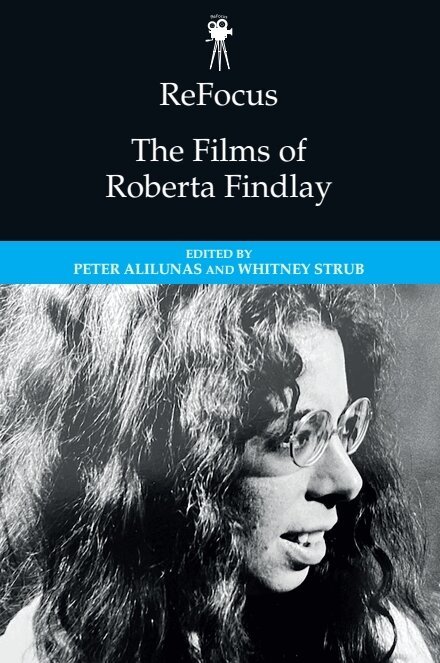
The first book on the renowned and notorious cult filmmaker Roberta FindlayArgues Findlay's centrality to modern exploitation, hardcore pornography, and horror cinemasOffers careful attention to numerous films that have received no previous scholarly attentionContributes to the history of women filmmakers by highlighting a female pioneer generally omitted from accounts of that historyReFocus: The Films of Roberta Findlay covers a variety of angles, using queer, feminist, historical, and close textual reading methods to grapple with the complicated and contradictory politics and meanings of this pioneering culture-worker. Chapters examine Findlay's marketing strategies, the gender politics of her exploitation and hardcore films, 1980s horror productions, and several case studies of key individual films, in addition to a new interview with Findlay reflecting on her life and career.
498 kr
Skickas inom 3-6 vardagar
ReFocus: The Films of Roberta Findlay covers a variety of angles, using queer, feminist, historical, and close textual reading methods to grapple with the complicated and contradictory politics and meanings of this pioneering culture-worker. Chapters examine Findlay’s marketing strategies, the gender politics of her exploitation and hardcore films, 1980s horror productions, and several case studies of key individual films, in addition to a new interview with Findlay reflecting on her life and career.
365 kr
Skickas inom 7-10 vardagar
For many Americans, the emergence of a “porno chic” culture provided an opportunity to embrace the sexual revolution by attending a film like Deep Throat (1972) or leafing through an erotic magazine like Penthouse. By the 1980s, this pornographic moment was beaten back by the rise of Reagan-era political conservatism and feminist anti-pornography sentiment.This volume places pornography at the heart of the 1970s American experience, exploring lesser-known forms of pornography from the decade, such as a new, vibrant gay porn genre; transsexual/female impersonator magazines; and pornography for new users, including women and conservative Christians. The collection also explores the rise of a culture of porn film auteurs and stars as well as the transition from film to video. As the corpus of adult ephemera of the 1970s disintegrates, much of it never to be professionally restored and archived, these essays seek to document what pornography meant to its producers and consumers at a pivotal moment.In addition to the volume editors, contributors include Peter Alilunas, Gillian Frank, Elizabeth Fraterrigo, Lucas Hilderbrand, Nancy Semin Lingo, Laura Helen Marks, Nicholas Matte, Jennifer Christine Nash, Joe Rubin, Alex Warner, Leigh Ann Wheeler, and Greg Youmans.
292 kr
Skickas inom 7-10 vardagar
Histories of gay and lesbian urban life typically focus on major metropolitan areas like San Francisco and New York, opportunity-filled destinations for LGBTQ migrants from across the country. Yet there are many other queer communities in economically depressed cities with majority Black and Hispanic populations that receive far less attention. Though just a few miles from New York, Newark is one of these cities, and its queer histories have been neglected—until now. Queer Newark charts a history in which working-class people of color are the central actors and in which violence, poverty, and homophobia could never suppress joy, resistance, love, and desire. Drawing from rare archives that range from oral histories to vice squad reports, this collection’s authors uncover the sites and people of Newark’s queer past in bars, discos, ballrooms, and churches. Exploring the intersections of class, race, gender, and sexuality, they offer fresh perspectives on the HIV/AIDS epidemic, community relations with police, Latinx immigration, and gentrification, while considering how to best tell the rich and complex stories of queer urban life. Queer Newark reveals a new side of New Jersey’s largest city while rewriting the history of LGBTQ life in America.
698 kr
Skickas inom 7-10 vardagar
Histories of gay and lesbian urban life typically focus on major metropolitan areas like San Francisco and New York, opportunity-filled destinations for LGBTQ migrants from across the country. Yet there are many other queer communities in economically depressed cities with majority Black and Hispanic populations that receive far less attention. Though just a few miles from New York, Newark is one of these cities, and its queer histories have been neglected—until now. Queer Newark charts a history in which working-class people of color are the central actors and in which violence, poverty, and homophobia could never suppress joy, resistance, love, and desire. Drawing from rare archives that range from oral histories to vice squad reports, this collection’s authors uncover the sites and people of Newark’s queer past in bars, discos, ballrooms, and churches. Exploring the intersections of class, race, gender, and sexuality, they offer fresh perspectives on the HIV/AIDS epidemic, community relations with police, Latinx immigration, and gentrification, while considering how to best tell the rich and complex stories of queer urban life. Queer Newark reveals a new side of New Jersey’s largest city while rewriting the history of LGBTQ life in America.