Wiktor Marzec – författare
Visar alla böcker från författaren Wiktor Marzec. Handla med fri frakt och snabb leverans.
4 produkter
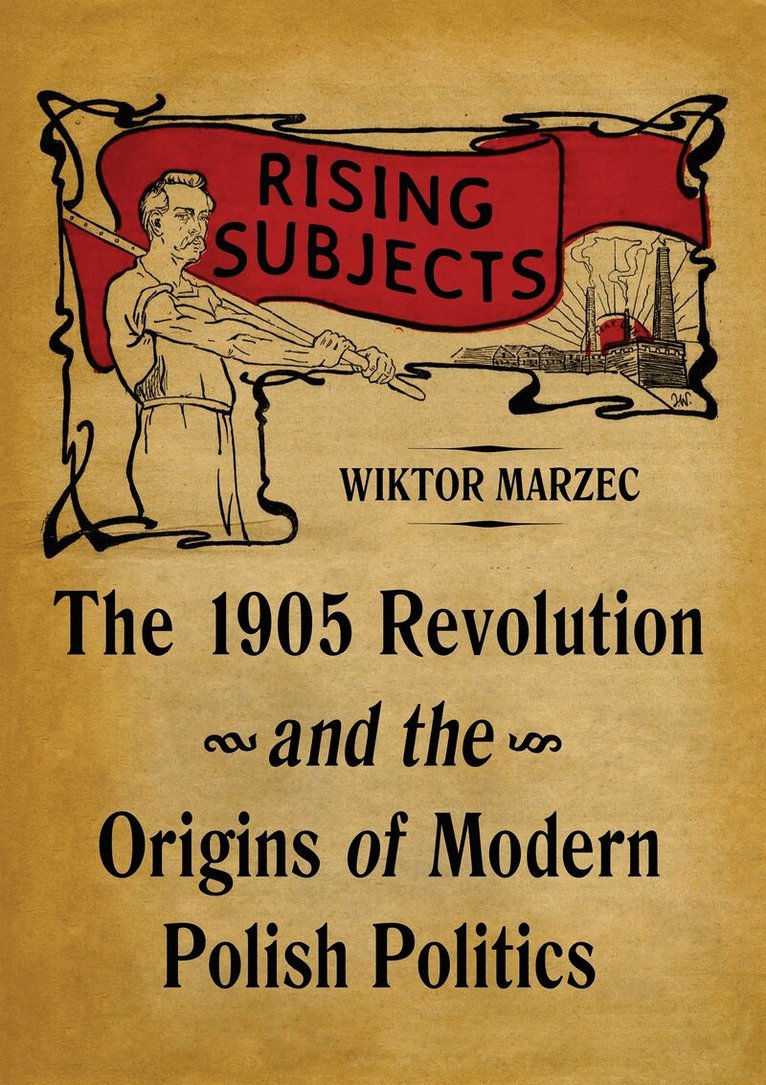
Rising Subjects
The 1905 Revolution and the Origins of Modern Polish Politics
Inbunden, 2020
805 kr
Lägg i varukorg
Rising Subjects explores the change of the public sphere in Russian Poland during the 1905 Revolution. The 1905 Revolution was one of the few bottom-up political transformations and general democratizations in Polish history. It was a popular rebellion fostering political participation of the …
Transnational Working-Class Literatures
Canons and Connections in the Nineteenth and Twentieth Centuries
Av Wiktor Marzec, Magnus Nilsson m. fl.
Inbunden, 2025
1680 kr
Lägg i varukorg
This book offers a pioneering study of the national, transnational, and international dimensions of working-class literature. It explores both the historically and geographically varied nature of the relationship between working-class literatures and national ‘canons’, and the importance of …
Transnational Working-Class Literatures
Canons and Connections in the Nineteenth and Twentieth Centuries
Av Mike Sanders, Magnus Nilsson m. fl.
E-bok, 2025
2087 kr
Lägg i varukorg
This book offers a pioneering study of the national, transnational, and international dimensions of working-class literature. It explores both the historically and geographically varied nature of the relationship between working-class literatures and national ‘canons’, and the importance of …
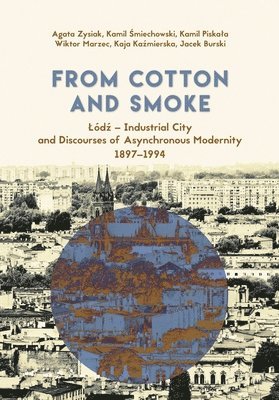
From Cotton and Smoke
Łódź – Industrial City and Discourses of Asynchronous Modernity, 1897–1994
Av Agata Zysiak, Kamil Śmiechowski m. fl.
Häftad, 2019
538 kr
Lägg i varukorg
This book considers Łódź as the capital of the Polish nineteenth century, and the history of this former textile hub, which now finds itself in central Poland, as one of struggle with modern change in Eastern Europe. The authors boldly challenge the romantic and noble-based Polish cultural …