William B. Dabars - Böcker
Visar alla böcker från författaren William B. Dabars. Handla med fri frakt och snabb leverans.
4 produkter
4 produkter
488 kr
Skickas inom 7-10 vardagar
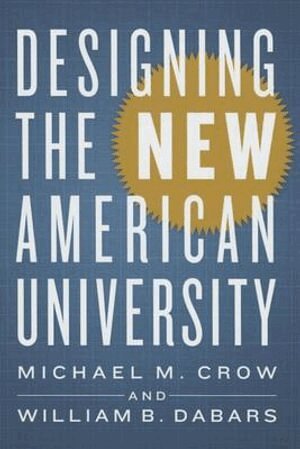
America's research universities consistently dominate global rankings but may be entrenched in a model that no longer accomplishes their purposes. With their multiple roles of discovery, teaching, and public service, these institutions represent the gold standard in American higher education, but their evolution since the nineteenth century has been only incremental. The need for a new and complementary model that offers accessibility to an academic platform underpinned by knowledge production is critical to our well-being and economic competitiveness. Michael Crow, president of Arizona State University and an outspoken advocate for reinventing the public research university, conceived the New American University model when he moved from Columbia University to Arizona State in 2002. Following a comprehensive reconceptualization spanning more than a decade, ASU has emerged as an international academic and research powerhouse that serves as the foundational prototype for the new model. Crow has led the transformation of ASU into an egalitarian institution committed to academic excellence, inclusiveness to a broad demographic, and maximum societal impact.In Designing the New American University, Crow and coauthor William B. Dabars-a historian whose research focus is the American research university-examine the emergence of this set of institutions and the imperative for the new model, the tenets of which may be adapted by colleges and universities, both public and private. Through institutional innovation, say Crow and Dabars, universities are apt to realize unique and differentiated identities, which maximize their potential to generate the ideas, products, and processes that impact quality of life, standard of living, and national economic competitiveness. Designing the New American University will ignite a national discussion about the future evolution of the American research university.
293 kr
Skickas inom 7-10 vardagar
A radical blueprint for reinventing American higher education.America’s research universities consistently dominate global rankings but may be entrenched in a model that no longer accomplishes their purposes. With their multiple roles of discovery, teaching, and public service, these institutions represent the gold standard in American higher education, but their evolution since the nineteenth century has been only incremental. The need for a new and complementary model that offers broader accessibility to an academic platform underpinned by knowledge production is critical to our well-being and economic competitiveness.Michael M. Crow, president of Arizona State University and an outspoken advocate for reinventing the public research university, conceived the New American University model when he moved from Columbia University to Arizona State in 2002. Following a comprehensive reconceptualization spanning more than a decade, ASU has emerged as an international academic and research powerhouse that serves as the foundational prototype for the new model. Crow has led the transformation of ASU into an egalitarian institution committed to academic excellence, inclusiveness to a broad demographic, and maximum societal impact.In Designing the New American University, Crow and coauthor William B. Dabars—a historian whose research focus is the American research university—examine the emergence of this set of institutions and the imperative for the new model, the tenets of which may be adapted by colleges and universities, both public and private. Through institutional innovation, say Crow and Dabars, universities are apt to realize unique and differentiated identities, which maximize their potential to generate the ideas, products, and processes that impact quality of life, standard of living, and national economic competitiveness. Designing the New American University will ignite a national discussion about the future evolution of the American research university.
389 kr
Tillfälligt slut
Out of the crises of American higher education emerges a new class of large-scale public universities designed to accelerate social change through broad access to world-class knowledge production and cutting-edge technological innovation.America's research universities lead the world in discovery, creativity, and innovation—but are captive to a set of design constraints that no longer aligns with the changing needs of society. Their commitment to discovery and innovation, which is carried out largely in isolation from the socioeconomic challenges faced by most Americans, threatens to impede the capacity of these institutions to contribute decisively and consistently to the collective good. The global preeminence of our leading institutions, moreover, does not correlate with overall excellence in American higher education. Sadly, admissions practices that flatly exclude the majority of academically qualified applicants are now the norm in our leading universities, both public and private. In The Fifth Wave, Michael M. Crow and William B. Dabars argue that colleges and universities need to be comprehensively redesigned in order to educate millions more qualified students while leveraging the complementarities between discovery and accessibility. Building on the themes of their prior collaboration, Designing the New American University, this book examines the historical development of American higher education—the first four waves—and describes the emerging standard of institutions that will transform the field. What must emerge in this Fifth Wave of universities, Crow and Dabars posit, are institutions that are responsive to the needs of students, focused on access, embedded in their regions, and committed to solving global problems.The Fifth Wave in American higher education, Crow and Dabars write, comprises an emerging league of colleges and universities that aspires to accelerate positive social outcomes through the seamless integration of world-class knowledge production with cutting-edge technological innovation. This set of institutions is dedicated to the advancement of accessibility to the broadest possible demographic that is representative of the socioeconomic and intellectual diversity of our nation. Recognizing the fact that both cooperation and competition between universities is essential if higher education hopes to truly serve the needs of the nation, Fifth Wave schools like Arizona State University are already beginning to spearhead a network spanning academia, business and industry, government agencies and laboratories, and civil society organizations.Drawing from a variety of disciplines, including design, economics, public policy, organizational theory, science and technology studies, sociology, and even cognitive psychology and epistemology, The Fifth Wave is a must-read for anyone concerned with the future of higher education in our society.
415 kr
Kommande
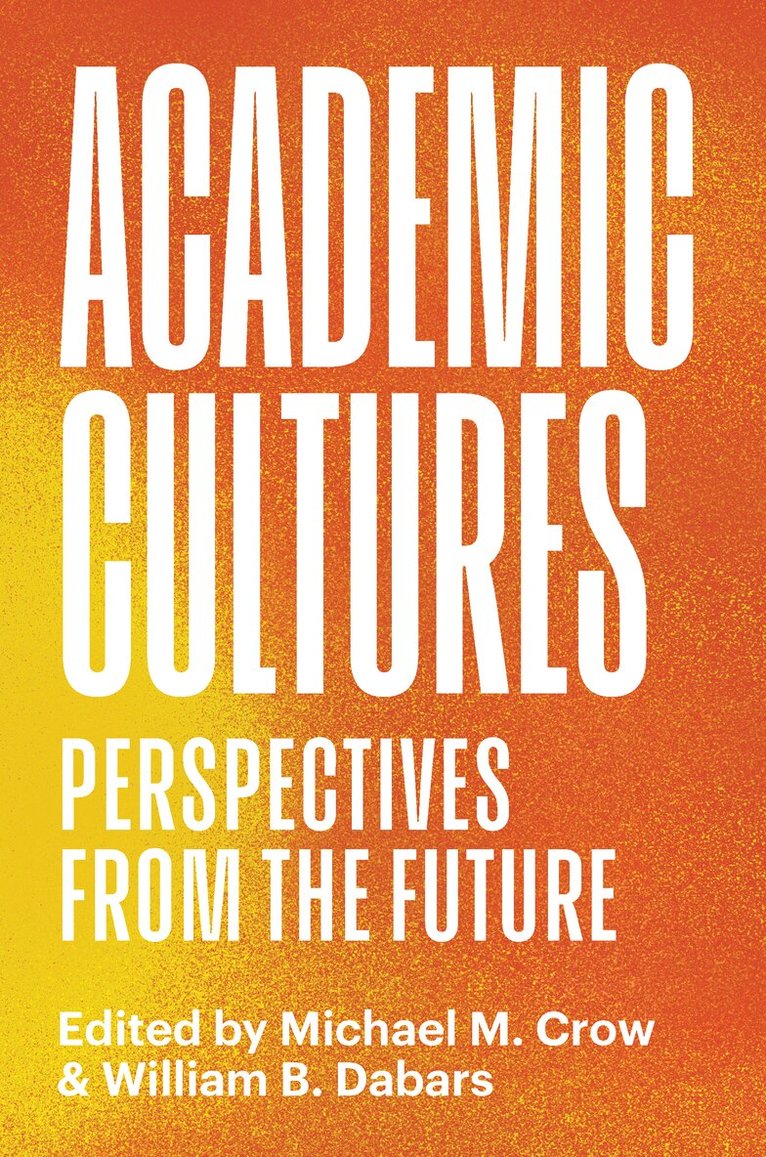
Rethinking the American research university over the next seventy-five years.How might scholars writing in the year 2100 interpret the academic culture of the early twenty-first century? How might they assess the role research universities and liberal arts colleges played in shaping the social, economic, political, and environmental contours of the century? In Academic Cultures, Michael M. Crow and William B. Dabars convene a diverse group of scholars to imagine the future of the American research university while reconsidering the contemporary academy through the lens of speculative hindsight.Across disciplines, contributors ask whether the epistemic norms, governance structures, incentive systems, and institutional designs of contemporary universities may either enable or constrain society's capacity to confront systemic challenges such as the climate crisis, demographic change, technological disruption, and democratic fragility. The volume interrogates core academic values—free inquiry, peer review, shared governance, knowledge production for the common good—and asks whether they remain sufficient in a world defined by accelerating complexity. Will change within the academy remain incremental, or is more fundamental transformation already underway? Can research universities move beyond inherited design constraints to assume more prominent roles in fostering responsible innovation and inclusive growth?Building on Crow and Dabars' earlier work on institutional redesign, this collection invites leaders, trustees, faculty, and policymakers to reexamine the structures and purposes of the contemporary research university. By imagining how future generations might evaluate our present decisions, Academic Cultures offers a compelling framework for rethinking the academic sector at a moment of consequential institutional change.Contributors: David B. Allison, Derrick M. Anderson, John Seely Brown, Carol T. Christ, Jonathan R. Cole, France Córdova, Michael M. Crow, William B. Dabars, Peter Dear, David H. Guston, Freeman A. Hrabowski, III, Sheila Jasanoff, Roberta R. Katz, Anthony Lane, Margaret Levi, Andrew Maynard, Marcia McNutt, Naomi Oreskes, David W. Orr, Ann Pendleton-Jullian, Sheldon Rothblatt, Abby Smith Rumsey, David J. Staley, Ayanna Thompson