William Gumede – författare
Visar alla böcker från författaren William Gumede. Handla med fri frakt och snabb leverans.
9 produkter
9 produkter
Häftad, Engelska, 2012
228 kr
Skickas inom 5-8 vardagar
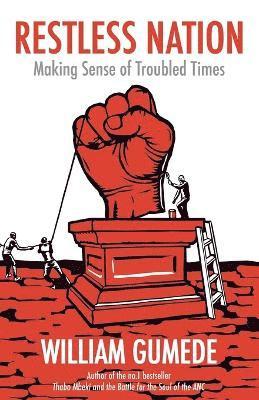
Corruption is commonplace in South Africa. The values that underpinned the ANC's liberation ideology appear to be collapsing and a new 'bling' culture, which has infected both politics and business, seems to be taking over in South Africa. William Gumede tackles these and other pressing issues head-on in his new book which brings together his best writing of the past three years. Included are opinion pieces written for overseas publications such as The Guardian, The Independent and The New Statesman, which have never been published in South Africa before. Gumede covers several hot topics, including black economic empowerment, the state of the ANC alliance, poor service delivery and the state of our democracy. His critique is most severe when he discusses the Zuma presidency and the scourge of corruption. According to Gumede there is a choking sense that the current generation in government do not have the ideas or political will to lead us out of this malaise. Only a spring-clean of leadership, ideas and institutions will lift the gloom. A powerful call to action.
Häftad, Engelska, 2018
254 kr
Kommande
Häftad, Engelska, 2019
376 kr
Skickas inom 5-8 vardagar
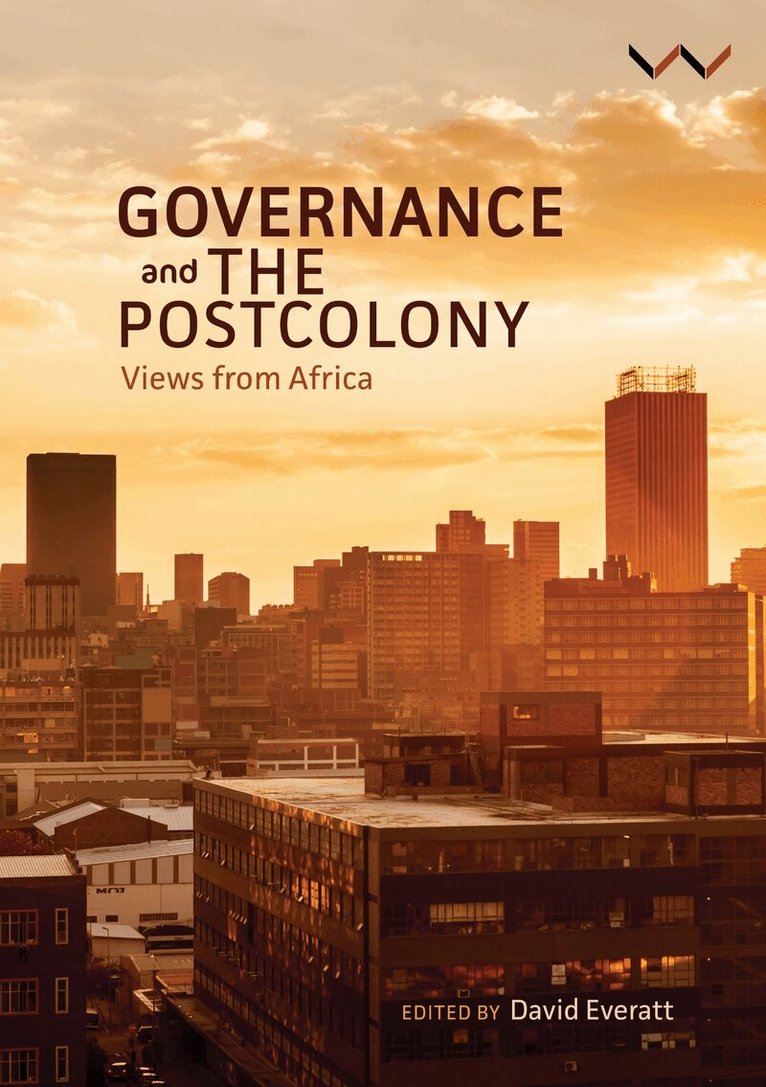
Civil society, NGOs, governments, and multilateral institutions all repeatedly call for improved or 'good' governance – yet they seem to speak past one another. Governance is in danger of losing all meaning precisely because it means many things to different people in varied locationsThis is especially true in sub-Saharan Africa. Here, the postcolony takes many forms, reflecting the imperial project with painful accuracy. Offering a set of multidisciplinary analyses of governance in different sectors (crisis management, water, food security, universities), in different locales across sub-Saharan Africa, and from different theoretical approaches (network to adversarial network governance); this volume makes a useful addition to the growing debates on 'how to govern'. It steers away from offering a 'correct' definition of governance, or from promoting a particular position on postcoloniality. It gives no neat conclusion, but invites readers to draw their own conclusions based on these differing approaches to and analyses of governance in the postcolony.As a robust, critical assessment of power and accountability in the sub-Saharan context, Governance and the Postcolony: Views from Africa brings together topical case studies that will be a valuable resource for those working in the field of African international relations, public policy, public management and administration.
E-bok
PDF, Engelska, 2019376 kr
Läs direkt efter köp
Civil society, NGOs, governments, and multilateral institutions all repeatedly call for improved or ‘good’ governance – yet they seem to speak past one another. Governance is in danger of losing all meaning precisely because it means many things to different people in varied locations. This is especially true in sub-Saharan Africa. Here, the postcolony takes many forms, reflecting the imperial project with painful accuracy. Offering a set of multidisciplinary analyses of governance in different sectors (crisis management, water, food security, universities), in different locales (including the African Union and specific regional contexts from West Africa, Zambia, to South Africa), and from different theoretical approaches (network to adversarial network governance, and beyond), this volume makes a useful addition to the growing debates on ‘how to govern’. It steers away from offering a ‘correct’ definition of governance, or from promoting a particular position on postcoloniality. It gives no conclusion that neatly sums up all the arguments advanced. Instead, readers are invited to draw their own conclusions based on these differing approaches to and analyses of governance in the postcolony. As a robust, critical assessment of power and accountability in the sub-Saharan context, this collection brings together topical case studies that will be a valuable resource for those working in the field of African international relations, public policy, public management and administration.
E-bok
Engelska, 2019373 kr
Läs direkt efter köp
Civil society, NGOs, governments, and multilateral institutions all repeatedly call for improved or ‘good’ governance – yet they seem to speak past one another. Governance is in danger of losing all meaning precisely because it means many things to different people in varied locations. This is especially true in sub-Saharan Africa. Here, the postcolony takes many forms, reflecting the imperial project with painful accuracy. Offering a set of multidisciplinary analyses of governance in different sectors (crisis management, water, food security, universities), in different locales (including the African Union and specific regional contexts from West Africa, Zambia, to South Africa), and from different theoretical approaches (network to adversarial network governance, and beyond), this volume makes a useful addition to the growing debates on ‘how to govern’. It steers away from offering a ‘correct’ definition of governance, or from promoting a particular position on postcoloniality. It gives no conclusion that neatly sums up all the arguments advanced. Instead, readers are invited to draw their own conclusions based on these differing approaches to and analyses of governance in the postcolony. As a robust, critical assessment of power and accountability in the sub-Saharan context, this collection brings together topical case studies that will be a valuable resource for those working in the field of African international relations, public policy, public management and administration.
E-bok
PDF, Engelska, 2016398 kr
Läs direkt efter köp
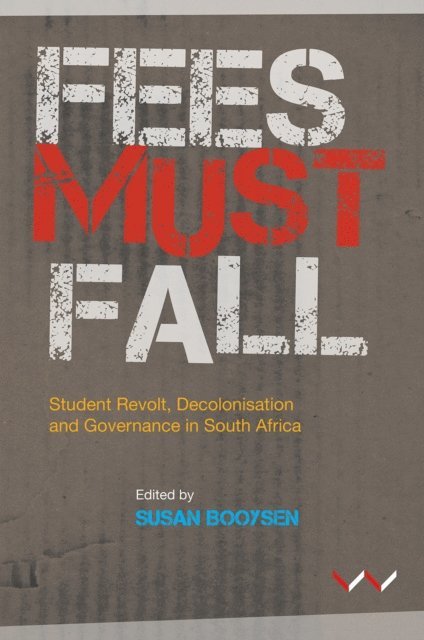
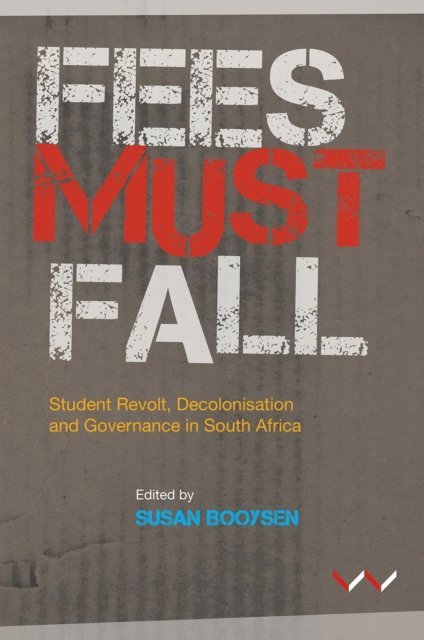
#FeesMustFall, the student revolt that began in October 2015, was an uprising against lack of access to, and financial exclusion from, higher education in South Africa. More broadly, it radically questioned the socio-political dispensation resulting from the 1994 social pact between big business, the ruling elite and the liberation movement. The 2015 revolt links to national and international youth struggles of the recent past and is informed by black consciousness politics and social movements of the international left. Yet, its objectives are more complex than those of earlier struggles. The student movement has challenged the hierarchical, top-down leadership system of university management and it’s ‘double speak’ of professing to act in workers’ and students’ interests yet entrenching a regressive system for control and governance. University managements, while on one level amenable to change, have also co-opted students into their ranks to create co-responsibility for the highly bureaucratised university financial aid that stands in the way of their social revolution. This book maps the contours of student discontent a year after the start of the #FeesMustFall revolt. Student voices dissect colonialism, improper compromises by the founders of democratic South Africa, feminism, worker rights and meaningful education. In-depth assessments by prominent scholars reflect on the complexities of student activism, its impact on national and university governance, and offer provocative analyses of the power of the revolt.
E-bok
Engelska, 2016384 kr
Läs direkt efter köp
#FeesMustFall, the student revolt that began in October 2015, was an uprising against lack of access to, and financial exclusion from, higher education in South Africa. More broadly, it radically questioned the socio-political dispensation resulting from the 1994 social pact between big business, the ruling elite and the liberation movement. The 2015 revolt links to national and international youth struggles of the recent past and is informed by black consciousness politics and social movements of the international left. Yet, its objectives are more complex than those of earlier struggles. The student movement has challenged the hierarchical, top-down leadership system of university management and it’s ‘double speak’ of professing to act in workers’ and students’ interests yet entrenching a regressive system for control and governance. University managements, while on one level amenable to change, have also co-opted students into their ranks to create co-responsibility for the highly bureaucratised university financial aid that stands in the way of their social revolution. This book maps the contours of student discontent a year after the start of the #FeesMustFall revolt. Student voices dissect colonialism, improper compromises by the founders of democratic South Africa, feminism, worker rights and meaningful education. In-depth assessments by prominent scholars reflect on the complexities of student activism, its impact on national and university governance, and offer provocative analyses of the power of the revolt.
220 kr
Tillfälligt slut
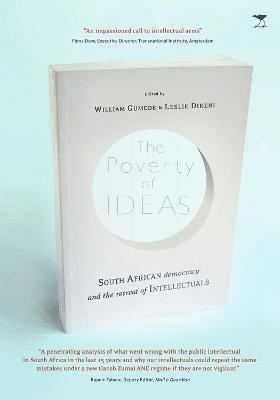
Exploring the changing role of the South African intellectual, these essays define the role and responsibility of critical thinkers in a new democracy. Contrasting the courage of the outspoken dissenter during the apartheid era with today's disengaged observers, the contributors discuss the retreat of the intellectual from the public sphere and the impact this has had on the consolidation of democracy in postapartheid South Africa.
Häftad, Engelska, 2015
153 kr
Tillfälligt slut
This title tells the story of how Andile and his father make a kite. While flying the kite, its string breaks releasing the kite on an epic journey across Africa. From the thundering Victoria Falls and the snow tops of Kilimanjaro, to the Sahara Desert and ancient Egyptian Pyramids, follow the kite's flight over some of the great landmarks of Africa!