William J. McShea - Böcker
Visar alla böcker från författaren William J. McShea. Handla med fri frakt och snabb leverans.
3 produkter
3 produkter
588 kr
Skickas inom 5-8 vardagar
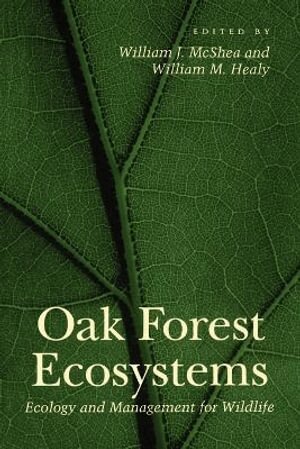
Oak Forest Ecosystems focuses on the relationship between an oak forest's acorn yield and species of wildlife that depend on it. It begins by treating factors such as oak distribution, forest fires, tree diseases and pests, dynamics of acorn production, and acorn dispersal by birds and mammals. Special consideration is given to the phenomenon of masting-whereby oaks in a given area will produce huge crops of acorns at irregular intervals-a key component for wildlife researchers and managers in understanding patterns of scarcity and abundance in the creatures that feed on this crop. Relationships between oaks and animals such as mice, squirrels, turkeys, deer, and bear are discussed, as are the differences between eastern, southern Appalachian, southwestern, and California oak forests. Contributors: Marc D. Abrams, Pennsylvania State University * Patrick H. Brose, U.S. Department of Agriculture Forest Service * John P. Buonaccorsi, University of Massachusetts * Daniel Dey, U.S. Department of Agriculture Forest Service * Joseph S. Elkinton, University of Massachusetts * George A. Feldhamer, Southern Illinois University * Peter F. Folliott, University of Arizona * Lee E.Frelich, University of Minnesota * Cathryn H. Greenberg, U.S. Department of Agriculture Forest Service * William M. Healy, U.S. Department of Agriculture Forest Service * Roy L. Kirkpatrick, Virginia Polytechnic Institute and State University * Johannes M. H. Knops, University of Nebraska * Walter D. Koenig, University of California * Nelson W. Lafon, Virginia Department of Game and Inland Fisheries * Andrew M. Liebhold, U.S. Department of Agriculture Forest Service * William J. McShea, National Zoological Park Conservation and Research Center * William H. McWilliams, U.S. Department of Agriculture Forest Service * Gary W. Norman, Virginia Department of Game and Inland Fisheries * Steven W. Oak, U.S. Department of Agriculture Forest Service * Renee A. O'Brien, U.S. Department of Agriculture Forest Service * Richard S. Ostfeld, Institute of Ecosystem Studies * Bernard R. Parresol, U.S. Department of Agriculture Forest Service * Peter J. Perkins, University of New Hampshire * Gordon C. Reese, Colorado State University * Peter B. Reich, University of Minnesota * Peter D. Smallwood, University of Richmond * Christopher C. Smith, Kansas State University * Richard B.Standiford, University of California-Berkeley * Martin A. Stapanian, Ohio Cooperative Wildlife Unit * Michael A. Steele, Wilkes University * David Steffen, Virginia Department of Game and Inland Fisheries * David H. Van Lear, Clemson University * Michael R. Vaughan, Virginia Polytechnic Institute and State University * Karen L. Waddell, U.S. Department of Agriculture Forest Service
536 kr
Skickas
Think of deer and the image that pops into most American's minds is that of a white-tailed deer, the most common large mammal in North America. Most Europeans are more familiar with red deer. It may surprise many people to know that there are actually about 50 species of deer found throughout the world. Here, readers will find nontechnical, expert information about the wide range of diverse deer species. Did you know that elk and caribou are deer? Or that the earliest fossils of deer are 15 to 20 million years old? Have you ever wondered whether deer swim, play, or see color? How do deer avoid predators and survive the winter? Do deer make good pets or carry contagious diseases? George A. Feldhamer and William J. McShea answer these and other intriguing questions about members of the deer family Cervidae. From the diminutive pudu of South America that weighs 17 pounds to male moose that weigh close to 2,000 pounds, Feldhamer and McShea explore the biology, evolution, ecology, feeding habits, reproduction, and behavior of deer. They chronicle the relationships between humans and deer-both positive and negative - and discuss the challenges of deer conservation and management.With vivid color photographs and an accessible and engaging question-and-answer format, this easy-to-read book is the go-to resource on deer. Nature lovers, hunters, and anyone curious about deer will find this fact-filled book both fascinating and full of surprises.
319 kr
Skickas inom 11-20 vardagar
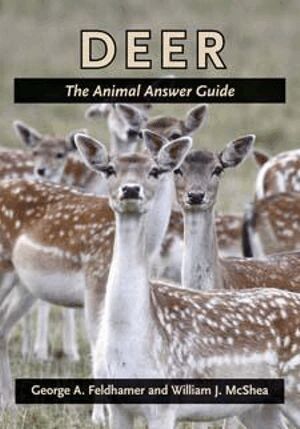
Think of deer and the image that pops into most American's minds is that of a white-tailed deer, the most common large mammal in North America. Most Europeans are more familiar with red deer. It may surprise many people to know that there are actually about 50 species of deer found throughout the world. Here, readers will find nontechnical, expert information about the wide range of diverse deer species. Did you know that elk and caribou are deer? Or that the earliest fossils of deer are 15 to 20 million years old? Have you ever wondered whether deer swim, play, or see color? How do deer avoid predators and survive the winter? Do deer make good pets or carry contagious diseases? George A. Feldhamer and William J. McShea answer these and other intriguing questions about members of the deer family Cervidae. From the diminutive pudu of South America that weighs 17 pounds to male moose that weigh close to 2,000 pounds, Feldhamer and McShea explore the biology, evolution, ecology, feeding habits, reproduction, and behavior of deer. They chronicle the relationships between humans and deer-both positive and negative - and discuss the challenges of deer conservation and management.With vivid color photographs and an accessible and engaging question-and-answer format, this easy-to-read book is the go-to resource on deer. Nature lovers, hunters, and anyone curious about deer will find this fact-filled book both fascinating and full of surprises.