• Fri frakt över 249 kr
  • •
  • Snabba leveranser
  • •
  • Billiga böcker
Kundservice

Du är på sajten för privatpersoner.

Företag, bibliotek eller offentlig verksamhet?

Du handlar på classic.bokus.com, där alla dina funktioner finns intakta.
Till classic.bokus.com
Bokus logotyp. Gå till startsidan.
  • Erbjudanden
  • Student
  • Topplistor
  • Barn & ungdom
  • Bokus Play
  • E-böcker
  • Ljudböcker
  • Pocketböcker
  • Spel & pussel

10% rabatt på allt med kod NYSTART10 →

Sidfot

Mina sidor

    Hjälp

    • Kundservice
    • Vanliga frågor och svar
    • Frakt och leverans
    • Retur vid ångerrätt
    • Reklamera vara
    • Betalning
    • Köpvillkor
    • Allmänna villkor
    • Information om webbplatsens tillgänglighet

    Om Bokus

    • Om oss
    • Pressrum
    • För studenter
    • För företag
    • För bibliotek och offentlig verksamhet
    • För leverantörer
    • Hållbarhet

    Populärt

    • Aktuella erbjudanden
    • Presentkort
    • Studentlitteratur
    • Nya böcker
    • Topplistor
    • Signerade böcker
    • Engelska böcker

    Inspiration

    • Boktips
    • BookTok
    • Populära bokserier
    • Barnbokskaraktärer
    • Populära författare
    Logotyp för Bokus
    Följ oss på Facebook (extern länk)Följ oss på Instagram (extern länk)Följ oss på YouTube (extern länk)Följ oss på TikTok (extern länk)
    bokus @ CookiesAnpassa cookiesIntegritetspolicyKöpvillkor
    Till Citymail hemsida (extern länk)Till Budbee hemsida (extern länk)Till Postnord hemsida (extern länk)Till Schenker hemsida (extern länk)Till Early Bird hemsida (extern länk)Till Walleys hemsida (extern länk)
    1. Naturvetenskap och teknik
    2. Geovetenskap
    3. Miljövetenskap och miljöpolitik

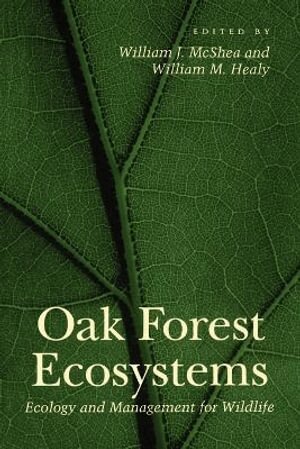
    Oak Forest Ecosystems

    Ecology and Management for Wildlife

    AvWilliam J. McShea,William J. McShea

    Häftad, Engelska, 2004

    599 kr

    Beställningsvara. Skickas inom 5-8 vardagar. Fri frakt över 249 kr.

    Beskrivning

    Oak Forest Ecosystems focuses on the relationship between an oak forest's acorn yield and species of wildlife that depend on it. It begins by treating factors such as oak distribution, forest fires, tree diseases and pests, dynamics of acorn production, and acorn dispersal by birds and mammals. Special consideration is given to the phenomenon of masting-whereby oaks in a given area will produce huge crops of acorns at irregular intervals-a key component for wildlife researchers and managers in understanding patterns of scarcity and abundance in the creatures that feed on this crop. Relationships between oaks and animals such as mice, squirrels, turkeys, deer, and bear are discussed, as are the differences between eastern, southern Appalachian, southwestern, and California oak forests. Contributors: Marc D. Abrams, Pennsylvania State University * Patrick H. Brose, U.S. Department of Agriculture Forest Service * John P. Buonaccorsi, University of Massachusetts * Daniel Dey, U.S. Department of Agriculture Forest Service * Joseph S. Elkinton, University of Massachusetts * George A. Feldhamer, Southern Illinois University * Peter F. Folliott, University of Arizona * Lee E.Frelich, University of Minnesota * Cathryn H. Greenberg, U.S. Department of Agriculture Forest Service * William M. Healy, U.S. Department of Agriculture Forest Service * Roy L. Kirkpatrick, Virginia Polytechnic Institute and State University * Johannes M. H. Knops, University of Nebraska * Walter D. Koenig, University of California * Nelson W. Lafon, Virginia Department of Game and Inland Fisheries * Andrew M. Liebhold, U.S. Department of Agriculture Forest Service * William J. McShea, National Zoological Park Conservation and Research Center * William H. McWilliams, U.S. Department of Agriculture Forest Service * Gary W. Norman, Virginia Department of Game and Inland Fisheries * Steven W. Oak, U.S. Department of Agriculture Forest Service * Renee A. O'Brien, U.S. Department of Agriculture Forest Service * Richard S. Ostfeld, Institute of Ecosystem Studies * Bernard R. Parresol, U.S. Department of Agriculture Forest Service * Peter J. Perkins, University of New Hampshire * Gordon C. Reese, Colorado State University * Peter B. Reich, University of Minnesota * Peter D. Smallwood, University of Richmond * Christopher C. Smith, Kansas State University * Richard B.Standiford, University of California-Berkeley * Martin A. Stapanian, Ohio Cooperative Wildlife Unit * Michael A. Steele, Wilkes University * David Steffen, Virginia Department of Game and Inland Fisheries * David H. Van Lear, Clemson University * Michael R. Vaughan, Virginia Polytechnic Institute and State University * Karen L. Waddell, U.S. Department of Agriculture Forest Service

    Produktinformation

    • Utgivningsdatum:2004-01-20
    • Mått:152 x 229 x 24 mm
    • Vikt:907 g
    • Format:Häftad
    • Språk:Engelska
    • Antal sidor:448
    • Förlag:Johns Hopkins University Press
    • ISBN:9780801877476

    Utforska kategorier

    • Miljövetenskap och miljöpolitik inom Naturvetenskap och teknik
    • Biovetenskap inom Naturvetenskap och teknik

    Mer om författaren

    William J. McShea is a research scientist in the Conservation and Research Center at the Smithsonian Institution. William M. Healy is a research wildlife biologist at the Northeastern Forest Experiment Station of the USDA Forest Service.

    Recensioner i media

    The information is a good starting point for managers and landowners who want to have a better understanding of their forests. -- Paul Jasinski Ecoscience 2003

    Innehållsförteckning

    • Contents: Contributors Acknowledgments Chapter 1 Oaks and Acorns as a Foundation for Ecosystem Management -William J. McShea and William M. Healy Part I Patterns and Processes of Oak Forests Chapter 2 Distribution and Abundance of Oaks in North America -William H. McWilliams, Renee O'Brien, Gordon C. Reese, and Karen L. Waddell Chapter 3 The Postglacial History of Oak Forests in Eastern North America -Marc D. Abrams Chapter 4 Fire History and Postsettlement Disturbance -Daniel Dey Chapter 5 The Ecological Basis for Oak Silviculture in Eastern North America -Daniel Dey Chapter 6 Native Diseases and Insects That Impact Oaks -Steven W. Oak Chapter 7 Gypsy Moths and Forest Dynamics -Joseph S. Elkinton, William M. Healy, Andrew M. Liebhold, and John P. Buonaccorsi Chapter 8 Dynamics of Old-Growth Oak Forests in the Eastern United States - Lee E. Frelich and Peter B. Reich Part II Ecology and Patterns of Acorns Chapter 9 The Behavioral Ecology of Masting in Oaks -Walter B. Koening and Johannes M. H. Knops Chapter 10 Dynamics of Acorn Production by Five Species of Southern Appalachian Oaks -Cathryn H. Greenberg and Bernard R. Parresol Chapter 11 Nutritional Value of Acorns for Wildlife -Roy L. Kirkpatrick and Peter J. Pekins Chapter 12 Acorn Dispersal by Birds and Mammals -Michael A. Steele and Peter D. Smallwood Chapter 13 Ecological Webs Involving Acorns and Mice: Basic Research and Its Management Implications -Richard S. Ostfeld Chapter 14: Acorns and White-Talied Deer: Interrelationships in Forest Ecosystems -George A. Feldhamer Chapter 15: Oak Trees, Acorns, and Bears -Michael R. Vaughan Chapter 16: Turkeys, Acorns, and Oaks -Davis E. Steffen, Nelson W. Lafon, and Gary W. Norman Chapter 17 Squirrels and Oaks -Christopher C. Smith and Martin A. Stapanian Part III Management of Oaks for Wildlife Chapter 18 Fire and Oak Management -David H. Van Lear and Patrick H. Brose Chapter 19 California's Oak Woodlands -Richard B. Standiford Chapter 20 Ecology and Management of Evergreen Oak Woodlands in Arizona and New Mexico -Peter F. Ffolliott Chapter 21 Managing Eastern Oak Forests for Wildlife -William M. Healy Chapter 22 Goals and Guidelines for Managing Oak Ecosystems for Wildlife -William M. Healy and William J. McShea References Index