William M. Reddy - Böcker
Visar alla böcker från författaren William M. Reddy. Handla med fri frakt och snabb leverans.
8 produkter
8 produkter
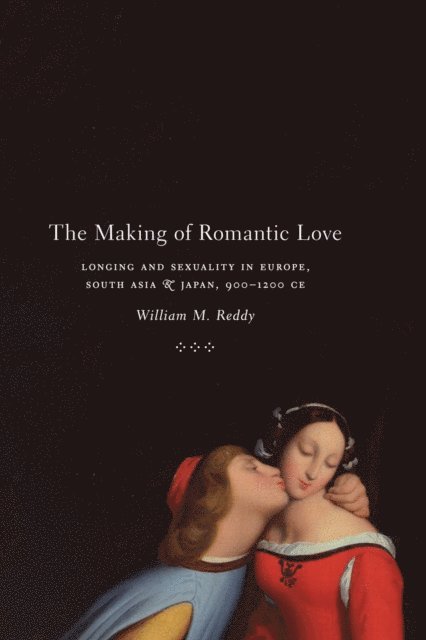
Making of Romantic Love
Longing and Sexuality in Europe, South Asia, and Japan, 900-1200 CE
Inbunden, Engelska, 2012
1 145 kr
Skickas inom 7-10 vardagar
In the twelfth century, the Catholic Church attempted a thoroughgoing reform of marriage and sexual behavior aimed at eradicating sexual desire from Christian lives. Seeking a refuge from the very serious condemnations of the Church and relying on a courtly culture that was already preoccupied with honor and secrecy, European poets, romance writers, and lovers devised a vision of love as something quite different from desire. Romantic love was thus born as a movement of covert resistance. In "The Making of Romantic Love", William M. Reddy illuminates the birth of a cultural movement that managed to regulate selfish desire and render it innocent - or innocent enough. Reddy strikes out from this historical moment on an international exploration of love, contrasting the medieval development of romantic love in Europe with contemporaneous eastern traditions in Bengal and Orissa, and in Heian Japan from 900 to 1200 CE, where one finds no trace of an opposition between love and desire. In this comparative framework, Reddy tells an appealing tale about the rise and fall of various practices of longing, underscoring the uniqueness of the European concept of sexual desire.
Making of Romantic Love
Longing and Sexuality in Europe, South Asia, and Japan, 900-1200 CE
Häftad, Engelska, 2012
454 kr
Skickas inom 7-10 vardagar
In the twelfth century, the Catholic Church attempted a thoroughgoing reform of marriage and sexual behavior aimed at eradicating sexual desire from Christian lives. Seeking a refuge from the very serious condemnations of the Church and relying on a courtly culture that was already preoccupied with honor and secrecy, European poets, romance writers, and lovers devised a vision of love as something quite different from desire. Romantic love was thus born as a movement of covert resistance. In "The Making of Romantic Love", William M. Reddy illuminates the birth of a cultural movement that managed to regulate selfish desire and render it innocent - or innocent enough. Reddy strikes out from this historical moment on an international exploration of love, contrasting the medieval development of romantic love in Europe with contemporaneous eastern traditions in Bengal and Orissa, and in Heian Japan from 900 to 1200 CE, where one finds no trace of an opposition between love and desire. In this comparative framework, Reddy tells an appealing tale about the rise and fall of various practices of longing, underscoring the uniqueness of the European concept of sexual desire.
333 kr
Skickas inom 7-10 vardagar
The Invisible Code: Honor and Sentiment in Postrevolutionary France, 1814–1848 explores the transformation of social norms and personal identity during a pivotal era in French history. While the Napoleonic legal codes institutionalized key revolutionary principles like equality before the law and freedom of contract, they also entrenched patriarchal authority, restricting women’s rights and elevating male dominance in the public and private spheres. Yet alongside these formal codes existed an unspoken "invisible code" of honor, which reshaped interpersonal and societal dynamics in the postrevolutionary period. This honor code democratized access to prestige but heightened personal vulnerability, as men contended for respect and status in an open, competitive arena. The book delves into the intersections of law, family, and public life, examining how honor was both enforced by legal structures and internalized as deeply felt shame, driving emotional and political behavior.This "invisible code" was inextricably linked to gendered experiences of honor and sentiment. Men’s pursuit of honor was portrayed as rational and public, while women’s lives were framed through sentiment and emotional fulfillment. This constructed dichotomy legitimized the exclusion of women from political and public spaces under the guise of rationality. However, as the book illustrates, emotions—particularly male shame—were central to the social order, influencing decisions and actions in ways often overlooked by historians. By juxtaposing male honor with female sentiment, The Invisible Code critiques the flawed premise of rationality as a male domain, offering fresh insights into the interplay between gender, emotion, and social legitimacy in early 19th-century France. Through this lens, the study reveals how deeply embedded ideas of honor and sentiment shaped personal identities and the broader fabric of postrevolutionary society.This title is part of UC Press's Voices Revived program, which commemorates University of California Press’s mission to seek out and cultivate the brightest minds and give them voice, reach, and impact. Drawing on a backlist dating to 1893, Voices Revived makes high-quality, peer-reviewed scholarship accessible once again using print-on-demand technology. This title was originally published in 1997.
1 513 kr
Skickas inom 3-6 vardagar
The Invisible Code: Honor and Sentiment in Postrevolutionary France, 1814–1848 explores the transformation of social norms and personal identity during a pivotal era in French history. While the Napoleonic legal codes institutionalized key revolutionary principles like equality before the law and freedom of contract, they also entrenched patriarchal authority, restricting women’s rights and elevating male dominance in the public and private spheres. Yet alongside these formal codes existed an unspoken "invisible code" of honor, which reshaped interpersonal and societal dynamics in the postrevolutionary period. This honor code democratized access to prestige but heightened personal vulnerability, as men contended for respect and status in an open, competitive arena. The book delves into the intersections of law, family, and public life, examining how honor was both enforced by legal structures and internalized as deeply felt shame, driving emotional and political behavior.This "invisible code" was inextricably linked to gendered experiences of honor and sentiment. Men’s pursuit of honor was portrayed as rational and public, while women’s lives were framed through sentiment and emotional fulfillment. This constructed dichotomy legitimized the exclusion of women from political and public spaces under the guise of rationality. However, as the book illustrates, emotions—particularly male shame—were central to the social order, influencing decisions and actions in ways often overlooked by historians. By juxtaposing male honor with female sentiment, The Invisible Code critiques the flawed premise of rationality as a male domain, offering fresh insights into the interplay between gender, emotion, and social legitimacy in early 19th-century France. Through this lens, the study reveals how deeply embedded ideas of honor and sentiment shaped personal identities and the broader fabric of postrevolutionary society.This title is part of UC Press's Voices Revived program, which commemorates University of California Press’s mission to seek out and cultivate the brightest minds and give them voice, reach, and impact. Drawing on a backlist dating to 1893, Voices Revived makes high-quality, peer-reviewed scholarship accessible once again using print-on-demand technology. This title was originally published in 1997.
409 kr
Skickas inom 7-10 vardagar
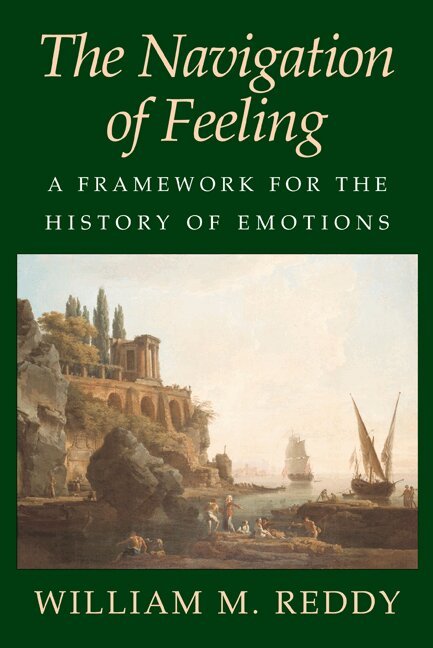
In The Navigation of Feeling: A Framework for the History of Emotions, William M. Reddy offers a theory of emotions which both critiques and expands upon recent research in the fields of anthropology and psychology. Exploring the links between emotion and cognition, between culture and emotional expression, Reddy applies this theory of emotions to the processes of history. He demonstrates how emotions change over time, how emotions have a very important impact on the course of events, and how different social orders either facilitate or constrain emotional life. In an investigation of Revolutionary France, where sentimentalism in literature and philosophy had promised a new and unprecedented kind of emotional liberty, Reddy's theory of emotions and historical change is successfully put to the test.
441 kr
Skickas inom 7-10 vardagar
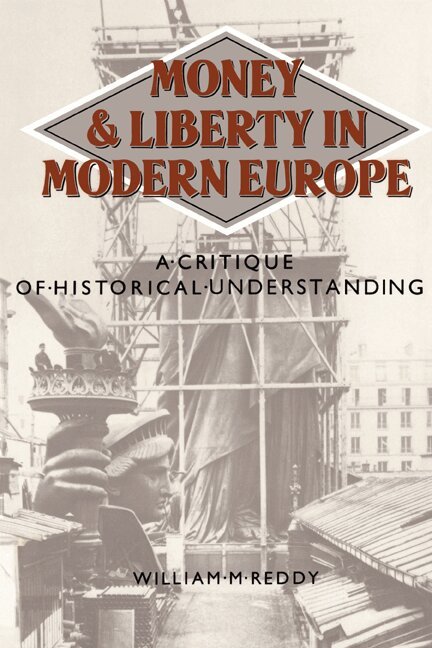
The concept of class, along with its correlates -m class interest, class conflict, class consciousness - ramain indispensable tools of historical explanation. Yet research over the last twenty-five years, especially on the histories of England, France, and Germany, has revealed an increasingly poor fit between these concepts and the reality they purport to explain. Some historians have reacted by rejecting class; others have proposed bold revisions in our understanding of it that enable it to encompass new research findings. This study does neither. Instead, building on interpretive method Professor Reddy proposes to replace class with an alternative concept that seeks to capture from a new angle the fundamental relations of exchange and authority that have shaped social life in modern Europe.
523 kr
Skickas inom 7-10 vardagar
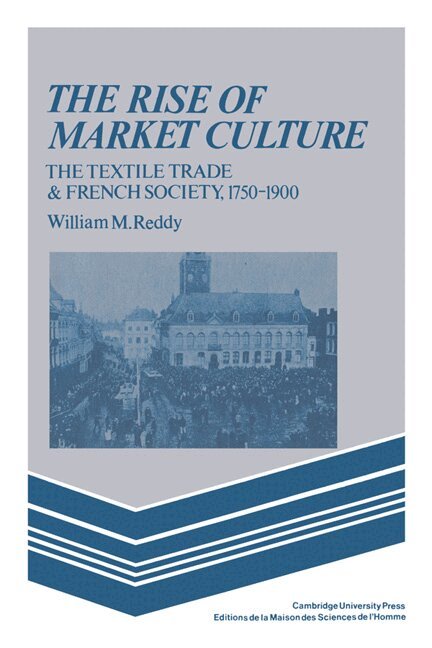
Combining the perspectives of anthropology and social history, Professor Reddy traces the transition from precapitalist to capitalist culture in the French textile industry from 1750 to 1900. He shows how and why a new conception of the social order based on the idea of the market began to emerge, and examines the attendant political and social conflict. Focusing on the northern regional centres in France which led the movement toward mechanisation, the author - employs the methods of cultural anthropology to find that even by 1900 French textile labourers had failed to develop a social identity commensurate with the idea of wage labour. This discovery leads him to a critique of the market idea that suggests radical and prevalent interpretations of the social history of industrialisation as well as of the concept of 'class consciousness'.
1 485 kr
Skickas inom 7-10 vardagar
In The Navigation of Feeling: A Framework for the History of Emotions, William M. Reddy offers a theory of emotions which both critiques and expands upon recent research in the fields of anthropology and psychology. Exploring the links between emotion and cognition, between culture and emotional expression, Reddy applies this theory of emotions to the processes of history. He demonstrates how emotions change over time, how emotions have a very important impact on the course of events, and how different social orders either facilitate or constrain emotional life. In an investigation of Revolutionary France, where sentimentalism in literature and philosophy had promised a new and unprecedented kind of emotional liberty, Reddy's theory of emotions and historical change is successfully put to the test.