William Roberds – författare
Visar alla böcker från författaren William Roberds. Handla med fri frakt och snabb leverans.
5 produkter
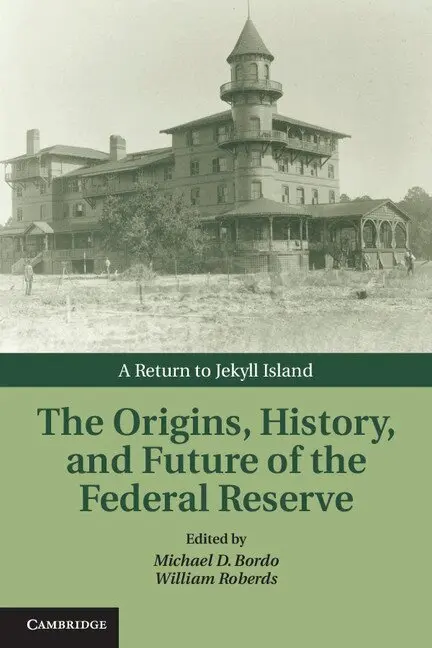
The Origins, History, and Future of the Federal Reserve
A Return to Jekyll Island
Av Michael D. Bordo, William Roberds
Inbunden, 2013
1089 kr
Lägg i varukorg
This book contains essays presented at a conference held in November 2010 to mark the centenary of the famous 1910 Jekyll Island meeting of leading American financiers and the US Treasury. The 1910 meeting resulted in the Aldrich Plan, a precursor to the Federal Reserve Act that was enacted by …
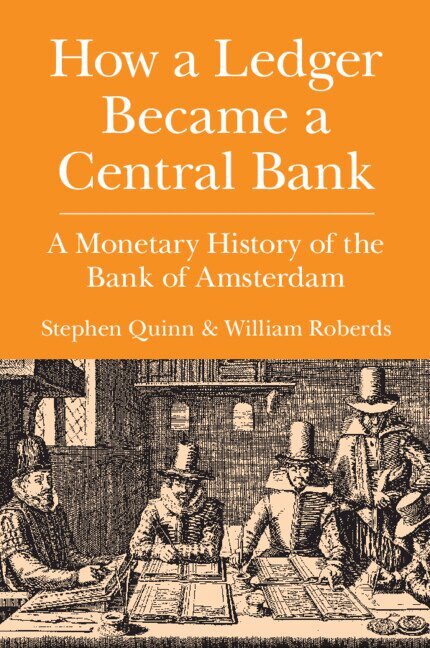
How a Ledger Became a Central Bank
A Monetary History of the Bank of Amsterdam
Av Stephen Quinn, William Roberds
Inbunden, 2023
1384 kr
Lägg i varukorg
Before the US Federal Reserve and the Bank of England, the Bank of Amsterdam ('Bank') was a dominant central bank with a global impact on money and credit. How a Ledger Became a Central Bank draws on extensive archival data and rich secondary literature, to offer a new and detailed portrait of this …
How a Ledger Became a Central Bank
A Monetary History of the Bank of Amsterdam
Av William Roberds, Stephen Quinn
E-bok, 2023
426 kr
Lägg i varukorg
How a Ledger Became a Central Bank
A Monetary History of the Bank of Amsterdam
Av William Roberds, Stephen Quinn
E-bok, 2023
440 kr
Lägg i varukorg
How a Ledger Became a Central Bank
A Monetary History of the Bank of Amsterdam
Av Stephen Quinn, William Roberds
Häftad, 2023
455 kr
Lägg i varukorg
Before the US Federal Reserve and the Bank of England, the Bank of Amsterdam ('Bank') was a dominant central bank with a global impact on money and credit. How a Ledger Became a Central Bank draws on extensive archival data and rich secondary literature, to offer a new and detailed portrait of this …