• Fri frakt över 249 kr
  • •
  • Snabba leveranser
  • •
  • Billiga böcker
Kundservice

Du är på sajten för privatpersoner.

Företag, bibliotek eller offentlig verksamhet?

Du handlar på classic.bokus.com, där alla dina funktioner finns intakta.
Till classic.bokus.com
Bokus logotyp. Gå till startsidan.
  • Erbjudanden
  • Nyheter
  • Student
  • Topplistor
  • Barn & ungdom
  • Bokus Play
  • E-böcker
  • Pocketböcker
  • Spel & pussel

10% rabatt på allt med kod: NYSTART10 →

Sidfot

Mina sidor

    Hjälp

    • Kundservice
    • Vanliga frågor och svar
    • Frakt och leverans
    • Retur vid ångerrätt
    • Reklamera vara
    • Betalning
    • Köpvillkor
    • Allmänna villkor
    • Information om webbplatsens tillgänglighet

    Om Bokus

    • Om oss
    • Pressrum
    • För studenter
    • För företag
    • För bibliotek och offentlig verksamhet
    • För leverantörer
    • Hållbarhet

    Populärt

    • Aktuella erbjudanden
    • Presentkort
    • Studentlitteratur
    • Nya böcker
    • Topplistor
    • Signerade böcker
    • Engelska böcker

    Inspiration

    • Boktips
    • BookTok
    • Populära bokserier
    • Barnbokskaraktärer
    • Populära författare
    Logotyp för Bokus
    Följ oss på Facebook (extern länk)Följ oss på Instagram (extern länk)Följ oss på YouTube (extern länk)Följ oss på TikTok (extern länk)
    bokus @ CookiesAnpassa cookiesIntegritetspolicyKöpvillkor
    Till Citymail hemsida (extern länk)Till Budbee hemsida (extern länk)Till Postnord hemsida (extern länk)Till Schenker hemsida (extern länk)Till Early Bird hemsida (extern länk)Till Walleys hemsida (extern länk)
    1. Ekonomi och Ledarskap
    2. Nationalekonomi
    3. Makroekonomi

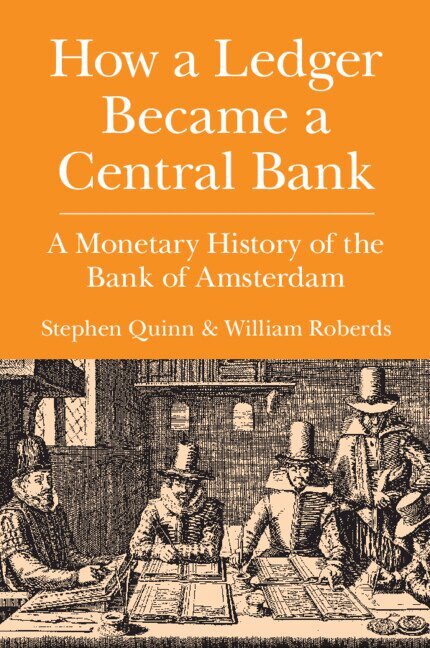
    How a Ledger Became a Central Bank

    A Monetary History of the Bank of Amsterdam

    AvStephen Quinn,William Roberds

    Häftad, Engelska, 2023

    Del i serien Studies in Macroeconomic History

    353 kr

    Beställningsvara. Skickas inom 10-15 vardagar. Fri frakt över 249 kr.

    Fler format och utgåvor

    Inbunden

    1 134 kr

    Beskrivning

    Before the US Federal Reserve and the Bank of England, the Bank of Amsterdam ('Bank') was a dominant central bank with a global impact on money and credit. How a Ledger Became a Central Bank draws on extensive archival data and rich secondary literature, to offer a new and detailed portrait of this historically significant institution. It describes how the Bank struggled to manage its money before hitting a modern solution: fiat money in combination with a repurchase facility and discretionary open market operations. It describes techniques the Bank used to monitor and stabilize money stock, and how foreign sovereigns could exploit the liquidity of the Bank for state finance. Closing with a discussion of commonalities of the Bank of Amsterdam with later central banks, including the Federal Reserve, this book has generated a great deal of excitement among scholars of central banking and the role of money in the macroeconomy.

    Produktinformation

    • Utgivningsdatum:2023-11-30
    • Mått:152 x 227 x 21 mm
    • Vikt:540 g
    • Format:Häftad
    • Språk:Engelska
    • Serie:Studies in Macroeconomic History
    • Antal sidor:400
    • Förlag:Cambridge University Press
    • ISBN:9781108706155

    Utforska kategorier

    • Makroekonomi inom Ekonomi och Ledarskap
    • Politik och statsskick inom Samhälle och politik

    Mer om författaren

    Stephen Quinn is a Professor of Economics at Texas Christian University. He has published extensively on the origins of banking in London and Amsterdam, which has awarded him a visiting lectureship at the Bank of England and a New York Times Magazine Idea of the Year. William Roberds is a research economist and senior advisor at the Federal Reserve Bank of Atlanta. He has been an economist with the Federal Reserve since 1984 and has published academic research in the areas of finance, monetary policy, payment systems, and central bank history.

    Recensioner i media

    'Stephen Quinn and Will Roberds have written a remarkable book on the world's first true central bank and its first true international currency. Their newly unearthed history sheds much light on the past, but also the future, of the international monetary and financial system.' Barry Eichengreen, University of California, Berkeley

    Innehållsförteckning

    • 1. Similar yet different?; 2. The world of the bank; 3. Coins in eighteenth-century Amsterdam; 4. First steps, 1609–1659; 5. Emergence of the receipt system, 1660–1710; 6. Metal in motion: the mechanics of receipts; 7. Two banks and one money, 1711–1791; 8. Prussia's debasement during the Seven Years War: the role of the Bank; 9. The bank's place in central bank history.