William Thomas Okie - Böcker
Visar alla böcker från författaren William Thomas Okie. Handla med fri frakt och snabb leverans.
3 produkter
3 produkter
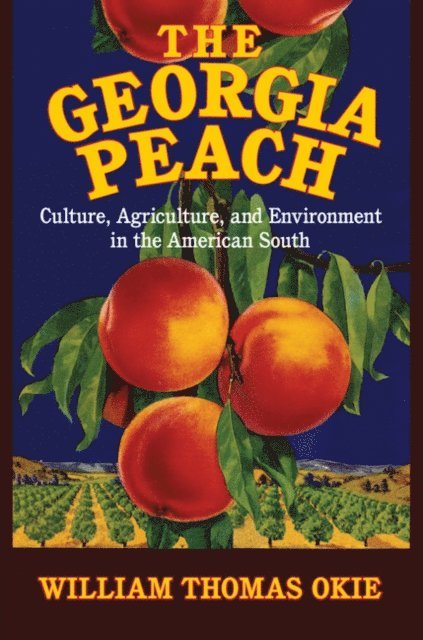
The Georgia Peach
Culture, Agriculture, and Environment in the American South
Inbunden, Engelska, 2016
496 kr
Skickas inom 7-10 vardagar
Imprinted on license plates, plastered on billboards, stamped on the tail side of the state quarter, and inscribed on the state map, the peach is easily Georgia's most visible symbol. Yet Prunus persica itself is surprisingly rare in Georgia, and it has never been central to the southern agricultural economy. Why, then, have southerners - and Georgians in particular - clung to the fruit? The Georgia Peach: Culture, Agriculture, and Environment in the American South shows that the peach emerged as a viable commodity at a moment when the South was desperate for a reputation makeover. This agricultural success made the fruit an enduring cultural icon despite the increasing difficulties of growing it. A delectable contribution to the renaissance in food writing, The Georgia Peach will be of great interest to connoisseurs of food, southern, environmental, rural, and agricultural history.
344 kr
Skickas inom 7-10 vardagar
Imprinted on license plates, plastered on billboards, stamped on the tail side of the state quarter, and inscribed on the state map, the peach is easily Georgia's most visible symbol. Yet Prunus persica itself is surprisingly rare in Georgia, and it has never been central to the southern agricultural economy. Why, then, have southerners - and Georgians in particular - clung to the fruit? The Georgia Peach: Culture, Agriculture, and Environment in the American South shows that the peach emerged as a viable commodity at a moment when the South was desperate for a reputation makeover. This agricultural success made the fruit an enduring cultural icon despite the increasing difficulties of growing it. A delectable contribution to the renaissance in food writing, The Georgia Peach will be of great interest to connoisseurs of food, southern, environmental, rural, and agricultural history.
117 kr
Skickas inom 5-8 vardagar
What is our place in nature?Since the Industrial Revolution, humans have has exercised unprecedented dominance over nature, with consequences that are now catching up with us. Many have pointed to Christianity as a culprit. Yet Christianity actually teaches that our relationship to nature should not be one of contempt or disassociation. Rather, according to ancient church tradition, nature is a book to be read, revealing truths about its creator and ours. At a time when many moderns are unsure of what difference, if any, marks us out from other living beings on our planet, and of what our place in the natural world ought to be, what might nature itself tell us about how to live within it?On this theme:Peter Mommsen asks if humans should live by nature’s laws.Colin Boller interviews farmers successfully shifting to regenerative agriculture.Caroline Moore introduces some of Britain’s amazing moths.Daniel Stulac wonders what the Promised Land means in Saskatchewan.Clare Coffey defends dandelions in lawns.Rhys Laverty reports on man’s battle with the sea at the Alderney breakwater.William Thomas Okie explores the old idea that plants reveal their uses.Greta Gaffin looks at our relationship to wolves, and Saint Francis’s.Norann Voll remembers lambing with her father.Tim Maendel finds peace by hunting.Erik Varden asks if the Christian teaching on chastity is unnatural.David McBride translates “The Leper of Abercuawg,” an old Welsh poem.Maureen Swinger watches meteor showers.Plough Quarterly features stories, ideas, and culture for people eager to apply their faith to the challenges we face. Each issue includes in-depth articles, interviews, poetry, book reviews, and art.