Wilma A. Dunaway - Böcker
Visar alla böcker från författaren Wilma A. Dunaway. Handla med fri frakt och snabb leverans.
8 produkter
8 produkter
422 kr
Skickas inom 7-10 vardagar
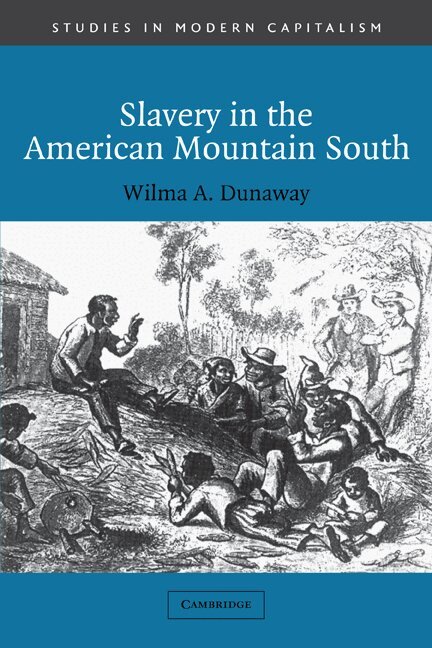
Wilma Dunaway breaks new ground by focusing on slave experiences on small plantations in the Upper South. She argues that a region was not buffered from the political, economic, and social impacts of enslavement simply because it was characterized by low black population density and small slaveholdings. By drawing on a massive statistical data base derived from antebellum census manuscripts and county tax records of 215 counties in nine states, on a vast array of slaveholder manuscripts, and on regional slave narratives, she pinpoints several indicators that distinguished Mountain South enslavement from the Lower South. These include a higher incidence of ethnic mixing between African and Native American slaves, heavier reliance on the field labor of women and children, and more frequent assignment of slaves to non-agricultural occupations. Dunaway also calls into question the notion that large numbers were necessary before slaves could engage in community building and resistance.
370 kr
Skickas inom 7-10 vardagar
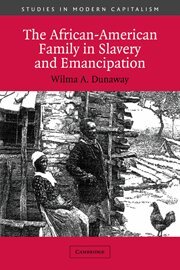
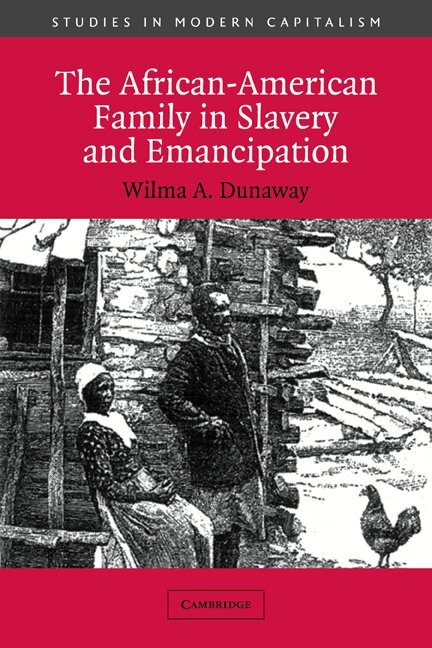
In The African-American Family in Slavery and Emancipation, Wilma Dunaway calls into question the dominant paradigm of the US slave family. She contends that US slavery studies have been flawed by neglect of small plantations and export zones and exaggeration of slave agency. Using data on population trends and Slave narratives, she identifies several profit-maximizing strategies that owners implemented to disrupt and endanger African-American families, including forced labor migrations, structural interference in marriages and childcare, sexual exploitation of women, shortfalls in provision of basic survival needs, and ecological risks. This book is unique in its examination of new threats to family persistence that emerged during the Civil War and Reconstruction.
618 kr
Skickas inom 7-10 vardagar
Wilma Dunaway breaks new ground by focusing on slave experiences on small plantations in the Upper South. She argues that a region was not buffered from the political, economic, and social impacts of enslavement simply because it was characterized by low black population density and small slaveholdings. By drawing on a massive statistical data base derived from antebellum census manuscripts and county tax records of 215 counties in nine states, on a vast array of slaveholder manuscripts, and on regional slave narratives, she pinpoints several indicators that distinguished Mountain South enslavement from the Lower South. These include a higher incidence of ethnic mixing between African and Native American slaves, heavier reliance on the field labor of women and children, and more frequent assignment of slaves to non-agricultural occupations. Dunaway also calls into question the notion that large numbers were necessary before slaves could engage in community building and resistance.
767 kr
Skickas inom 7-10 vardagar
In The African-American Family in Slavery and Emancipation, Wilma Dunaway calls into question the dominant paradigm of the US slave family. She contends that US slavery studies have been flawed by neglect of small plantations and export zones and exaggeration of slave agency. Using data on population trends and Slave narratives, she identifies several profit-maximizing strategies that owners implemented to disrupt and endanger African-American families, including forced labor migrations, structural interference in marriages and childcare, sexual exploitation of women, shortfalls in provision of basic survival needs, and ecological risks. This book is unique in its examination of new threats to family persistence that emerged during the Civil War and Reconstruction.
1 282 kr
Skickas inom 7-10 vardagar
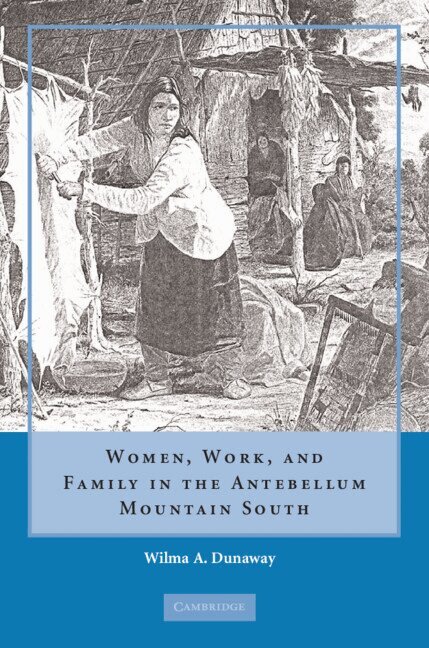
Wilma Dunaway breaks new ground to examine the race, class, and ethnic differences among antebellum Southern Appalachian women. Most women defied separate spheres of gender conventions to undertake agricultural and non-agricultural labors that were essential to family survival or community well-being. Unlike elite and middle-class females, Cherokee, black, and poor white women engaged in stigmatized labors and worked alongside males in cross-racial settings. To support their work portfolios, non-white and most poor white women constructed non-patriarchal families that challenged cultural ideals of motherhood. Churches and courts inequitably regulated the sexual behaviors of these women and treated their households as aberrations that were not entitled to the legal privilege of family sanctity. Legal and religious officials sanctioned family break-ups and the removal, indenturement, or enslavement of their children. Still, many women resisted patriarchal conventions through their work lives, family roles, and group activism.
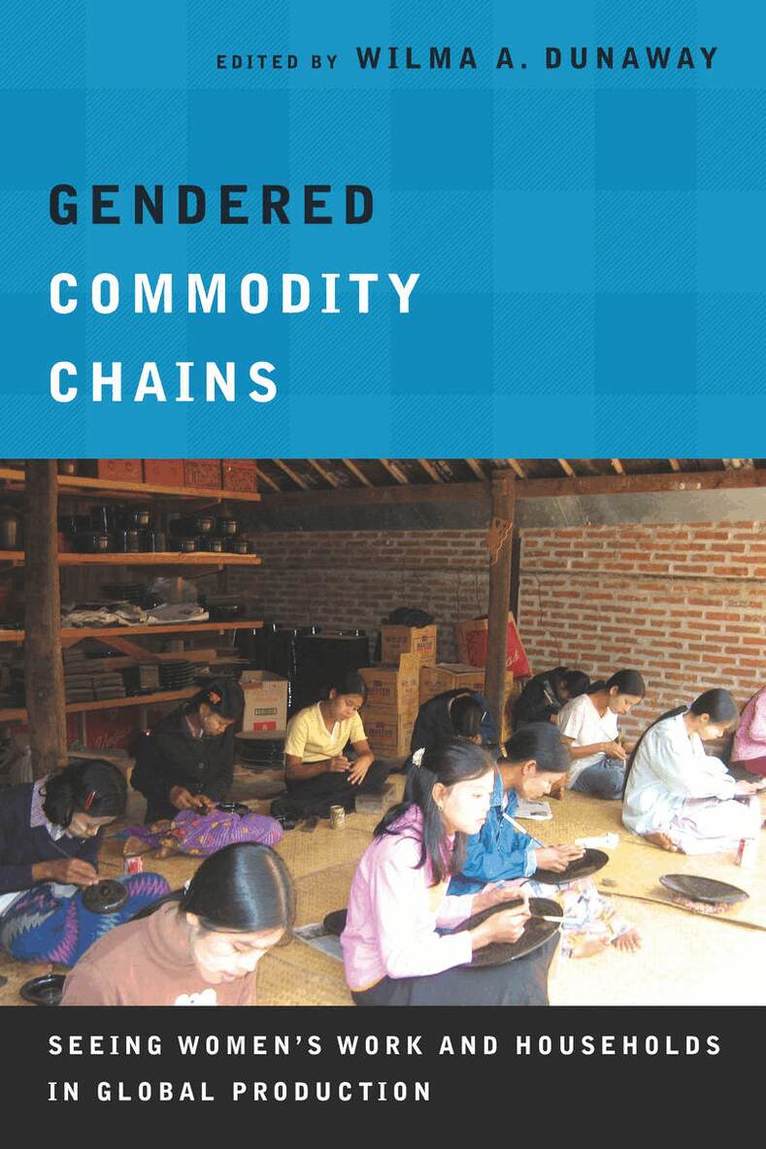
Gendered Commodity Chains
Seeing Women's Work and Households in Global Production
Inbunden, Engelska, 2013
1 466 kr
Skickas inom 7-10 vardagar
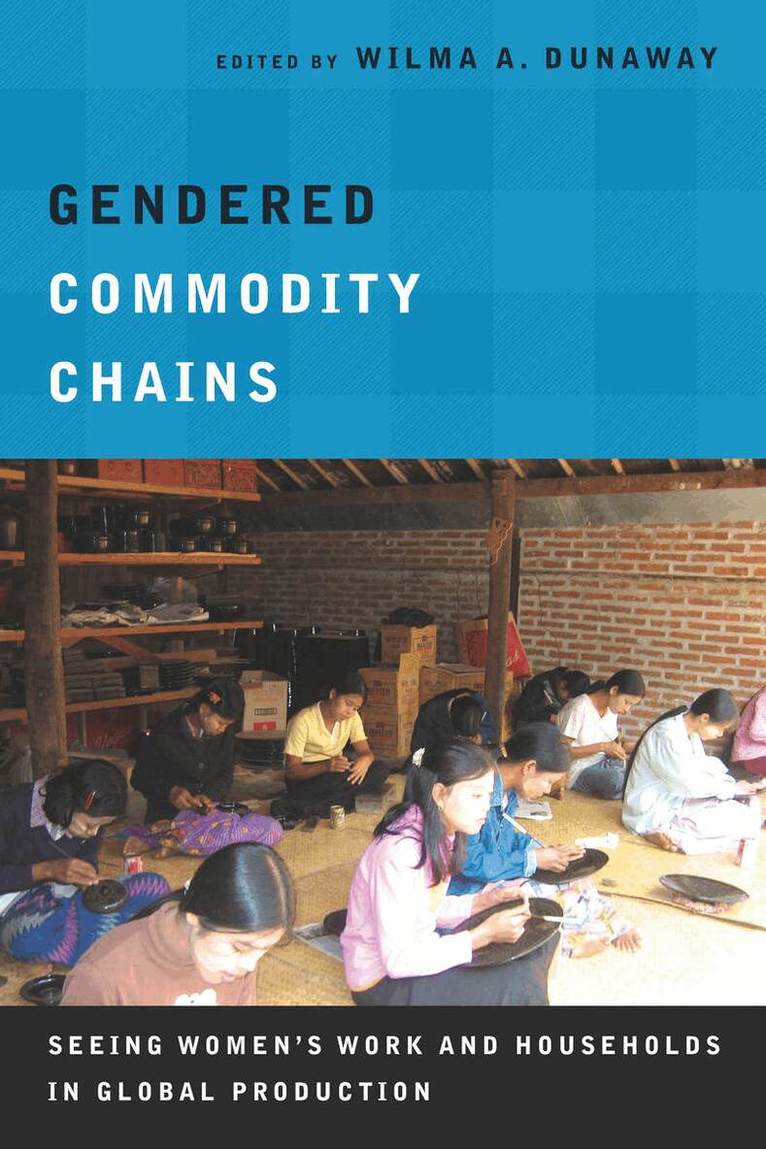
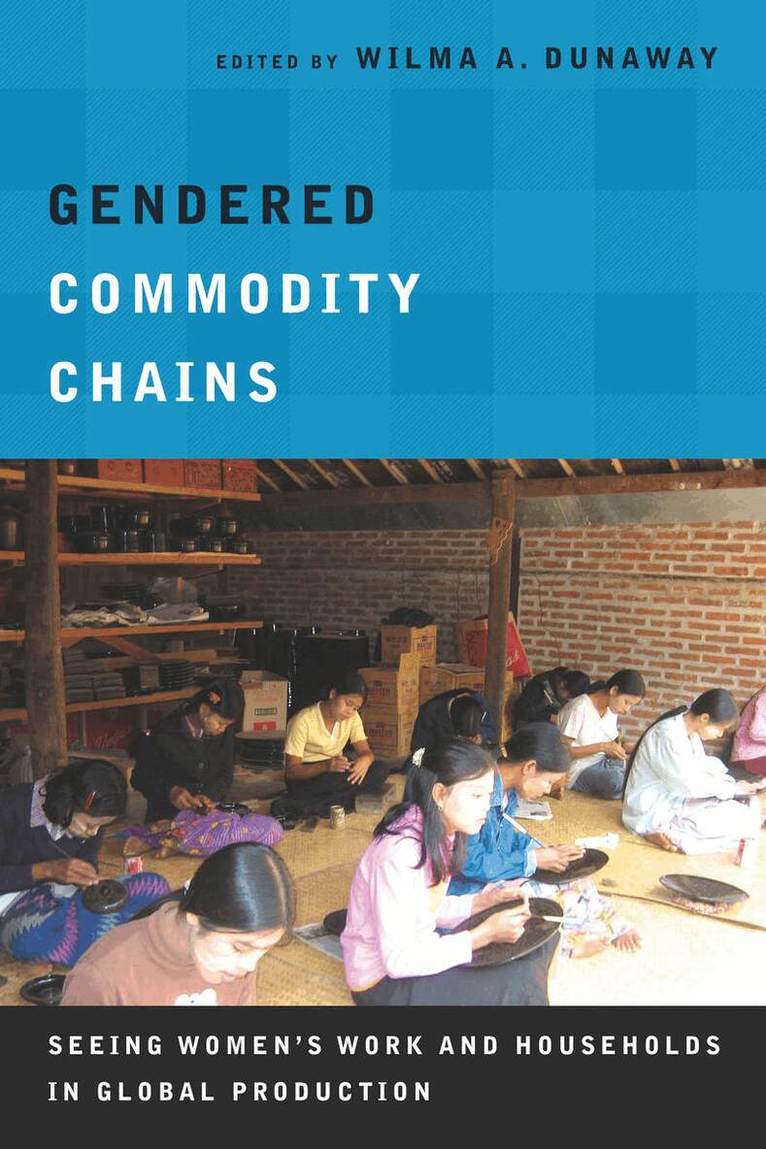
Gendered Commodity Chains is the first book to consider the fundamental role of gender in global commodity chains. It challenges long-held assumptions of global economic systems by identifying the crucial role social reproduction plays in production and by declaring the household as an important site of production. In affirming the importance of women's work in global production, this cutting-edge volume fills an important gender gap in the field of global commodity and value chain analysis.With thirteen chapters by an international group of scholars from sociology, anthropology, economics, women's studies, and geography, this volume begins with an eye-opening feminist critique of existing commodity chain literature. Throughout its remaining five parts, Gendered Commodity Chains addresses ways women's work can be integrated into commodity chain research, the forms women's labor takes, threats to social reproduction, the impact of indigenous and peasant households on commodity chains, the rapidly expanding arenas of global carework and sex trafficking, and finally, opportunities for worker resistance. This broadly interdisciplinary volume provides conceptual and methodological guides for academics, graduate students, researchers, and activists interested in the gendered nature of commodity chains.
Gendered Commodity Chains
Seeing Women's Work and Households in Global Production
Häftad, Engelska, 2013
362 kr
Skickas inom 7-10 vardagar
Gendered Commodity Chains is the first book to consider the fundamental role of gender in global commodity chains. It challenges long-held assumptions of global economic systems by identifying the crucial role social reproduction plays in production and by declaring the household as an important site of production. In affirming the importance of women's work in global production, this cutting-edge volume fills an important gender gap in the field of global commodity and value chain analysis.With thirteen chapters by an international group of scholars from sociology, anthropology, economics, women's studies, and geography, this volume begins with an eye-opening feminist critique of existing commodity chain literature. Throughout its remaining five parts, Gendered Commodity Chains addresses ways women's work can be integrated into commodity chain research, the forms women's labor takes, threats to social reproduction, the impact of indigenous and peasant households on commodity chains, the rapidly expanding arenas of global carework and sex trafficking, and finally, opportunities for worker resistance. This broadly interdisciplinary volume provides conceptual and methodological guides for academics, graduate students, researchers, and activists interested in the gendered nature of commodity chains.
First American Frontier
Transition to Capitalism in Southern Appalachia, 1700-1860
Häftad, Engelska, 1996
584 kr
Skickas inom 10-15 vardagar
In The First American Frontier , Wilma Dunaway challenges many assumptions about the development of preindustrial Southern Appalachia's society and economy. Drawing on data from 215 counties in nine states from 1700 to 1860, she argues that capitalist exchange and production came to the region much earlier than has been previously thought. Her innovative book is the first regional history of antebellum Southern Appalachia and the first study to apply world-systems theory to the development of the American frontier. Dunaway demonstrates that Europeans established significant trade relations with Native Americans in the southern mountains and thereby incorporated the region into the world economy as early as the seventeenth century. In addition to the much-studied fur trade, she explores various other forces of change, including government policy, absentee speculation in the region's natural resources, the emergence of towns, and the influence of local elites. Contrary to the myth of a homogeneous society composed mainly of subsistence homesteaders, Dunaway finds that many Appalachian landowners generated market surpluses by exploiting a large landless labor force, including slaves. In delineating these complexities of economy and labor in the region, Dunaway provides a perceptive critique of Appalachian exceptionalism and development. |The most comprehensive reference for Carolina bird watchers is now updated to include more than 60 new species recorded in the Carolinas since the publication of the first edition in 1980, bringing the new total to more than 460 individual species. Previous entries have been updated to reflect the current status of species and major changes in taxonomy and the naming of species.