• Fri frakt över 249 kr
  • •
  • Snabba leveranser
  • •
  • Billiga böcker
Kundservice

Du är på sajten för privatpersoner.

Företag, bibliotek eller offentlig verksamhet?

Du handlar på classic.bokus.com, där alla dina funktioner finns intakta.
Till classic.bokus.com
Bokus logotyp. Gå till startsidan.
  • Erbjudanden
  • Nyheter
  • Student
  • Topplistor
  • Barn & ungdom
  • Bokus Play
  • E-böcker
  • Pocketböcker
  • Spel & pussel

10% studentrabatt med kod TERM26

Sidfot

Mina sidor

    Hjälp

    • Kundservice
    • Vanliga frågor och svar
    • Frakt och leverans
    • Retur vid ångerrätt
    • Reklamera vara
    • Betalning
    • Köpvillkor
    • Allmänna villkor
    • Information om webbplatsens tillgänglighet

    Om Bokus

    • Om oss
    • Pressrum
    • För studenter
    • För företag
    • För bibliotek och offentlig verksamhet
    • För leverantörer
    • Hållbarhet

    Populärt

    • Aktuella erbjudanden
    • Presentkort
    • Studentlitteratur
    • Nya böcker
    • Topplistor
    • Signerade böcker
    • Engelska böcker

    Inspiration

    • Boktips
    • BookTok
    • Populära bokserier
    • Barnbokskaraktärer
    • Populära författare
    Logotyp för Bokus
    Följ oss på Facebook (extern länk)Följ oss på Instagram (extern länk)Följ oss på YouTube (extern länk)Följ oss på TikTok (extern länk)
    bokus @ CookiesAnpassa cookiesIntegritetspolicyKöpvillkor
    Till Citymail hemsida (extern länk)Till Budbee hemsida (extern länk)Till Postnord hemsida (extern länk)Till Schenker hemsida (extern länk)Till Early Bird hemsida (extern länk)Till Walleys hemsida (extern länk)
    1. Historia och arkeologi
    2. Historia
    3. Amerikas historia

    The African-American Family in Slavery and Emancipation

    AvWilma A. Dunaway,Maurice Aymard

    Häftad, Engelska, 2003

    Del i serien Studies in Modern Capitalism

    390 kr

    Beställningsvara. Skickas inom 10-15 vardagar. Fri frakt över 249 kr.

    Fler format och utgåvor

    Inbunden

    822 kr

    Beskrivning

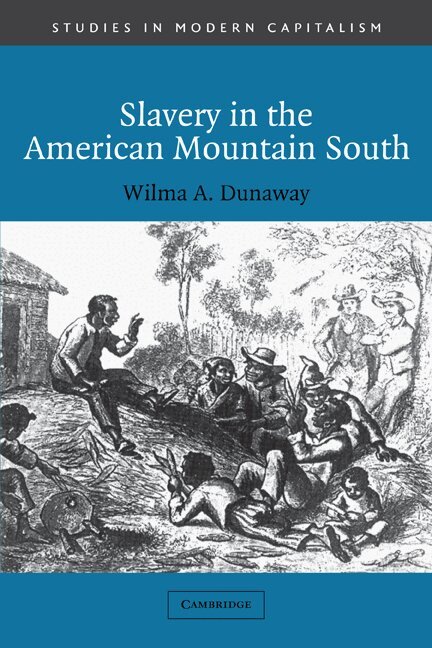
    In The African-American Family in Slavery and Emancipation, Wilma Dunaway calls into question the dominant paradigm of the US slave family. She contends that US slavery studies have been flawed by neglect of small plantations and export zones and exaggeration of slave agency. Using data on population trends and Slave narratives, she identifies several profit-maximizing strategies that owners implemented to disrupt and endanger African-American families, including forced labor migrations, structural interference in marriages and childcare, sexual exploitation of women, shortfalls in provision of basic survival needs, and ecological risks. This book is unique in its examination of new threats to family persistence that emerged during the Civil War and Reconstruction.

    Produktinformation

    • Utgivningsdatum:2003-04-14
    • Mått:152 x 229 x 22 mm
    • Vikt:560 g
    • Format:Häftad
    • Språk:Engelska
    • Serie:Studies in Modern Capitalism
    • Antal sidor:384
    • Förlag:Cambridge University Press
    • ISBN:9780521012164

    Utforska kategorier

    • Amerikas historia inom Historia och arkeologi

    Recensioner i media

    'If one is interested in the history of the American south then this book is as essential as Fogel's many works on this subject. It gives a completely new dimension to the darker side of slavery. Much of the published work of recent years mitigates some of the hardships of a slave's existence. As one might expect from a professor of sociology there is a great emphasis on the emotional and tragic disintegration of slave family life due to economic circumstances beyond the control of the slave. It is almost a euphemism to say this book is essential reading on the subject of slavery, nevertheless on this occasion it is a fact.' Open History

    Innehållsförteckning

    • Introduction; 1. Slave trading and forced labor migrations; 2. Family diasporas and parenthood lost; 3. Malnutrition, ecological risks, and slave mortality; 4. Reproductive exploitation and child mortality; 5. Slave household subsistence and women's work; 6. The impacts of Civil War on slave families; 7. The risks of emancipation for black families; 8. Reconstruction threats to black family survival; Theoretical reprise.