Winfried Menninghaus - Böcker
Visar alla böcker från författaren Winfried Menninghaus. Handla med fri frakt och snabb leverans.
7 produkter
7 produkter
385 kr
Skickas inom 7-10 vardagar
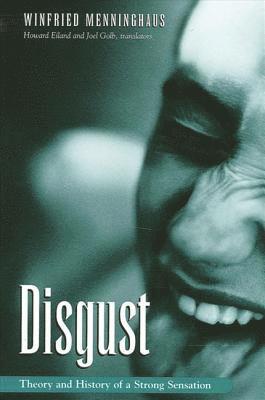
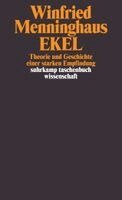
Examines this forceful emotion from philosophical, literary, and art historical perspectives.Disgust (Ekel, dégoût) is a state of high alert. It acutely says "no" to a variety of phenomena that seemingly threaten the integrity of the self, if not its very existence. A counterpart to the feelings of appetite, desire, and love, it allows at the same time for an acting out of hidden impulses and libidinal drives.In Disgust, Winfried Menninghaus provides a comprehensive account of the significance of this forceful emotion in philosophy, aesthetics, literature, the arts, psychoanalysis, and theory of culture from the eighteenth century to the present. Topics addressed include the role of disgust as both a cognitive and moral organon in Kant and Nietzsche; the history of the imagination of the rotting corpse; the counter-cathexis of the disgusting in Romantic poetics and its modernist appeal ever since; the affinities of disgust and laughter and the analogies of vomiting and writing; the foundation of Freudian psychoanalysis in a theory of disgusting pleasures and practices; the association of disgusting "otherness" with truth and the trans-symbolic "real" in Bataille, Sartre, and Kristeva; Kafka's self-representation as an "Angel" of disgusting smells and acts, concealed in a writerly stance of uncompromising "purity"; and recent debates on "Abject Art."
1 480 kr
Skickas inom 10-15 vardagar
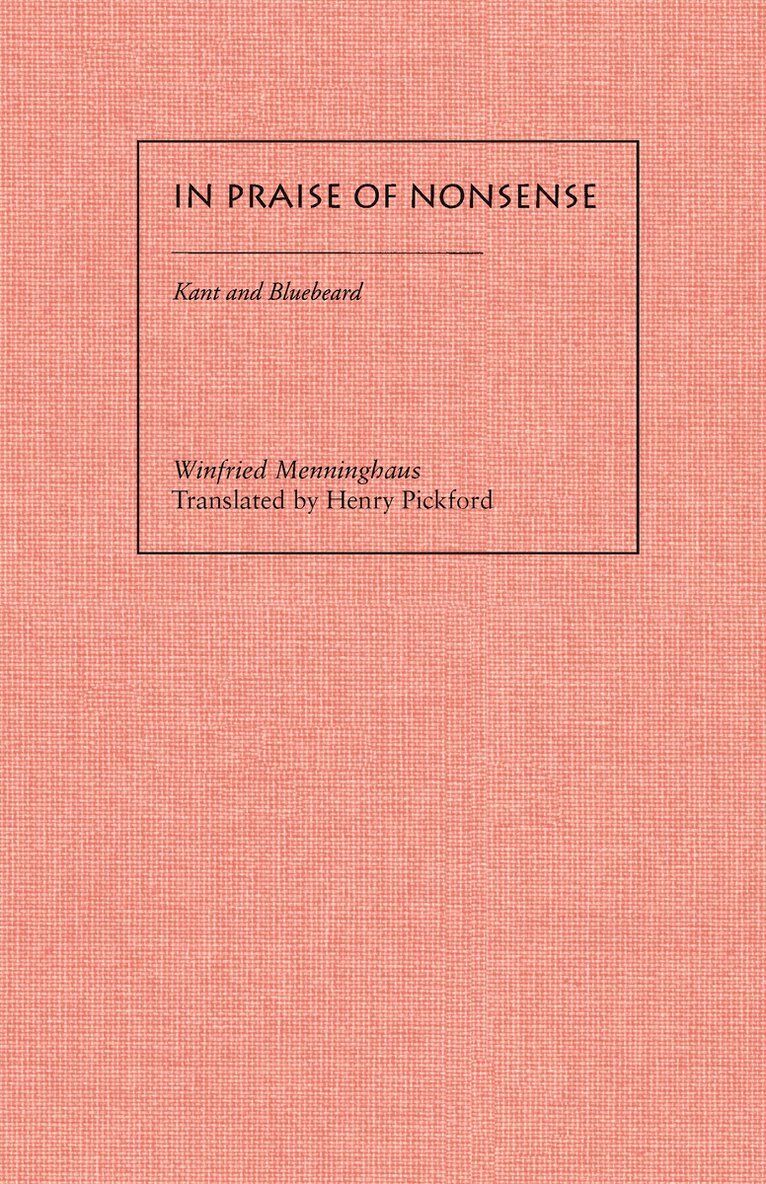
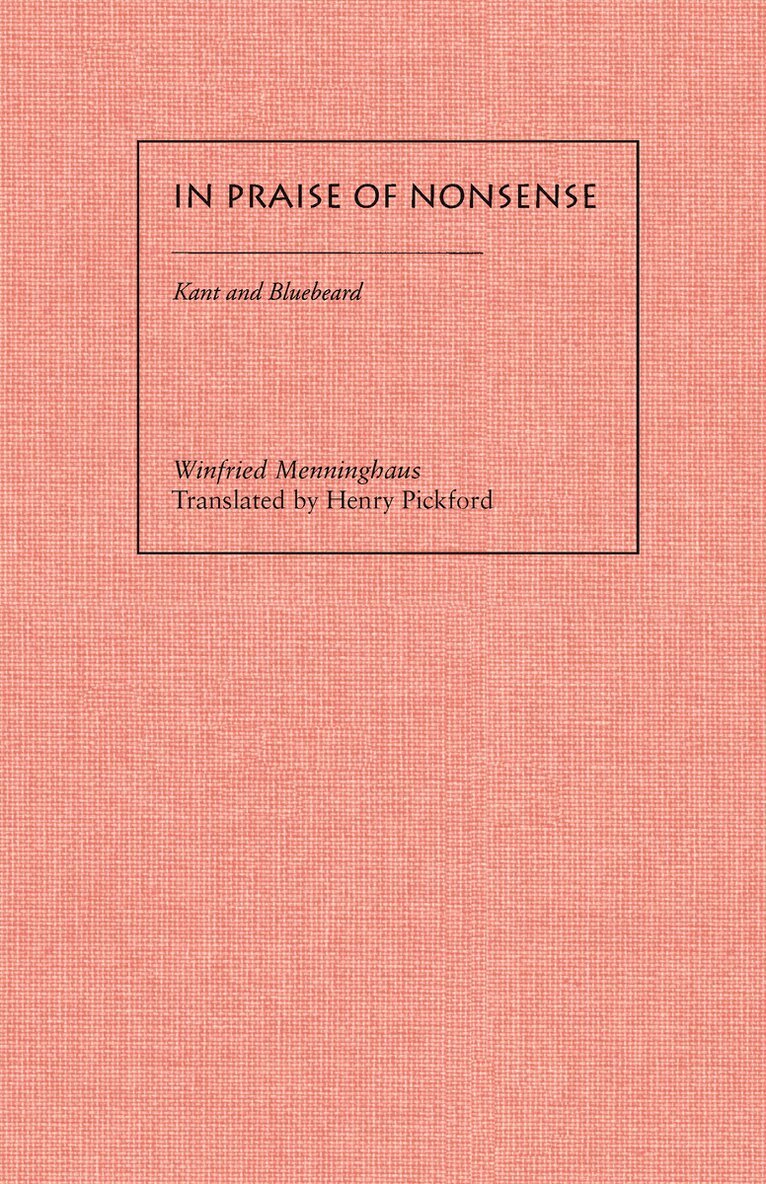
Shells, leafwork, picture frames, hummingbirds, wallpaper decorations, hems of clothing—such are the examples Kant's Critique of Judgment offers for a "free" and purely aesthetic beauty. Menninghaus's book demonstrates that all these examples refer to a widely unknown debate on the arabesque and that Kant, in displacing it, addresses genuinely "modern" phenomena. The early Romantic poetics and literature of the arabesque follow and radicalize Kant's move.Menninghaus shows parergonality and "nonsense" to be two key features in the spread of the arabesque from architecture and the fine arts to philosophy and finally to literature. On the one hand, comparative readings of the parergon in Enlightenment aesthetics, Kant, and Schlegel reveal the importance of this term for establishing the very notion of a self-reflective work of art. On the other hand, drawing on Kant's posthumous anthropological notebooks, Menninghaus extrapolates an entire Kantian theory of what it means to produce nonsense and why the Critique of Judgment defines genius precisely through the power (as well as the dangers) of doing so.Ludwig Tieck's 1797 rewriting of Charles Perrault's famous Bluebeard tale (1697) explicitly claims to be an "arabesque" book "without any sense and coherence." Menninghaus's close reading of this capricious narrative reveals a specifically Romantic—as opposed, say, to a Victorian or dadaistic—type of nonsense. Benjamin's as well as Propp's, Lévi-Strauss's, and Meletinskij's oppositions of myth and fairy tale lend additional credit to a Romantic poetics that inaugurates "universal poetry" while performing a bizarre trajectory through arabesque ornament, nonsense, parergonality, and the fairy tale.
356 kr
Skickas inom 7-10 vardagar
Shells, leafwork, picture frames, hummingbirds, wallpaper decorations, hems of clothing—such are the examples Kant's Critique of Judgment offers for a "free" and purely aesthetic beauty. Menninghaus's book demonstrates that all these examples refer to a widely unknown debate on the arabesque and that Kant, in displacing it, addresses genuinely "modern" phenomena. The early Romantic poetics and literature of the arabesque follow and radicalize Kant's move.Menninghaus shows parergonality and "nonsense" to be two key features in the spread of the arabesque from architecture and the fine arts to philosophy and finally to literature. On the one hand, comparative readings of the parergon in Enlightenment aesthetics, Kant, and Schlegel reveal the importance of this term for establishing the very notion of a self-reflective work of art. On the other hand, drawing on Kant's posthumous anthropological notebooks, Menninghaus extrapolates an entire Kantian theory of what it means to produce nonsense and why the Critique of Judgment defines genius precisely through the power (as well as the dangers) of doing so.Ludwig Tieck's 1797 rewriting of Charles Perrault's famous Bluebeard tale (1697) explicitly claims to be an "arabesque" book "without any sense and coherence." Menninghaus's close reading of this capricious narrative reveals a specifically Romantic—as opposed, say, to a Victorian or dadaistic—type of nonsense. Benjamin's as well as Propp's, Lévi-Strauss's, and Meletinskij's oppositions of myth and fairy tale lend additional credit to a Romantic poetics that inaugurates "universal poetry" while performing a bizarre trajectory through arabesque ornament, nonsense, parergonality, and the fairy tale.
1 371 kr
Skickas inom 5-8 vardagar
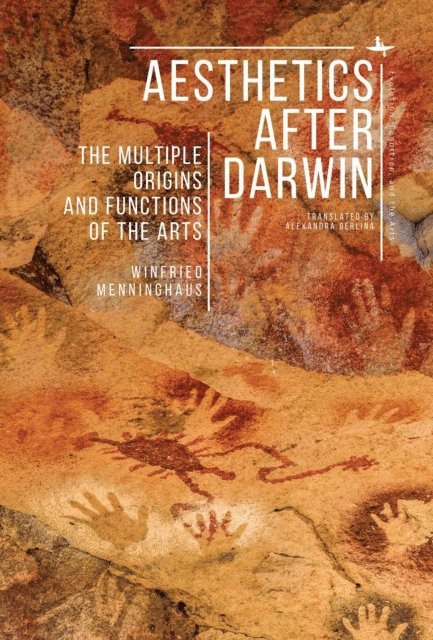
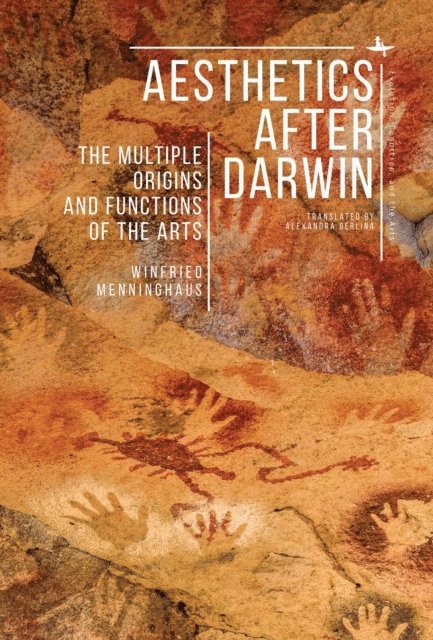
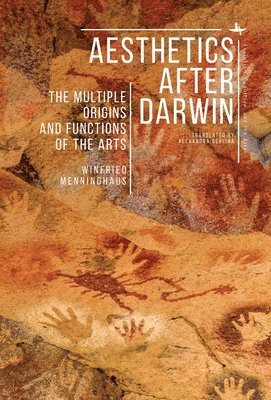
Darwin famously proposed that sexual competition and courtship is (or at least was) the driving force of "art" production not only in animals, but also in humans. The present book is the first to reveal that Darwin's hypothesis, rather than amounting to a full-blown antidote to the humanist tradition, is actually strongly informed both by classical rhetoric and by English and German philosophical aesthetics, thereby Darwin's theory far richer and more interesting for the understanding of poetry and song.The book also discusses how the three most discussed hypothetical functions of the human arts––competition for attention and (loving) acceptance, social cooperation, and self-enhancement––are not mutually exclusive, but can well be conceived of as different aspects of the same processes of producing and responding to the arts.Finally, reviewing the current state of archeological findings, the book advocates a new hypothesis on the multiple origins of the human arts, posing that they arose as new variants of human behavior, when three ancient and largely independent adaptions––sensory and sexual selection-driven biases regarding visual and auditory beauty, play behavior, and technology––joined forces with, and were transformed by, the human capacities for symbolic cognition and language.
414 kr
Skickas inom 5-8 vardagar
Darwin famously proposed that sexual competition and courtship is (or at least was) the driving force of “art” production not only in animals, but also in humans. The present book is the first to reveal that Darwin’s hypothesis, rather than amounting to a full-blown antidote to the humanist tradition, is actually strongly informed both by classical rhetoric and by English and German philosophical aesthetics, thereby Darwin’s theory far richer and more interesting for the understanding of poetry and song.The book also discusses how the three most discussed hypothetical functions of the human arts––competition for attention and (loving) acceptance, social cooperation, and self-enhancement––are not mutually exclusive, but can well be conceived of as different aspects of the same processes of producing and responding to the arts.Finally, reviewing the current state of archeological findings, the book advocates a new hypothesis on the multiple origins of the human arts, posing that they arose as new variants of human behavior, when three ancient and largely independent adaptions––sensory and sexual selection-driven biases regarding visual and auditory beauty, play behavior, and technology––joined forces with, and were transformed by, the human capacities for symbolic cognition and language.
205 kr
Skickas inom 3-6 vardagar
299 kr
Skickas inom 3-6 vardagar