• Fri frakt över 249 kr
  • •
  • Snabba leveranser
  • •
  • Billiga böcker
Kundservice

Du är på sajten för privatpersoner.

Företag, bibliotek eller offentlig verksamhet?

Du handlar på classic.bokus.com, där alla dina funktioner finns intakta.
Till classic.bokus.com
Bokus logotyp. Gå till startsidan.
  • Erbjudanden
  • Nyheter
  • Student
  • Topplistor
  • Barn & ungdom
  • Bokus Play
  • E-böcker
  • Pocketböcker
  • Spel & pussel

10% rabatt på allt med kod: NYSTART10 →

Sidfot

Mina sidor

    Hjälp

    • Kundservice
    • Vanliga frågor och svar
    • Frakt och leverans
    • Retur vid ångerrätt
    • Reklamera vara
    • Betalning
    • Köpvillkor
    • Allmänna villkor
    • Information om webbplatsens tillgänglighet

    Om Bokus

    • Om oss
    • Pressrum
    • För studenter
    • För företag
    • För bibliotek och offentlig verksamhet
    • För leverantörer
    • Hållbarhet

    Populärt

    • Aktuella erbjudanden
    • Presentkort
    • Studentlitteratur
    • Nya böcker
    • Topplistor
    • Signerade böcker
    • Engelska böcker

    Inspiration

    • Boktips
    • BookTok
    • Populära bokserier
    • Barnbokskaraktärer
    • Populära författare
    Logotyp för Bokus
    Följ oss på Facebook (extern länk)Följ oss på Instagram (extern länk)Följ oss på YouTube (extern länk)Följ oss på TikTok (extern länk)
    bokus @ CookiesAnpassa cookiesIntegritetspolicyKöpvillkor
    Till Citymail hemsida (extern länk)Till Budbee hemsida (extern länk)Till Postnord hemsida (extern länk)Till Schenker hemsida (extern länk)Till Early Bird hemsida (extern länk)Till Walleys hemsida (extern länk)
    1. Filosofi och religion
    2. Filosofi
    3. Filosofiska discipliner

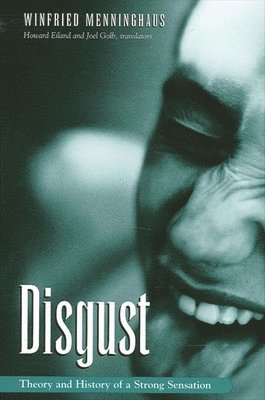
    Disgust

    Theory and History of a Strong Sensation

    AvWinfried Menninghaus

    Häftad, Engelska, 2003

    Del i serien SUNY series, Intersections: Philosophy and Critical Theory

    392 kr

    Beställningsvara. Skickas inom 7-10 vardagar. Fri frakt över 249 kr.

    Fler format och utgåvor

    Inbunden

    1 246 kr

    Beskrivning

    Examines this forceful emotion from philosophical, literary, and art historical perspectives.Disgust (Ekel, dégoût) is a state of high alert. It acutely says "no" to a variety of phenomena that seemingly threaten the integrity of the self, if not its very existence. A counterpart to the feelings of appetite, desire, and love, it allows at the same time for an acting out of hidden impulses and libidinal drives.In Disgust, Winfried Menninghaus provides a comprehensive account of the significance of this forceful emotion in philosophy, aesthetics, literature, the arts, psychoanalysis, and theory of culture from the eighteenth century to the present. Topics addressed include the role of disgust as both a cognitive and moral organon in Kant and Nietzsche; the history of the imagination of the rotting corpse; the counter-cathexis of the disgusting in Romantic poetics and its modernist appeal ever since; the affinities of disgust and laughter and the analogies of vomiting and writing; the foundation of Freudian psychoanalysis in a theory of disgusting pleasures and practices; the association of disgusting "otherness" with truth and the trans-symbolic "real" in Bataille, Sartre, and Kristeva; Kafka's self-representation as an "Angel" of disgusting smells and acts, concealed in a writerly stance of uncompromising "purity"; and recent debates on "Abject Art."

    Produktinformation

    • Utgivningsdatum:2003-10-09
    • Mått:140 x 216 x 26 mm
    • Vikt:635 g
    • Format:Häftad
    • Språk:Engelska
    • Serie:SUNY series, Intersections: Philosophy and Critical Theory
    • Antal sidor:480
    • Förlag:State University of New York Press
    • ISBN:9780791458327
    • Översättare:Howard Eiland, Joel Golb

    Utforska kategorier

    • Filosofiska discipliner inom Filosofi och religion

    Mer om författaren

    Winfried Menninghaus is Professor of Comparative Literature at the Free University, Berlin. He is the author of many books, including In Praise of Nonsense: Kant and Bluebeard.

    Innehållsförteckning

    • INTRODUCTION: BETWEEN VOMITING AND LAUGHING. BASE LINES OF A PHILOSOPHY OF DISGUST Exposition / Subject Matter and Objectives of the Present Study / Aurel Kolnai, "Der Ekel" (Disgust) / Democracy as Source of Disgust: William Ian Miller's The Anatomy of Disgust 1. THE DISGUST TABOO, AND THE OMNIPRESENCE OF DISGUST IN AESTHETIC THEORY The Beautiful as Vomitive / Aesthetic Infinity as Antivomitive / "Mixed Sensations" and the Exception of Disgust / Pleasure and Displeasure / The "Darkest of all the Senses" and the Collapse of Aesthetic Illusion in Disgust / Semanticized and "Crude" Disgust 2. DISGUSTING ZONES AND DISGUSTING TIMES: THE CONSTRUCTION OF THE IDEALLY BEAUTIFUL BODY The Ideal Skin and Disgust at Folds and Wrinkles, Layers of Cartilage and Fat / Disgusting Depths and the Body's Openings / Forever young / The Gaping Mouth / Nose-Disgust and the "Greek Profile" / The "Flattened Ear" / "Disgusting Breasts" and Ideal "Hills" / Invisibility, Unseen Nakedness, and "Wetted Garments" / A Body "Without a Belly" / The "Spare Behind" / Excision, Castration, Hermaphroditization: the Phallus in the Field of the Beautiful / The "Hypergigantic" Sex of the "Colossal Woman" / Wounds, Dismembered Limbs, Flayed Skin: The Body as a "Disgusting Thing" / Beautiful Death and Disgusting Decay / The Ugly Old Lady / Repression or Differentiation? / Disgust, Purity, and Impurity in the Aesthetic 3. "STRONG VITAL SENSATION" AND ORGANON OF PHILOSOPHY: THE JUDGMENT OF DISGUST IN KANT Disgust and Pleasure / Disgust as a Goal of Education / Smell, Taste, and the "Vital Sensation" of Disgust / Disgust, Laughter, and "Dark Conceptions" / Disgust as an Organon of Intellectual Critique / Disgust as Organon of Practical Action / Disgust, Happiness and Unhappiness, Ennui 4. POETRY OF PUTREFACTION: "BEAUTIFUL DISGUST" AND THE PATHOLOGY OF THE "ROMANTIC" Classical Disgust and the Basic Alterations of the Aesthetic Field around 1800 / The Disgusting as Stimulus-Increase and Recipe of Modern "Shock"-Aesthetics / The License of "Disgusting Impotence" and the Decay of the Negative Principle / Disgusting Souls, Disgusting Times, and the Art of the Disgusting: The "Romantic" Ubiquity of the Once-Tabood / Rosenkranz on the Disgusting (1): Putrefaction as an "Inverse Becoming of the Already Dead" / Baudelaire's Poem "Une charogne" / Rosenkranz on the Disgusting (2): The Return of Indigestibility in the System of Dialectic Appropriation 5. THE "NO" OF DISGUST AND NIETZSCHE'S "TRAGEDY" OF KNOWLEDGE Plato, Jesus, and Morals as World-Historical Agents of Disgust / "Ressentiment" and Weakness as Catalysts of Modern "Moralizing"—The Disgusting Mixture of Lies and Innocence / "Mollycoddling" as Disgust at one's own Cruelty / The Disgusting Body and Nietzsche's Physiology / "Great Disgust" and Contemporary Literature / Disgust and Cognition / Education for Disgust / Overcoming Disgust / Nietzsche Vetula 6. THE PSYCHOANALYSIS OF STINKING: LIBIDO, DISGUST, AND CULTURAL DEVELOPMENT IN FREUD Interpretations of Disgust in Evolutionary Theory before Freud / Freud's Birth / Disgust, Aesthetic Culture, Antie-Aesthetic Libido / The Triumph of Libido: the "Perverse" Overcoming of Disgust / Perverse Father, Servant Girl, and Prostitute / Habemus Vetulam / Disgust and the Choice of Neurosis / Excretion as Prototype of Social Acts, and the Copro-Erotics of Language / "Disgusting Abuses," "Primeval Devil Worship," and the Equation of Analyst and Torturer / Art as Suspension of Disgust and Guiltless "Enjoyment" of the Rejected / Research on Disgust in Empirical Psychology after Freud 7. THE ANGEL OF DISGUST: KAFKA'S POETICS OF "INNOCENT" ENJOYMENT OF "SULPHUROUS" PLEASURES 7.1. Ugly Maidservants, Fat Old Whores, Sexual Disgust, and "Sulphurous" Obessions Felice and Other Women with Un-Greek Noses, Skin Defects, and Bad Teeth / "Old Maids" / "I Want Only the Stout Older Ones" / Disgust with Conjugal Sexuality versus Pleasure in Disgusting Sex Outside of Marriage / "Innocence" and "You Must Possess Every Girl!" / "Dirty Fellow," Dancing and Swinging Pigs, Stinking Bitches and Self-Knowledge / Kafka the "Flabby Worm:" The Method of Making "Abominable Peculiarities" Invisible through the Form of Their Disclosure 7.2. The Transformation of the Abject into "Guiltless Enjoyment:" Writing as Devlish-Angelic "Deceiving without Deception" 7.3. Disgusting Sexuality in Kafka's Novels Amerika, or the Trajectory of Male Innocence in the Realm of "Repellent" Female Practices / Loathsome Power and K.'s "Sexual Etiquette" in The Trial and The Castle 7.4. A Poetics of Eating and Vomiting Broken Engagements and Disgust with Meat, Spoiled Old Food and Laxatives / On Hard Sausages and Filthy Breakfasts: Nutrition and Narration in Kafka's Amerika / Breakfast, Old Woman, and Arrest: The Opening Chapter of The Trial / Orgies of Flesh-Eating and Intoxication with Blood in Kafka's (Hunger) Stories 7.5. Incisions in Flesh and the Knife of Literature Torture, Truth, and Disembowelled Pigs / "Like a Dog:" K.'s Execution as the Summa of Kafka's Knife-Poetics / The "Stupidity" of Torture 7.6. The Wound in the Text and the Text as Wound: The Story "A Country Doctor" 7.7. Beer-Drinking Hearse-Drivers and Cheerful Gravediggers 7.8. "Horrible Words" and Kafka's Physiology of Writing 8. Holy Disgust (Bataille) and the Sticky Jelly of Existence (Sartre) Anti-Aesthetic of the "Formless:" Materialism of the Debased, Pollution of the Beautiful, Self-Mutilation, and the "Bliss" of Anal-Sadistic Ravages / Disgust Prohibitions and their Transgression as Societal "Core" and Stimulating Medium of Erotic Violence / "La Nausée: c'est moi"—Sartre's Elevation of Disgust to the Sole Authentic Experience of Existence 9. Abject Mother (Kristeva), Abject Art, and the Convergence of Disgust, Truth, and the Real Repression, Repudiation, Abjection / Abject Mother, Symbolic Order, Desire / Abjection, Disgust, and Jouissance / Literature as (Perverse) Reclamation of the Abandoned / Rhythm, Laughing Apocalypse, Happy Guilt / Abject Pleasure, Disgust, Truth and the Real / Grand Narratives of the Heterogeneous / AIDS, Disgust, and Affirmative Abjection: On the Political Appropriation of Kristeva / The Academic Career of the "Abject" / Abject Art NOTES BIBLIOGRAPHY