Wye Jamison Allanbrook – författare
Visar alla böcker från författaren Wye Jamison Allanbrook. Handla med fri frakt och snabb leverans.
4 produkter
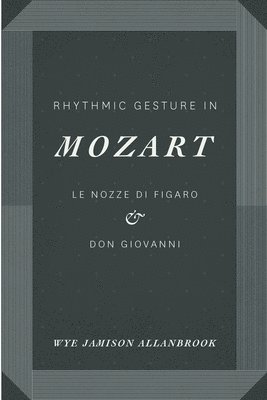
Rhythmic Gesture in Mozart
Le Nozze di Figaro and Don Giovanni
Häftad, 2016
623 kr
Lägg i varukorg
Wye Jamison Allanbrook’s widely influential Rhythmic Gesture in Mozart challenges the view that Wolfgang Amadeus Mozart’s music was a “pure play” of key and theme, more abstract than that of his predecessors. Allanbrook’s innovative work shows that Mozart used a vocabulary of symbolic gestures and …
Secular Commedia
Comic Mimesis in Late Eighteenth-Century Music
Av Wye Jamison Allanbrook, Mary Ann Smart m. fl.
Inbunden, 2014
538 kr
Lägg i varukorg
Wye Jamison Allanbrook's The Secular Commedia is a stimulating and original rethinking of the music of the late eighteenth century. Hearing the symphonies and concertos of Haydn and Mozart with an ear tuned to operatic style, as their earliest listeners did, Allanbrook shows that this familiar …
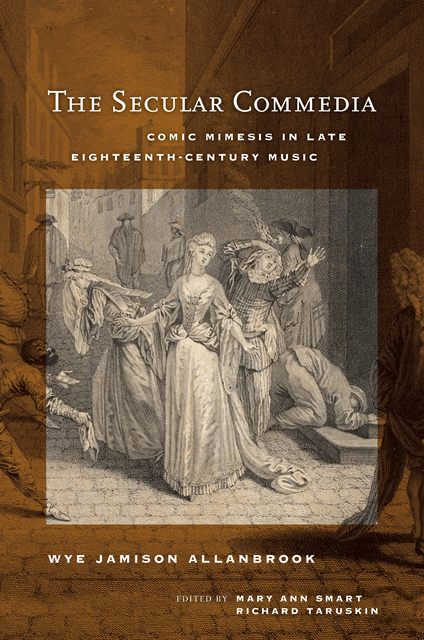
Secular Commedia
Comic Mimesis in Late Eighteenth-Century Music
Av Wye Jamison Allanbrook, Richard Taruskin m. fl.
E-bok, 2014
873 kr
Lägg i varukorg
Wye Jamison Allanbrook’s The Secular Commedia is a stimulating and original rethinking of the music of the late eighteenth century. Hearing the symphonies and concertos of Haydn and Mozart with an ear tuned to operatic style, as their earliest listeners did, Allanbrook shows that this familiar …
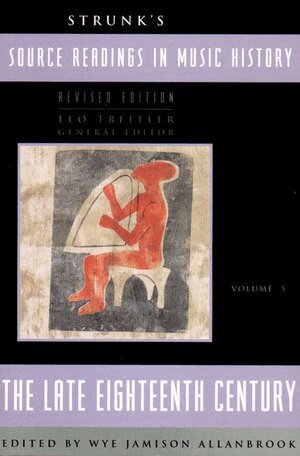
Strunk's Source Readings in Music History
The Late Eighteenth Century
Häftad, 1997
397 kr
Tillfälligt slut
The era of Haydn, Mozart, and early Beethoven not only produced music of enduring appeal, it also gave us significant writings that explain how music should be composed, performed, listened to, and understood. Included are selections from the great German pedagogical treaties of Quantz (on playing …