Xiaojun Duan - Böcker
Visar alla böcker från författaren Xiaojun Duan. Handla med fri frakt och snabb leverans.
4 produkter
4 produkter
1 010 kr
Skickas inom 10-15 vardagar
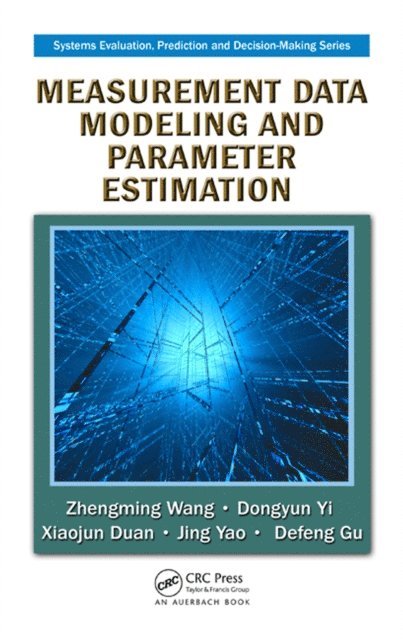
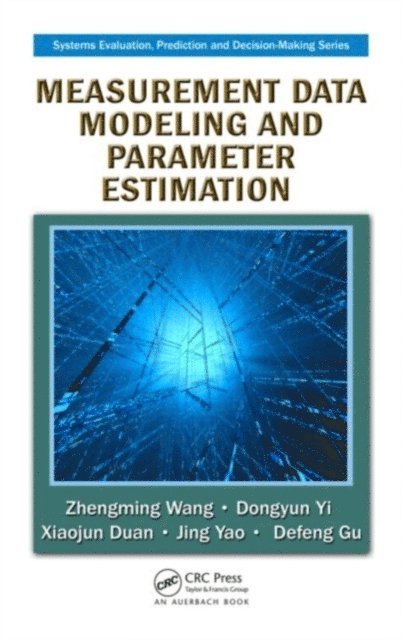
Measurement Data Modeling and Parameter Estimation integrates mathematical theory with engineering practice in the field of measurement data processing. Presenting the first-hand insights and experiences of the authors and their research group, it summarizes cutting-edge research to facilitate the application of mathematical theory in measurement and control engineering, particularly for those interested in aeronautics, astronautics, instrumentation, and economics. Requiring a basic knowledge of linear algebra, computing, and probability and statistics, the book illustrates key lessons with tables, examples, and exercises. It emphasizes the mathematical processing methods of measurement data and avoids the derivation procedures of specific formulas to help readers grasp key points quickly and easily. Employing the theories and methods of parameter estimation as the fundamental analysis tool, this reference: Introduces the basic concepts of measurements and errorsApplies ideas from mathematical branches, such as numerical analysis and statistics, to the modeling and processing of measurement dataExamines methods of regression analysis that are closely related to the mathematical processing of dynamic measurement dataCovers Kalman filtering with colored noises and its applicationsConverting time series models into problems of parameter estimation, the authors discuss modeling methods for the true signals to be estimated as well as systematic errors. They provide comprehensive coverage that includes model establishment, parameter estimation, abnormal data detection, hypothesis tests, systematic errors, trajectory parameters, and modeling of radar measurement data. Although the book is based on the authors’ research and teaching experience in aeronautics and astronautics data processing, the theories and methods introduced are applicable to processing dynamic measurement data across a wide range of fields.
725 kr
Skickas inom 10-15 vardagar
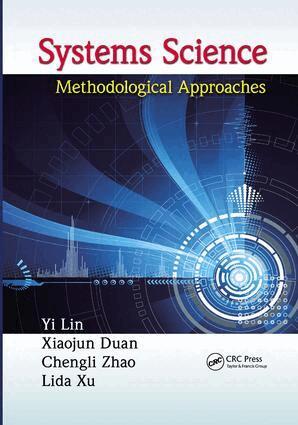
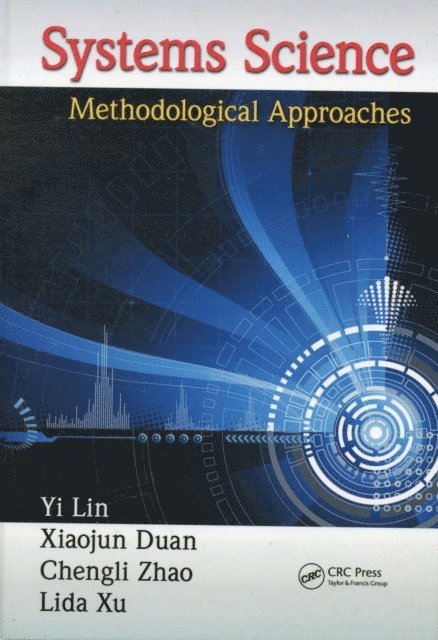
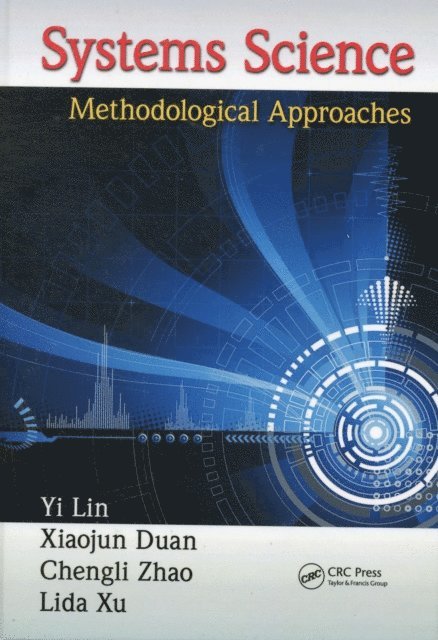
By making use of the principles of systems science, the scientific community can explain many complicated matters of the world and shed new light on unsettled problems. Each real science has its own particular methodology for not only qualitative but also quantitative analyses, so it is important to understand the organic whole of systems research with operable mathematical methods. Systems Science: Methodological Approaches presents a mathematical explanation of systems science, giving readers a complete technical formulation of different systemic laws. It enables them to use a unified methodology to attack different problems that are hard, if not impossible, for modern science to handle.Following a brief history of systems science, the book explores: Basic concepts, characteristics, properties, and classifications of general systemsNonlinear systems dynamics and the theory of catastropheDissipative structures and synergisticsStudies of chaos, including logistic mapping, phase space reconstruction, Lyapunov exponents, and chaos of general single relation systemsDifferent aspects and concepts of fractals, including a presentation of L systems analysis and designComplex systems and complexity, with a discussion of how the phenomena of "three" and complexity are related, and how various cellular automata can be constructed to generate useful simulations and figurative patternsComplex adaptive systems and open complex giant systems, with introduction of the yoyo model and practical applicationsComplex networks and related concepts and methods The book concludes with several case studies that demonstrate how various concepts and the logic of systems can be practically applied to resolve real-life problems, such as the prediction of natural disasters. The book will be useful in directing future research and applications of systems science on a commonly accepted platform and playground.
2 625 kr
Skickas inom 10-15 vardagar
Measurement Data Modeling and Parameter Estimation integrates mathematical theory with engineering practice in the field of measurement data processing. Presenting the first-hand insights and experiences of the authors and their research group, it summarizes cutting-edge research to facilitate the application of mathematical theory in measurement and control engineering, particularly for those interested in aeronautics, astronautics, instrumentation, and economics. Requiring a basic knowledge of linear algebra, computing, and probability and statistics, the book illustrates key lessons with tables, examples, and exercises. It emphasizes the mathematical processing methods of measurement data and avoids the derivation procedures of specific formulas to help readers grasp key points quickly and easily. Employing the theories and methods of parameter estimation as the fundamental analysis tool, this reference: Introduces the basic concepts of measurements and errorsApplies ideas from mathematical branches, such as numerical analysis and statistics, to the modeling and processing of measurement dataExamines methods of regression analysis that are closely related to the mathematical processing of dynamic measurement dataCovers Kalman filtering with colored noises and its applicationsConverting time series models into problems of parameter estimation, the authors discuss modeling methods for the true signals to be estimated as well as systematic errors. They provide comprehensive coverage that includes model establishment, parameter estimation, abnormal data detection, hypothesis tests, systematic errors, trajectory parameters, and modeling of radar measurement data. Although the book is based on the authors’ research and teaching experience in aeronautics and astronautics data processing, the theories and methods introduced are applicable to processing dynamic measurement data across a wide range of fields.
1 954 kr
Skickas inom 10-15 vardagar
By making use of the principles of systems science, the scientific community can explain many complicated matters of the world and shed new light on unsettled problems. Each real science has its own particular methodology for not only qualitative but also quantitative analyses, so it is important to understand the organic whole of systems research with operable mathematical methods. Systems Science: Methodological Approaches presents a mathematical explanation of systems science, giving readers a complete technical formulation of different systemic laws. It enables them to use a unified methodology to attack different problems that are hard, if not impossible, for modern science to handle.Following a brief history of systems science, the book explores: Basic concepts, characteristics, properties, and classifications of general systemsNonlinear systems dynamics and the theory of catastropheDissipative structures and synergisticsStudies of chaos, including logistic mapping, phase space reconstruction, Lyapunov exponents, and chaos of general single relation systemsDifferent aspects and concepts of fractals, including a presentation of L systems analysis and designComplex systems and complexity, with a discussion of how the phenomena of "three" and complexity are related, and how various cellular automata can be constructed to generate useful simulations and figurative patternsComplex adaptive systems and open complex giant systems, with introduction of the yoyo model and practical applicationsComplex networks and related concepts and methods The book concludes with several case studies that demonstrate how various concepts and the logic of systems can be practically applied to resolve real-life problems, such as the prediction of natural disasters. The book will be useful in directing future research and applications of systems science on a commonly accepted platform and playground.